Aldehydes and ketones · 醛和酮
| English | 中文 | Pinyin · 拼音 |
|---|---|---|
| carbonyl compound/ˈkɑːbənaɪl ˈkɒmpaʊnd/ | 羰基化合物 | tāng jī huà hé wù |
| aldehyde/ˈældɪhaɪd/ | 醛 | quán |
| ketone/ˈketəʊn/ | 酮 | tóng |
| reduction/rɪˈdʌkʃn/ | 还原 | huán yuán |
| hydroxynitrile/haɪˈdrɒksɪnaɪtraɪl/ | 羟基腈 | qiǎng jī jīng |
| nucleophilic addition/ˌnjuːklɪəˈfɪlɪk əˈdɪʃn/ | 亲核加成 | qīn hé jiā chéng |
The carbonyl compounds 羰基化合物
- These are carbonyl compounds — they contain the C=O group.
- In an aldehyde 醛 the C=O is on the end of the chain (–CHO).
- In a ketone 酮 it is in the middle, between two carbons.
羰基化合物
- 这些是羰基化合物(carbonyl compounds)——它们含有 C=O 基团。
- 在一个醛(aldehyde)中,C=O 在链的末端(–CHO)。
- 在一个酮(ketone)中,它在中间,在两个碳之间。
Carbonyl compound lab · 羰基化合物实验室
Sort carbonyl reactions by what they reveal. · 按羰基反应揭示的东西对它们分类。
The difference between an aldehyde and a ketone is that: · 一个醛和一个酮之间的区别是:
Both have the carbonyl C=O; in an aldehyde it is terminal (–CHO), in a ketone it is between two carbons. · 两者都有羰基 C=O;在一个醛中它在末端(–CHO),在一个酮中它在两个碳之间。
Aldehydes have the carbonyl group at the end of the carbon chain. · 醛的羰基在碳链的末端。
Ketones have it in the middle. · 酮的在中间。
Making them
- By oxidation of an alcohol (acidified $\text{K}_2\text{Cr}_2\text{O}_7$ or $\text{KMnO}_4$):
- a primary alcohol, with distillation, gives an aldehyde.
- a secondary alcohol gives a ketone.
In an aldehyde the C=O is on the end; in a ketone it is in the middle
制造它们
- 通过一个醇的氧化(酸化的 $\text{K}_2\text{Cr}_2\text{O}_7$ 或 $\text{KMnO}_4$):
- 一个伯醇,用蒸馏,给出一个醛。
- 一个仲醇给出一个酮。
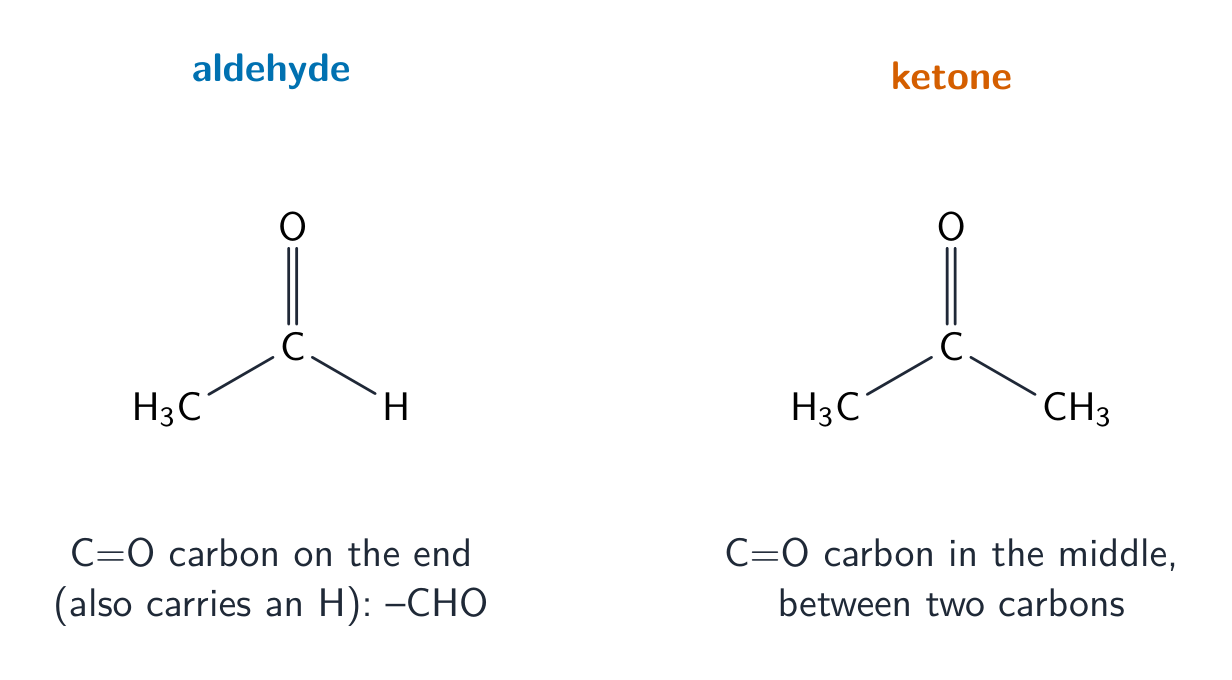
在一个醛中 C=O 在末端;在一个酮中它在中间
Oxidising a secondary alcohol gives: · 氧化一个仲醇给出:
Secondary alcohols oxidise to ketones; primary alcohols (with distillation) give aldehydes. · 仲醇氧化成酮;伯醇(用蒸馏)给出醛。
Match each carbonyl fact. · 匹配每个羰基事实。
Each item links the term to its correct meaning. · 每一项把术语链接到它正确的含义。
Reactions
- reduction 还原 ($\text{NaBH}_4$ or $\text{LiAlH}_4$) → back to an alcohol (aldehyde → primary; ketone → secondary).
- HCN (with KCN catalyst) adds H and CN across the C=O → a hydroxynitrile 羟基腈 (adds one carbon).
Tollens' reagent gives a bright silver mirror with an aldehyde.
反应
- 还原($\text{NaBH}_4$ 或 $\text{LiAlH}_4$)→ 回到一个醇(醛 → 伯;酮 → 仲)。
- HCN(用 KCN 催化剂)把 H 和 CN 跨 C=O 加上 → 一个羟基腈(hydroxynitrile,加一个碳)。
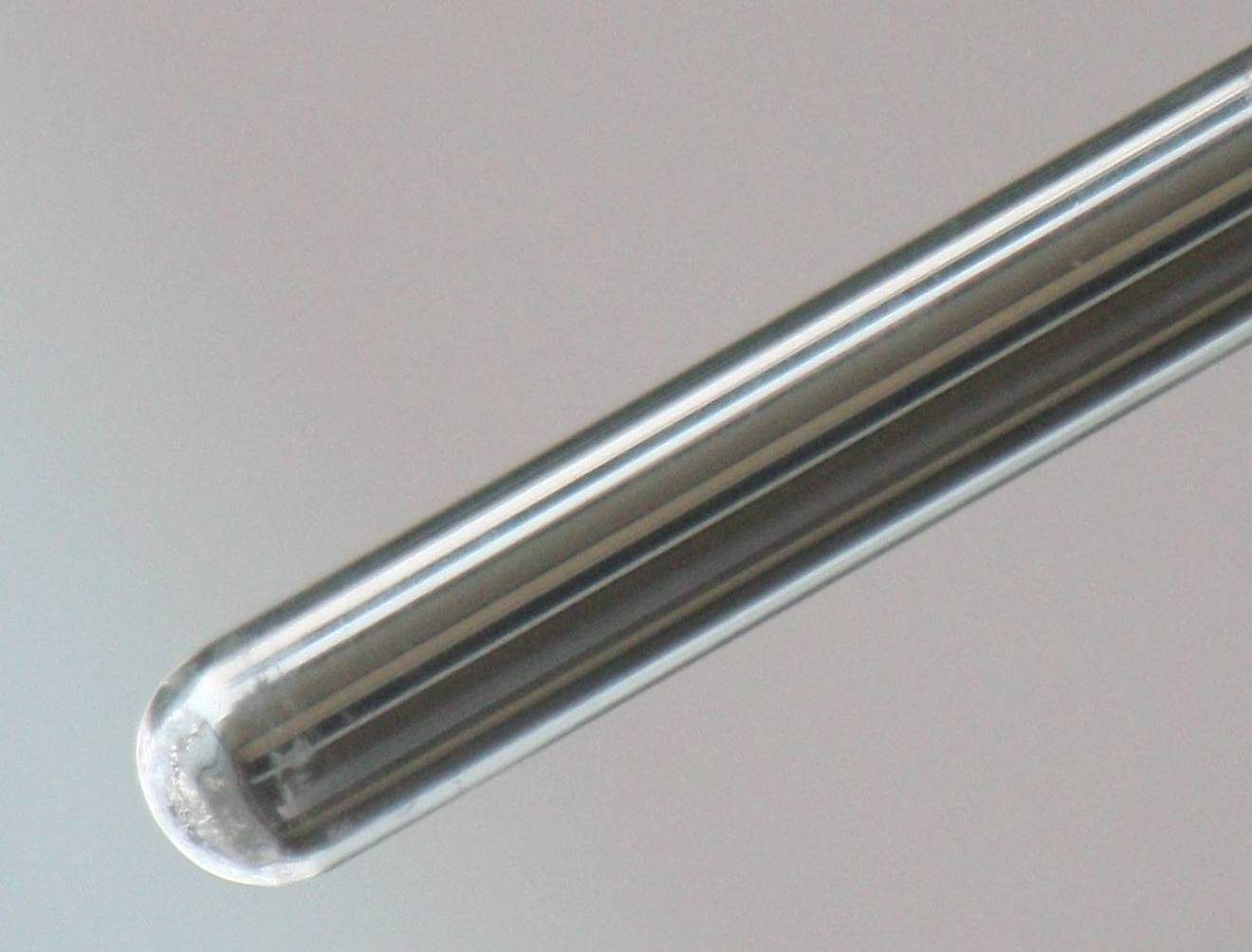
托伦斯试剂与一个醛给出一面明亮的银镜。
Reducing a carbonyl compound (with NaBH₄) gives: · 还原一个羰基化合物(用 NaBH₄)给出:
Reduction turns a carbonyl back into an alcohol (aldehyde → primary, ketone → secondary). · 还原把一个羰基变回一个醇(醛 → 伯,酮 → 仲)。
Nucleophilic addition 亲核加成
The HCN reaction is nucleophilic addition:
- $\text{CN}^-$ (a nucleophile) attacks the slightly positive carbonyl carbon.
- the C=O double bond breaks, leaving a negative oxygen ($\text{O}^-$).
- the $\text{O}^-$ takes an $\text{H}^+$ to finish the hydroxynitrile.
Propanone (acetone), the simplest ketone, is the solvent in nail-polish remover.
亲核加成
HCN 反应是亲核加成(nucleophilic addition):
- $\text{CN}^-$(一个亲核试剂)进攻稍微正的羰基碳。
- C=O 双键断裂,留下一个负氧($\text{O}^-$)。
- $\text{O}^-$ 取一个 $\text{H}^+$ 来完成羟基腈。
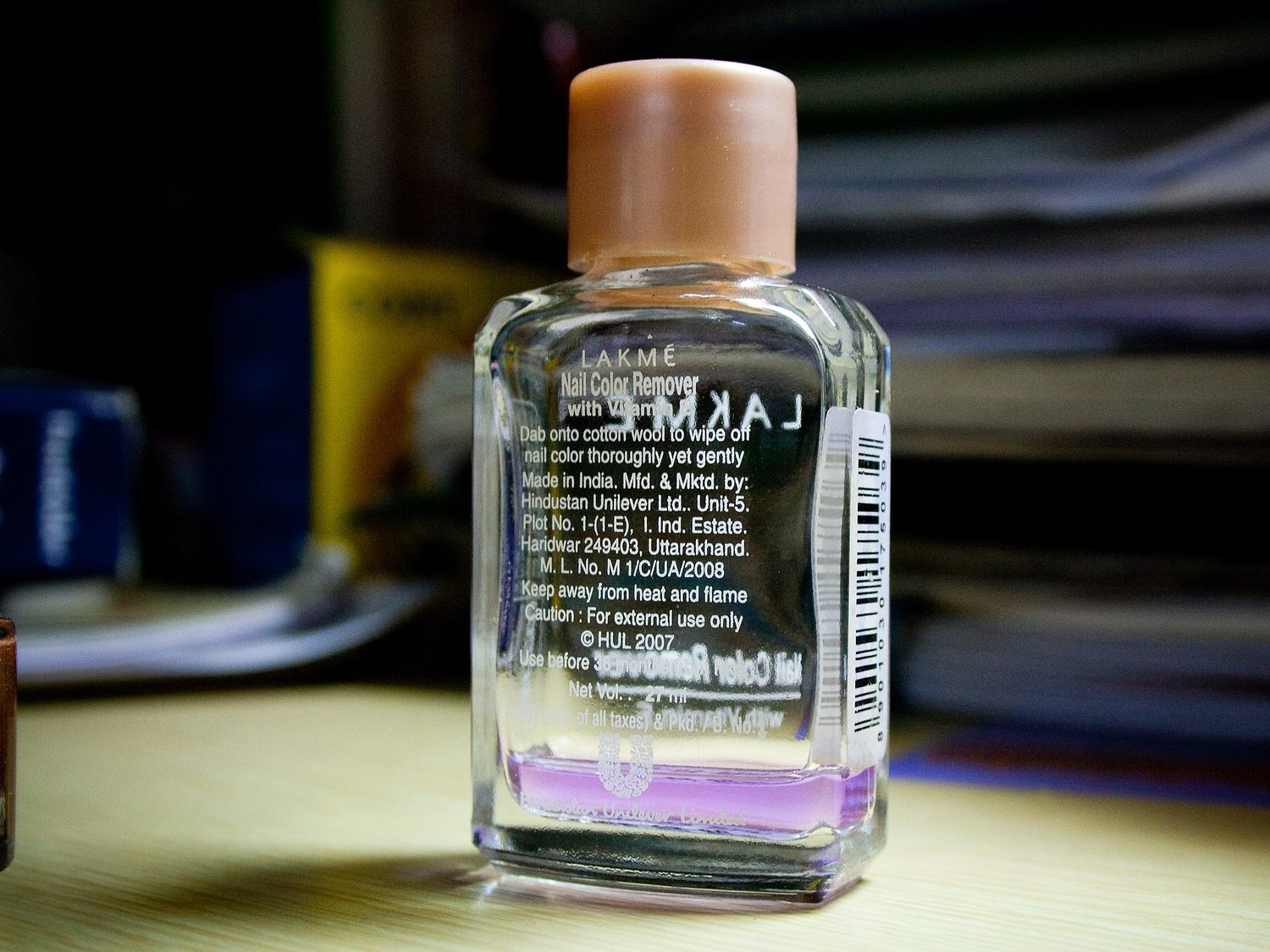
丙酮(acetone),最简单的酮,是洗甲水中的溶剂。
In the nucleophilic addition of HCN, the first step is: · 在 HCN 的亲核加成中,第一步是:
The cyanide nucleophile attacks the δ+ carbon, breaking the C=O; the O⁻ then takes an H⁺. · 氰化物亲核试剂进攻 δ+ 碳,断裂 C=O;然后 O⁻ 取一个 H⁺。
You've got it
- carbonyl = C=O; aldehyde (end, –CHO) vs ketone (middle)
- made by oxidising an alcohol: primary + distillation → aldehyde; secondary → ketone
- reduction → alcohol; HCN → hydroxynitrile (+1 carbon)
- the HCN step is nucleophilic addition: $\text{CN}^-$ attacks the $\delta+$ carbon, C=O breaks, $\text{O}^-$ takes $\text{H}^+$
你掌握了
- 羰基 = C=O;醛(末端,–CHO)对比酮(中间)
- 由氧化一个醇制造:伯 + 蒸馏 → 醛;仲 → 酮
- 还原 → 醇;HCN → 羟基腈(+1 碳)
- HCN 步骤是亲核加成:$\text{CN}^-$ 进攻 $\delta+$ 碳,C=O 断裂,$\text{O}^-$ 取 $\text{H}^+$