Quality management · 质量管理
| English | 中文 | Pinyin · 拼音 |
|---|---|---|
| reputation/ˌrepjuːˈteɪʃn/ | 声誉 | shēng yù |
| quality management/ˈkwɒlɪti ˈmænɪdʒmənt/ | 质量管理 | zhì liàng guǎn lǐ |
| quality control/ˈkwɒlɪti kənˈtrəʊl/ | 质量控制 | zhì liàng kòng zhì |
| quality assurance/ˈkwɒlɪti əˈʃʊərəns/ | 质量保证 | zhì liàng bǎo zhèng |
| inspecting/ɪnˈspektɪŋ/ | 检验 | jiǎn yàn |
| defects/ˈdiːfekts/ | 缺陷 | quē xiàn |
| total quality management/ˈtəʊtl ˈkwɒlɪti ˈmænɪdʒmənt/ | 全面质量管理 | quán miàn zhì liàng guǎn lǐ |
| loyalty/ˈlɔɪəlti/ | 忠诚度 | zhōng chéng dù |
Getting it right every time
- One faulty product can lose a customer for life and wreck a reputation 声誉 online overnight.
- Quality management 质量管理 makes sure the product meets the standard customers expect — consistently.
每次都做对
- 一个有缺陷的产品能永远失去一个顾客,并在一夜之间在网上毁掉一个声誉。
- 质量管理(quality management)确保产品满足顾客期待的标准——一致地。
Leadership style lab · 领导风格实验室
Pick the management style that fits each situation. · 选择适合每种情况的管理风格。
Quality control mainly involves: · 质量控制主要涉及:
QC inspects the end product for defects. · QC检查最终产品是否存在缺陷。
Quality assurance focuses on: · 质量保证专注于:
QA designs quality in so defects do not occur. · QA将质量融入设计中以防止缺陷发生。
Quality control 质量控制 vs quality assurance 质量保证
- Quality control (QC): inspecting 检验 finished output to catch defects 缺陷 at the end.
- Quality assurance (QA): building quality into every stage so defects don't happen.
Quality control checks at the end; quality assurance builds quality into every stage
质量控制对质量保证
- 质量控制(quality control,QC):在最后检验成品以抓住缺陷。
- 质量保证(quality assurance,QA):把质量建进每个阶段,使缺陷不发生。
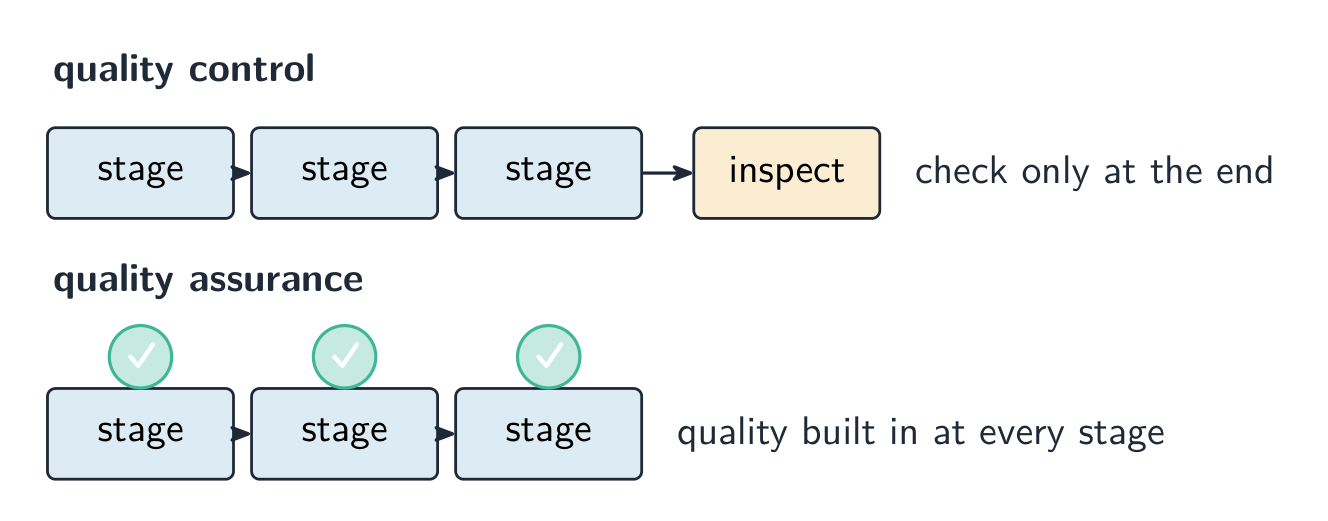
质量控制在最后检查;质量保证把质量建进每个阶段
Total Quality Management (TQM) makes quality: · 全面质量管理(TQM)使质量成为:
TQM embeds quality across the whole organisation. · TQM将质量嵌入整个组织。
The approach where quality is everyone's responsibility is Total Quality . · 将质量视为每个人责任的这种方法是全面质量。
TQM = Total Quality Management. · TQM = 全面质量管理。
Total Quality Management 全面质量管理
- TQM makes quality everyone's responsibility, throughout the business.
- It aims for continuous improvement and "right first time", reducing waste and rework.
Worked example. Instead of inspecting cars only at the end (QC), a factory has each worker check their own stage (QA) and empowers anyone to stop the line for a fault (TQM) — catching problems early and cheaply.
全面质量管理
- TQM(全面质量管理)使质量成为每个人的责任,贯穿整个企业。
- 它瞄准持续改进和"一次做对",减少浪费和返工。
例题。 不是只在最后检验汽车(QC),一个工厂让每个工人检查他们自己的阶段(QA)并赋能任何人为一个缺陷停止生产线(TQM)——早期且便宜地抓住问题。
Preventing defects (assurance) is usually cheaper than inspecting them out at the end (control). · 预防缺陷(保证)通常比在末端检查剔除缺陷(控制)更便宜。
Prevention avoids the waste of making defective output. · 预防避免了生产次品的浪费。
Why quality matters
- High quality builds reputation, customer loyalty 忠诚度 and the ability to charge more.
- Poor quality means returns, lost customers, and costly rework.
Quality control catches defects; quality assurance prevents them. QC inspects at the end (waste already made); QA designs quality in from the start. Prevention is usually cheaper than cure.
为什么质量重要
- 高质量建立声誉、顾客忠诚和收更多的能力。
- 差的质量意味着退货、失去的顾客和昂贵的返工。
质量控制抓住缺陷;质量保证防止它们。 QC 在最后检验(浪费已经造成);QA 从一开始就设计质量进去。预防通常比治疗更便宜。
You've got it
- quality control inspects finished output; quality assurance builds quality into every stage
- TQM makes quality everyone's job, aiming for "right first time"
- good quality builds reputation and loyalty; prevention beats inspection
你掌握了
- 质量控制检验成品;质量保证把质量建进每个阶段
- TQM 使质量成为每个人的工作,瞄准"一次做对"
- 好的质量建立声誉和忠诚;预防胜过检验