Demand, supply and elasticity · 需求、供给与弹性
| English | 中文 | Pinyin · 拼音 |
|---|---|---|
| demand/dɪˈmænd/ | 需求 | xū qiú |
| supply/səˈplaɪ/ | 供给 | gōng jǐ |
| equilibrium/ˌiːkwɪˈlɪbrɪəm/ | 均衡 | jūn héng |
| quantity demanded/ˈkwɒntɪti dɪˈmændɪd/ | 需求量 | xū qiú liàng |
| price elasticity of demand/praɪs ɪlæˈstɪsɪti ɒv dɪˈmænd/ | 需求价格弹性 | xū qiú jià gé tán xìng |
| elastic/ɪˈlæstɪk/ | 富有弹性 | fù yǒu tán xìng |
| inelastic/ɪnɪˈlæstɪk/ | 缺乏弹性 | quē fá tán xìng |
| revenue/ˈrevənjuː/ | 营业收入 | yíng yè shōu rù |
The market sets the price
- A firm would love to charge whatever it likes — but the market has the final say, through demand 需求 and supply 供给.
- Understanding how they interact is the foundation of pricing and forecasting.
市场决定价格
- 一个企业会很想收它喜欢的任何价格——但市场有最终决定权,通过需求和供给。
- 理解它们如何相互作用是定价和预测的基础。
The equilibrium price is where: · 均衡价格在以下之处:
Equilibrium clears the market. · 均衡使市场出清。
Demand, supply and equilibrium 均衡
- Demand falls as price rises; supply rises as price rises.
- The market settles at the equilibrium price, where the two are equal.
The equilibrium price is where quantity demanded 需求量 equals quantity supplied.
需求、供给与均衡
- 需求随价格上升而下降;供给随价格上升而上升。
- 市场在均衡(equilibrium)价格稳定下来,在那里两者相等。
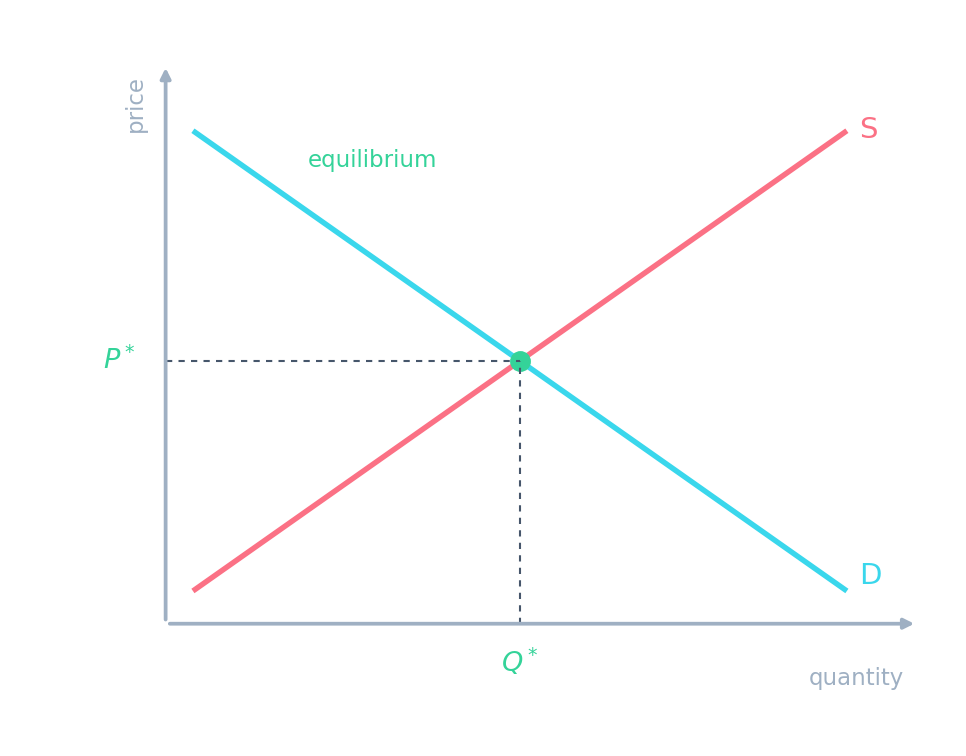
均衡价格是需求量等于供给量之处。
Demand, supply & elasticity · 需求、供给与弹性
Price is set where demand meets supply. · 价格在需求与供给相遇之处决定。
Price rises 10% and quantity demanded falls 25%. What is the size of PED? · 价格上升 10% 而需求量下降 25%。PED 的大小是多少?
PED = 25% / 10% = 2.5 (elastic). · PED = 25% / 10% = 2.5(弹性)。
A product with many close substitutes tends to have elastic demand. · 一个有许多接近替代品的产品倾向于有弹性需求。
Substitutes let customers switch, making demand price-sensitive. · 替代品让顾客切换,使需求对价格敏感。
When quantity demanded responds strongly to price, demand is said to be . · 当需求量对价格反应强烈时,需求被说成是。
Elastic demand has PED greater than 1. · 弹性需求有大于 1 的 PED。
Price elasticity of demand 需求价格弹性
- PED measures how much quantity demanded responds to a price change.
- Elastic 富有弹性 (PED > 1): quantity is sensitive to price; inelastic 缺乏弹性 (PED < 1): it is not.
需求价格弹性
- PED 测量需求量对一个价格变化反应多少。
- 弹性(elastic,PED > 1):数量对价格敏感;非弹性(inelastic,PED < 1):它不敏感。
If demand for a product is inelastic, raising its price will: · 如果对一个产品的需求是非弹性的,提高它的价格会:
With inelastic demand, quantity falls little, so revenue rises. · 在非弹性需求下,数量下降很少,所以收入上升。
Why elasticity matters for revenue 营业收入
- If demand is inelastic, raising price raises revenue.
- If demand is elastic, raising price lowers revenue — so a firm may cut price to sell far more.
Know your elasticity before changing price. A price rise helps revenue only if demand is inelastic. For an elastic product, the same rise drives customers away and revenue falls.
为什么弹性对收入重要
- 如果需求是非弹性的,提高价格提高收入。
- 如果需求是弹性的,提高价格降低收入——所以一个企业可能削减价格以卖出多得多。
在改变价格之前了解你的弹性。 一次价格上升只在需求非弹性时才帮助收入。对一个弹性产品,同样的上升赶走顾客且收入下降。
You've got it
- price settles at equilibrium, where demand meets supply
- PED measures demand's sensitivity to price (elastic >1, inelastic <1)
- inelastic → raise price to raise revenue; elastic → the opposite
你掌握了
- 价格在均衡稳定,在需求与供给相遇之处
- PED 测量需求对价格的敏感性(弹性 >1,非弹性 <1)
- 非弹性 → 提高价格以提高收入;弹性 → 相反