Stakeholders in a business · 利益相关者 (Stakeholders in a business)
| English | 中文 | Pinyin · 拼音 |
|---|---|---|
| stake/steɪk/ | 利害关系 | lì hài guān xì |
| supplier/səˈplaɪə/ | 供应商 | gōng yìng shāng |
| stakeholder/ˈsteɪkhəʊldə/ | 利益相关者 | lì yì xiāng guān zhě |
| internal/ɪnˈtɜːnl/ | 内部 | nèi bù |
| external/ekˈstɜːnl/ | 外部 | wài bù |
| shareholder/ˈʃeəhəʊldə/ | 股东 | gǔ dōng |
| pressure group/ˈpreʃə ɡruːp/ | 压力团体 | yā lì tuán tǐ |
| dividend/ˈdɪvɪdend/ | 股息 | gǔ xī |
| prompt payment/prɒmpt ˈpeɪmənt/ | 及时付款 | jí shí fù kuǎn |
| conflict/ˈkɒnflɪkt/ | 冲突 | chōng tū |
| margin/ˈmɑːdʒɪn/ | 利润率 | lì rùn lǜ |
| balance/ˈbæləns/ | 平衡 | píng héng |
Everyone with a stake 利害关系
- A business doesn't just affect its owners. Workers, customers, suppliers 供应商, the government and the local community all care what it does.
- These groups are its stakeholders 利益相关者 — and their interests often clash.
每个有利害关系的人
- 一个企业不只影响它的所有者。工人、顾客、供应商、政府和当地社区都关心它做什么。
- 这些群体是它的利益相关者(stakeholders)——而他们的利益常常冲突。
Stakeholder interest lab · 利益相关者兴趣实验室
See how different stakeholders judge the same business decision. · 观察不同的利益相关者如何评判同一项商业决策。
A stakeholder is: · 利益相关者是:
Stakeholders are all groups with an interest in the firm. · 利益相关者是对企业有兴趣的所有群体。
Internal 内部 and external 外部 stakeholders
- Internal: owners/shareholders 股东, managers, employees.
- External: customers, suppliers, government, the local community, pressure groups 压力团体.
Each stakeholder group has a different interest in how the business is run.
内部和外部利益相关者
- 内部:所有者/股东、经理、员工。
- 外部:顾客、供应商、政府、当地社区、压力团体。
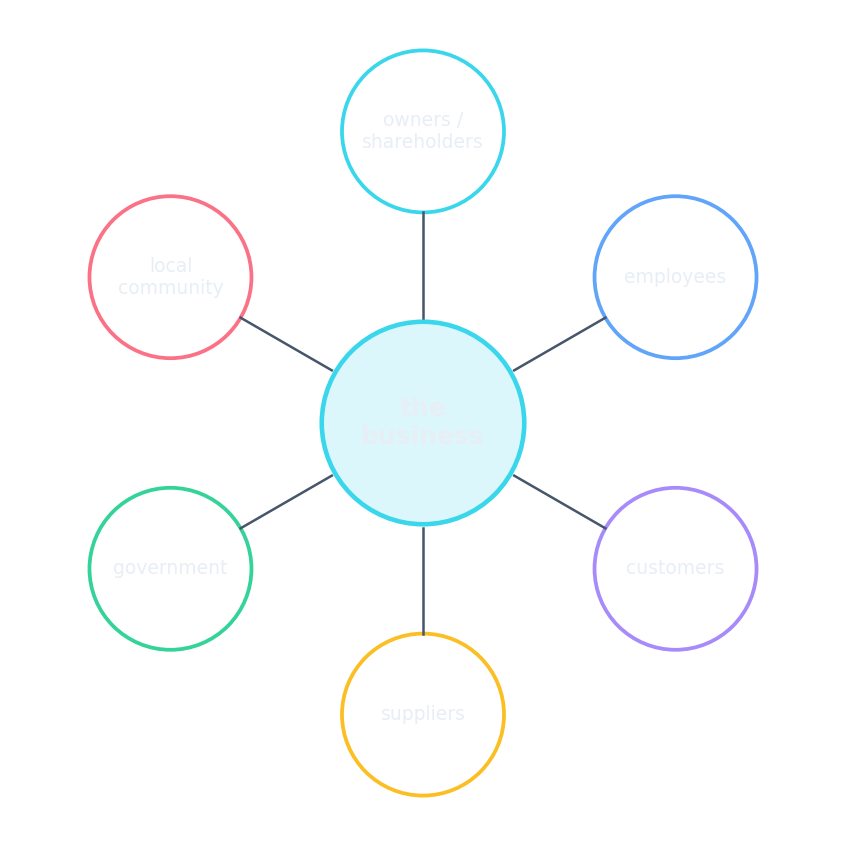
每个利益相关者群体对企业如何运营有不同的利益。
Which is an internal stakeholder? · 哪一个是内部利益相关者?
Employees, managers and owners are internal; the rest are external. · 员工、管理者和所有者是内部的;其余均为外部的。
Customers, suppliers and the local community are ______ stakeholders. · 客户、供应商和当地社区是______利益相关者。
They are outside the business, unlike employees and owners. · 他们位于企业外部,不同于员工和所有者。
What each group wants
- Shareholders want profit and dividends 股息; employees want pay and security.
- Customers want quality and low prices; suppliers want prompt payment 及时付款.
- Government wants taxes and laws obeyed; the community wants jobs without harm.
每个群体想要什么
- 股东想要利润和股息;员工想要报酬和保障。
- 顾客想要质量和低价格;供应商想要及时付款。
- 政府想要税收和法律被遵守;社区想要没有伤害的工作。
A typical stakeholder conflict is between: · 典型的利益相关者冲突发生在:
Pay rises for staff reduce profit for owners — a classic conflict. · 员工加薪减少所有者利润——这是一个典型的冲突。
Every shareholder is a stakeholder, but not every stakeholder is a shareholder. · 每个股东都是利益相关者,但并非每个利益相关者都是股东。
Stakeholders are a wider group than shareholders. · 利益相关者的范围比股东更广。
Stakeholder conflict 冲突
- Their aims often conflict: higher wages (employees) cut profit (shareholders); lower prices (customers) squeeze margins 利润率.
- Managers must balance 平衡 these competing interests — pleasing everyone fully is impossible.
A stakeholder is not the same as a shareholder. Shareholders own part of the company. Stakeholders are anyone affected by it — a much wider group that includes shareholders but also workers, customers and the community.
利益相关者冲突
- 他们的目标常常冲突:更高的工资(员工)削减利润(股东);更低的价格(顾客)挤压利润率。
- 经理必须平衡这些竞争的利益——完全取悦每个人是不可能的。
一个利益相关者与一个股东不同。 股东(shareholders)拥有公司的一部分。利益相关者(stakeholders)是受它影响的任何人——一个宽得多的群体,包括股东,但也包括工人、顾客和社区。
You've got it
- stakeholders = all groups affected by a business (internal + external)
- each wants something different — profit, pay, quality, taxes, jobs
- their interests conflict, so managers must balance them; stakeholder ≠ shareholder
你掌握了
- 利益相关者 = 受一个企业影响的所有群体(内部 + 外部)
- 每个想要不同的东西——利润、报酬、质量、税收、工作
- 他们的利益冲突,所以经理必须平衡它们;利益相关者 ≠ 股东