Artificial selection · 人工选择
| English | 中文 | Pinyin · 拼音 |
|---|---|---|
| selective breeding/sɪˈlektɪv ˈbriːdɪŋ/ | 选择育种 | xuǎn zé yù zhǒng |
| artificial selection/ˌɑːtɪˈfɪʃl sɪˈlekʃn/ | 人工选择 | rén gōng xuǎn zé |
| inbreeding/ˈɪnbriːdɪŋ/ | 近交 | jìn jiāo |
| hybridisation/ˌhaɪbrɪdaɪˈzeɪʃn/ | 杂交 | zá jiāo |
| gene pool/dʒiːn puːl/ | 基因库 | jī yīn kù |
Selective breeding 选择育种
- In selective breeding (artificial selection 人工选择), humans — not nature — choose which organisms breed.
- This passes on useful features.
- It is how we shaped our crops and farm animals.
选择育种
- 在 选择育种(selective breeding)(人工选择)中,人类——而不是大自然——选择哪些生物繁殖。
- 这传递有用的特征。
- 这就是我们如何塑造了我们的作物和农场动物。
Selective breeding (artificial selection) differs from natural selection because: · 选择育种(人工选择)与自然选择不同,因为:
In artificial selection, people choose the breeders to pass on useful features; in natural selection, the environment selects. · 在人工选择中,人们选择繁殖者来传递有用的特征;在自然选择中,环境选择。
When humans choose which organisms breed to pass on useful features, it is called ______ selection. · 当人类选择哪些生物繁殖以传递有用的特征时,这叫做 ______ 选择。
Artificial selection (selective breeding) is the same mechanism as natural selection — but humans, not the environment, do the selecting. · 人工选择(选择育种)与自然选择是相同的机制——但人类而不是环境做选择。
Repeated artificial selection from a few individuals can reduce the gene pool and cause inbreeding problems. · 反复从少数个体的人工选择能减少基因库并引起近交问题。
A narrow gene pool concentrates harmful recessive alleles and lowers the population's resilience. · 一个狭窄的基因库集中有害的隐性等位基因并降低群体的恢复力。
Examples
- breeding disease resistance into varieties of wheat and rice.
- using inbreeding 近交 and hybridisation 杂交 (crossing different lines) to make vigorous, uniform maize.
- breeding dairy cattle to improve their milk yield.
例子
- 把 抗病性 培育进小麦和水稻的品种。
- 用 近交(inbreeding) 和 杂交(hybridisation)(杂交不同的品系)制造有活力、均匀的 玉米。
- 培育奶牛以改善它们的产奶 量。
Selective breeding · 选择育种
Step through it. Humans take the role of the environment — choosing the breeders, generation after generation. · 一步步走过它。人类扮演环境的角色——一代又一代地选择繁殖者。
Which is an example of selective breeding? · 哪个是选择育种的例子?
Breeding cattle for milk yield (or disease-resistant crops) is humans choosing which organisms reproduce. · 培育牛以获得产奶量(或抗病的作物)是人类选择哪些生物繁殖。
Put selective breeding in order. · 把选择育种按顺序排列。
Choose → breed → select offspring → repeat. Each round pushes the feature further. · 选择 → 培育 → 选择后代 → 重复。每一轮把特征推得更远。
Hybridisation in selective breeding means: · 选择育种中的杂交意味着:
Hybridisation crosses different lines (often with inbreeding) to make vigorous, uniform crops like maize. · 杂交杂交不同的品系(常与近交一起)以制造像玉米这样有活力、均匀的作物。
How it is done
- Choose parents with the desired feature, breed them, and select the best offspring to breed again.
- Repeat over many generations until the feature is firmly established.
Choosing the best parents each generation makes a wanted feature more and more common
它是如何做的
- 选择有 想要的特征 的亲本,培育它们,并选择最好的后代再次培育。
- 经过许多代重复,直到这个特征牢固地建立起来。
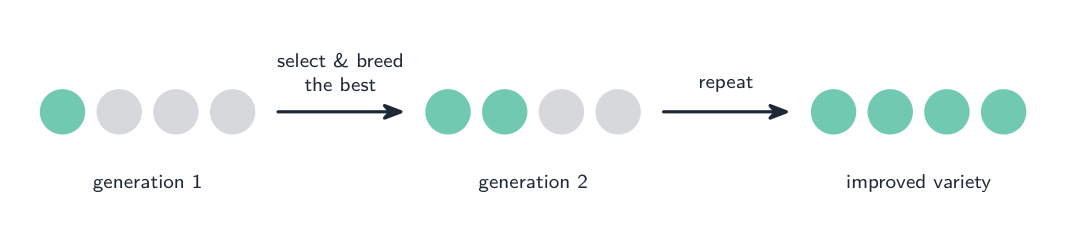
每代选择最好的亲本,使想要的特征越来越普遍
The problems with it
- Repeatedly breeding from a few "best" individuals shrinks the gene pool 基因库.
- This inbreeding can concentrate harmful alleles and leaves the population vulnerable to disease.
它的问题
- 反复从少数“最好的”个体培育 缩小基因库。
- 这种 近交 能集中有害的等位基因,并使群体容易受疾病影响。
You've got it
- selective breeding (artificial selection) = humans choose which organisms reproduce
- examples: disease-resistant wheat/rice; inbreeding + hybridisation for maize; higher milk yield in cattle
- it passes on the features people find useful
你掌握了
- 选择育种(人工选择)= 人类 选择哪些生物繁殖
- 例子:抗病 小麦/水稻;近交 + 杂交 用于玉米;牛更高的产奶 量
- 它传递人们觉得有用的特征