Genetic diagrams and crosses · 遗传图与杂交
| English | 中文 | Pinyin · 拼音 |
|---|---|---|
| Punnett square/ˈpʌnɪt skweə/ | 庞纳特方格 | páng nà tè fāng gé |
| monohybrid cross/ˈmɒnəʊhaɪbrɪd krɒs/ | 单基因杂交 | dān jī yīn zá jiāo |
| dihybrid cross/daɪˈhaɪbrɪd krɒs/ | 双基因杂交 | shuāng jī yīn zá jiāo |
| multiple alleles/ˈmʌltɪpl əˈliːlz/ | 复等位基因 | fù děng wèi jī yīn |
| sex linkage/seks ˈlɪŋkɪdʒ/ | 伴性遗传 | bàn xìng yí chuán |
| epistasis/ɪpɪˈstɑːsiz/ | 上位性 | shàng wèi xìng |
| chi-squared test/kaɪ skweəd test/ | 卡方检验 | kǎ fāng jiǎn yàn |
Genetic crosses
- A genetic diagram shows how alleles pass to offspring.
- The handiest tool is the Punnett square 庞纳特方格 — a grid of all gamete combinations.
- Then we meet the special cases.
遗传杂交
- 一个 遗传图 显示等位基因如何传给后代。
- 最方便的工具是 庞纳特方格(Punnett square)——一个所有配子组合的网格。
- 然后我们遇到这些特殊情况。
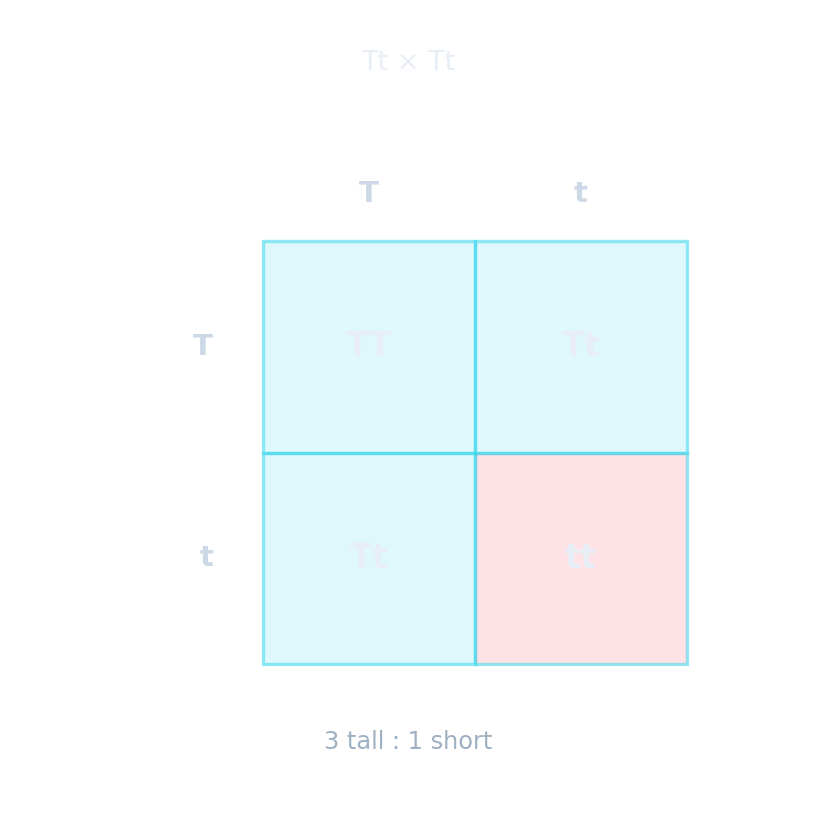
A Punnett square is used to predict the offspring genotypes and ratios of a genetic cross. · 一个庞纳特方格用来预测一个遗传杂交的后代基因型和比例。
It combines every possible pairing of the parents' gametes. · 它组合亲本配子的每个可能的配对。
The Punnett square
- A monohybrid cross 单基因杂交 follows one gene; a dihybrid cross 双基因杂交 follows two at once.
- Some genes have multiple alleles 复等位基因 (more than two versions in a population), like human blood groups.
庞纳特方格
- 一个 单基因杂交(monohybrid cross) 跟踪 一个 基因;一个 双基因杂交(dihybrid cross) 一次跟踪 两个。
- 一些基因有 复等位基因(multiple alleles)(一个群体中多于两个版本),像人类血型。
Genetic crosses · 遗传杂交
Aa × Aa → 3 : 1
Pick the parents' genotypes and read the offspring ratios straight from the Punnett square. · 选择亲本的基因型,直接从庞纳特方格读出后代的 比例。
In a Tt × Tt cross (T dominant), the offspring ratio is: · 在一个 Tt × Tt 杂交(T 显性)中,后代比例是:
The Punnett square gives TT, Tt, Tt, tt — three with a dominant T (tall) to one tt (short). · 庞纳特方格给出 TT、Tt、Tt、tt——三个有显性 T(高)对一个 tt(矮)。
In a Tt × Tt cross, what fraction of the offspring (as a decimal) are expected to be short (tt)? · 在一个 Tt × Tt 杂交中,预期有多少比例的后代(作为小数)是矮的(tt)?
One of the four boxes (TT, Tt, Tt, tt) is tt, so 1/4 = 0.25 are short. · 四个格子(TT、Tt、Tt、tt)中有一个是 tt,所以 1/4 = 0.25 是矮的。
Match each genetics term to its meaning. · 把每个遗传学术语与它的含义配对。
Mono = one gene, di = two; a sex-linked gene is on the X; the Punnett square works out the ratios. · 单 = 一个基因,双 = 两个;一个性连锁基因在 X 上;庞纳特方格算出比例。
A cross that follows the inheritance of a single gene is a ______ cross. · 一个跟踪单个基因遗传的杂交是一个 ______ 杂交。
A monohybrid cross follows one gene; a dihybrid cross follows two genes together. · 一个单基因杂交跟踪一个基因;一个双基因杂交一起跟踪两个基因。
Special inheritance patterns
- sex linkage 伴性遗传: the gene is on the X chromosome, so results differ for males and females.
A sex-linked gene sits on the X chromosome, so sons and daughters inherit it differently
- linkage: genes on the same chromosome tend to be inherited together.
- epistasis 上位性: one gene affects how another gene is shown.
特殊的遗传模式
- 性连锁(sex linkage):基因在 X 染色体 上,所以男性和女性的结果不同。
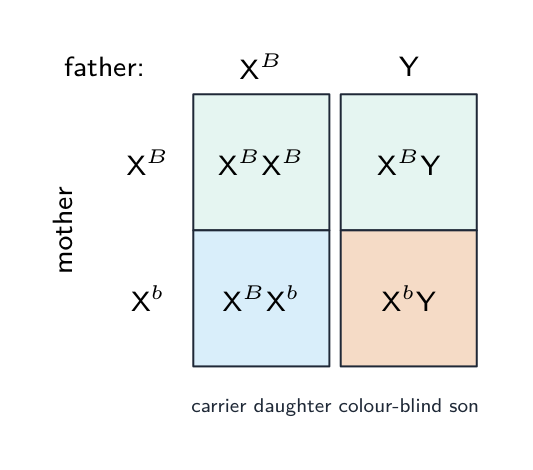
一个性连锁基因位于 X 染色体上,所以儿子和女儿以不同方式遗传它
- 连锁(linkage):同一条染色体 上的基因倾向于被 一起 遗传。
- 上位(epistasis):一个基因影响 另一个 基因如何显示。
Sex linkage means that: · 性连锁意味着:
A sex-linked gene sits on the X chromosome, so inheritance differs between the sexes. · 一个性连锁基因位于 X 染色体上,所以遗传在两性之间不同。
The chi-squared test 卡方检验
- The chi-squared test compares the numbers you actually counted with those you expected.
- It tells you whether the difference is small enough to be chance, or large enough to mean something else is going on.
卡方检验
- 卡方检验(chi-squared test) 把你 实际数到的 数目与你 预期的 数目比较。
- 它告诉你差异是否小到足以是 偶然,或大到足以意味着别的事情正在发生。
The chi-squared test is used to: · 卡方检验用来:
Chi-squared tests whether the gap between observed and expected counts is small enough to be chance. · 卡方检验观察和预期数目之间的差距是否小到足以是偶然。
You've got it
- a Punnett square shows all gamete combinations (Tt × Tt → 3 : 1)
- monohybrid (one gene) vs dihybrid (two genes); multiple alleles = >2 versions
- sex linkage (gene on X), linkage (same chromosome, inherited together), epistasis (one gene affects another)
- chi-squared compares observed vs expected — is the difference just chance?
你掌握了
- 一个 庞纳特方格 显示所有配子组合(Tt × Tt → 3 : 1)
- 单基因(一个基因)对 双基因(两个基因);复等位基因 = >2 个版本
- 性连锁(基因在 X 上)、连锁(同一条染色体,一起遗传)、上位(一个基因影响另一个)
- 卡方 比较观察对预期——差异只是偶然吗?