Meiosis and variation · 减数分裂与变异
| English | 中文 | Pinyin · 拼音 |
|---|---|---|
| diploid/ˈdɪplɔɪd/ | 二倍体 | èr bèi tǐ |
| haploid/ˈhæplɔɪd/ | 单倍体 | dān bèi tǐ |
| gamete/ˈɡæmiːt/ | 配子 | pèi zi |
| meiosis/meɪˈəʊsɪs/ | 减数分裂 | jiǎn shù fēn liè |
| homologous/həˈmɒləɡəs/ | 同源 | tóng yuán |
| allele/əˈliːl/ | 等位基因 | děng wèi jī yīn |
| crossing over/ˈkrɒsɪŋ ˈəʊvə/ | 交叉互换 | jiāo chā hù huàn |
| independent assortment/ˌɪndɪˈpendənt əˈsɔːtmənt/ | 自由组合 | zì yóu zǔ hé |
| fertilisation/ˌfɜːtɪlaɪˈzeɪʃn/ | 受精 | shòu jīng |
Shuffling the genetic deck
- A diploid 二倍体 cell (2n) has two sets of chromosomes; a haploid 单倍体 cell (n) has one.
- Gametes 配子 (sex cells) must be haploid — or the number would double each generation.
- They are made by meiosis 减数分裂, which also creates variation.
洗牌遗传的牌
- 一个 二倍体(diploid) 细胞(2n)有 两 套染色体;一个 单倍体(haploid) 细胞(n)有 一 套。
- 配子(gametes)(性细胞)必须是单倍体——否则数目会每一代翻倍。
- 它们由 减数分裂(meiosis) 产生,它也创造 变异。
Why must gametes be haploid? · 为什么配子必须是单倍体?
If gametes were diploid, fertilisation would double the chromosome number each generation; meiosis halves it. · 如果配子是二倍体,受精会每一代使染色体数目翻倍;减数分裂把它减半。
Meiosis halves the chromosome number, producing ______ gametes (one set of chromosomes each). · 减数分裂把染色体数目减半,产生 ______ 配子(各一套染色体)。
Two haploid gametes fuse at fertilisation to restore the diploid number. · 两个单倍体配子在受精时融合以恢复二倍体数目。
Homologous 同源 pairs and meiosis
- Chromosomes come in homologous pairs: same length, same genes — but the alleles 等位基因 (versions) may differ.
- Meiosis halves the chromosome number, in two divisions (eight stages: prophase I → telophase II).
Meiosis runs two divisions, halving the chromosome number from a diploid cell to four haploid gametes
A human egg cell (ovum), one of the gametes produced by meiosis.
同源对和减数分裂
- 染色体成 同源对(homologous pairs):相同的长度、相同的 基因——但 等位基因(alleles)(版本)可能不同。
- 减数分裂 把染色体数目减半,分 两次分裂(八个阶段:前期 I → 末期 II)。
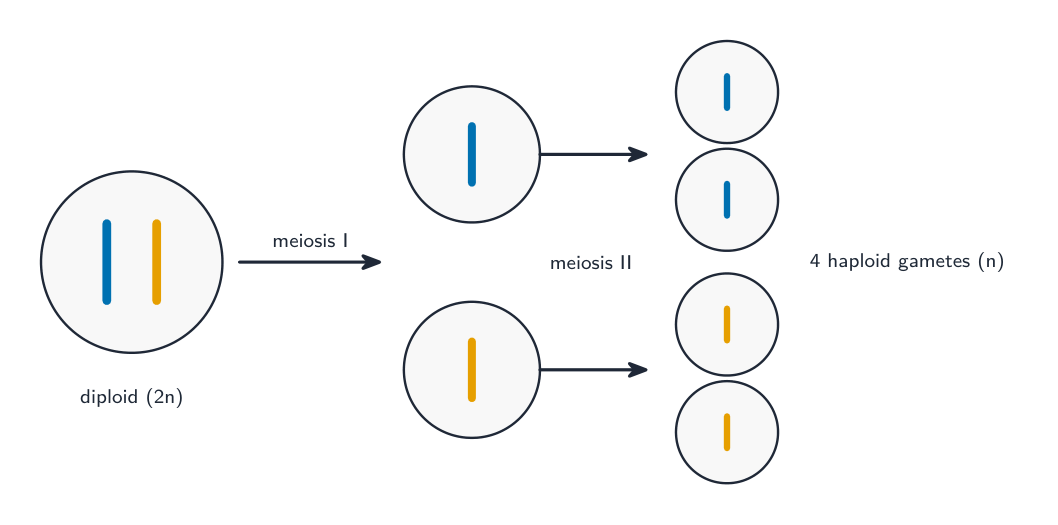
减数分裂进行两次分裂,把染色体数目从一个二倍体细胞减半到四个单倍体配子
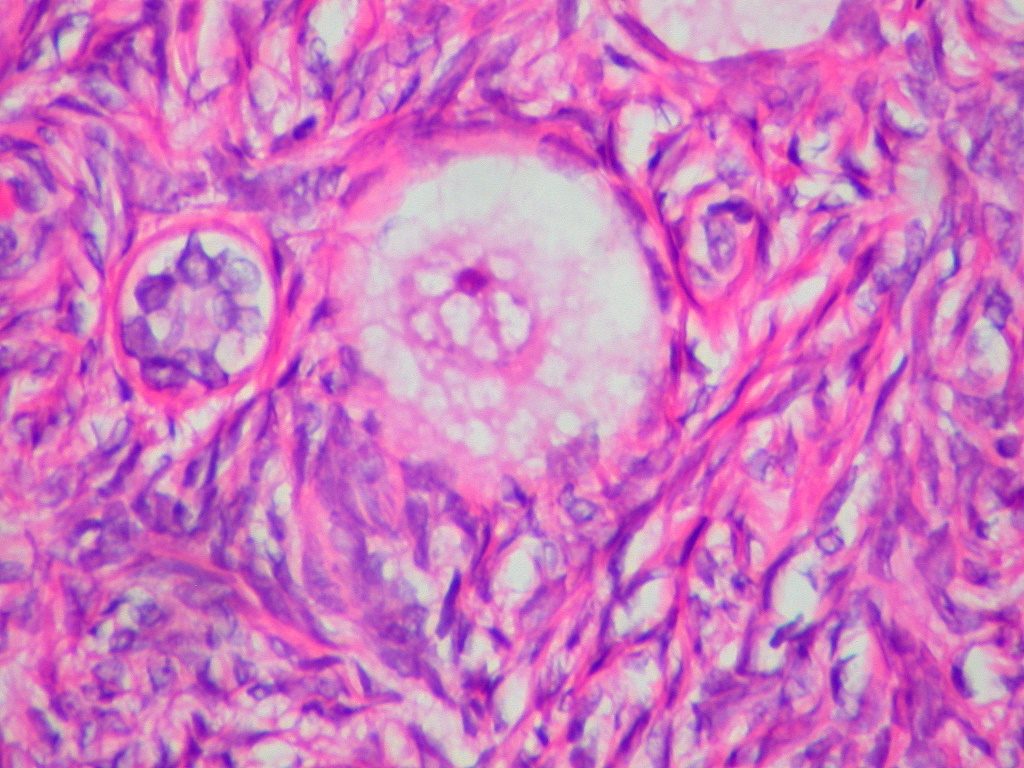
一个人类卵细胞(卵子),减数分裂产生的配子之一。
Meiosis · 减数分裂
Step through it. Two divisions halve the chromosome number and shuffle the alleles, giving four unique gametes. · 一步步走过它。两次分裂把染色体数目减半并洗牌等位基因,给出四个独特的配子。
A homologous pair of chromosomes: · 一个同源对染色体:
Homologous chromosomes match in length and gene positions, though they may carry different alleles. · 同源染色体在长度和基因位置上匹配,尽管它们可能携带不同的等位基因。
Two sources of variation
- Crossing over 交叉互换: homologous chromosomes swap matching pieces, mixing alleles.
Crossing over swaps matching segments between homologous chromosomes, making new allele combinations
- Independent assortment 自由组合: the pairs line up in a random order, so each gamete gets a random mix.
Independent assortment: each homologous pair lines up at random, so many different gamete types form
A human karyotype: 23 pairs of chromosomes, ending in XY (male)
两个变异的来源
- 交叉互换(crossing over):同源染色体 交换匹配的片段,混合等位基因。
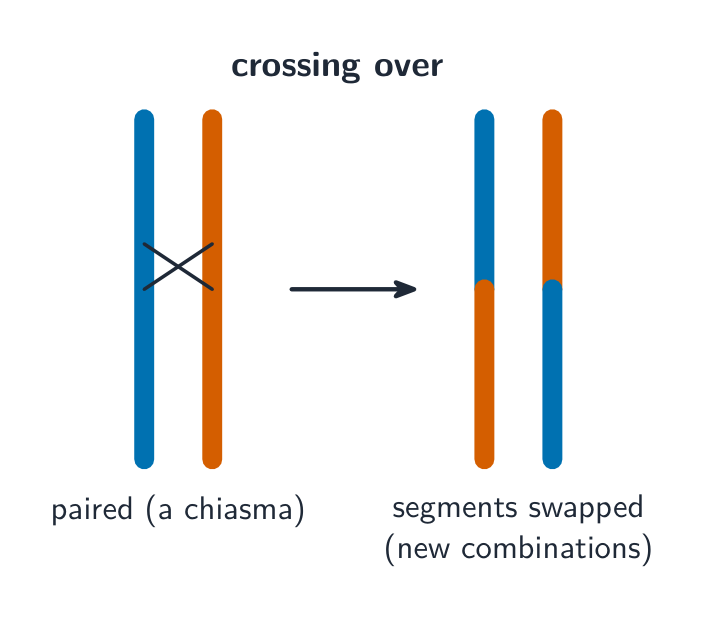
交叉互换在同源染色体之间交换匹配的片段,产生新的等位基因组合
- 独立分配(independent assortment):这些对以 随机的顺序 排列,所以每个配子得到一个随机的混合。
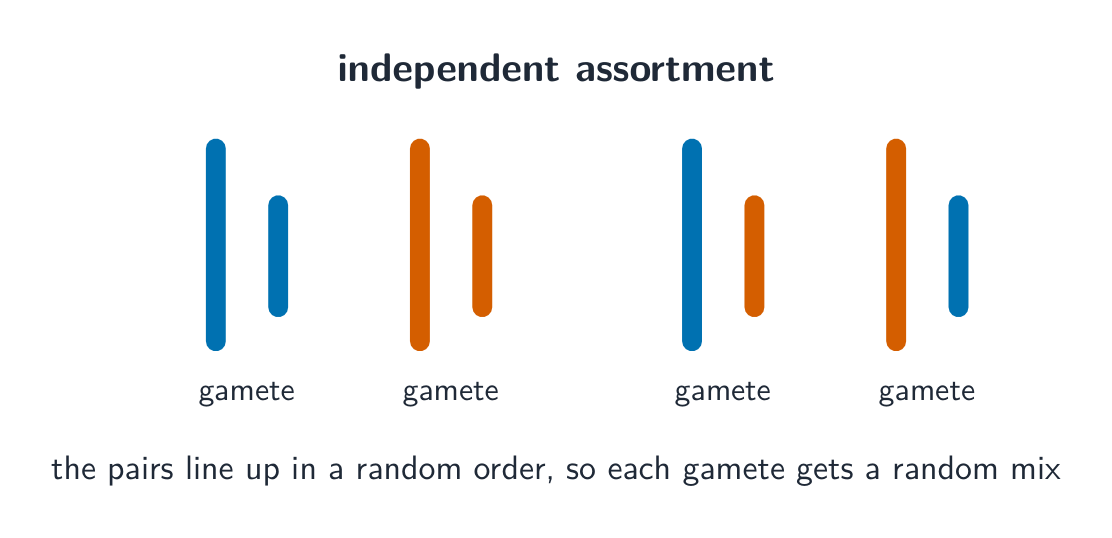
独立分配:每个同源对随机排列,所以形成许多不同的配子类型
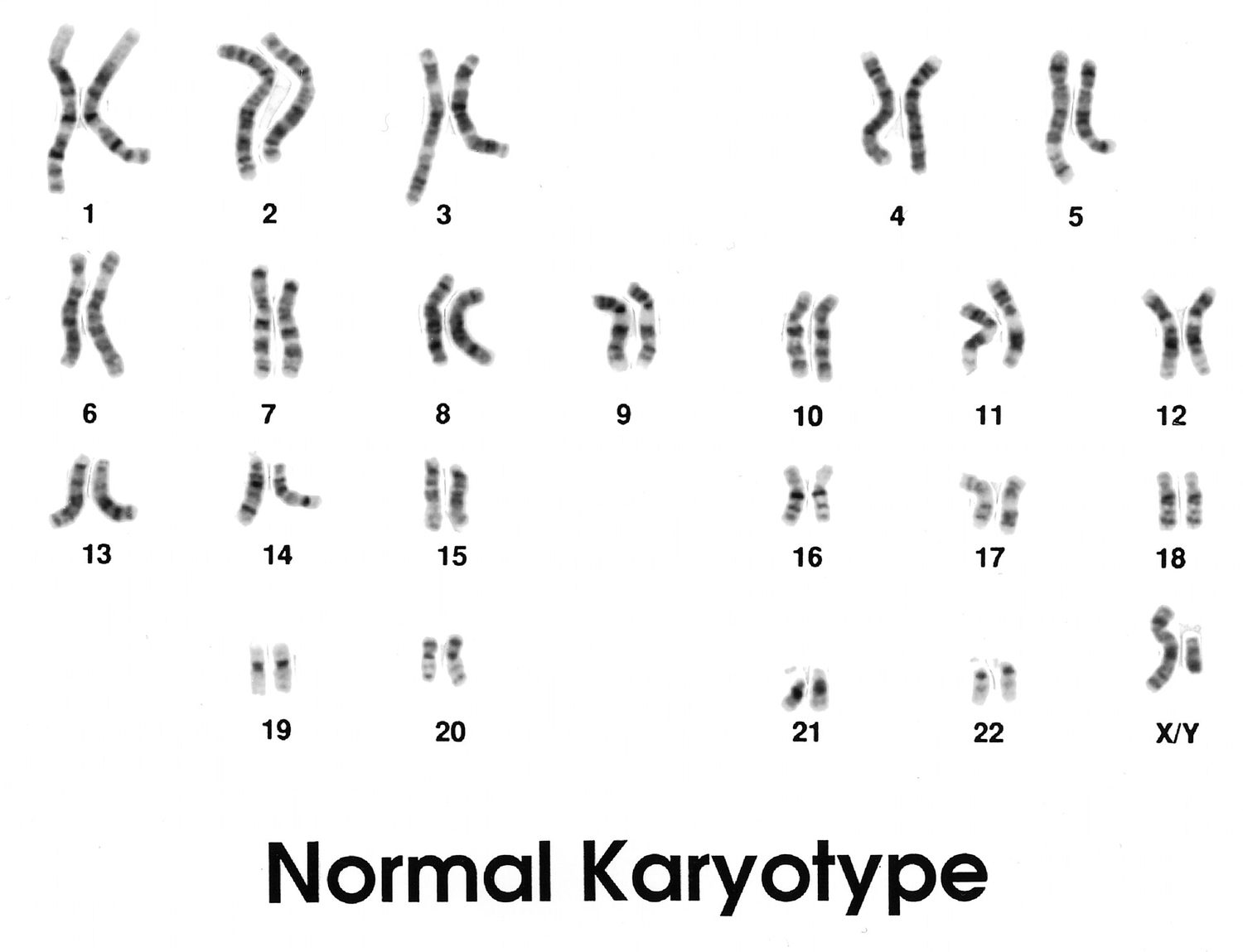
一个人类核型:23 对染色体,以 XY 结束(男性)
Crossing over creates variation by: · 交叉互换通过以下创造变异:
At a chiasma, homologous chromosomes exchange matching pieces, producing new allele combinations. · 在一个交叉处,同源染色体交换匹配的片段,产生新的等位基因组合。
Independent assortment means each homologous pair lines up in a random order, so gametes get a random mix of chromosomes. · 独立分配意味着每个同源对以随机的顺序排列,所以配子得到一个随机的染色体混合。
The random orientation of each pair at metaphase I gives an enormous number of possible gamete combinations. · 每个对在中期 I 的随机取向给出大量可能的配子组合。
Match each source of variation to what it does. · 把每个变异来源与它做的事配对。
Meiosis (crossing over + independent assortment) and random fertilisation shuffle existing alleles; mutation creates new ones. · 减数分裂(交叉互换 + 独立分配)和随机受精洗牌现有的等位基因;突变创造新的。
Random fertilisation 受精
- At fertilisation, any gamete can fuse with any other.
- This random fusion makes every new individual genetically different.
随机受精
- 在 受精(fertilisation) 时,任何 配子能与任何另一个融合。
- 这种随机融合使每个新个体 基因不同。
Random fertilisation adds to variation because: · 随机受精增加变异,因为:
Which two gametes meet is random, so each new combination of alleles is unique. · 哪两个配子相遇是随机的,所以每个新的等位基因组合都是独特的。
You've got it
- diploid (2n) = two sets; haploid (n) = one; gametes must be haploid
- homologous pairs: same genes, possibly different alleles; meiosis halves the number
- variation from crossing over + independent assortment
- plus random fertilisation → every individual is unique
你掌握了
- 二倍体(2n) = 两套;单倍体(n) = 一套;配子必须是 单倍体
- 同源对:相同的基因,可能不同的 等位基因;减数分裂 把数目减半
- 变异来自 交叉互换 + 独立分配
- 加上 随机受精 → 每个个体都是独特的