Homeostasis and the liver · 稳态与肝脏
| English | 中文 | Pinyin · 拼音 |
|---|---|---|
| homeostasis/ˌhəʊmiːəˈstɑːsiz/ | 稳态 | wěn tài |
| stimulus/ˈstɪmjʊləs/ | 刺激 | cì jī |
| endocrine system/ˈendəʊkraɪn ˈsɪstəm/ | 内分泌系统 | nèi fēn mì xì tǒng |
| hormone/ˈhɔːməʊn/ | 激素 | jī sù |
| effector/ɪˈfektə/ | 效应器 | xiào yìng qì |
| negative feedback/ˈneɡətɪv ˈfiːdbæk/ | 负反馈 | fù fǎn kuì |
| urea/juːˈrɪə/ | 尿素 | niào sù |
| deamination/ˌdiːmɪˈneɪʃn/ | 脱氨基作用 | tuō ān jī zuò yòng |
Keeping the inside steady
- Homeostasis 稳态 means keeping the conditions inside the body steady, even when outside changes.
- Steady temperature, water and glucose let enzymes and cells work properly.
- Almost all homeostasis follows the same plan — and corrects itself.
保持内部稳定
- 稳态(homeostasis) 意味着保持身体内部的条件 稳定,即使外部改变。
- 稳定的温度、水和葡萄糖让酶和细胞正常工作。
- 几乎所有稳态都遵循同样的方案——并自我纠正。
Homeostasis is: · 稳态是:
Homeostasis keeps internal conditions (temperature, water, glucose) steady so cells work well. · 稳态保持内部条件(温度、水、葡萄糖)稳定,使细胞良好工作。
Removing the amino group from excess amino acids in the liver is called ______. · 在肝脏中从多余的氨基酸移除氨基叫做 ______。
It produces ammonia, which the liver converts to urea for the kidneys to excrete. · 它产生氨,肝脏把它转化成尿素供肾脏排出。
The principle
- A change (a stimulus 刺激) is detected by a receptor.
- A coordination system carries the message — the nervous system (nerve signals) or the endocrine system 内分泌系统 (hormones 激素).
- An effector 效应器 (a muscle or gland) makes a response that corrects the change.
- This is negative feedback 负反馈: a change away from normal triggers a response that pushes it back to normal.
Negative feedback: a receptor detects a change and an effector corrects it, back toward the set point
A blood glucose meter: homeostasis keeps blood glucose within narrow limits.
原理
- 一个变化(一个 刺激(stimulus))被一个 感受器(receptor) 检测到。
- 一个协调系统传递信息——神经系统(神经信号)或 内分泌系统(激素)。
- 一个 效应器(effector)(一块肌肉或一个 腺体)做出纠正变化的反应。
- 这是 负反馈(negative feedback):一个偏离正常的变化触发一个把它推 回 正常的反应。
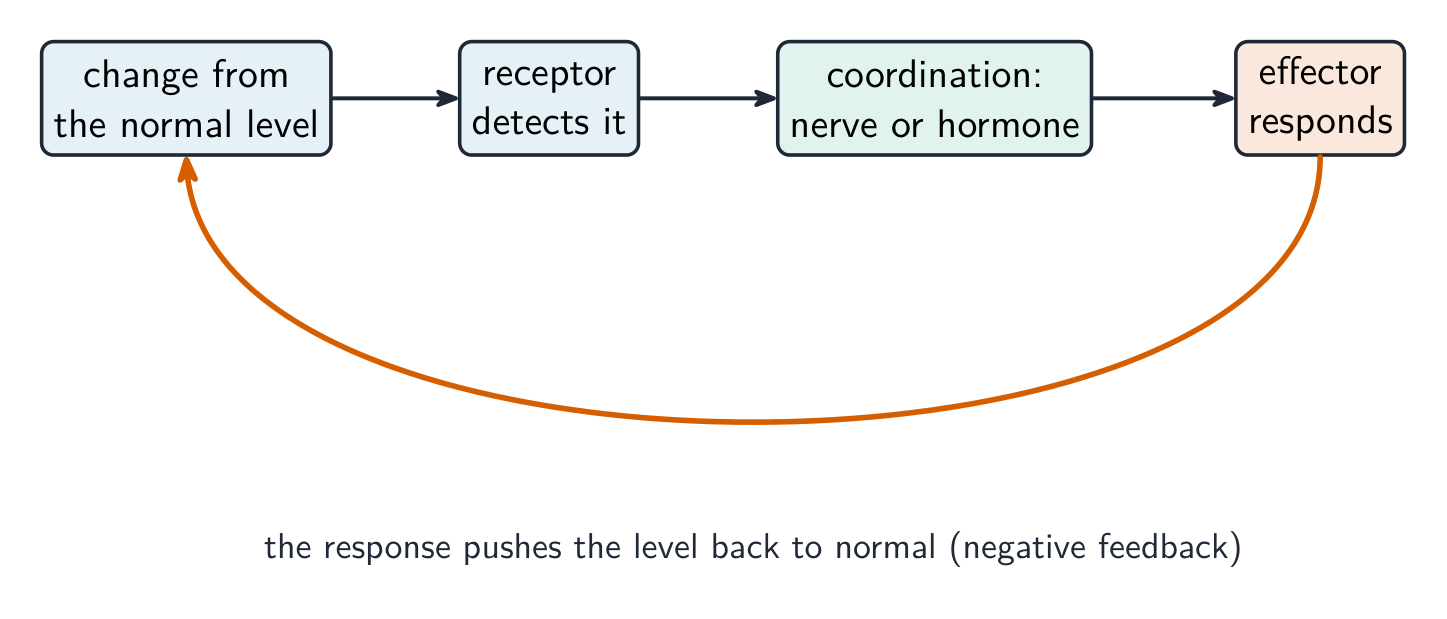
负反馈:一个感受器检测到变化,一个效应器纠正它,回到设定点
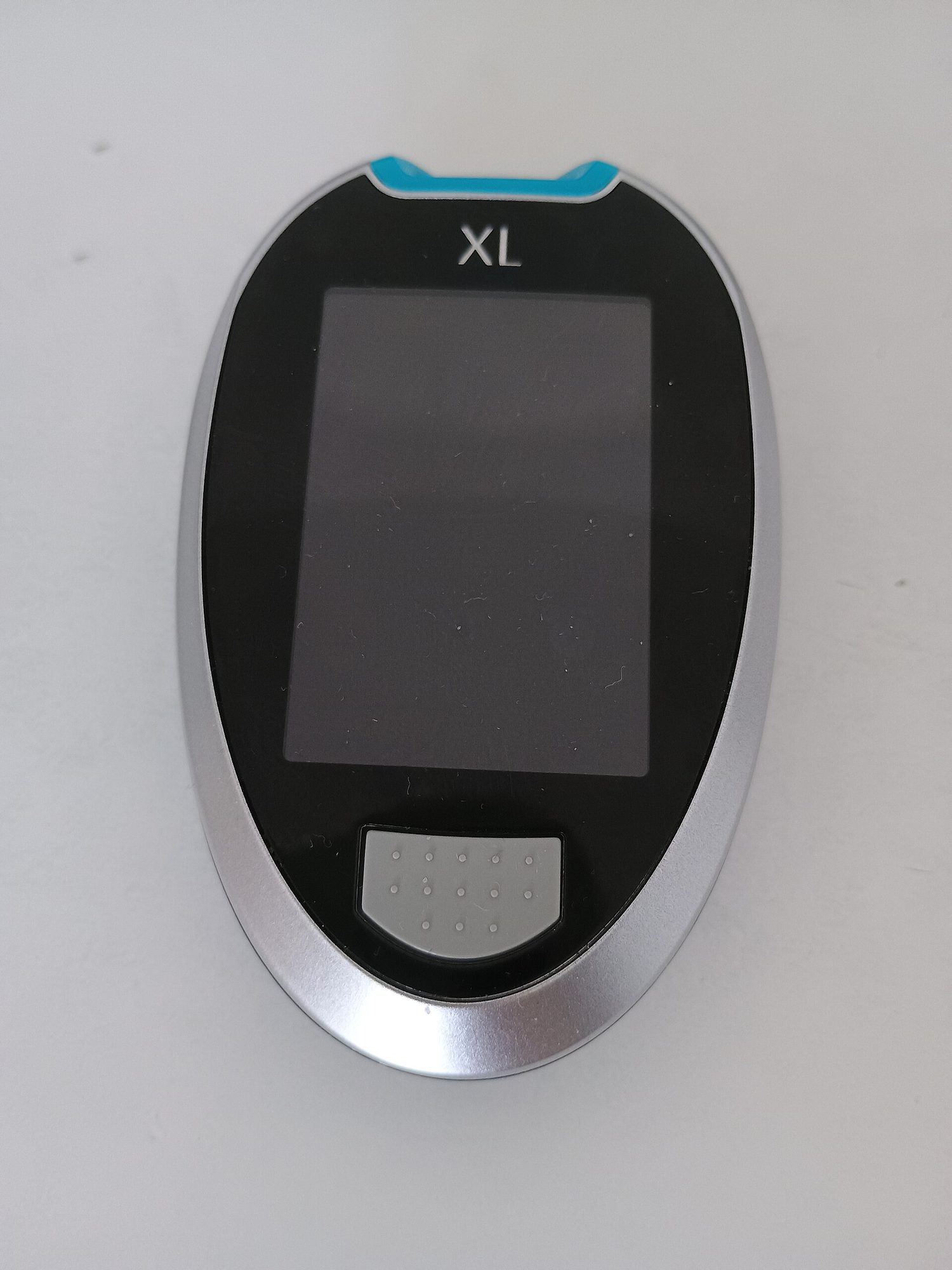
一个血糖仪:稳态把血糖保持在狭窄的范围内。
Homeostasis · 稳态
negative feedback to a set point · 向一个设定点的负反馈
Drag the disturbance. A change is corrected back to the set point — the basis of all homeostasis. · 拖动扰动。一个变化被 纠正回 设定点——所有稳态的基础。
Put the homeostatic control steps in order. · 把稳态控制的步骤按顺序排列。
A stimulus is detected by a receptor, the message is coordinated, and an effector responds to correct it. · 一个刺激被一个感受器检测到,信息被协调,一个效应器反应来纠正它。
Negative feedback works by: · 负反馈通过以下方式运作:
Negative feedback opposes the change, returning the condition toward its normal level. · 负反馈对抗变化,把条件带回它的正常水平。
Match each part of a control system to its job. · 把一个控制系统的每个部分与它的工作配对。
Receptor → coordination → effector, with negative feedback always pushing the condition back to normal. · 感受器 → 协调 → 效应器,负反馈总是把条件推回正常。
In negative feedback, a change away from the set point triggers a response that reverses it. · 在负反馈中,一个偏离设定点的变化触发一个逆转它的反应。
This self-correcting loop is what keeps temperature, glucose and water steady. · 这个自我纠正的回路是保持温度、葡萄糖和水稳定的东西。
The liver and urea 尿素
- The body cannot store extra amino acids.
- In the liver, deamination 脱氨基作用 removes the amino group from excess amino acids.
- This is turned into urea, carried in the blood to the kidneys to be removed.
肝脏和尿素
- 身体 不能储存 多余的氨基酸。
- 在 肝脏(liver) 中,脱氨基(deamination) 从多余的氨基酸移除氨基。
- 这被变成 尿素(urea),在血液中被运到肾脏被移除。
Excess amino acids are dealt with in the liver by: · 多余的氨基酸在肝脏中通过以下处理:
Deamination removes the amino group from surplus amino acids; the product is converted to urea for excretion. · 脱氨基从多余的氨基酸移除氨基;产物被转化成尿素以排出。
The liver's many jobs
- The liver also detoxifies substances such as alcohol and drugs.
- It carries out deamination — removing the amino group from excess amino acids to form urea.
肝脏的许多工作
- 肝脏也 解毒 像酒精和药物这样的物质。
- 它进行 脱氨基——从多余的氨基酸移除氨基以形成尿素。
You've got it
- homeostasis = keeping internal conditions steady so enzymes/cells work
- the loop: stimulus → receptor → coordination (nerve/hormone) → effector → response
- negative feedback pushes any change back towards normal
- the liver removes excess amino acids by deamination → urea → kidneys
你掌握了
- 稳态 = 保持内部条件稳定,使酶/细胞工作
- 这个回路:刺激 → 感受器 → 协调(神经/激素)→ 效应器 → 反应
- 负反馈 把任何变化推回正常
- 肝脏 通过 脱氨基 移除多余的氨基酸 → 尿素 → 肾脏