Transpiration and xerophytes · 蒸腾与旱生植物
| English | 中文 | Pinyin · 拼音 |
|---|---|---|
| transpiration/trænspəˈreɪʃn/ | 蒸腾作用 | zhēng téng zuò yòng |
| water vapour/ˈwɔːtə ˈveɪpə/ | 水蒸气 | shuǐ zhēng qì |
| stomata/ˈstəʊmətə/ | 气孔 | qì kǒng |
| cohesion/kəʊˈhiːʒn/ | 内聚力 | nèi jù lì |
| tension/ˈtenʃn/ | 张力 | zhāng lì |
| adhesion/ədˈhiːʒn/ | 附着力 | fù zhuó lì |
| xerophyte/ˈzɪərəfaɪt/ | 旱生植物 | hàn shēng zhí wù |
| cuticle/ˈkjuːtɪkl/ | 角质层 | jiǎo zhì céng |
Pulling water up a tree
- A tall tree lifts water tens of metres — with no pump.
- The "engine" is water leaving the leaves: transpiration 蒸腾作用.
- Sticky water molecules let the whole column be pulled up.
把水拉上一棵树
- 一棵高树把水提升几十米——没有泵。
- “引擎”是水 离开 叶:蒸腾(transpiration)。
- 黏黏的水分子让整个水柱被拉上去。
Transpiration
- Transpiration is the loss of water vapour 水蒸气 from a plant.
- Water evaporates from the wet cell surfaces inside the leaf.
- The water vapour then diffuses out through the stomata 气孔 into the air.
Transpiration pulls water up the xylem by cohesion 内聚力 and tension 张力
蒸腾
- 蒸腾 是一株植物水蒸气的损失。
- 水从叶内部湿的细胞表面 蒸发。
- 水蒸气 然后通过 气孔(stomata) 扩散 出去进入空气。
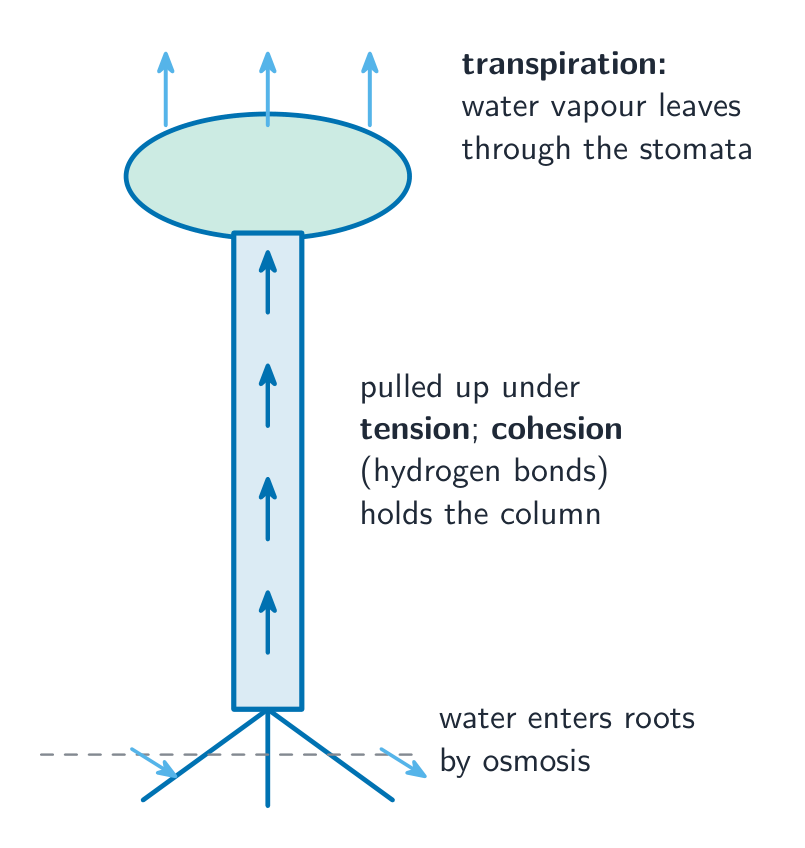
蒸腾通过内聚力和张力把水拉上木质部
Transpiration is: · 蒸腾是:
Transpiration is water evaporating inside the leaf and the vapour diffusing out through the stomata. · 蒸腾是水在叶内蒸发,蒸气通过气孔扩散出去。
Water vapour leaves the leaf mainly by diffusing out through pores called ______. · 水蒸气主要通过叫 ______ 的孔扩散出去离开叶。
After evaporating from leaf cell surfaces, the vapour diffuses out through the stomata. · 从叶细胞表面蒸发后,蒸气通过气孔扩散出去。
Cohesion and tension
- Water molecules attract each other by hydrogen bonds, so they stick together — this is cohesion.
- Loss at the top puts the column under tension (a pull), and cohesion lets the whole column be drawn up — the cohesion–tension idea.
- Water also sticks to the cellulose walls — adhesion 附着力 — which helps hold the column in place.
内聚力和张力
- 水分子通过 氢键 互相吸引,所以它们 粘在一起——这是 内聚力(cohesion)。
- 顶部的损失把水柱置于 张力(tension) 之下(一个拉力),内聚力让整个水柱被拉上来——内聚力–张力(cohesion–tension) 的想法。
- 水也粘在纤维素壁上——附着力(adhesion)——这有助于把水柱固定在位。
The transpiration stream · 蒸腾流
Step through how water is pulled up a tree — evaporation at the top creates a tension that drags the whole cohesive column upward. · 一步步走过水如何被拉上一棵树——顶部的蒸发产生一个张力,把整个内聚的水柱向上拖。
Cohesion in the cohesion–tension theory means: · 内聚力–张力理论中的内聚力意味着:
Cohesion is water-to-water attraction (hydrogen bonds); it lets the whole column be pulled up under tension. · 内聚力是水与水之间的吸引(氢键);它让整个水柱在张力下被拉上去。
Match each term in the cohesion–tension theory. · 配对内聚力–张力理论中的每个术语。
Evaporation creates tension; cohesion holds the column together so it is pulled up; adhesion helps it cling to the walls. · 蒸发产生张力;内聚力把水柱保持在一起所以它被拉上去;附着力帮助它紧贴壁。
Xerophytes 旱生植物
- A xerophyte is a plant adapted to live where water is scarce. It cuts transpiration with:
- a thick waxy cuticle 角质层,
- stomata sunk in pits,
- hairs that trap moist air,
- leaves that can roll up.
Xerophyte leaf adaptations that reduce water loss
旱生植物
- 旱生植物(xerophyte) 是一株适应在水稀缺处生活的植物。它用以下减少蒸腾:
- 一层厚的蜡质 角质层(cuticle),
- 下陷在凹坑中的气孔,
- 困住潮湿空气的 绒毛,
- 能 卷起来 的叶。
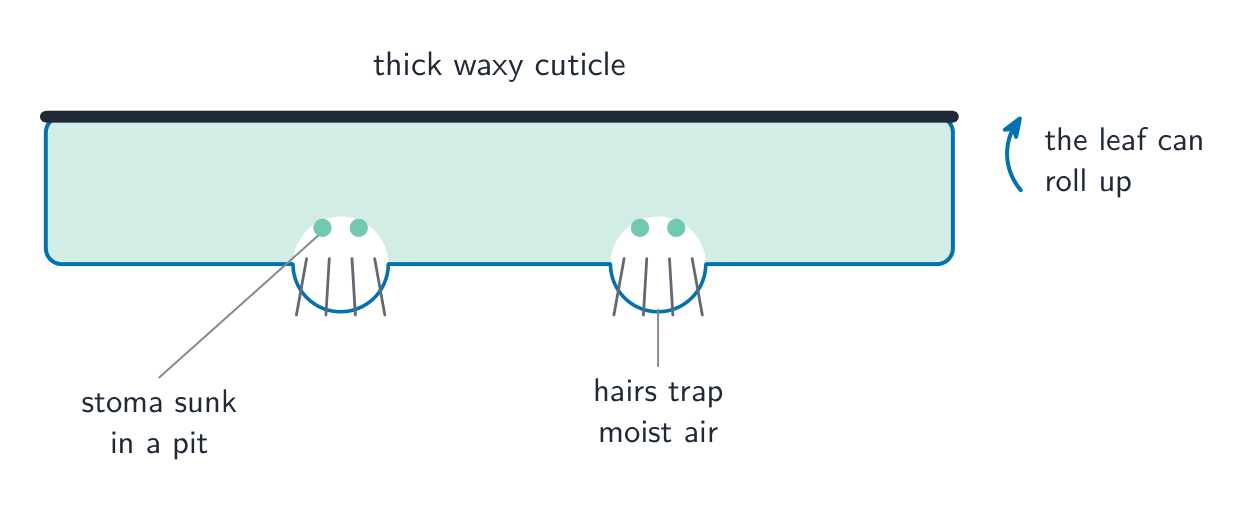
减少水分损失的旱生植物叶适应
Which feature helps a xerophyte reduce water loss? · 哪个特征帮助旱生植物减少水分损失?
Sunken stomata, a thick cuticle, trapped moist air and rolled leaves all cut transpiration. · 下陷的气孔、厚的角质层、困住的潮湿空气和卷起的叶都减少蒸腾。
Xerophytes are plants adapted to reduce water loss, with features like a thick cuticle and sunken stomata. · 旱生植物是适应减少水分损失的植物,有像厚角质层和下陷气孔这样的特征。
Small or rolled leaves, a thick waxy cuticle, hairs and sunken stomata all trap moist air and cut transpiration. · 小的或卷起的叶、厚的蜡质角质层、绒毛和下陷的气孔都困住潮湿空气并减少蒸腾。
You've got it
- transpiration = loss of water vapour: evaporates inside the leaf, diffuses out the stomata
- cohesion (hydrogen bonds) holds the water column together; it's pulled up under tension
- adhesion = water sticking to the cell walls
- xerophytes cut water loss: thick cuticle, sunken stomata, hairs, rolled leaves
你掌握了
- 蒸腾 = 水蒸气的损失:在叶内 蒸发,通过 气孔 扩散 出去
- 内聚力(氢键)把水柱保持在一起;它在 张力 下被拉上去
- 附着力 = 水粘在细胞壁上
- 旱生植物 减少水分损失:厚 角质层、下陷气孔、绒毛、卷起的 叶