Eukaryotic cells and their organelles · 真核细胞和它们的细胞器
| English | 中文 | Pinyin · 拼音 |
|---|---|---|
| organelle/ˌɔːɡəˈnel/ | 细胞器 | xì bāo qì |
| cytoplasm/ˈsaɪtəplæzəm/ | 细胞质 | xì bāo zhì |
| eukaryotic/ˌjuːkərɪˈɒtɪk/ | 真核 | zhēn hé |
| ribosome/ˈriːbəʊsəʊm/ | 核糖体 | hé táng tǐ |
| Golgi body/ˈɡɒlɡɪ ˈbɒdi/ | 高尔基体 | gāo ěr jī tǐ |
| vesicle/ˈvesɪkl/ | 囊泡 | náng pào |
| mitochondria/ˌmaɪtəˈkɒndrɪə/ | 线粒体 | xiàn lì tǐ |
| chloroplast/ˈklɔːrəʊplæst/ | 叶绿体 | yè lǜ tǐ |
| vacuole/ˈvækjuːəʊl/ | 液泡 | yè pào |
A cell is a tiny factory
- Zoom into any plant or animal cell and you find a busy factory — a control room, power stations and packaging lines.
- These working parts are organelles 细胞器, each with a job, floating in the jelly-like cytoplasm 细胞质.
- The cell is eukaryotic 真核: its DNA is kept inside a nucleus. Learn each organelle's structure and its function.
一个细胞是一座微型工厂
- 放大任何植物或动物细胞,你会发现一座繁忙的 工厂——一个控制室、发电站和包装线。
- 这些工作的部分是 细胞器(organelles),每个都有一项工作,漂浮在果冻状的 细胞质(cytoplasm) 中。
- 这个细胞是 真核的(eukaryotic):它的 DNA 被保存在一个 细胞核(nucleus) 内。要学每个细胞器的结构 和 它的功能。
The main organelles
| Organelle | Function |
|---|---|
| nucleus | holds the DNA; controls the cell (nucleolus makes ribosomes 核糖体) |
| rough ER | makes and transports proteins (ribosomes on its surface) |
| smooth ER | makes lipids |
| Golgi body 高尔基体 | modifies and packs proteins/lipids into vesicles 囊泡 for secretion |
| mitochondria 线粒体 | site of respiration — releases energy as ATP |
| ribosomes | join amino acids to make proteins |
| lysosomes | sacs of enzymes that break down waste |
A generalised animal cell and its organelles
- Explore below: tap each organelle on the diagram to see what it does.
主要的细胞器
| 细胞器 | 功能 |
|---|---|
| 细胞核 | 保存 DNA;控制细胞(核仁制造核糖体) |
| 粗面内质网 | 制造并运输 蛋白质(表面有核糖体) |
| 滑面内质网 | 制造 脂质 |
| 高尔基体 | 修饰蛋白质/脂质并把它们包装进 囊泡 以分泌 |
| 线粒体 | 呼吸作用 的场所——以 ATP 释放能量 |
| 核糖体 | 连接氨基酸制造 蛋白质 |
| 溶酶体 | 装有酶的小囊,分解废物 |
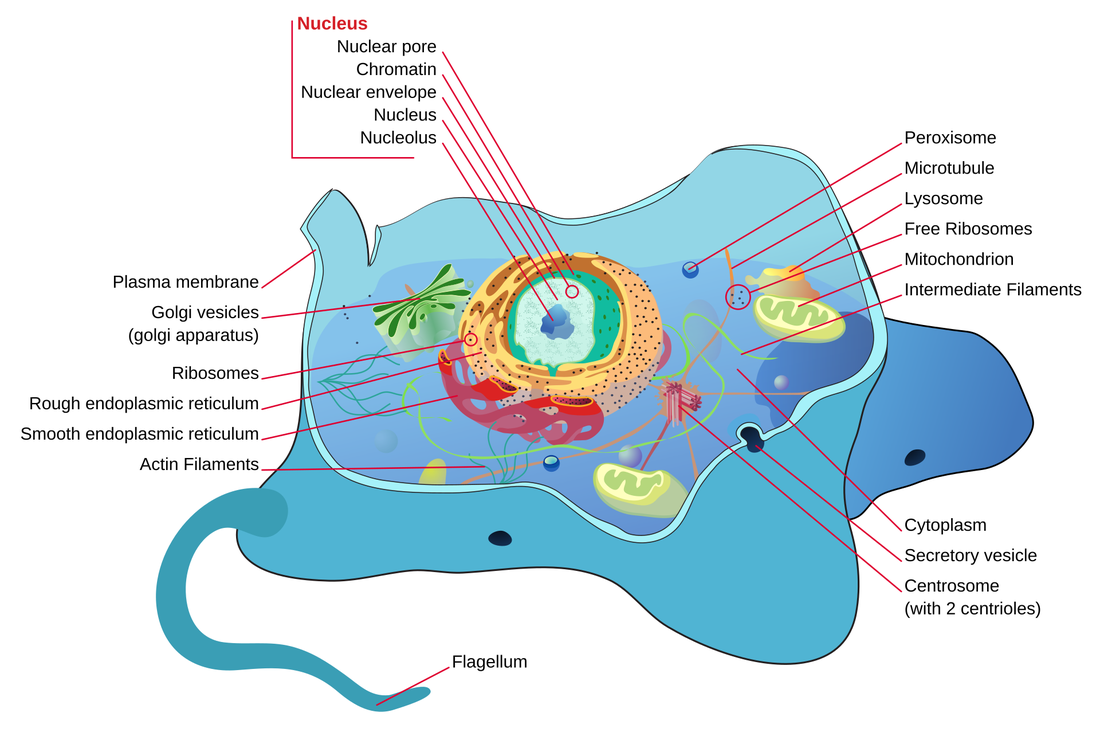
一个一般化的动物细胞和它的细胞器
- 在下面探索:点击图上的每个细胞器,看它做什么。
Explore the organelles · 探索细胞器
Tap each organelle on the diagram — explore all eight to see what each one does. · 点击图上的每个细胞器——探索全部八个,看每一个做什么。
What is the main function of mitochondria? · 线粒体的主要功能是什么?
Mitochondria are the site of aerobic respiration, producing ATP. · 线粒体是有氧呼吸的场所,产生 ATP。
The tiny organelle that joins amino acids to build proteins is the ______. · 把氨基酸连接起来构建蛋白质的微小细胞器是 ______。
Ribosomes carry out protein synthesis; the nucleolus makes them. · 核糖体进行蛋白质合成;核仁制造它们。
Rough ER is studded with ribosomes and makes proteins, while smooth ER has none and makes lipids. · 粗面内质网布满核糖体并制造蛋白质,而滑面内质网没有核糖体并制造脂质。
Correct — the "rough" look is the ribosomes on the rough ER, which make proteins; smooth ER makes lipids. · 正确——“粗糙”的外观就是粗面内质网上的核糖体,它们制造蛋白质;滑面内质网制造脂质。
The Golgi body: · 高尔基体:
The Golgi processes and packages molecules into vesicles to be secreted. · 高尔基体加工分子并把它们包装进囊泡以被分泌。
Plant-cell extras
- Chloroplasts 叶绿体 — site of photosynthesis (green, stacked membranes).
- Cell wall — strong cellulose layer; supports the cell and stops it bursting.
- A large permanent vacuole 液泡 (with a tonoplast membrane) — stores water and keeps the cell firm.
- Plasmodesmata — channels linking neighbouring cells' cytoplasm.
A plant cell adds a cellulose cell wall, chloroplasts and a large central vacuole
植物细胞的额外部分
- 叶绿体(chloroplasts)——光合作用(photosynthesis) 的场所(绿色,堆叠的膜)。
- 细胞壁(cell wall)——结实的 纤维素(cellulose) 层;支持细胞并阻止它胀破。
- 一个大的永久 液泡(vacuole)(带一层 液泡膜(tonoplast))——储存水并保持细胞坚挺。
- 胞间连丝(plasmodesmata)——连接相邻细胞细胞质的通道。
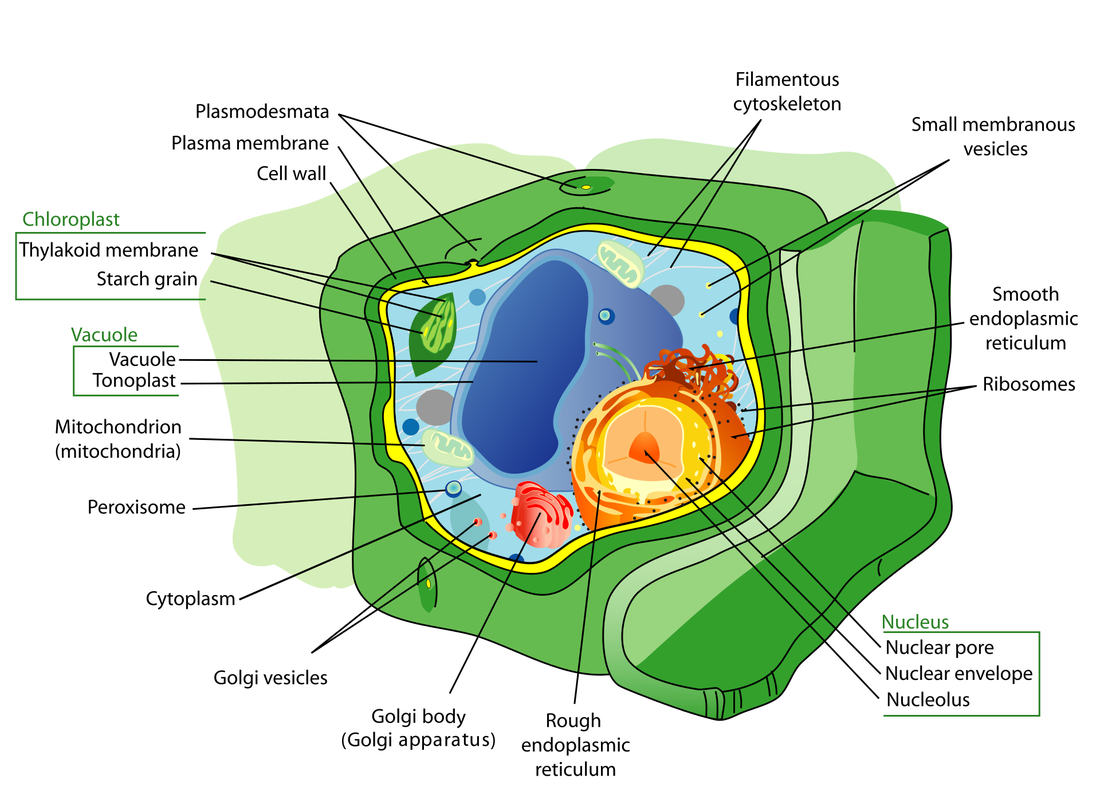
植物细胞增加了一个纤维素细胞壁、叶绿体和一个大的中央液泡
The plant-only organelle where photosynthesis happens is the ______. · 光合作用发生的、仅植物有的细胞器是 ______。
Chloroplasts trap light energy for photosynthesis; they are found in plant cells, not animal cells. · 叶绿体为光合作用捕获光能;它们存在于植物细胞中,而不是动物细胞中。
Plant vs animal cells
- Plant only: cell wall, chloroplasts, large permanent vacuole.
- Animal usually has: centrioles (absent in most plant cells).
- Both have: cell surface membrane, cytoplasm, nucleus, mitochondria, ribosomes, ER, Golgi.
Magnification = image size ÷ actual size
植物细胞与动物细胞
- 仅植物有:细胞壁、叶绿体、大的永久液泡。
- 动物通常有:中心粒(大多数植物细胞没有)。
- 两者都有:细胞表面膜、细胞质、细胞核、线粒体、核糖体、内质网、高尔基体。
Match each organelle to its function. · 把每个细胞器与它的功能配对。
Mitochondrion = respiration; chloroplast = photosynthesis; lysosome = digestion of waste; Golgi = packaging. · 线粒体 = 呼吸作用;叶绿体 = 光合作用;溶酶体 = 消化废物;高尔基体 = 包装。
Select all · 所有 the parts found in BOTH plant and animal cells. · 选出植物和动物细胞中 都 有的所有部分。
Nucleus, mitochondria, ribosomes and Golgi are in both. Chloroplasts and a cellulose cell wall are plant-only. · 细胞核、线粒体、核糖体和高尔基体两者都有。叶绿体和纤维素细胞壁是仅植物有的。
Which is found in plant cells but NOT animal cells? · 哪个存在于植物细胞中但不在动物细胞中?
Cell wall, chloroplasts and a large permanent vacuole are plant-only; the others are in both. · 细胞壁、叶绿体和一个大的永久液泡是仅植物有的;其他的两者都有。
You've got it
- mitochondria = respiration (ATP); ribosomes = protein synthesis
- rough ER makes proteins, smooth ER makes lipids; Golgi packs them into vesicles
- plant-only: cell wall (cellulose), chloroplasts, large vacuole
- both plant and animal cells have membrane, cytoplasm, nucleus, mitochondria, ribosomes, ER, Golgi
你掌握了
- 线粒体 = 呼吸作用(ATP);核糖体 = 蛋白质合成
- 粗面内质网 制造蛋白质,滑面内质网 制造脂质;高尔基体 把它们包装进囊泡
- 仅植物有:细胞壁(纤维素)、叶绿体、大 液泡
- 植物和动物细胞都有膜、细胞质、细胞核、线粒体、核糖体、内质网、高尔基体