Skip to content
科目

国际文凭组织 · IB Diploma · 初学语言 · SL

  • 1

    身份;社会组织 · 西班牙语介绍与一致

    学习计划即将上线

    Handout

    Scope and prerequisites

    IB Language ab initio first assessment 2020; Spanish focus. This supplemental reference covers only the listed preparation outcomes. School selections, full-guide procedures and required live or recorded performance are separate.

    • Introduce yourself using ser 是 and llamarse
    • Use gender/number agreement 一致关系 and basic questions accurately

    Prerequisites: Supplied vocabulary; singular and plural; questions and responses.

    Explain and choose the method

    Me llamo gives your name; soy describes identity or role. ¿Cómo te llamas? asks a familiar person's name.

    Spanish adjectives often agree in gender and number: un libro nuevo, dos casas nuevas.

    Me llamo gives a name; soy describes identity or role. “Me llamo Inés. Soy estudiante.” Answer a name question with me llamo, not a word-for-word English construction. Agreement : la casa nueva; las casas nuevas. Estudiante does not acquire an invented -a in “soy estudiante”. Use these models with supplied words before transferring to a different person or object.
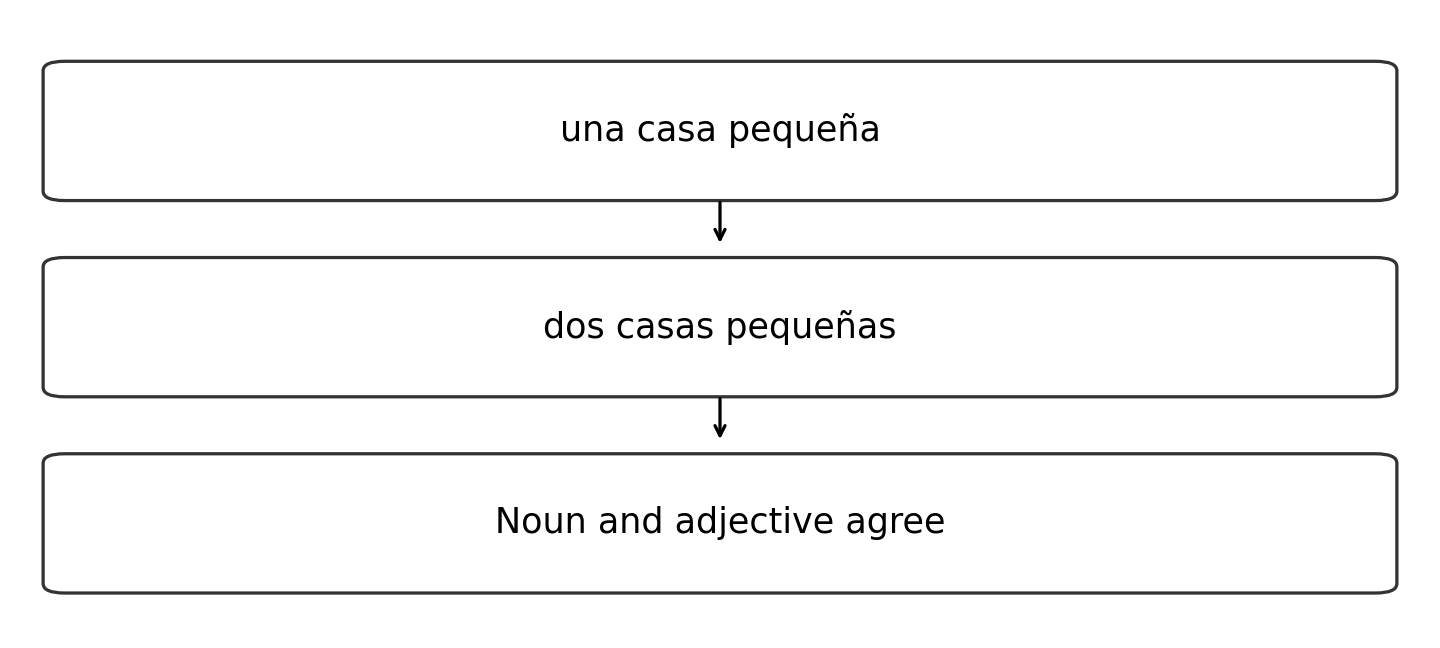
    Original diagram of the worked relationship; read the full wording and qualifications.
    Original diagram of the worked relationship; read the full wording and qualifications.

    Existing worked example: Soy estudiante works without adding a gender ending to estudiante in this phrase. La casa es nueva uses a feminine singular adjective. Change to las casas son nuevas when both noun and description become plural.

    Complete original context

    Original Spanish exchange: — Hola. ¿Cómo te llamas? — Me llamo Inés. Soy estudiante. ¿Y tú? — Me llamo Pablo. Soy estudiante también. Vivo en una casa pequeña. — Yo vivo en una casa pequeña también. Tengo dos libros nuevos. Vocabulary: también = also; vivo = I live; pequeña = small; tengo = I have; libro = book; nuevo = new.

    Independent practice and checked reasoning

    Transfer 1

    Introduce yourself with a name and role, then ask your partner's name. Use an invented classroom identity if preferred.

    Reasoning: “Hola. Me llamo Elena. Soy estudiante. ¿Cómo te llamas?” The response gives name and role and asks a relevant question. Other names are acceptable; assess the structures, not an exact memorised name.

    Transfer 2

    Change “una casa pequeña” to two small houses and “dos libros nuevos” to one new book. Explain the agreement.

    Reasoning: “Dos casas pequeñas” uses feminine plural noun and adjective. “Un libro nuevo” uses masculine singular forms. The adjective agrees with its noun in this supplied regular pattern; not every adjective or noun follows one ending rule.

    Transfer 3

    Answer “¿Dónde vives?” using the model, and ask one relevant follow-up. Explain what must happen before this becomes evidence 证据 of oral interaction.

    Reasoning: “Vivo en una casa pequeña. ¿Y tú?” is a simple relevant answer and return question. A live partner must actually respond and the learner must react; typed preparation cannot certify spontaneous interaction or pronunciation.

    Limits and next use

    Not every noun ending predicts gender, and not every adjective changes for gender. Learn articles and useful phrases with words; do not translate each English word mechanically.

    All tasks here are public original practice with authored guidance. They are not official questions or fresh diagnostics. Existing protected tests and mocks remain separate.
    词汇
    English 中文 拼音
    agreement/əˈɡriːmənt/ 一致关系 yí zhì guān xì
    evidence/ˈevɪdəns/ 证据 zhèng jù
    ser 是 shì
  • 2

    经历;日常生活 · 西班牙语日常惯例、时间与目的性信息

    学习计划即将上线

    Handout

    Scope and prerequisites

    IB Language ab initio first assessment 2020; Spanish focus. This supplemental reference covers only the listed preparation outcomes. School selections, full-guide procedures and required live or recorded performance are separate.

    • Describe a routine and ask for practical information
    • Write a short message with an appropriate greeting, details and closing

    Prerequisites: Present tense; clock times; greeting and closing.

    Explain and choose the method

    Present-tense verbs describe routines: estudio, vivo, tengo. A las 在……点 ocho gives a clock time.

    A simple message should state why you write, the arrangement and any action needed from the reader.

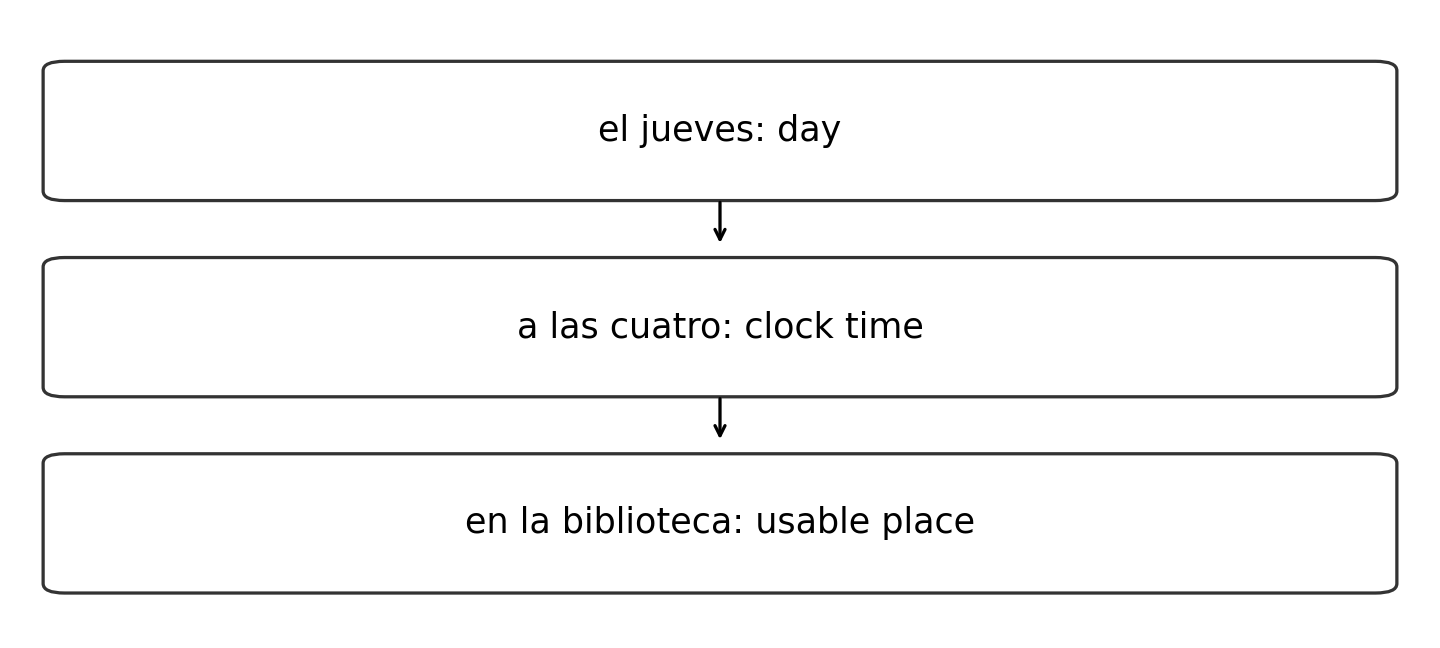
    A purposeful message 实用信息 gives the reader usable arrangements. Include why, day, time, place, needed items and a question or request. “A las cuatro” gives a clock time; “el jueves” gives a day. Two complete original 70–150-word models are in the writing companion. The short phrase alone is not an exam-length response.

    Original diagram of the worked relationship; read the full wording and qualifications.
    Original diagram of the worked relationship; read the full wording and qualifications.

    Existing worked example: Hola, Ana. Nos vemos el jueves a las cuatro en la biblioteca 图书馆. ¿Puedes traer el libro? gives day, time, place and a request. For the current exam, expand the relevant task content within the 70–150-word range instead of repeating the greeting.

    Complete original context

    Original task A: Write a message to Ana inviting her to a study meeting. Describe your usual routine, give day/time/place, say what to bring, and ask her to confirm. Write 70–150 Spanish words.

    Original task B: Write a short blog entry for classmates about a small neighbourhood market visit. Describe what you see, when you go, one preference with a reason, and one practical plan to reduce waste. Write 70–150 Spanish words. These are original practice tasks, not official prompts.

    Independent practice and checked reasoning

    Transfer 1

    Plan task A, then write the whole message. Check greeting, routine, arrangement, request and closing.

    Reasoning: The companion gives a complete original model with all five content cues and a checked word count 字数. Alternatives can use different plausible arrangements if they remain consistent and answer every cue in 70–150 words.

    Hola, Ana:

    ¿Cómo estás? Normalmente tengo clase por la mañana y estudio en casa por la tarde. El jueves quiero estudiar contigo porque tenemos un ejercicio de español. Nos vemos a las cuatro en la biblioteca. La biblioteca está al lado de la escuela y es un lugar tranquilo. Puedes traer tu libro y un lápiz, por favor. Yo llevo mi cuaderno y una lista de preguntas. Después podemos hablar de nuestra rutina y practicar las horas. ¿Puedes venir? Escribe un mensaje para confirmar. Si el jueves no puedes, podemos vernos el viernes a la misma hora.

    Hasta pronto, Elena

    Classroom model: 100 words. Greeting and closing; usual routine; study purpose; Thursday four o'clock library; book/pencil request; own materials; confirmation; consistent Friday alternative.

    Transfer 2

    Write task B. Underline the visible description, preference and reason, and practical waste plan.

    Reasoning: The companion model describes people, fruit and a table; gives Saturday morning; prefers apples because they are easy to carry; and proposes a bag from home and a list to buy only needed food. Other accurate, coherent beginner responses are acceptable.

    El sábado voy al mercado de mi barrio por la mañana. En el mercado hay una mesa con fruta y tres personas. Me gusta visitar este lugar porque puedo hablar con los vendedores y comprar comida para mi familia. Prefiero las manzanas porque son fáciles de llevar. Normalmente llevo una bolsa de casa para usar menos plástico. También preparo una lista antes de salir. Así compro solo la comida que necesitamos. La próxima semana quiero ir con mi amiga Ana. Después de comprar, podemos caminar hasta la biblioteca. Es una rutina sencilla, pero para mí es agradable y útil.

    Classroom model: 99 words. Saturday morning; market description; preference and reason; bag/list waste plan; coherent next-week arrangement. Original personal scenario; no national cultural claim.

    Transfer 3

    Repair “Nos vemos jueves cuatro biblioteca” into a usable arrangement and add a polite request for a book.

    Reasoning: “Nos vemos el jueves a las cuatro en la biblioteca. ¿Puedes traer el libro, por favor?” It supplies day, clock-time phrase, location 位置 preposition and a clear request. Do not assume a reader can reconstruct every missing relationship.

    Limits and next use

    The short model is a teaching sentence, not a complete exam-length response. No listening recording is provided here; teacher-supplied Spanish audio and live interaction remain necessary.

    All tasks here are public original practice with authored guidance. They are not official questions or fresh diagnostics. Existing protected tests and mocks remain separate.

    词汇
    English 中文 拼音
    purposeful message 实用信息 shí yòng xìn xī
    word count 字数 zì shù
    biblioteca 图书馆 tú shū guǎn
    location/ləʊˈkeɪʃn/ 位置 wèi zhì
    a las 在……点 zài …… diǎn
  • 3

    共享地球;口语 · 西班牙语视觉描述与文化比较

    学习计划即将上线

    Handout

    Scope and prerequisites

    IB Language ab initio first assessment 2020; Spanish focus. This supplemental reference covers only the listed preparation outcomes. School selections, full-guide procedures and required live or recorded performance are separate.

    • Describe visible details with hay 有 and location 位置 language
    • Link a visual to a studied Spanish-speaking context and respond to follow-up

    Prerequisites: Hay; visible detail 细节; location phrases; me gusta/prefiero with reasons.

    Explain and choose the method

    Hay means there is or there are. Location phrases such as al lado de and delante de place objects.

    Build from description to a supported interpretation, then a specific cultural comparison studied in class.

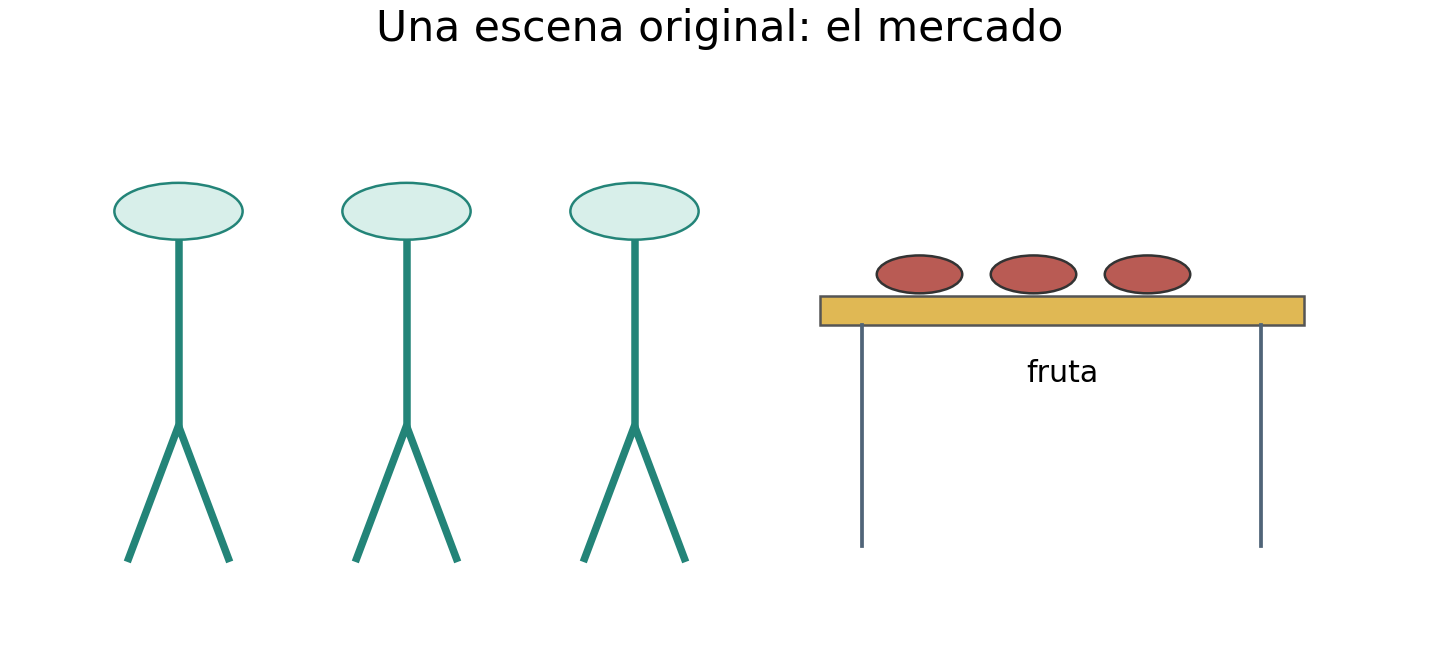
    Use the actual original market illustration. Say “En la imagen hay tres personas y una mesa”. Location phrases include al lado de (beside) and delante de (in front of). “Prefiero las manzanas porque son fáciles de llevar” gives a preference with a reason. The image alone supplies no nationality, relationships or historical origin. A cultural link must come from a specific studied Spanish-speaking context.

    Original diagram of the worked relationship; read the full wording and qualifications.
    Original diagram of the worked relationship; read the full wording and qualifications.

    Existing worked example: En la foto hay tres personas en un mercado 市场. Están al lado de una mesa can describe an original classroom visual. A follow-up about food can use me gusta or prefiero with a reason, while avoiding claims about every Spanish-speaking country.

    Complete original context

    Original teacher-read rehearsal 排练 教师朗读演练 script: “El sábado voy al mercado por la mañana. En el mercado hay tres personas al lado de una mesa. En la mesa hay fruta. Llevo una bolsa de casa porque quiero usar menos plástico. Prefiero las manzanas porque son fáciles de llevar. Después voy a la biblioteca.” Vocabulary: sábado = Saturday; mañana = morning; fruta = fruit; bolsa = bag; menos = less; después = afterwards. Use the supplied market illustration for description. Close this script for teacher-read listening; no recording is supplied or certified.

    Independent practice and checked reasoning

    Transfer 1

    Describe two visible details in Spanish and give one location phrase. Separate description from an unsupported cultural assumption.

    Reasoning: “En la imagen hay tres personas. Hay fruta en la mesa. Las personas están al lado de la mesa.” The picture does not prove the people are Spanish, related or celebrating a particular festival. Describe its actual content rather than guessing an identity.

    Transfer 2

    Answer “¿Qué prefieres y por qué?” and “¿Qué llevas al mercado?” using a coherent short response. Then ask a follow-up.

    Reasoning: “Prefiero las manzanas porque son fáciles de llevar. Llevo una bolsa de casa. ¿Qué prefieres tú?” Accept other accurate preferences with reasons and a relevant follow-up. A live partner response remains necessary for interaction evidence 证据.

    Transfer 3

    After a teacher reads the script with the text closed, state the day, time of day, next place and reason for the bag. Then explain what is still needed for a specific cultural connection 文化联系.

    Reasoning: Saturday; morning; the library afterwards; to use less plastic. A reliable studied source about a named Spanish-speaking place or practice is still needed for cultural comparison. Neither this original picture nor the teacher-read script establishes a national custom. Recording and delivery verification remain pending.

    Limits and next use

    A cultural connection needs a specific place or practice and reliable learning material. Spanish differs from English B; this beginner course does not meet another language's vocabulary, grammar or listening requirements.

    All tasks here are public original practice with authored guidance. They are not official questions or fresh diagnostics. Existing protected tests and mocks remain separate.

    词汇
    English 中文 拼音
    teacher-read rehearsal 教师朗读演练 jiào shī lǎng dú yǎn liàn
    cultural connection 文化联系 wén huà lián xì
    rehearsal/rɪˈhɜːsl/ 排练 pái liàn
    evidence/ˈevɪdəns/ 证据 zhèng jù
    location/ləʊˈkeɪʃn/ 位置 wèi zhì
    mercado 市场 shì chǎng
    detail/ˈdiːteɪl/ 细节 xì jié
    hay 有 yǒu

登录或创建账户

IGCSE、A-Level 与 AP