Skip to content
科目

国际文凭组织 · IB Diploma · 语言 A:文学 · SL

  • 1

    读者、作者与文本 · 文学形式与细读

    学习计划即将上线

    Handout

    Scope and prerequisites

    IB Language A literature first assessment 2021; English focus. This supplemental reference covers only the listed preparation outcomes. School selections, full-guide procedures and required live or recorded performance are separate.

    • Analyse imagery 意象, voice, structure and ambiguity 歧义
    • Explain effects through precise evidence 证据 rather than plot summary

    Prerequisites: Speaker versus author; figurative language; evidence and qualification.

    Explain and choose the method

    Literary analysis connects wording and form to meaning. Personification 拟人 assigns human qualities to something non-human.

    Establish who speaks and what the passage makes available before treating a speaker as the author's own voice.

    Close reading 细读 connects a word or pattern to a supported interpretation. In Text B, “beside” contrasts with “where” and makes addition different from replacement. The poem's old circle and new clean wood turn a relationship into visible space. Do not stop at naming imagery ; explain what the image lets the reader notice.
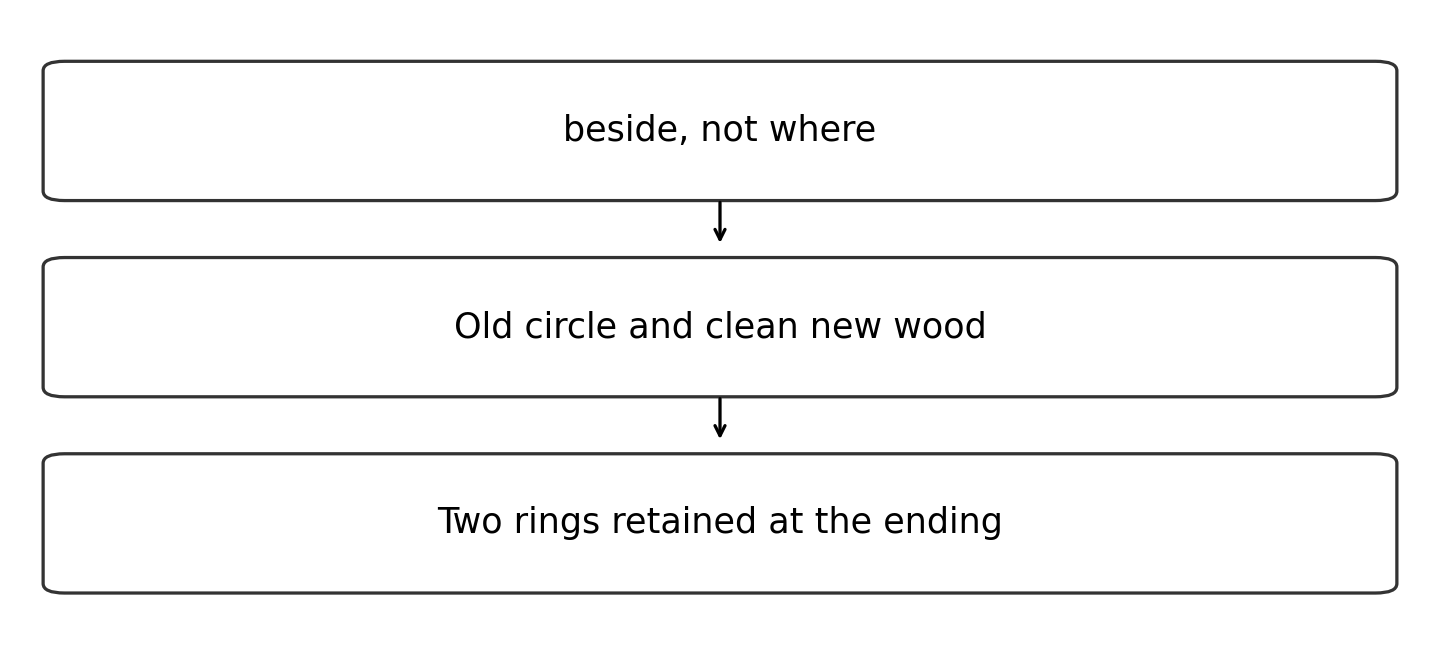
    Original diagram of the worked relationship; read the full wording and qualifications.
    Original diagram of the worked relationship; read the full wording and qualifications.

    Existing worked example: In the original classroom line, held its breath suspends ordinary movement and makes anticipation feel shared. Compare that interpretation with nearby details before claiming the phrase signals fear rather than excitement.

    Complete original context

    Original classroom texts, written for this supplement. They are not school-selected assessed works.

    Text A — The label Every morning I polished the brass plate beside the door. It carried my father's name, and visitors asked for him even after I took charge of the shop. I answered their questions, found the parts, and wrapped each purchase. Still, at the door, they thanked the name on the plate. One afternoon I put a small card below it: “Ask for Leila.” The next visitor read the card aloud, hesitated, and then asked me where the hinges were. I left the brass plate shining. The card stayed too.

    Text B — A space on the shelf (original poem) I cleared a place beside the cup, not where the cup had been. The shelf kept its old circle; the new wood still looked clean. By evening, two rings darkened it. I did not rub them out.

    Context supplied for this exercise: both texts are contemporary original classroom writing in English. No author biography, translation 翻译 history or evidence about a real society is supplied. Compare what the wording permits; do not invent historical facts. A real course comparison must use the school's eligible studied works.

    Independent practice and checked reasoning

    Transfer 1

    Analyse the poem's voice, imagery and structure in a coherent paragraph, allowing ambiguity.

    Reasoning: The first-person speaker makes a quiet decision about space. “Beside” corrects the possible replacement implied by “where”, so the opening frames coexistence. The contrast between “old circle” and “new wood” gives the past and a new place physical traces. The final refusal to rub out either ring accepts the changed shelf. This may suggest shared belonging or preserving memory; the poem does not name the relationship, so a specific family story would exceed the evidence.

    Transfer 2

    Compare “I did not rub them out” with a hypothetical ending “I rubbed the old ring out”. Explain how the altered choice changes meaning.

    Reasoning: The supplied ending preserves both traces and supports coexistence. The hypothetical ending removes the old trace and could suggest replacement or deliberate separation. It is an analytical comparison with an invented alternative, not a quotation from the actual poem.

    Transfer 3

    Give two defensible readings of Text A's preserved brass plate. Explain how the card constrains a reading of total submission.

    Reasoning: Keeping the polished plate can imply respect and continuity, or the continuing authority of an inherited name. The new card visibly asserts Leila's recognition, so a reading in which she does nothing to alter her position ignores that action. Interpretations may coexist if supported and qualified.

    Limits and next use

    The classroom line is original practice, not a quotation from a prescribed work. Avoid an effect word such as vivid without explaining what is made vivid and why it matters.

    All tasks here are public original practice with authored guidance. They are not official questions or fresh diagnostics. Existing protected tests and mocks remain separate.
    词汇
    English 中文 拼音
    personification/pɜːˈsɒnɪfɪkeɪʃn/ 拟人 nǐ rén
    close reading/kləʊs ˈriːdɪŋ/ 细读 xì dú
    translation/trænˈsleɪʃn/ 翻译 fān yì
    ambiguity/ˌæmbɪˈɡjuːɪti/ 歧义 qí yì
    evidence/ˈevɪdəns/ 证据 zhèng jù
    imagery/ˈɪmɪdʒri/ 意象 yì xiàng
  • 2

    时间与空间;互文性 · 比较文学论点

    学习计划即将上线

    Handout

    Scope and prerequisites

    IB Language A literature first assessment 2021; English focus. This supplemental reference covers only the listed preparation outcomes. School selections, full-guide procedures and required live or recorded performance are separate.

    • Compare choices in two literary works
    • Use context and contrasting readings to develop a reasoned interpretation

    Prerequisites: Close reading 细读; comparative claim; context versus biography.

    Explain and choose the method

    A lyric can compress a moment while a novel develops events across a longer narrative.

    Paper 2 requires a comparative argument 论证 比较论证 about two studied works, supported by precise knowledge and authorial choices.

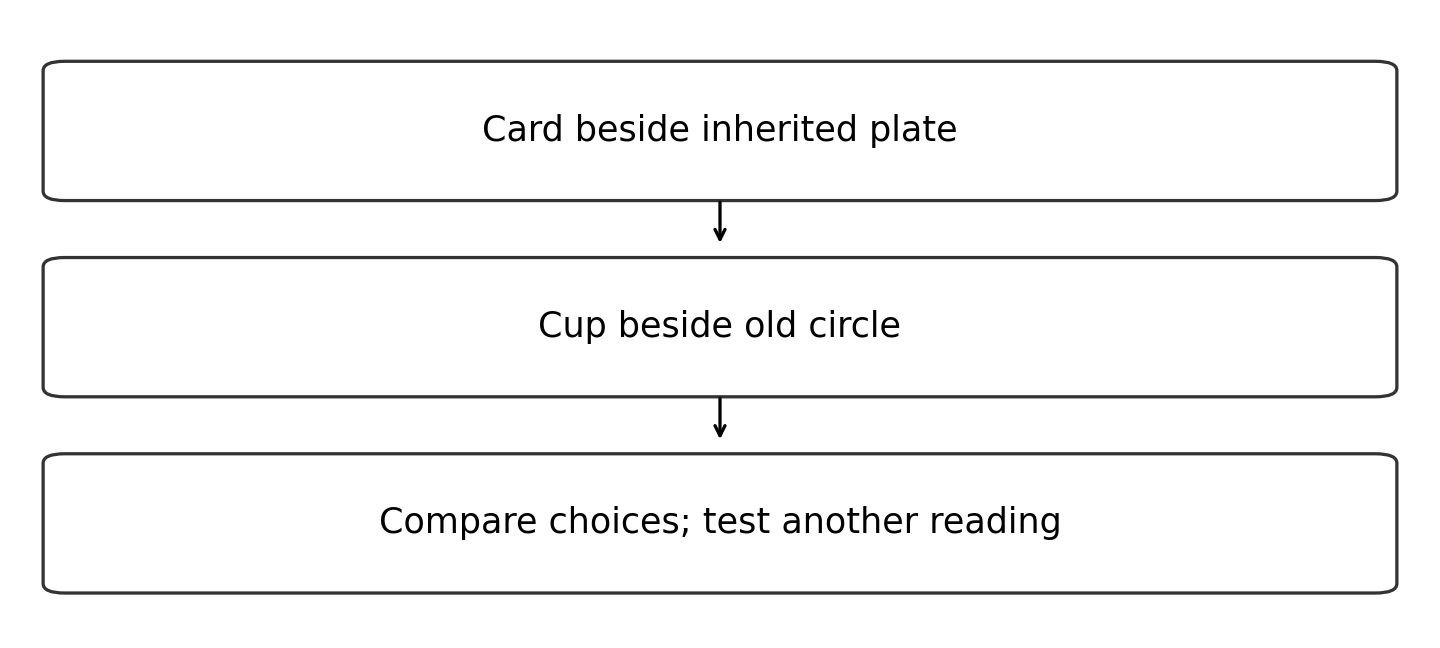
    A comparative argument explains a relationship through both texts. Use a shared question, then analyse a distinct choice in each text. “Both concern belonging” is a start, not a developed comparison. The original classroom context supplies no biography; analyse wording before suggesting a broader interpretation.

    Original diagram of the worked relationship; read the full wording and qualifications.
    Original diagram of the worked relationship; read the full wording and qualifications.

    Existing worked example: Build a paragraph about how time is arranged in each work: repetition may return a poem to one moment while retrospective narration 回顾性叙述 revises an earlier event. Explain how this difference shapes the reader's understanding of memory.

    Complete original context

    Original classroom texts, written for this supplement. They are not school-selected assessed works.

    Text A — The label Every morning I polished the brass plate beside the door. It carried my father's name, and visitors asked for him even after I took charge of the shop. I answered their questions, found the parts, and wrapped each purchase. Still, at the door, they thanked the name on the plate. One afternoon I put a small card below it: “Ask for Leila.” The next visitor read the card aloud, hesitated, and then asked me where the hinges were. I left the brass plate shining. The card stayed too.

    Text B — A space on the shelf (original poem) I cleared a place beside the cup, not where the cup had been. The shelf kept its old circle; the new wood still looked clean. By evening, two rings darkened it. I did not rub them out.

    Context supplied for this exercise: both texts are contemporary original classroom writing in English. No author biography, translation 翻译 history or evidence 证据 about a real society is supplied. Compare what the wording permits; do not invent historical facts. A real course comparison must use the school's eligible studied works.

    Independent practice and checked reasoning

    Transfer 1

    Compare how both texts represent making a place for a new identity. Write a complete comparative paragraph with quotations.

    Reasoning: Both texts make identity visible through a small addition rather than complete replacement. In A, “Ask for Leila” gives the worker a public name beside the inherited brass plate, turning unnamed labour into recognition. In B, “beside” rather than “where” preserves the old cup's place while creating another. A's hesitation before a visitor speaks Leila's name stages a social adjustment; B's two darkened rings make coexistence visible without a visitor. The difference is between recognition through language and belonging through shared space, not a simple opposition between keeping and destroying the past.

    Transfer 2

    Identify one contrasting reading that complicates a wholly optimistic interpretation of A, without inventing biography.

    Reasoning: Leila must add a request to be recognised, and the visitor hesitates, so recognition is not automatic. Keeping the shining plate may suggest respect, but could also show the inherited name retains authority. Both readings need the supplied details and should remain interpretations, not claims about the author's family.

    Transfer 3

    Explain how you would transfer this method to two actual studied works and what must be verified before making historical-context claims.

    Reasoning: Choose a question-led comparison, select precise scenes and authorial choices from both works, and test a counter-reading. Verify editions, eligible works, reliable contextual evidence and the relevance 相关性 of that context to textual details. A general biography cannot replace analysis.

    Limits and next use

    Do not imply every poem or novel works this way; verify the selected works. Context should illuminate details rather than replace textual evidence with a history lesson.

    All tasks here are public original practice with authored guidance. They are not official questions or fresh diagnostics. Existing protected tests and mocks remain separate.

    词汇
    English 中文 拼音
    retrospective narration/ˌretrəʊˈspektɪv nəˈreɪʃn/ 回顾性叙述 huí gù xìng xù shù
    comparative argument 比较论证 bǐ jiào lùn zhèng
    close reading/kləʊs ˈriːdɪŋ/ 细读 xì dú
    translation/trænˈsleɪʃn/ 翻译 fān yì
    relevance/ˈrelɪvəns/ 相关性 xiāng guān xìng
    evidence/ˈevɪdəns/ 证据 zhèng jù
    argument/ˈɑːɡjuːmənt/ 论证 lùn zhèng
  • 3

    个人口头展示 · 全球议题与翻译作品

    学习计划即将上线

    Handout

    Scope and prerequisites

    IB Language A literature first assessment 2021; English focus. This supplemental reference covers only the listed preparation outcomes. School selections, full-guide procedures and required live or recorded performance are separate.

    • Select a focused issue across original-language and translated works
    • Analyse extracts and whole works in a supervised oral

    Prerequisites: Close reading 细读; original language versus translation 翻译; whole-work evidence 证据.

    Explain and choose the method

    The oral connects one work originally written in the language studied and one studied in translation through a global issue 全球性问题.

    Balance detailed extract analysis with the issue's treatment across both whole works.

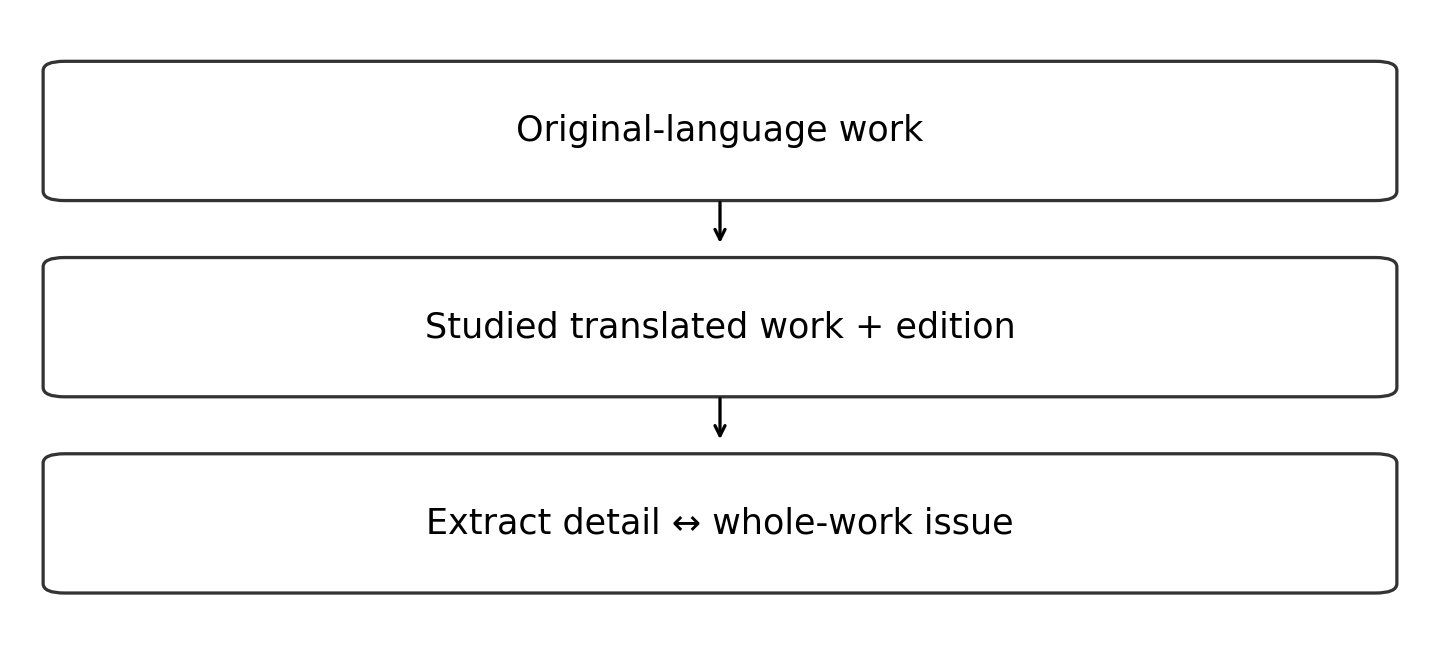
    The Literature oral connects one eligible work originally written in the studied language and one studied in translation . Record the translator and edition, and discuss the language actually available to you. A focused issue can connect extracts, but the analysis must also reach both whole works. These two original English classroom texts are not an eligible original/translation pairing; use them only to practise selection and qualification.

    Original diagram of the worked relationship; read the full wording and qualifications.
    Original diagram of the worked relationship; read the full wording and qualifications.

    Existing worked example: For a focused issue about exclusion through naming, compare the chosen extracts' labels, narrative positions and consequences. Record the translator and edition, and avoid unsupported claims about wording in an original language you cannot read.

    Complete original context

    Original classroom texts, written for this supplement. They are not school-selected assessed works.

    Text A — The label Every morning I polished the brass plate beside the door. It carried my father's name, and visitors asked for him even after I took charge of the shop. I answered their questions, found the parts, and wrapped each purchase. Still, at the door, they thanked the name on the plate. One afternoon I put a small card below it: “Ask for Leila.” The next visitor read the card aloud, hesitated, and then asked me where the hinges were. I left the brass plate shining. The card stayed too.

    Text B — A space on the shelf (original poem) I cleared a place beside the cup, not where the cup had been. The shelf kept its old circle; the new wood still looked clean. By evening, two rings darkened it. I did not rub them out.

    Context supplied for this exercise: both texts are contemporary original classroom writing in English. No author biography, translation history or evidence about a real society is supplied. Compare what the wording permits; do not invent historical facts. A real course comparison must use the school's eligible studied works.

    Independent practice and checked reasoning

    Transfer 1

    Form a focused issue about recognition using Text A, identify two useful extract details, and name what evidence is absent for an assessed Literature oral pairing.

    Reasoning: An issue such as “Inherited names and recognition of new workers” can use visitors thanking the plate and the “Ask for Leila” card. The exercise supplies no studied translated work, translator or edition, and no approved whole-work pairing. It cannot certify the assessed oral requirement.

    Transfer 2

    A student claims a translated adjective proves exactly what the source-language author intended. Write a more careful analytical sentence and explain the missing evidence.

    Reasoning: “In this translation, the adjective presents the speaker as hesitant; this wording supports a cautious reading of the scene.” Assessing the original word or the translator's intervention requires the original text, linguistic competence and reliable comparison. A translation can be analysed without pretending access to unavailable wording.

    Transfer 3

    Plan how to balance an extract detail 细节 with a wider-work claim, then give a follow-up that tests the claim. Explain the live evidence still required.

    Reasoning: Identify a recurring choice in the approved extract, connect it to a different scene in the same work, and test whether an ending or contrasting voice complicates the issue. A follow-up is “Where does the work resist your interpretation?” The school must verify the two eligible works, procedures and notes; teacher-supervised discussion and recording are separate from written planning.

    Limits and next use

    This literature oral does not pair a literary work with an advert. School verifies text choices, reuse rules, extract length, notes and authenticity against the full guide.

    All tasks here are public original practice with authored guidance. They are not official questions or fresh diagnostics. Existing protected tests and mocks remain separate.

    词汇
    English 中文 拼音
    close reading/kləʊs ˈriːdɪŋ/ 细读 xì dú
    global issue/ˈɡləʊbl ˈɪʃuː/ 全球性问题 quán qiú xìng wèn tí
    translation/trænˈsleɪʃn/ 翻译 fān yì
    evidence/ˈevɪdəns/ 证据 zhèng jù
    detail/ˈdiːteɪl/ 细节 xì jié

登录或创建账户

IGCSE、A-Level 与 AP