Scope and prerequisites
IB Language A language and literature first assessment 2021; English focus. This supplemental reference covers only the listed preparation outcomes. School selections, full-guide procedures and required live or recorded performance are separate.
- Develop a focused line of inquiry 探究线索 into a selected work or body of work
- Revise a 1200–1500-word analytical argument 论证 with accurate citation
Prerequisites: Evidence 证据-based paragraphs; line of inquiry; citations and counter-reading.
Explain and choose the method
The HL essay develops an independent line of inquiry using studied material and detailed analysis.
Choose evidence that advances the argument and acknowledge complications rather than repeating a thesis 论点.
A line of inquiry connects several choices to an interpretation that develops across a work. For the complete original short story “The label”, ask: “How do labels and acts of naming complicate Leila's attempt to claim a place in the shop?” Plan the opening inherited label, the mismatch between labour and thanks, the new card and hesitation, then the retained plate. Test a counter-reading: preserving the plate may express continuity, but can also preserve unequal recognition. The full model in the companion is a classroom analytical essay, not an assessed essay on a school-approved work. Never submit or count it as personal coursework.
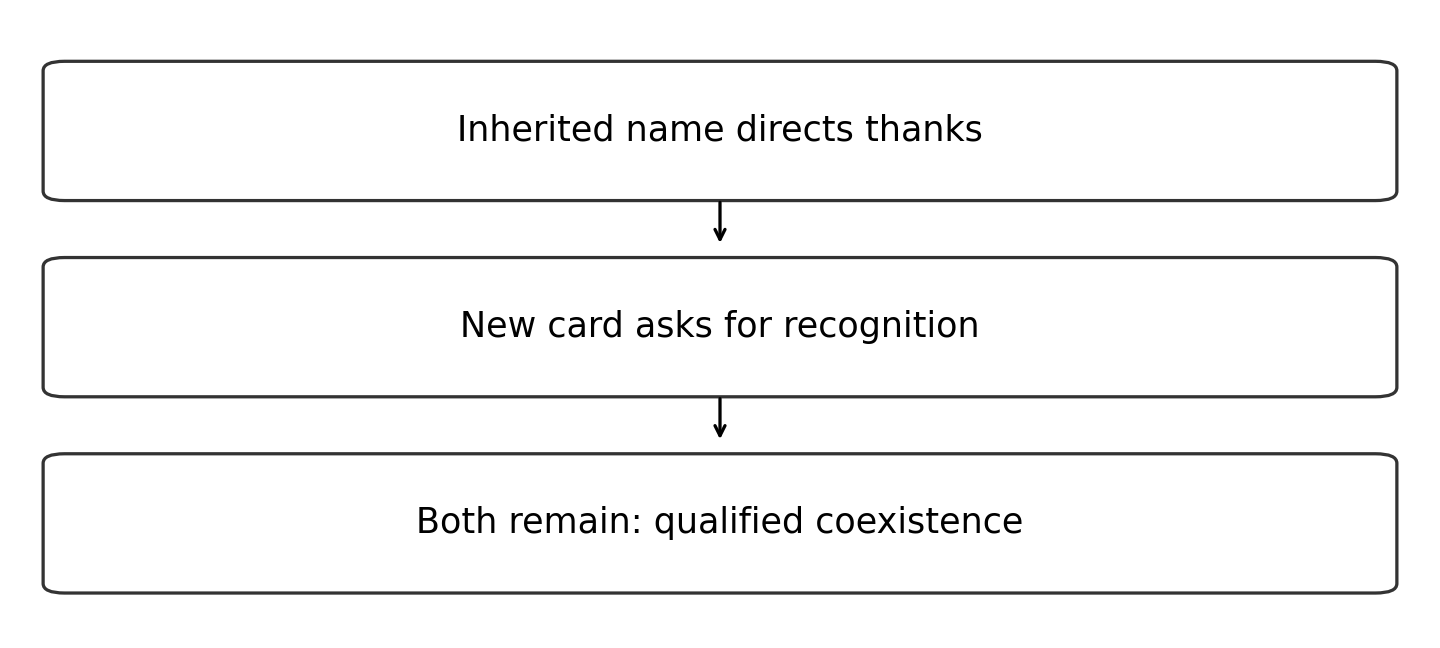
Existing worked example: Ask how a recurrent contrast constructs belonging across a selected work. Trace changes in the pattern and analyse moments that resist the initial reading. Revise topic sentences so each contributes a distinct step in the argument.
Complete original context
Original classroom texts, written for this supplement. They are not school-selected assessed works.
Text A — The label Every morning I polished the brass plate beside the door. It carried my father's name, and visitors asked for him even after I took charge of the shop. I answered their questions, found the parts, and wrapped each purchase. Still, at the door, they thanked the name on the plate. One afternoon I put a small card below it: “Ask for Leila.” The next visitor read the card aloud, hesitated, and then asked me where the hinges were. I left the brass plate shining. The card stayed too.
Text B — A space on the shelf (original poem) I cleared a place beside the cup, not where the cup had been. The shelf kept its old circle; the new wood still looked clean. By evening, two rings darkened it. I did not rub them out.
Context supplied for this exercise: both texts are contemporary original classroom writing in English. No author biography, translation 翻译 history or evidence about a real society is supplied. Compare what the wording permits; do not invent historical facts. A real course comparison must use the school's eligible studied works.
Independent practice and checked reasoning
Transfer 1
Develop a thesis and paragraph sequence that answers the supplied inquiry, including a counter-reading rather than merely listing images.
Reasoning: Thesis: labels make authority visible but not inevitable; the new card seeks recognition without erasing inheritance, leaving a qualified coexistence. Sequence: inherited name and recurring polish; labour versus misdirected thanks; the card's direct address and visitor hesitation; the retained shining plate and a counter-reading of continued hierarchy. Each paragraph must explain a change in meaning and its relation to the inquiry.
Transfer 2
Explain why counting every name is weaker than tracing naming's changing function. Identify one detail 细节 that tests a claim of complete liberation.
Reasoning: A count does not distinguish inherited authority, misrecognition and self-assertion. The plate remains shining and the visitor hesitates, so complete liberation is too strong. The argument should explain both change and continuing dependence.
Transfer 3
Use the complete model as a method example, then state the exact steps needed for a personal 1200–1500-word HL essay on an eligible studied work.
Reasoning: Choose a school-approved work or permitted body, agree a focused inquiry 聚焦探究, gather precise evidence across it, draft independently, cite quotations and interpretations, verify assessment-reuse and authenticity rules, revise counter-readings, and count final words. The original classroom model demonstrates a sustained line but cannot supply the student's personal assessed work or missing school selection.
In the original short story “The label”, taking charge of a shop does not immediately give Leila public recognition. She carries out its work, but the name displayed beside the door continues to direct visitors' gratitude toward her father. The story makes this problem visible through two small texts: a polished brass plate and a new card. Its question is not simply whether Leila can replace an older generation. Instead, acts of naming expose the difference between doing a job and being recognised as its keeper. The card changes that relationship without removing the inherited plate, so the ending offers a qualified coexistence rather than a complete break. The sequence of polishing, misplaced thanks, self-naming and continued display develops that tension across the whole story.
The opening turns an ordinary maintenance action into a repeated encounter with inherited authority. “Every morning” makes polishing a habit rather than a single sentimental gesture. Leila cares for the object carrying her father's name even after she has taken charge. This creates an important distinction: operational responsibility has changed, while the sign of responsibility remains attached to someone else. Brass also gives the plate a durable material presence. The reader need not assume a universal symbolism for that material to notice its contrast with the later small card. The plate is established, regularly maintained and already positioned at the threshold where visitors decide whom to seek. Before Leila speaks, the shop presents another person's identity. Naming thus operates through space as well as through language.
The visitors' requests show that the plate has practical consequences. They “asked for him” although Leila now performs the keeper's work. The pronoun keeps her father present through other people's expectations, while Leila's first-person narration reveals the mismatch those visitors may not notice. Her account of answering questions, finding parts and wrapping purchases forms a series of concrete actions. These are not abstract claims that she deserves authority; they show her fulfilling the role. The sequence also suggests a complete transaction, from enquiry to departure. Yet carrying the work through to its conclusion does not ensure that gratitude reaches the worker. The story separates competence from acknowledgement, allowing the reader to see an inequality that the visitor may reproduce without deliberate hostility.
That separation becomes sharpest when visitors “thanked the name on the plate”. A name cannot literally receive gratitude, so the phrase makes the sign stand for the absent person. It also presents the direction of thanks as almost automatic: the plate's established identity outweighs the visible worker's actions. The narration does not report an argument in which someone explicitly denies Leila's ability. Instead, misrecognition occurs through an apparently polite habit. This matters because it prevents an easy solution based only on performing more work or behaving more helpfully. Leila has already completed those actions. Her difficulty concerns the way people interpret the shop's public signs. The story therefore prepares a response that changes the available information, rather than adding another demonstration of competence that might again be credited elsewhere.
The card answers that problem through unusually direct wording. “Ask for Leila” is an instruction, not a description of her father's absence or an accusation against visitors. Its verb invites a new act from the reader: address the person now doing the work. By choosing her name, Leila also becomes visible as an individual rather than only as the child of the person already named. The card is small, however, and sits “below” the brass plate. Those details complicate an account of sudden triumph. The addition can be read as a practical correction fitted into an existing arrangement, but its subordinate position may also suggest that the inherited identity remains more prominent. Both possibilities depend on the actual spatial relationship. Neither requires inventing a history of conflict outside the story.
The first response to the card makes change perceptible without making it effortless. The visitor reads the new name aloud and “hesitated” before asking Leila for the hinges. Reading aloud gives her name a public sound that contrasts with the earlier requests for “him”. The following question is also a practical acknowledgement: the visitor directs the shop enquiry to her. Yet the hesitation interrupts any smooth transition 衔接词. It may suggest uncertainty, a revision of expectation or simply the moment needed to process unfamiliar information. The narration does not choose among those private motives. A careful interpretation can identify recognition beginning in the changed address while retaining uncertainty about the visitor's attitude. Claiming either complete approval or contempt would exceed the available evidence.
The ending returns to the brass plate rather than allowing the new card to become the sole sign. Leila leaves it “shining”, continuing the care established in the opening. This repetition gives the final arrangement continuity with her earlier practice, but its meaning has changed because another name is now displayed beside the inherited one. The last statement, “The card stayed too”, is brief and firm. Too is crucial: it adds rather than replaces. The story does not end with a declared reconciliation, a removal, or a promise that all later visitors will respond correctly. It ends with two signs remaining together. The material arrangement carries the conclusion, leaving the reader to weigh how much recognition the addition has achieved and how much inherited authority it still accommodates.
The first-person form also affects how this conflict is presented. Leila reports what she does and what visitors say, but she does not quote an explanation of her father's wishes. That absence matters: maintaining the plate cannot be treated as proof that he ordered her to preserve it. Nor does the visitor's hesitation reveal a settled judgement. The reader encounters these signs through a worker who notices where gratitude goes. This perspective makes the problem immediate while keeping other people's motives uncertain. It supports an analysis of recognition in the scene, rather than a confident diagnosis of every relationship outside it.
A counter-reading tests the apparent optimism of that coexistence. Keeping the polished plate could show affection and a refusal to treat independence as erasure. However, it could also preserve a hierarchy in which Leila must ask for recognition beneath a more established name. The visitor's hesitation supports that second possibility by showing that the new arrangement has not become entirely natural. Conversely, an interpretation of total submission must account for Leila's deliberate instruction and the visitor's changed address. She does act, and that action produces a visible response. The strongest reading therefore holds continuity and inequality in tension rather than treating one as cancelled. The story's restraint invites that qualified judgement: it offers no final access to the father's view or every visitor's future behaviour.
Across the story, labels move from inherited description to contested social action. The plate initially directs requests and thanks away from the present worker; the card then asks readers to revise whom they recognise. Concrete labour establishes Leila's role, but naming makes that role legible to others. Her response is modest in size and direct in purpose, and its first result is real but limited. By retaining the shining plate and the card together, the ending resists a simple choice between obedience and replacement. Leila claims a place within an inherited setting while leaving its unresolved pressures visible. The analysis of naming therefore leads to a changing relationship, not merely a count of names: authority is maintained, questioned and partly redistributed through the signs that remain at the door.
Classroom model: 1237 words. Complete source is supplied in ib_focus.yaml; inquiry and thesis; opening/work/thanks/card/response/ending sequence; precise quotations; counter-reading; qualified conclusion. Classroom model only, not approved-work coverage or personal coursework.
Limits and next use
Do not recycle the oral or Paper 2 material without checking assessment reuse rules with the teacher. The essay is coursework with supervision and authenticity checks, not an invented timed paper.
All tasks here are public original practice with authored guidance. They are not official questions or fresh diagnostics. Existing protected tests and mocks remain separate.