Impact of computing · 计算的影响
Computing changes the world
- Computing affects almost every part of life: school, work, health, money, and friends.
- The same tool can bring benefits (good effects) and harms (bad effects).
- A good computer scientist thinks about both sides, not just the cool features.
计算改变世界
- 计算几乎影响生活的方方面面:上学、工作、健康、金钱和朋友。
- 同一个工具既能带来好处(benefit,好的影响),也能带来害处(harm,坏的影响)。
- 一个优秀的计算机科学家会同时考虑两个方面,而不只是看那些很酷的功能。
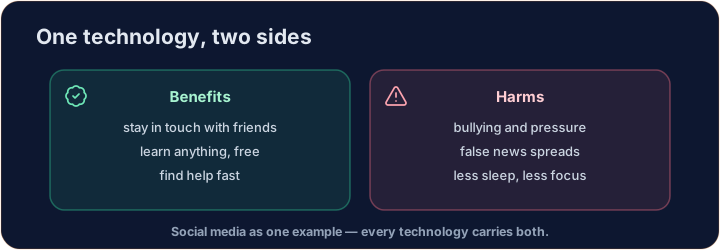
One technology, two sides:

  Social media
    Benefit: stay in touch, share, learn
    Harm:    bullying, false news, less sleep
Benefits and harms together
- A benefit for one group can be a harm for another.
- Example: an app that suggests videos keeps you watching (benefit for the company) but can waste your time (harm for you).
- Always ask: who gains, who loses, and what could go wrong?
好处与害处并存
- 对一个群体是好处,对另一个群体可能就是害处。
- 例子:一个推荐视频的应用让你一直看下去(对公司是好处),但可能浪费你的时间(对你是害处)。
- 永远要问:谁受益、谁受损,以及可能出什么问题?
The digital divide
- The digital divide is the gap between people who have good access to computing and those who do not.
- Causes include money, where you live (no fast Internet), and not having training.
- This is unfair: people without access miss out on school, jobs, and information.
数字鸿沟
- 数字鸿沟(digital divide)是指能良好使用计算的人和不能使用的人之间的差距。
- 原因包括金钱、居住的地方(没有高速互联网),以及缺少培训。
- 这是不公平的:无法接触计算的人会错失学习、工作和信息的机会。
Bias in computing
- Bias means an unfair result that favors one group over another.
- Software learns from data. If the data is unfair or incomplete, the results can be unfair too.
- Example: a face tool trained mostly on one kind of face may work badly for other people.
计算中的偏见
- 偏见(bias)是指偏向某一群体、对另一群体不公平的结果。
- 软件从数据中学习。如果数据不公平或不完整,结果也可能不公平。
- 例子:一个人脸工具如果主要用某一种面孔训练,对其他人可能就识别得很差。
Biased data  ->  biased results

  Training data:  mostly group A faces
  Result:         works well for A, poorly for B
Intellectual property and licensing
- Intellectual property (IP) is creative work people make: code, music, art, writing.
- A license is the rules for how others may use that work. Using work without permission can break the law.
- Open source software shares its code so others may read and reuse it; Creative Commons licenses let creators say "you may share this, with these conditions".
知识产权与许可
- 知识产权(intellectual property,IP)是人们创作的作品:代码、音乐、艺术、文字。
- 许可(license)是别人可以如何使用这些作品的规则。未经允许使用作品可能违法。
- 开源(open source)软件会公开它的代码,让别人可以阅读和重用;知识共享(Creative Commons)许可让创作者说出“你可以分享这个,但要满足这些条件”。
Privacy and PII
- PII means Personally Identifiable Information: data that points to a real person.
- Examples: full name, home address, phone number, ID number, exact location.
- Once data is online it is hard to take back, and apps may collect more than you expect. Share carefully.
隐私与 PII
- PII 指个人身份信息(Personally Identifiable Information):指向某个真实的人的数据。
- 例子:全名、家庭住址、电话号码、身份证号、精确位置。
- 数据一旦上网就很难收回,而且应用收集的信息可能比你以为的还多。要小心地分享。
Safe computing
- Use a strong, unique password for important accounts (long, mixed, not reused).
- Watch out for phishing: fake messages that trick you into giving passwords or money. Check the sender; do not click strange links.
- Keep software updated, and think before you post personal data.
安全地使用计算
- 给重要账户使用强而且唯一的密码(够长、多种字符混合、不要重复使用)。
- 当心钓鱼(phishing):用假消息骗你交出密码或钱。要核对发件人;不要点可疑的链接。
- 及时更新软件,在发布个人数据之前先想一想。
Key words
- Digital divide: the gap in access to computing.
- Bias: an unfair result, often from unfair data.
- Intellectual property / license: who owns creative work and how it may be used.
- PII / privacy: personal data, and protecting it.
- Phishing: fake messages that try to steal your information.
关键词
- 数字鸿沟(digital divide):使用计算的机会上的差距。
- 偏见(bias):不公平的结果,常常来自不公平的数据。
- 知识产权 / 许可:谁拥有创作作品,以及它可以如何被使用。
- PII / 隐私:个人数据,以及对它的保护。
- 钓鱼(phishing):试图窃取你信息的假消息。
Common mistakes
- Weigh both the benefits and the harms (bias, privacy, unequal access).
- The digital divide is the gap in access to technology.
常见错误
- 同时权衡好处和坏处(偏见、隐私、不平等的获取)。
- 数字鸿沟是获取技术上的差距。
Now you try
- These tasks turn the ideas above into code: PII, bias, and password safety.
- Press Check answer to test your code.
现在轮到你
- 下面的任务把上面的想法变成代码:PII、偏见和密码安全。
- 按检查答案来测试你的代码。
PII is data that points to a real person. You are given a record fields (a dict like {"name": ..., "color": ..., "phone": ...}) and a set pii_names of PII field names. Write count_pii(fields, pii_names) that returns how many of the record's keys are PII. · PII 是指向某个真实的人的数据。给定一条记录 fields(字典,如 {"name": ..., "color": ..., "phone": ...})和一组 PII 字段名 pii_names。编写 count_pii(fields, pii_names),返回这条记录里有多少个键属于 PII。
Click Run to see the output here. · 点击“运行”查看此处输出。
Software can be biased if it works better for one group than another. Write accuracy_gap(correct_a, total_a, correct_b, total_b) that returns group A's accuracy minus group B's accuracy, as a decimal. Example: accuracy_gap(90, 100, 60, 100) is 0.3. · 如果软件对某个群体比对另一个群体更好用,它就可能带有偏见。编写 accuracy_gap(correct_a, total_a, correct_b, total_b),返回 A 群体的准确率减去 B 群体的准确率,用小数表示。例如:accuracy_gap(90, 100, 60, 100) 是 0.3。
Click Run to see the output here. · 点击“运行”查看此处输出。
A password is strong · 强效 when it is at least 12 characters and is not in the list of common passwords. Write is_strong(password, common) returning True or · 或 False. Example: with common = ["password", "123456"], is_strong("correcthorsebattery", common) is True. · 当密码至少有 12 个字符****而且不在常见密码列表里时,它才算强。编写 is_strong(password, common),返回 True 或 False。例如:当 common = ["password", "123456"] 时,is_strong("correcthorsebattery", common) 是 True。
Click Run to see the output here. · 点击“运行”查看此处输出。