- อ่านคร่าวๆ เพื่อจับใจความหลัก แล้วดูหว่านเพื่อหาข้อเท็จจริง ชื่อ จำนวน เวลา และสถานที่เฉพาะเจาะจง
- ตอบคำถามสั้นๆ ด้วยคำเดียวหรือวลีสั้นๆ โดยใช้รายละเอียดที่ตรงตามข้อความเป๊ะๆ
- คาดเดาประเภทของข้อมูลที่คำถามต้องการก่อนอ่านข้อความอย่างละเอียด
เคล็ดลับ
ภาษาอังกฤษ IGCSE สำหรับภาษาที่สอง (0510) ประเมินตามทักษะสี่ด้าน: การอ่าน, การเขียน, การฟัง และ การพูด หัวข้อการเขียนจัดกลุ่มตาม ประเภทข้อความ ที่ข้อสอบต้องการ — อีเมลที่ไม่เป็นทางการ, จดหมายอย่างเป็นทางการ, รายงาน, บทความ, รีวิว,.ru essay — เพราะแต่ละประเภทมีกฎเกณฑ์เฉพาะและให้คะแนนตามนั้น
สำหรับผู้เข้าสอบที่เป็นภาษาที่สอง Rarely lose marks on ideas. They are lost on register (an informal email written formally), structure (an article with no headline or paragraphs), and accuracy in a few repeated patterns — articles, tenses, prepositions.
การแก้ไขความผิดพลาดซ้ำๆ ห้าประการของคุณมีค่ามากกว่าการเรียนรู้คำศัพท์ใหม่
-
1
ทักษะการอ่าน
ดูบทเรียน1.1
การอ่านเพื่อหาข้อมูลเฉพาะ

หลักสูตร
แหล่งที่มา: หลักสูตร Cambridge International
ในการสอบ คุณไม่จำเป็นต้องอ่านทุกคำอย่างช้าๆ คุณควรปรับความเร็วในการอ่านให้สอดคล้องกับเป้าหมายของคุณ
สกิมก่อน แล้วสแกน
- ขั้นแรก สกิม (Skim) ข้อความ อ่านเร็วๆ เพื่อรับ ** gist (大意)** —也就是总体概念或主旨。看标题、每段的第一行以及任何图片。
- จากนั้น สแกน (Scan) เพื่อหาคำตอบหนึ่งจุด ย้ายสายตาอย่างรวดเร็วตามหน้ากระดาษ อย่าอ่านทุกคำ หยุดเมื่อเจอสิ่งที่ต้องการ
- ใช้การสแกนสำหรับข้อเท็จจริง เช่น ชื่อ เลข จำนวน วันที่ เวลา และสถานที่
Skim掠过everything抓 gist; scan jumps straight to one fact 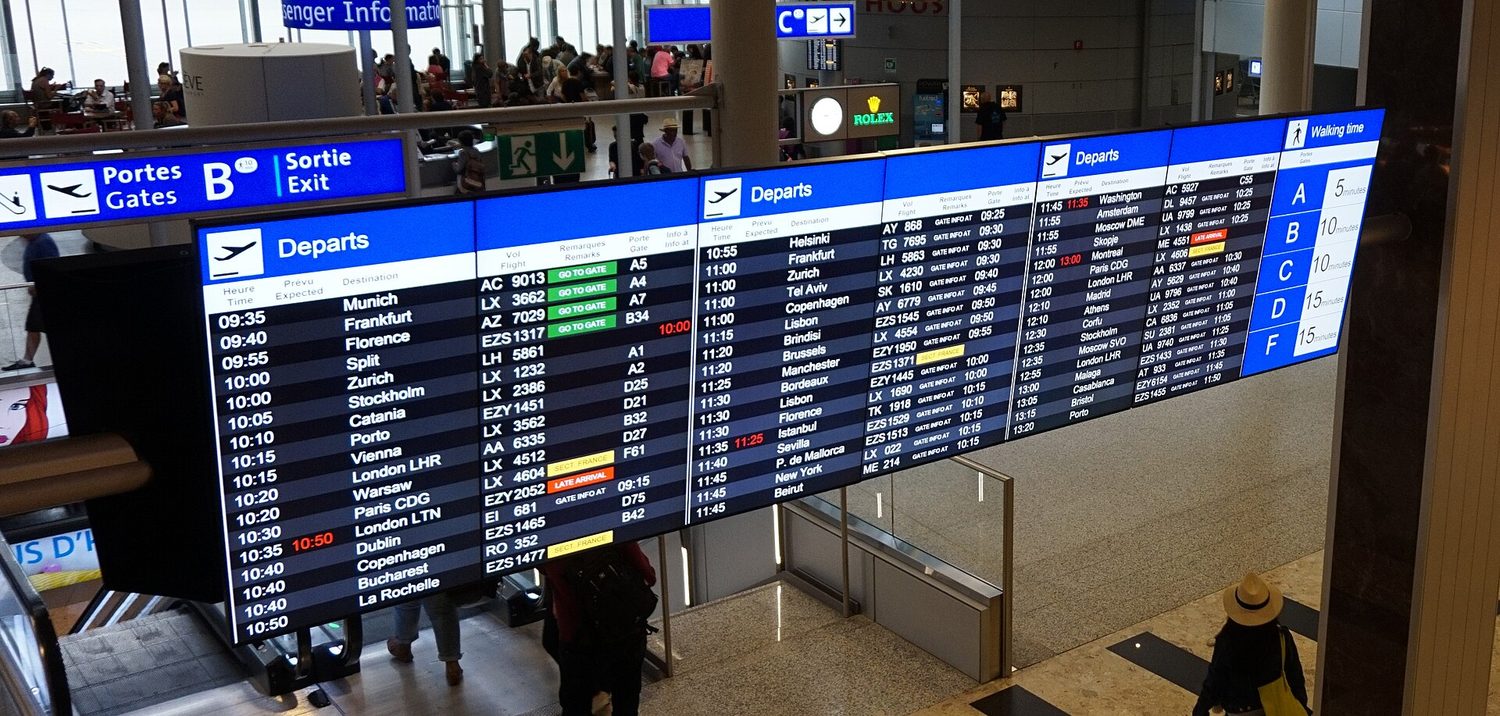
บอร์ดแสดงเวลาออกเดินทางคือข้อความจริงที่คุณใช้การสแกน: คุณไม่ได้อ่านทุกบรรทัด — คุณกระโดดตรงไปที่เวลาหรือทางเดินออกที่จำเป็นทันที จับคู่คำถามกับข้อความ
- อ่านคำถามก่อน ตัดสินใจว่าคำตอบเป็นแบบไหน: เป็นชื่อ? เป็นตัวเลข? เป็นเหตุผล?
- ทำนาย (Predict) คำตอบก่อนดูในข้อความ สิ่งนี้จะช่วยให้สายตาของคุณค้นหาได้เร็วขึ้น
- หาส่วนของข้อความที่พูดถึงประเด็นเดียวกัน คำตอบมักจะอยู่ในส่วนนั้น
เขียนคำตอบสั้นและถูกต้อง
- ที่นี่คุณเขียนคำเดียวหรือ phrase (短语) สั้นๆ ไม่ใช่ประโยคเต็ม
- คัดลอกคำที่แน่นอนจากข้อความเมื่อทำได้
- ตอบเฉพาะสิ่งที่คำถามถาม คำเพิ่มเติมอาจทำให้เสียคะแนน
คำศัพท์ ฝึกฝนEnglish ไทย skim/skɪm/ อ่านคร่าวๆ gist/dʒɪst/ ใจความสำคัญ paragraph/ˈpærəɡræf/ ย่อหน้า scan/skæn/ การสแกน predict/prɪˈdɪkt/ คาดการณ์ phrase/freɪz/ วลี 1.2
เชื่อมโยงความคิดข้ามข้อความ

หลักสูตร
- ติดตามการเชื่อมโยงระหว่างแนวคิด ความคิดเห็นและทัศนคติในข้อความ
- จับคู่แต่ละคำถามกับย่อหน้าหรือข้อความสั้นที่มีแนวคิดที่เกี่ยวข้อง (การจับคู่หลายข้อ)
- จดจำคำและวลีที่บ่งบอกถึงเวลา สาเหตุและผล การเพิ่มข้อมูล และการขัดแย้ง
แหล่งที่มา: หลักสูตร Cambridge International
ข้อความยาวไม่ใช่แค่รายการข้อเท็จจริง ความคิดต่างๆ เชื่อมโยงกัน และคุณต้องติดตามวิธีเชื่อมโยงเหล่านั้น
การจับคู่แบบหลายตัวเลือก
- ในงาน multiple matching (多项匹配) คุณต้องอ่านข้อความสั้นๆ หลายฉบับ หรือหลายส่วนของข้อความเดียว
- แต่ละคำถามอธิบายประเด็นหนึ่ง คุณเลือกข้อความหรือส่วนที่ตรงกับมัน
- คำในคำถามมักต่างจากคำในข้อความ มองหาความหมายเดียวกัน ไม่ใช่คำเดียวกัน สิ่งนี้เรียกว่า paraphrase (改写)
คำบอกสัญญาณ
- ผู้เขียนใช้คำเล็กๆ เพื่อแสดงวิธีการเชื่อมโยงความคิด คำเหล่านี้คือ signal words (信号词)
- บางคำแสดง addition (递进) (also, in addition, as well as) บางคำแสดง contrast (对比) (but, however, although) บางคำแสดง cause and effect (因果) (because, so, as a result)
- เมื่อคุณสังเกตเห็นคำเหล่านี้ คุณจะเห็นได้ว่าความคิดของผู้เขียนเชื่อมโยงกันอย่างไร
The three signal-word families and what they do to ideas คำศัพท์ ฝึกฝนEnglish ไทย multiple matching/ˈmʌltɪpl ˈmætʃɪŋ/ จับคู่หลายข้อ paraphrase/ˈpærəfreɪz/ การเรียบเรียงใหม่ signal words/ˈsɪɡnl wɜːdz/ คำนำ signal words addition/əˈdɪʃn/ addition contrast/ˈkɒntræst/ ความแตกต่างของค่าสี cause and effect/kɔːz ænd ɪˈfekt/ สาเหตุและผล 1.3
การจดบันทึกและการสรุป

หลักสูตร
- เลือกเฉพาะจุดที่สำคัญจากข้อความสำหรับวัตถุประสงค์ที่กำหนด
- เติมแบบบันทึกสั้นๆ ภายใต้หัวข้อต่างๆ โดยใช้วลีสั้นแทนประโยคเต็ม
- ตัดตัวอย่างและการซ้ำซ้อนออก เก็บไว้เพียงข้อมูลสำคัญเท่านั้น
แหล่งที่มา: หลักสูตร Cambridge International
บางครั้งคุณต้องดึงประเด็นหลักออกจากข้อความและเขียนในรูปแบบสั้นๆ
การจดบันทึก
- ในงาน note-making (做笔记) คุณจะเติมข้อมูลในหมายเหตุภายใต้หัวข้อ
- เขียนหมายเหตุสั้นๆ ไม่ใช่ประโยคเต็ม คำเดียวหรือวลีสั้นก็พอ
- เลือกเฉพาะจุดที่ตรงกับหัวข้อ ทิ้งตัวอย่างและรายละเอียดเพิ่มเติมไว้
ทักษะการสรุป
- summary (概括) ให้เพียงประเด็นที่สำคัญที่สุด โดยใช้คำจำนวนน้อยกว่า
- หาประเด็นสำคัญ ทิ้งตัวอย่าง repetition (重复) และรายละเอียดเล็กน้อย
- ใช้คำของคุณเองเมื่อทำได้ อย่าคัดลอกทั้งประโยค
A summary keeps only the key points, in your own words คำศัพท์ ฝึกฝนEnglish ไทย note-making/nəʊt ˈmeɪkɪŋ/ การทำบันทึกย่อ summary/ˈsʌməri/ สรุป repetition/ˌrepəˈtɪʃn/ การซ้ำซ้อน 1.4
การอ่านระหว่างบรรทัด

หลักสูตร
- เข้าใจความหมายที่สื่อโดยนัยแต่ไม่ได้ระบุไว้อย่างชัดเจน
- วิเคราะห์ความคิดเห็น ทัศนคติหรือความรู้สึกของผู้เขียนจากคำและวลีที่เลือกใช้
- สันนิษฐานความหมายของคำที่ไม่รู้จักจากข้อมูลรอบข้าง
- ตอบคำถามแบบเลือกตอบเกี่ยวกับใจความหลัก รายละเอียดและทัศนคติ
แหล่งที่มา: หลักสูตร Cambridge International
การอ่านอย่างละเอียด: คำตอบเชิงอนุมานมาจากคำที่ผู้เขียนเลือกใช้ ไม่ใช่จากประโยคที่คุณสามารถคัดลอกออกมาได้ บางคำตอบไม่ได้เขียนไว้อย่างชัดเจนในข้อความ คุณต้องคิดหามันเอง สิ่งนี้เรียกว่า inference (推断)
ความหมายที่สื่อโดยนัย
- บางครั้งผู้เขียน **implies (暗示)**บางอย่างโดยไม่พูดออกมาโดยตรง ความหมายมีอยู่แต่ซ่อนเร้น
- อ่านคำรอบๆ ประเด็นนั้น ถามตัวเองว่า: ผู้เขียนต้องการให้ฉันเข้าใจอะไรที่นี่?
มุมมองของผู้เขียน
- attitude (态度) ของผู้เขียนคือความรู้สึกของพวกเขาต่อหัวข้อ — ตัวอย่างเช่น ตื่นเต้น กังวล หรือไม่แน่ใจ
- คุณพบมุมมอง这在作者的 word choice (用词) คำที่หนักแน่นหรือมีความรู้สึก แสดงถึงอารมณ์
- ในคำถามแบบเลือกตอบ (multiple-choice) ที่เกี่ยวกับทัศนคติ ให้อ่านตัวเลือกทั้งหมด เลือกข้อที่ตรงกับเนื้อหาทั้งฉบับ ไม่ใช่แค่บรรทัดเดียว
คำศัพท์ที่ไม่คุ้นเคย
- คุณจะเจอคำที่ไม่รู้จัก อย่าหยุดอ่าน
- ใช้ บริบท (context) — คำศัพท์โดยรอบ — เพื่อเดาความหมายของคำใหม่
คำศัพท์ ฝึกฝนEnglish ไทย inference/ˈɪnfərəns/ การอนุมาน (inference) implies/ɪmˈplaɪz/ บ่งชี้ว่า attitude/ˈætɪtjuːd/ ทัศนคติ word choice/wɜːd tʃɔɪs/ การเลือกคำศัพท์ multiple-choice/ˈmʌltɪpl tʃɔɪs/ แบบเลือกตอบ context/ˈkɒntekst/ บริบท 1.4
ข้อแนะนำสำหรับการสอบ
- อ่านคำถามก่อนอ่านเนื้อเรื่อง ใต้เส้นคำสำคัญ: ชื่อคน? ตัวเลข? หรือเหตุผล?
- คำตอบมักเรียงตามลำดับในเนื้อเรื่อง ดังนั้นอย่าย้อนกลับไปหาคำตอบข้อ 1
- คัดลอกคำที่ถูกต้องจากเนื้อเรื่องเท่าที่จะทำได้ คำที่เปลี่ยนไปอาจทำให้เสียคะแนน
- ตรวจสอบว่าคำถามต้องการคำตอบกี่ข้อ: "ให้สองเหตุผล" ต้องมีสองข้อ ไม่ใช่หนึ่ง
- ในแบบจับคู่หลายข้อ เนื้อเรื่องมักไม่ใช้คำเดิมกับคำถาม ให้มองหาไอเดียเดียวกันแต่พูดด้วยภาษาอื่น
- อย่าปล่อยช่องว่างไว้ การทายคำตอบอาจได้คะแนน แต่ช่องว่างไม่ได้
-
2
การเขียน: วัตถุประสงค์ ผู้รับ และความถูกต้อง
ดูบทเรียน2.1
วัตถุประสงค์ ผู้อ่าน และระดับภาษา

หลักสูตร
- ระบุวัตถุประสงค์ของการเขียน: เพื่อแจ้งข่าว เพื่อโต้แย้ง หรือเพื่อถกเถียง
- พิจารณาผู้รับและระดับความเป็นทางการหรือไม่เป็นทางการของภาษา
- เลือกใช้ระดับภาษาและสไตล์ที่เหมาะกับวัตถุประสงค์และผู้_read
แหล่งที่มา: หลักสูตร Cambridge International
ก่อนเขียน ให้ถามตัวเองสองคำถาม: ฉันเขียนเพื่ออะไร และมีใครอ่านบ้าง
รู้จักวัตถุประสงค์ของคุณ
- ทุกงานเขียนมี วัตถุประสงค์ (purpose): เพื่อแจ้งข้อมูล, เพื่อโต้แย้ง, หรือเพื่อแลกเปลี่ยนความคิดเห็น
- วัตถุประสงค์กำหนดสิ่งที่คุณจะเขียนและวิธีการเขียน
- ข้อบ่งชี้บอกวัตถุประสงค์ให้คุณ อ่านอย่างละเอียดแล้วทำเส้นใต้
รู้จักผู้ฟังของคุณ
- ผู้ฟัง (audience) คือคนที่จะอ่านงานเขียนของคุณ — เพื่อน ครู หรือผู้จัดกิจกรรม
- เขียนให้เหมาะสมกับพวกเขา คุณเขียนกับเพื่อนต่างจากการเขียนกับครู
เลือกใช้ระดับภาษาที่เหมาะสม
- ระดับภาษา (register) หมายถึงความทางการ或不正式ของภาษาคุณ
- ใช้ภาษาไม่เป็นทางการสำหรับเพื่อน: คำย่อ (I'm, don't) และคำที่เป็นกันเอง
- ใช้ภาษาทางการสำหรับครูหรือรายงาน: คำเต็ม (I am, do not) และคำสุภาพ ห้ามใช้สำนวนสแลง
วัตถุประสงค์และผู้รับสารร่วมกันกำหนดระดับความเป็นทางการของการเขียนของคุณ 
การเขียนที่โต๊ะ: ตัดสินใจวัตถุประสงค์และผู้ฟังก่อนจะจัดระเบียบความคิดบนกระดาษ คำศัพท์ ฝึกฝนEnglish ไทย purpose/ˈpɜːpəs/ purpose inform/ɪnˈfɔːm/ แจ้ง argue/ˈɑːɡjuː/ โต้แย้ง discuss/dɪˈskʌs/ อภิปราย audience/ˈɔːdɪəns/ audience register/ˈredʒɪstə/ รีจิสเตอร์ (register) formal/ˈfɔːml/ แบบทางการ informal/ɪnˈfɔːml/ ไม่ทางการ slang/slæŋ/ ภาษาปาก 2.2
การจัดระเบียบความคิด

หลักสูตร
- วางแผนสิ่งที่ควรใส่และลำดับการนำเสนอ
- จัดเรียงการเขียนเป็นย่อหน้าที่ชัดเจนและมีโครงสร้างทางตรรกะ
- เชื่อมโยงความคิดโดยใช้เครื่องเชื่อมสำหรับการเพิ่มข้อมูล (in addition, moreover) ความขัดแย้ง (however, although) และสาเหตุ/ผล (therefore, as a result)
แหล่งที่มา: หลักสูตร Cambridge International
งานเขียนที่ดีไม่ใช่แค่ถูก语法เท่านั้น แต่ยังต้องอ่านง่ายด้วย
วางแผนก่อนเขียน
- ใช้เวลาหนึ่งนาทีกับ แผน (plan) เขียนประเด็นหลักลงมาแล้วจัดลำดับ
- แผนช่วยไม่ให้ลืมจุดสำคัญหรือพูดซ้ำ
แผนหนึ่งนาทีกลายเป็นย่อหน้าของคุณ: หนึ่งแนวคิดต่อย่อหน้า, เชื่อมโยงด้วยคำเชื่อม ใช้ย่อหน้า
- ใส่แต่ละประเด็นหลักลงใน ย่อหน้า (paragraph) ของมันเอง
- เริ่มย่อหน้าใหม่สำหรับไอเดียใหม่ การนี้ทำให้งานเขียนชัดเจน
เชื่อมโยงความคิด
- ใช้ คำเชื่อม (linking words) เพื่อเชื่อมโยงความคิดได้อย่างลื่นไหล
- สำหรับการเพิ่ม: in addition, also, as well as. สำหรับการขัดแย้ง: however, but, although. สำหรับผลลัพธ์: so, therefore, as a result.
คำศัพท์ ฝึกฝนEnglish ไทย plan/plæn/ แผน paragraph/ˈpærəɡræf/ ย่อหน้า linking words/ˈlɪŋkɪŋ wɜːdz/ คำเชื่อม 2.3
ความถูกต้อง: grammar, คำศัพท์ และการตรวจสอบ

หลักสูตร
- ใช้โครงสร้างไวยากรณ์ที่หลากหลาย: รูป式和ทenses ของกริยาที่ต่างกัน شرط式和ประโยคหลากหลาย
- ใช้คำศัพท์ที่หลากหลาย รวมถึงสำนวน คำที่จับคู่กัน และคำPLATFORMเพื่อหลีกเลี่ยงการซ้ำซ้อน
- ตรวจสอบงานเขียนเพื่อความถูกต้องในด้านไวยากรณ์ การสะกดและการเว้นวรรค
แหล่งที่มา: หลักสูตร Cambridge International
คะแนนภาษามาจาก ความหลากหลาย (range) และ ความถูกต้อง (accuracy)
คะแนนภาษาตั้งอยู่บนเสาหลักสองอย่าง: ความหลากหลายและความแม่นยำ แสดงความหลากหลาย
- ใช้ tenses (tenses) และประเภทประโยคที่ต่างกัน อย่าเขียนทุกประโยคแบบเดียวกัน
- ใช้ คำศัพท์ (vocabulary) ที่หลากหลาย เลือกคำที่ดีกว่าคำง่าย ๆ และใช้ คำPLATFORM (synonyms) เพื่อหลีกเลี่ยงการซ้ำซ้อน
ให้ความถูกต้อง
- ตรวจสอบ grammar, spelling และ punctuation ของคุณ
- ข้อผิดพลาดที่พบบ่อยคือ subject–verb agreement, verb tenses และตัวอักษรพิมพ์ใหญ่ที่หายไป
ตรวจสอบงานของคุณ
- ทิ้งเวลาหนึ่งหรือสองนาทีเพื่ออ่านงานอีกครั้ง
- หาข้อผิดพลาดเล็ก ๆ ที่แก้ไขได้ง่าย การตรวจสอบอาจประหยัดคะแนนได้หลายข้อ
คำศัพท์ ฝึกฝนEnglish ไทย range/reɪndʒ/ range accuracy/ˈækjʊrəsi/ ความถูกต้อง tenses/ˈtensɪz/ กาลของกริยา vocabulary/vəʊˈkæbjʊləri/ คำศัพท์ synonyms/ˈsɪnənɪmz/ คำพ้องความหมาย grammar/ˈɡræmə/ ไวยากรณ์ spelling/ˈspelɪŋ/ การสะกดคำ punctuation/ˌpʌŋktʃuːˈeɪʃn/ เครื่องหมายวรรคตอน 2.3
ข้อแนะนำสำหรับการสอบ
- ก่อนเขียน บอกหน้าที่ของคุณในหนึ่งบรรทัด: "อีเมลไม่เป็นทางการถึงเพื่อน เพื่อเชิญเขาไปปิกนิก"
- ครอบคลุมทุกจุดเนื้อหาในโจทย์ ผู้ตรวจจะติ๊กแต่ละจุด; ถ้าขาดไปจะเสียคะแนนทันที
- จำได้ว่าลายมือ 120 ถึง 160 คำดูเป็นอย่างไร เพื่อที่จะไม่ต้องนับจำนวนในข้อสอบ
- Reserved เวลาห้านาทีสุดท้ายเพื่อตรวจสอบข้อผิดพลาดทั่วไปของคุณ: verb -s, past forms, a / an / the
- ประโยคสั้นที่ถูกต้องชนะประโยคยาวที่ผิด语法เสมอ
-
3
การเขียนอีเมลแบบไม่เป็นทางการ
ดูบทเรียน3.1
Why and to whom you write

หลักสูตร
- จำแนกว่าอีเมลไม่เป็นทางการนั้นเขียนถึงเพื่อนหรือญาติ
- ตอบกลับทุกหัวข้อที่โจทย์กำหนด
- ใช้โทนเสียงที่เป็นมิตรและเป็นส่วนตัวที่ตรงกับผู้อ่าน
แหล่งที่มา: หลักสูตร Cambridge International
The first writing task asks you to write an informal email 非正式电子邮件 to a friend or a family member.
Cover every prompt
- The task gives you some prompts 提示 — short points you must write about.
- You must cover every prompt. If you miss one, you lose content marks.
- Tick each prompt as you write it, so you do not forget one.
Use a friendly tone
- An email to a friend is informal 非正式. Use a warm, friendly tone 语气.
- Write as if you are talking to the person. Ask them questions too.
This is who the email is for: someone who already knows you, so write the way you would talk to them 
Writing on a laptop: informal emails still need a clear purpose, order and friendly tone คำศัพท์ ฝึกฝนEnglish ไทย informal email/ɪnˈfɔːml ˈiːmeɪl/ อีเมลไม่เป็นทางการ prompts/prɒmpts/ ตัวกระตุ้น informal/ɪnˈfɔːml/ ไม่ทางการ tone/təʊn/ น้ำเสียง 3.2
How to build your email

หลักสูตร
- เปิดและปิดอีเมลไม่เป็นทางการให้เหมาะสม (เช่น: Hi … / Write back soon …)
- จัดอีเมลเป็นย่อหน้าสั้นๆ โดยมีใจความหลักหนึ่งประเด็นต่อย่อหน้า
- ใช้ภาษาไม่เป็นทางการ: คำ сокยอ วลีเป็นมิตร และคำถามถึงผู้อ่าน
แหล่งที่มา: หลักสูตร Cambridge International
A good email has a clear shape.
The shape of a good informal email Greeting and ending
- Start with a greeting 问候语: Hi Sam, or Dear Anna,
- End with a friendly closing 结束语: Write back soon, or See you soon, then your name.
Paragraphs
- Use short paragraphs 段落. Put one main idea in each one.
- Do not write one long block of text.
Useful language
- Informal language uses short forms 缩略形式: I'm, don't, can't.
- Friendly phrases help: Guess what! / How are you? / I can't wait to…
คำศัพท์ ฝึกฝนEnglish ไทย greeting/ˈɡriːtɪŋ/ คำทักทาย closing/ˈkləʊzɪŋ/ คำลงท้าย paragraphs/ˈpærəɡræfz/ ย่อหน้า short forms/ʃɔːt fɔːmz/ รูปย่อ 3.3
Making your email better

หลักสูตร
- ขยายแต่ละ идеяด้วยเหตุผล ตัวอย่างหรือรายละเอียด แทนการแค่รายการจุด
- เปลี่ยนการเริ่มต้นประโยคและเชื่อมโยง ideas smoothly
- ตรวจสอบความยาว (120–160 words), โทนเสียง และความถูกต้องก่อนส่ง
แหล่งที่มา: หลักสูตร Cambridge International
Content marks reward developed 展开的 ideas, not a list.
Develop your ideas
- Do not just name an idea. Add a reason 原因, an example 例子, or a detail 细节.
- "I loved the trip" is weak. "I loved the trip because we saw an old castle" is much better.
Each extra reason or detail makes the idea stronger Check before you finish
- Count your words: aim for 120 to 160 words.
- Check the tone is friendly, then fix small grammar and spelling mistakes.
A model email
See how the friendly tone and developed ideas work together.
Hi Sam,
Guess what — I finally visited the new science museum you told me about! I loved it, especially the space room, because you can sit in a real rocket seat and feel it shake. I went with my cousin, and we stayed until it closed.
How about you? Have you been yet? We really should go together in the summer.
Write back soon, Lin
Notice the warm greeting, one developed idea with a reason, a question back to Sam, and a friendly closing. It reads like a real message to a friend — and it covers every prompt.
คำศัพท์ ฝึกฝนEnglish ไทย developed/dɪˈveləpt/ พัฒนา reason/ˈriːzn/ Reason example/eɡˈzæmpl/ ตัวอย่าง detail/ˈdiːteɪl/ รายละเอียด 3.3
Exam tips
- Open warmly: "Thanks for your email!" or "Great to hear from you!" sets the informal tone at once.
- Use short forms (I'm, don't, can't). They are correct here and make you sound like a friend.
- Give each prompt in the task its own short paragraph, and add one detail or reason to each.
- Close like a friend: "Write back soon," plus your first name only, never a full name.
- Keep the style informal from the first line to the last; one "Dear Sir" in the middle breaks the whole email.
-
4
Writing a formal letter or email
ดูบทเรียน4.1
When to write formally

หลักสูตร
- จำแนกเมื่อใดที่ต้องตอบกลับแบบเป็นทางการหรือกึ่งทางการ (เช่น ถึงครูผู้สอนหรือผู้จัดงาน)
- ครอบคลุมวัตถุประสงค์ รูปแบบและข้อมูลผู้รับที่โจทย์กำหนด
- รักษาโทนเสียงสุภาพและเป็นทางการตลอดทั้งเรื่อง
แหล่งที่มา: หลักสูตร Cambridge International
The second writing task sometimes asks for a formal 正式 or semi-formal 半正式 letter or email.
Spot a formal task
- A formal task is written to someone you do not know well — a head teacher 校长, a manager 经理, or an event organiser 活动组织者.
- The task tells you the format 格式, the purpose 目的 and the reader. Use all three.
A formal letter is read at a desk like this — by someone who does not know you, and who is busy Keep a polite tone
- Be polite 礼貌 and respectful. Do not use slang 俚语 or jokes.
- Do not use short forms. Write "I am", not "I'm".
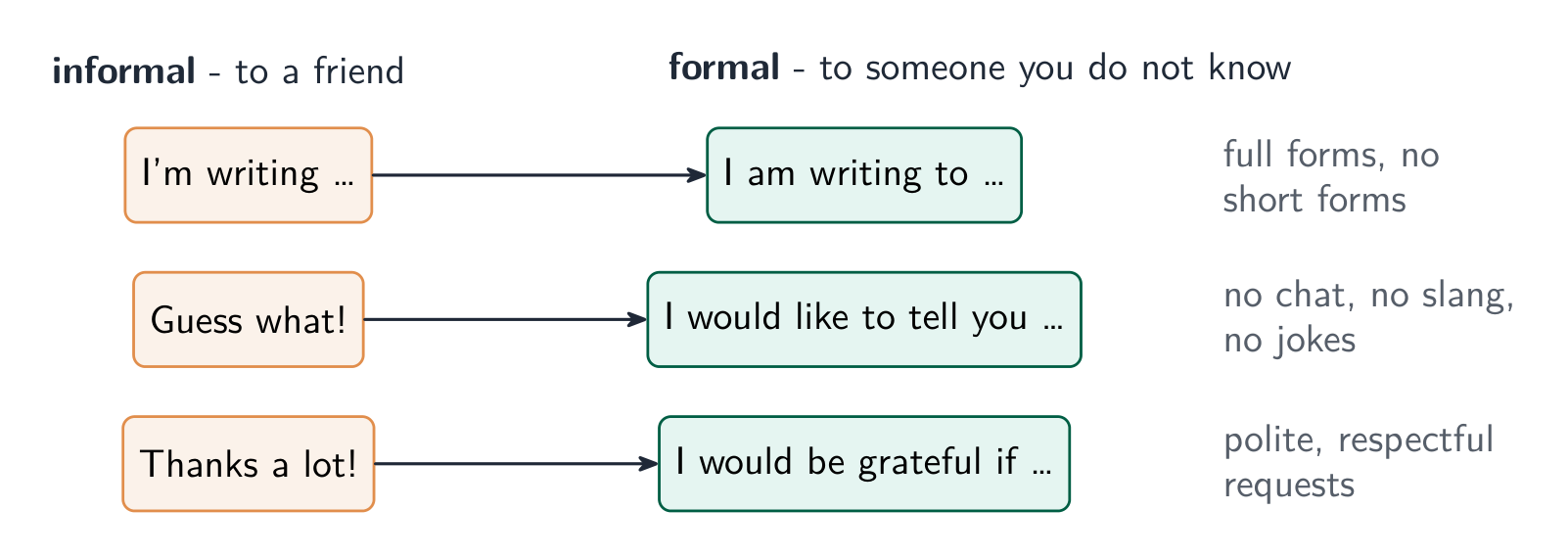
Turning friendly phrases into formal ones 
A formal letter: careful structure, polite register and a clear reason for writing คำศัพท์ ฝึกฝนEnglish ไทย formal/ˈfɔːml/ แบบทางการ semi-formal/ˈsemi ˈfɔːml/ กึ่งเป็นทางการ head teacher/hed ˈtiːtʃə/ ผู้อำนวยการโรงเรียน manager/ˈmænɪdʒə/ ผู้จัดการ event organiser/ɪˈvent ˈɔːɡənaɪzə/ ผู้จัดงานกิจกรรม format/ˈfɔːmæt/ รูปแบบ (Format) purpose/ˈpɜːpəs/ purpose polite/pəˈlaɪt/ สุภาพ slang/slæŋ/ ภาษาปาก 4.2
Building a formal letter or email

หลักสูตร
- เปิดและปิดจดหมายหรืออีเมลอย่างเป็นทางการให้เหมาะสม (เช่น: Dear … / Yours sincerely …)
- จัดเรียงประเด็นเป็นย่อหน้าที่ชัดเจน โดยมีจุดเริ่มต้น กลาง และจบ
- ใช้ภาษาที่เป็นทางการและหลีกเลี่ยงคำ сокยอและภาษาปาก
แหล่งที่มา: หลักสูตร Cambridge International
A formal letter follows a clear order.
The shape of a formal letter - and the greeting decides the sign-off Opening and closing
- Open with Dear Sir/Madam, or Dear Mr Lee,
- If you start with a name, close with Yours sincerely,. If you start with Sir/Madam, close with Yours faithfully,.
Clear paragraphs
- First paragraph: say why you are writing.
- Middle paragraphs: give your points, one idea in each.
- Last paragraph: say what you would like to happen next.
Formal language
- Use formal phrases: I would like to…, I am writing to…, I would be grateful 感激 if…
- Keep sentences clear and complete. Check your grammar and spelling.
A model formal letter
See how a polite, complete opening sets the right tone.
Dear Sir or Madam,
I am writing to suggest an improvement to the town library. At present it closes at five o'clock, which is too early for students who finish school at four. I would be grateful if the council could consider opening it until seven in the evening on weekdays.
Thank you for taking the time to read my letter.
Yours faithfully, J. Chen
Notice the Dear Sir or Madam / Yours faithfully pair, the clear first line stating the purpose, the polite request, and the complete sentences with no short forms.
คำศัพท์ ฝึกฝนEnglish ไทย grateful/ˈɡreɪtfl/ ขอบคุณอย่างจริงใจ 4.2
Exam tips
- Match the greeting to the ending: Dear Mr Lee → Yours sincerely; Dear Sir or Madam → Yours faithfully.
- Say why you are writing in the first line: "I am writing to apply for…" saves words and sounds formal.
- Do not use short forms: write "I am" and "do not", never "I'm" or "don't".
- One paragraph per point, and end by naming the action you hope for: "I would be grateful if…".
- Stay polite even in a complaint: "I was disappointed to find…" wins marks; "This is terrible!" loses the tone.
-
5
การเขียนรายงาน
ดูบทเรียน5.1
What a report is for

หลักสูตร
- จำแนกว่ารายงานถูกเขียนสำหรับผู้มีอำนาจเหนือหรือกลุ่มเกี่ยวกับเหตุการณ์ ประสบการณ์หรือสถานการณ์
- ให้ข้อมูลเชิงประจักษ์อย่างชัดเจนและเพิ่มข้อเสนอแนะหรือคำแนะนำ
- ใช้โทนเสียงที่เป็นกลางและเชิงประจักษ์
แหล่งที่มา: หลักสูตร Cambridge International
A report 报告 gives information to a person in charge — a teacher, a manager, or a club leader. They will act 行动 on what you write, so be clear and honest.
Purpose and reader
- A report describes an event 事件, an experience, or a situation 情况.
- It gives facts 事实 clearly, then adds suggestions.
- The reader wants useful information, not a story. Keep the tone factual 事实性的 and clear.
A report gives facts the reader can use, not a story Format
- A report is usually semi-formal or formal.
- A title at the top tells the reader what the report is about.
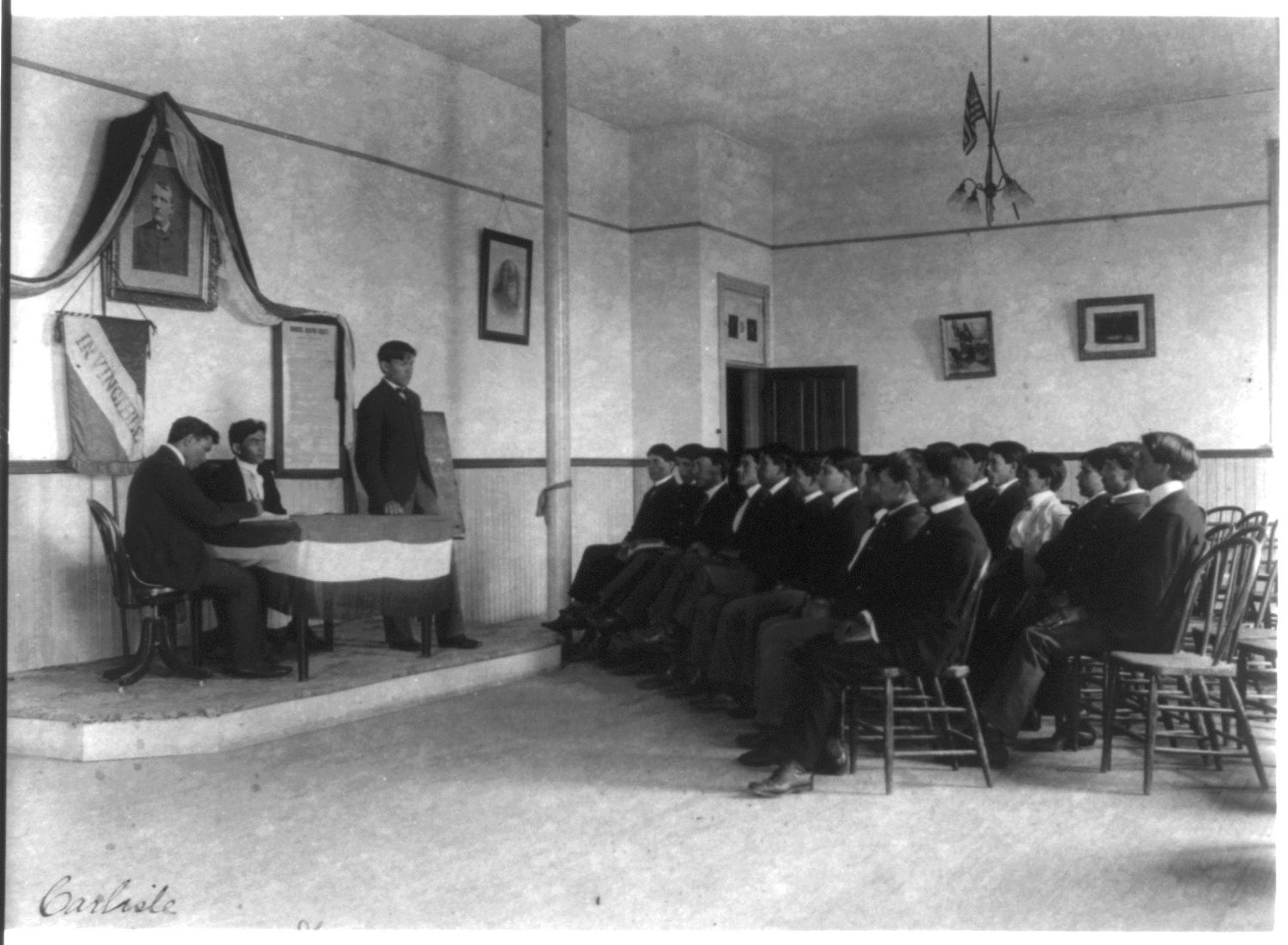
A formal discussion: reports give clear facts so decision-makers can act on them 
A report organises facts for a clear purpose and a defined reader คำศัพท์ ฝึกฝนEnglish ไทย report/rɪˈpɔːt/ รายงาน act/ækt/ กระทำ event/ɪˈvent/ เหตุการณ์ situation/ˌsɪtʃuːˈeɪʃn/ situation facts/fækts/ ข้อเท็จจริง factual/ˈfæktʃuːəl/ ตามข้อเท็จจริง 5.2
How to organise a report

หลักสูตร
- จัดรายงานโดยใช้หัวข้อย่อหรือส่วนที่แยกออกจากกันอย่างชัดเจน
- แยกข้อเท็จจริงออกจากความคิดเห็นและคำแนะนำส่วนตัว
- จบด้วยคำแนะนำหรือบทสรุปที่ชัดเจน
แหล่งที่มา: หลักสูตร Cambridge International
A clear shape helps the reader find information fast.
The shape of a report: facts under clear headings, recommendations at the end Use headings
- Break the report into sections with short headings 小标题.
- For example: Introduction, Good points, Problems, Recommendation.
Facts, then recommendations
- First give the facts. Keep your opinion 观点 out of this part.
- Then give your recommendations 建议 — what you think should happen.
End clearly
- Finish with a clear recommendation or conclusion 结论.
- Make your advice easy to follow.
Useful language
Keep a few report phrases 短语 ready. They make your writing sound organised and grown-up.
- To introduce: The aim 目的 of this report is to… / This report looks at…
- To give facts: At present… / The main problem is… / Many students felt that…
- To recommend: I recommend that… / It would help if… / The best solution 解决办法 is to…
Notice these are calm and impersonal. A report avoids strong words like "amazing" or "terrible".
A model report extract
Read how facts and a recommendation sit under clear headings.
Introduction This report looks at the school library and suggests ways to improve it.
Good points The library is quiet, and it has a wide range of science books. It opens every day after school.
Problems There are only two computers, and every table is full by four o'clock.
Recommendation The school should add five computers and open a second study room in the evening.
Each section is short. The first three give only facts; the last gives the advice. That split is what makes it a report, not a story.
คำศัพท์ ฝึกฝนEnglish ไทย headings/ˈhedɪŋz/ หัวข้อเรื่อง opinion/əˈpɪnɪən/ ความคิดเห็น recommendations/ˌrekəmenˈdeɪʃnz/ คำแนะนำ conclusion/kənˈkluːʒn/ ข้อสรุป phrases/ˈfreɪzɪz/ วลี aim/eɪm/ วัตถุประสงค์ solution/səˈluːʃn/ สารละลาย 5.2
Exam tips
- Start with To / From / Subject or a clear title. A report never opens with "Dear…".
- Use the introduction to say what the report covers and why, in one or two lines.
- Group the facts under short headings, and keep your opinion out of the findings.
- Save opinions for the end: one clear recommendation, "I recommend…" plus one action.
- Keep the style neutral and calm: no exclamation marks, no jokes, no chat.
-
6
การเขียนบทความ
ดูบทเรียน6.1
What an article is for

หลักสูตร
- จำแนกว่าบทความถูกเขียนเพื่อกลุ่มคนทั่วไปเพื่อแจ้งข่าวหรือความบันเทิง
- เลือกชื่อเรื่องและตอนเปิดที่ดึงดูดความสนใจของผู้อ่าน
- รักษาการมีส่วนร่วมของผู้อ่านด้วยคำถาม ตัวอย่าง และมุมมองที่ชัดเจน
แหล่งที่มา: หลักสูตร Cambridge International
A newsstand: every one of these is competing for the same reader, which is why an article has to open with a hook An article 文章 is written for a magazine, a newspaper, or a website. Many people read it.
Purpose
- An article informs 告知 or entertains 娱乐 a general reader.
- You usually give your own view on a topic, with reasons.
Engage the reader
- You must engage 吸引 the reader — make them want to keep reading.
- A good title 标题 and a strong first line catch their interest 兴趣.
- Ask the reader a question, or start with a surprising fact.
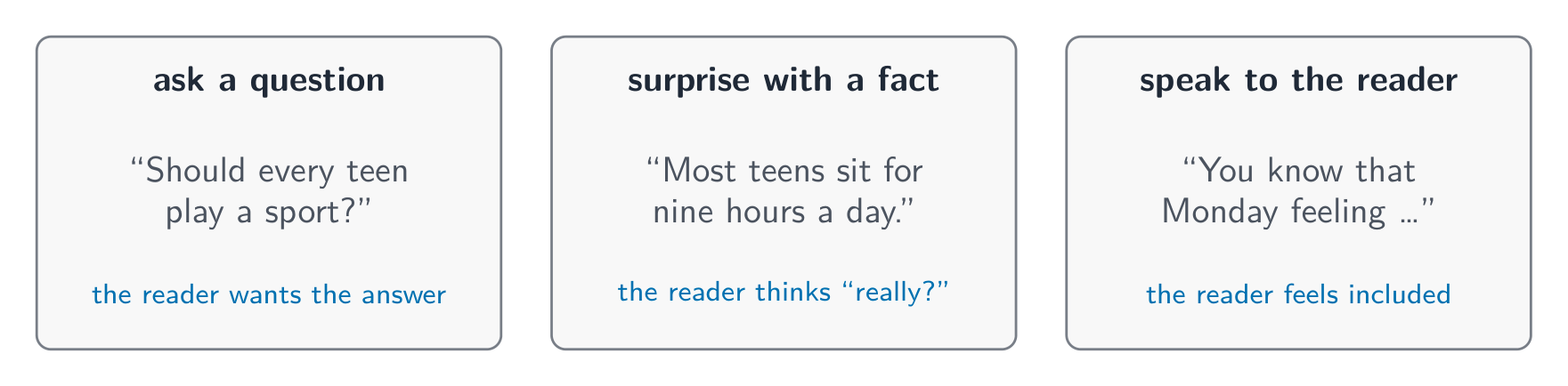
Three ways to catch the reader's interest in your first lines 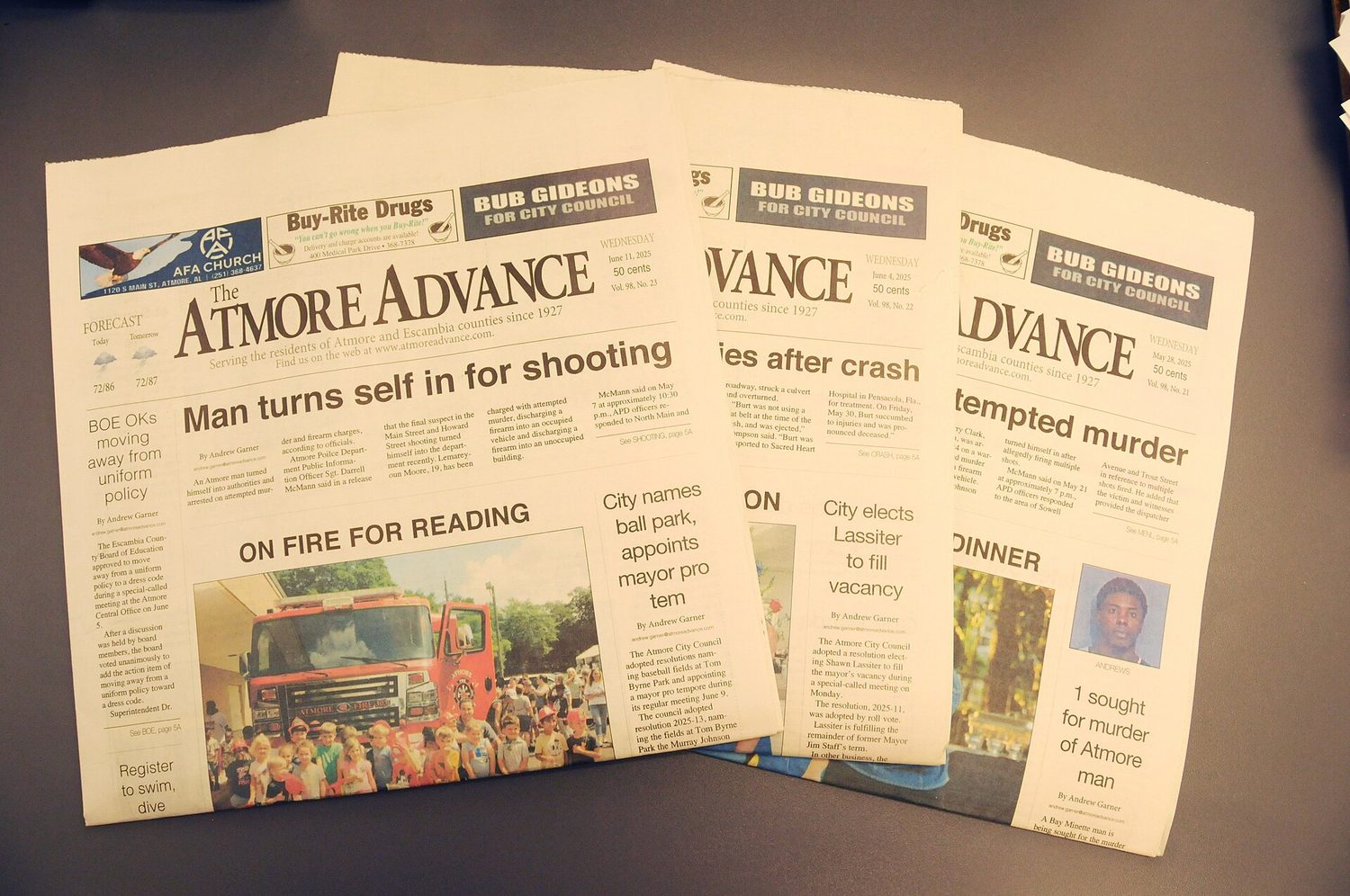
A newspaper front page: articles hook the reader, then inform and entertain with a clear angle คำศัพท์ ฝึกฝนEnglish ไทย article/ˈɑːtɪkl/ article informs/ɪnˈfɔːmz/ ให้ข้อมูล entertains/ˌentəˈteɪnz/ สร้างความบันเทิง engage/enˈɡeɪdʒ/ มีส่วนร่วม title/ˈtaɪtl/ ชื่อเรื่อง interest/ˈɪntrest/ interest 6.2
Writing a lively article

หลักสูตร
- จัดบทความเป็นการแนะนำ การพัฒนาและบทสรุป
- ใช้ภาษาที่มีชีวิตชีวา หลากหลาย และมีน้ำเสียงที่สม่ำเสมอ
- พูดถึงผู้อ่านโดยตรงเมื่อเหมาะสมกับหัวข้อ
แหล่งที่มา: หลักสูตร Cambridge International
An article should sound interesting, not flat.
The shape of a lively article: hook the reader, keep them, leave them thinking Structure
- Begin with an introduction 引言 that names the topic.
- Develop your points in the middle, one idea in each paragraph.
- End with a short conclusion 结论 that leaves the reader thinking.
Lively language
- Use varied 多样的 words and sentence lengths to keep the energy up.
- You can speak to the reader directly with "you".
- Keep the tone friendly, but not too casual.
Useful language
A few flexible phrases 短语 let you hook the reader and glide between ideas.
- To open with energy: Have you ever…? / Imagine you… / Last week, something odd happened to me.
- To move between ideas: What's more… / On the other hand… / The truth is…
- To speak to the reader: You might think… / We all know that… / Be honest —…
- To end memorably: So next time you… / Perhaps the real question is…
Vary how you open sentences. Ten sentences that all begin "I think" feel flat 平淡; mixing your openings keeps the reader awake.
A model opening
See how one opening hooks the reader, then points forward.
Have you ever tried to sleep with a phone glowing beside your pillow? Most of us have — and most of us wake up tired. This article asks a simple question: could a good night's sleep be the cheapest way to feel happier?
The question pulls the reader in, the honest detail keeps them, and the last line promises where the article is going. That is a lot of work for three sentences.
คำศัพท์ ฝึกฝนEnglish ไทย introduction/ˌɪntrəˈdʌkʃn/ การแนะนำ conclusion/kənˈkluːʒn/ ข้อสรุป varied/ˈveərid/ หลากหลาย phrases/ˈfreɪzɪz/ วลี flat/flæt/ แบบแบน 6.2
Exam tips
- Give the article a short, catchy title, then hook the reader with a question or surprise in the first lines.
- Talk to the reader: "Have you ever…?" An article is the one formal task where personality wins marks.
- One idea per paragraph, and make it real with a short example or a small story.
- Numbers and small facts make an article feel true: "three out of five students…".
- End with a line the reader remembers: a punchline, a question, or a call to act.
-
7
การเขียนรีวิว
ดูบทเรียน7.1
What a review does

หลักสูตร
- เข้าใจว่าบทวิจารณ์เป็นการบรรยายสิ่งที่คุณได้สัมผัส (ภาพยนตร์ สถานที่ หรือสินค้า) และแสดงความคิดเห็นของคุณ
- ดึงดูดคำบรรยายด้วยความคิดเห็นส่วนตัวและเหตุผล
- เขียนสำหรับกลุ่มผู้ฟังทั่วไป เช่น นิตยสารหรือเว็บไซต์
แหล่งที่มา: หลักสูตร Cambridge International
A review 评论 tells readers about something you have tried — a film, a book, a restaurant, or a place. A good review helps the reader decide 决定 whether to try it too.
Describe and judge
- A review does two things: it describes 描述 the thing, and it gives your opinion 观点 of it.
- Balance the two. Do not only describe, and do not only give opinions.
- Describing answers "What is it like?" Judging answers "Is it any good?" Move between the two, sentence by sentence.
An opinion stands on a reason and an example Support your opinions
- Give reasons for what you think. Say why it was good or bad.
- Use examples 例子 from your experience to make your view believable 可信.
- A weak review says "The food was nice." A strong review says "The soup was rich and warming, though the rice arrived cold." The detail is what convinces the reader.
Useful language
Learn a few phrases 短语 for each job. Then you never stare at a blank page.
- To describe: It is set in… / The story follows… / The dish combines… / What stands out is…
- To praise: The best part is… / I was impressed by… / It really succeeds in…
- To criticise 批评 (gently): The one weakness is… / It could have been better if… / At times it feels slow.
- To recommend: I would recommend it to… / It is well worth… / Don't miss…
Mix praise and criticism so the review sounds fair 公正. A review that is all praise, or all complaint, is hard to trust.

A theatre audience: reviews describe what you saw, give a clear opinion and support it with evidence คำศัพท์ ฝึกฝนEnglish ไทย review/rɪˈvjuː/ ทบทวน decide/dɪˈsaɪd/ ตัดสินใจ describes/dɪˈskraɪbz/ อธิบาย opinion/əˈpɪnɪən/ ความคิดเห็น examples/eɡˈzæmplz/ ตัวอย่าง believable/bɪˈliːvəbl/ น่าเชื่อถือ phrases/ˈfreɪzɪz/ วลี criticise/ˈkrɪtɪsaɪz/ วิจารณ์ fair/feə/ fair (ยุติธรรม) 7.2
How to build a review

หลักสูตร
- แนะนำสิ่งที่กำลังถูกวิจารณ์ จากนั้นบรรยายและประเมินผล
- รองรับความคิดเห็นของคุณด้วยรายละเอียดเฉพาะเจาะจงและตัวอย่าง
- สิ้นสุดด้วยการแนะนำที่ชัดเจนต่อผู้อ่าน
แหล่งที่มา: หลักสูตร Cambridge International
Readers want a clear, helpful review.
A review describes and judges, then ends with clear advice Structure
- Start by saying what you are reviewing, and give the reader the basic facts.
- In the middle, describe it and evaluate 评价 it — the good points and the weak points.
- Write for a general reader, in a friendly but clear tone 语气.
End with a recommendation
- Finish with a recommendation 建议: do you advise the reader to try it or not?
- Make your advice clear, for example: "I would recommend this film to anyone who likes adventure."
- You can add a condition: "…as long as you don't mind a slow start." This sounds honest and grown-up.
A model review
Read this short review of a film. Notice how each sentence either describes or judges.
Skyward is an adventure film about a girl who builds her own aircraft. The story is simple, but the flying scenes are breathtaking 惊人 and the young lead acts with real warmth. The middle drags a little, and a few jokes fall flat. Even so, it left the whole cinema smiling. I would recommend Skyward to any family looking for a bright, hopeful evening — just be ready for a slow first ten minutes.
Count the moves: it names the film, describes it, praises it, admits two faults, and ends with a clear, honest recommendation. That is a complete review in five sentences.

A restaurant interior: say what it is, describe it, judge the good and the weak, then recommend คำศัพท์ ฝึกฝนEnglish ไทย evaluate/ɪˈvæljuːeɪt/ ประเมิน tone/təʊn/ น้ำเสียง recommendation/ˌrekəmenˈdeɪʃn/ คำแนะนำ breathtaking/ˈbreθteɪkɪŋ/ น่าตื่นตาตื่นใจ 7.2
Exam tips
- Name what you are reviewing and your overall feeling in the first paragraph; do not keep it secret.
- Do both jobs: describe it (what it is) and judge it (what is strong, what is weak).
- Strong adjectives are the fuel of a review: gripping, delicious, disappointing, unforgettable.
- Mention one weakness even in a good review; pure praise sounds like an advert.
- Finish with a clear recommendation: who should try it, who should not, and why.
-
8
การเขียนเรียงความ
ดูบทเรียน8.1
Two kinds of essay

หลักสูตร
- บอกความแตกต่างระหว่าง essay แบบถกเถียง (สมดุล ทั้งสองด้าน) และ essay แบบให้ข้อคิดเห็น (มีมุมมองหลักหนึ่ง)
- วางแผนประเด็นหลักและเหตุผลหรือหลักฐานของแต่ละส่วน
- รักษาสไตล์ที่เป็นทางการและเป็นระเบียบ
แหล่งที่มา: หลักสูตร Cambridge International
An essay 议论文 gives your ideas about a topic in an organised way.
Two essay shapes: discursive weighs both sides; argumentative argues one view Discursive essays
- A discursive 论述的 essay looks at both sides of a topic.
- You give the points for and against, and perhaps your own view at the end.
Argumentative essays
- An argumentative 议论的 essay argues for one main view.
- You give strong reasons and examples to support your opinion.
Plan first
- Decide your main points and the reasons for each, before you write.
- A short plan keeps your essay organised.

A reading room full of books: essays need careful reading, planning and structured argument คำศัพท์ ฝึกฝนEnglish ไทย essay/ˈeseɪ/ เรียงความ discursive/dɪˈskɜːsɪv/ เชิงอรรถกรรม argumentative/ˌɑːɡjuːˈmentətɪv/ เชิงโต้แย้ง 8.2
How to structure an essay

หลักสูตร
- นำเสนอหัวข้อและแนวทางของคุณในบทนำ
- พัฒนาไอเดียหลักหนึ่งต่อย่อหน้าในส่วนเนื้อหา พร้อมเหตุผลและตัวอย่าง
- เชื่อมโยงไอเดียเข้าด้วยกันในบทสรุปที่ชัดเจน
แหล่งที่มา: หลักสูตร Cambridge International
A clear shape makes your argument easy to follow.
Introduction
- The introduction 引言 names the topic and says how you will approach it.
- Keep it short — two or three sentences.
Body paragraphs
- Put one main idea in each body 主体 paragraph.
- Start the paragraph with the idea, then add reasons and examples.
A body paragraph: the idea first, then reasons, then an example Conclusion
- The conclusion 结论 brings your ideas together.
- Do not add a new point here. Sum up your view clearly.
Useful language
Linking words 衔接词 signal your reader where the argument turns. They are the road signs of an essay.
- To add a point: Firstly… / In addition… / Another reason is…
- To show the other side: However… / On the other hand… / Some people argue that…
- To give an example: For example… / For instance… / such as…
- To conclude: In conclusion… / Overall… / Weighing both sides…
Use them at the start of a sentence, and do not overuse one. Two or three well-placed links are enough for a paragraph.
A model body paragraph
Watch the three moves: idea, then reason, then example.
Firstly, homework teaches students to work alone. In class, a teacher is always nearby to help. At home, a student must solve the problem by themselves — and that is where real learning happens. For example, a maths question that felt easy in the lesson can teach far more when you meet it again, alone, at your desk.
The first sentence is the idea. The next two explain why. The last one makes it real with an example. Every body paragraph can follow this simple shape.

Plan structure first: clear points, examples, and a firm conclusion คำศัพท์ ฝึกฝนEnglish ไทย introduction/ˌɪntrəˈdʌkʃn/ การแนะนำ body/ˈbɒdi/ ร่างกาย conclusion/kənˈkluːʒn/ ข้อสรุป linking words/ˈlɪŋkɪŋ wɜːdz/ คำเชื่อม 8.2
Exam tips
- Plan for three minutes before you write: your view, two reasons, one opposite view.
- First paragraph introduces the question; each middle paragraph carries exactly one argument.
- Signpost with linking words: First of all, However, On the other hand, In conclusion.
- Give the other side one fair paragraph, then answer it. Balance shows thinking and earns marks.
- The final paragraph states your opinion clearly. Do not sit on the fence.
-
9
ทักษะการฟัง
ดูบทเรียน9.1
Lắng nghe để nắm bắt thông tin

หลักสูตร
- ฟังหาข้อเท็จจริงและรายละเอียดเฉพาะ: สถานที่ ชื่อ เวลา วันที่ และทิศทาง
- คาดเดาประเภทของข้อมูลที่คุณจะได้ยินก่อนการฟัง
- เลือกตัวเลือกคำตอบที่ถูกต้องจากสิ่งที่ผู้พูดกล่าว
แหล่งที่มา: หลักสูตร Cambridge International
Trong bài thi nghe, bạn nghe mỗi bản ghi âm (recording) hai lần. Hãy tận dụng tốt cả hai cơ hội.
Dự đoán trước khi nghe
- อ่านคำถามก่อนเริ่มบันทึกเสียง
- Dự đoán (predict) loại câu trả lời bạn cần: một địa điểm, một tên, một con số, một thời gian?
Bắt kịp chi tiết
- Lắng nghe để tìm thông tin cụ thể (specific facts): địa điểm, tên, ngày tháng, giờ và hướng đi (directions).
- คำตอบมักมาตามลำดับเดียวกับคำถาม
Sử dụng cả hai lần phát
- Lần nghe đầu tiên, chọn câu trả lời của bạn.
- Lần thứ hai, kiểm tra lại. Đừng thay đổi một câu trả lời đúng mà không có lý do chính đáng.
ใช้การฟังทั้งสองครั้งต่างกัน: ตอบก่อน แล้วค่อยตรวจสอบ 
Một phòng thu radio: bài thi nghe yêu cầu bạn bắt kịp thông tin, thái độ và ý nghĩa hàm ẩn qua hai lần phát 
Nghe cẩn thận: bắt kịp thông tin, thái độ, và những gì chỉ được ngụ ý คำศัพท์ ฝึกฝนEnglish ไทย recording/rɪˈkɔːdɪŋ/ การบันทึกเสียง predict/prɪˈdɪkt/ คาดการณ์ specific/spəˈsɪfɪk/ เฉพาะเจาะจง directions/daɪˈrekʃnz/ คำแนะนำ 9.2
Nghe ý kiến và thái độ
หลักสูตร
- เข้าใจความคิด ความเห็น อารมณ์ และทัศนคติของผู้พูด
- ติดตามวิธีการเชื่อมโยงความคิดตลอดการพูดหรือสนทนาที่ยาวนานขึ้น
- สังเกตภาษาที่ผู้พูดใช้เพื่อแสดงความรู้สึก
แหล่งที่มา: หลักสูตร Cambridge International
Một số câu hỏi hỏi cách người nói nghĩ hoặc cảm nhận, không chỉ những gì họ nói.
Ý kiến và cảm xúc
- Lắng nghe ý kiến (opinion) và cảm xúc (feelings) của người nói.
- Chú ý đến từ ngữ họ lựa chọn. Từ mạnh mẽ cho thấy cảm xúc mạnh mẽ.
Theo dõi các liên kết
- Trong một bài nói dài, các ý tưởng liên kết (connect). Theo dõi cách một điểm dẫn đến điểm tiếp theo.
- Các từ như "nhưng", "vì" và "nên" cho thấy cách các ý tưởng liên kết.
คำศัพท์ ฝึกฝนEnglish ไทย opinion/əˈpɪnɪən/ ความคิดเห็น feelings/ˈfiːlɪŋz/ ความรู้สึก connect/kəˈnekt/ เชื่อมโยง 9.3
Nghe giữa các dòng

หลักสูตร
- เข้าใจสิ่งที่สื่อโดยนัยแต่ไม่ได้ระบุไว้โดยตรง
- พิจารณาเจตนาหรือทัศนภาพโดยรวมของผู้พูด
- สรุปความหมายของคำที่ไม่คุ้นเคยจากรายละเอียดโดยรอบ
แหล่งที่มา: หลักสูตร Cambridge International
Không phải câu trả lời nào cũng được nói trực tiếp.
ความหมายที่สื่อโดยนัย
- Đôi khi người nói ngụ ý (suggests) điều gì đó mà không nói thẳng.
- Hãy nghĩ về những gì họ thực sự muốn nói, không chỉ những từ chính xác.
Cẩn trọng với các yếu tố gây nhiễu
- Trong câu hỏi trắc nghiệm (multiple-choice), các phương án sai được gọi là yếu tố gây nhiễu (distractors).
- Người nói có thể đề cập đến một phương án, sau đó thay đổi suy nghĩ. Hãy lắng nghe toàn bộ ý tưởng trước khi chọn.
Một yếu tố gây nhiễu được đề cập trước, sau đó bị sửa - phần sửa là đáp án Những từ báo hiệu đáp án
tai được huấn luyện lắng nghe những từ nhỏ chỉ ra đáp án.
- การแก้ไขข้อความกำลังมา: ในความเป็นจริง… / ขออภัย, ฉันหมายถึง… / เมื่อคิดดีๆ แล้ว… — คำที่ อยู่หลังจาก คำเหล่านี้มักจะเป็นคำตอบที่แท้จริง ไม่ใช่คำที่อยู่ก่อนหน้า
- ประเด็นสำคัญ: สิ่งที่สำคัญที่สุดคือ… / สิ่งที่มีนัยสำคัญคือ… / เป็นพิเศษอย่างยิ่ง…
- ความรู้สึกหรือทัศนคติ: พูดกันตรงๆ… / ปัญหาอยู่ที่ว่า… / ฉันยินดีมากที่…
- ลำดับขั้นตอน: ก่อนอื่น… จากนั้น… สุดท้ายแล้ว… — คำเหล่านี้ช่วยให้คุณติดตามลำดับเหตุการณ์ได้ง่ายขึ้น
การจับคำสัญญาณได้เพียงคำเดียวก็ทำให้คุณได้รับคะแนนแล้ว จดจำคำเหล่านี้ไว้ขณะฟัง
คำศัพท์ ฝึกฝนEnglish ไทย suggests/səˈdʒests/ เสนอแนะ multiple-choice/ˈmʌltɪpl tʃɔɪs/ แบบเลือกตอบ distractors/dɪˈstræktəz/ ตัวเลือกลวง attitude/ˈætɪtjuːd/ ทัศนคติ 9.3
ข้อแนะนำสำหรับการสอบ
- อ่านคำถามก่อนเริ่มฟังและขีดเส้นใต้คำสำคัญในแต่ละข้อ
- คุณจะได้ยินทุกสิ่งสองรอบ: ตอบสิ่งที่ทำได้ในรอบแรก และตรวจสอบพร้อมเติมช่องว่างในรอบที่สอง
- ผู้พูดมักแก้ไขตัวเองด้วยตัวเลข วัน และการสะกดคำ รูปแบบสุดท้ายคือคำตอบ
- หากพลาดไป? ทิ้งไว้และมุ่งไปที่ข้อถัดไป กลับไปเติมช่องว่างนั้นในรอบที่สอง
- เขียนคำตอบสำหรับทุกข้อ ไม่มีการหักคะแนนสำหรับการทายผิด
-
10
ทักษะการพูด
ดูบทเรียน10.1
Talking with the examiner

หลักสูตร
- เข้าร่วมการสนทนาหรือการสัมภาษณ์ โดยให้ข้อมูลเชิงประจักษ์และความคิดเห็น
- ตอบคำถามและขยายคำตอบด้วยเหตุผลและตัวอย่าง
- ใช้ทักษะการสื่อสาร: เริ่มต้น ตอบกลับ ขอความชัดเจน และสลับบทพูด
แหล่งที่มา: หลักสูตร Cambridge International
The speaking test is a friendly conversation 对话, not a test you fail by being nervous.
Take part fully
- Answer the question, then add more. A one-word answer is too short.
- Give reasons and examples. Show what you can do with English.
Answer, then add more: a reason and an example make a full turn Interact well
- Listen to the examiner and respond 回应 to what they say.
- If you do not understand, it is fine to ask: "Sorry, could you repeat that?"
- Take turns 轮流 naturally, as in a real conversation.
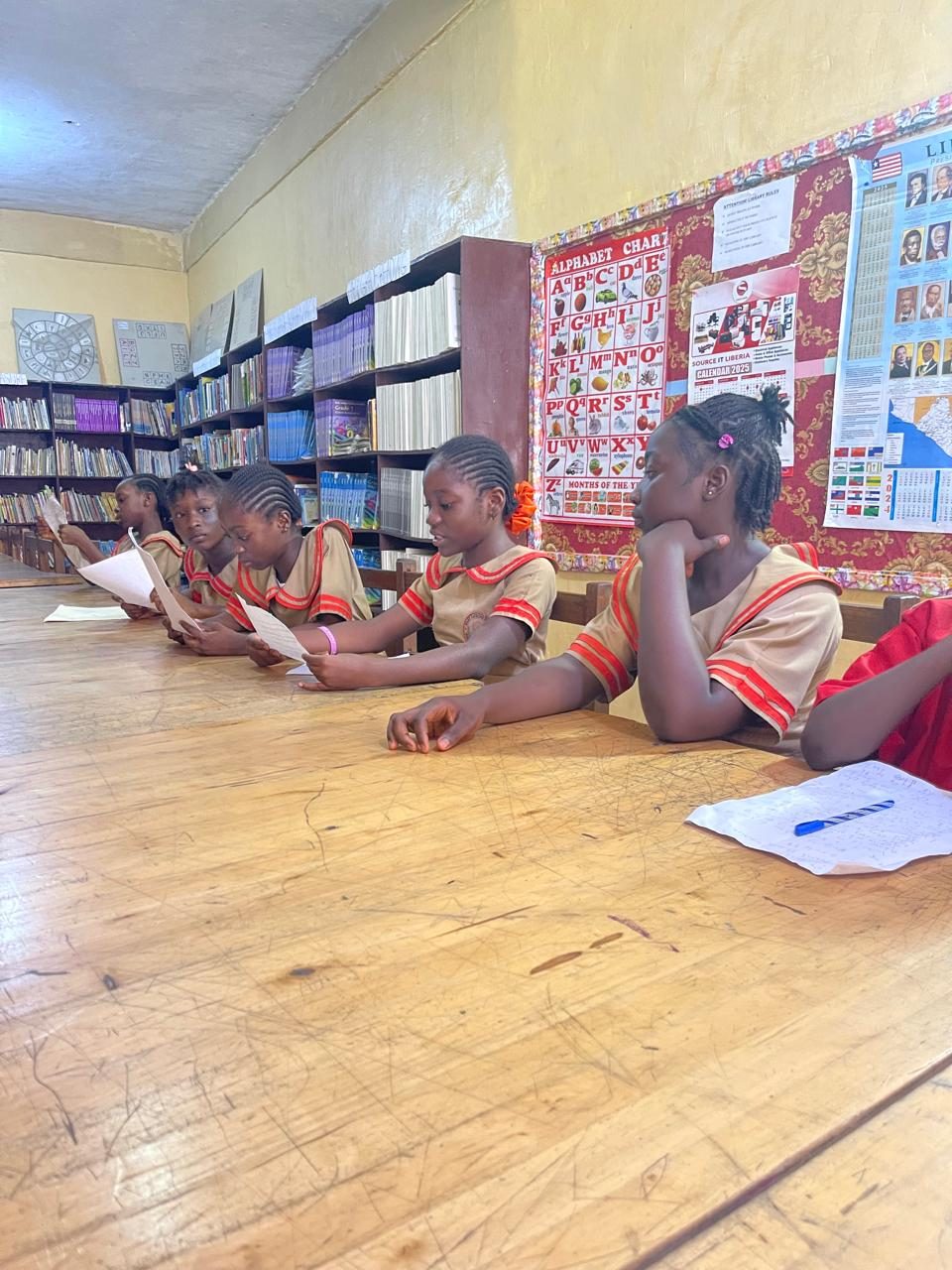
Develop answers in conversation: add reasons, examples, and a short opinion คำศัพท์ ฝึกฝนEnglish ไทย conversation/kɒnvəˈseɪʃn/ บทสนทนา respond/rɪˈspɒnd/ ตอบกลับ turns/tɜːnz/ เปลี่ยน 10.2
Giving a short talk

หลักสูตร
- นำเสนอพูดสั้นๆ เพื่ออธิบายเหตุการณ์หรืออธิบายและยืนยันความคิดเห็น
- ขยายคำตอบโดยยกตัวอย่าง ยืนยัน เปรียบเทียบ และคาดเดา
- พูดด้วยความคล่องแคล่วในการใช้คำไวยากรณ์ การออกเสียง และจังหวะเสียง
แหล่งที่มา: หลักสูตร Cambridge International
You may be asked to talk about a topic for a short time.
Develop your ideas
- Do not just list points. Develop 展开 each one with a reason or an example.
- Use phrases like "for example", "that is why" and "I suppose" to extend your answers.
Speak clearly
- Speak with good pronunciation 发音 and natural intonation 语调.
- Do not rush. It is better to speak clearly than quickly.
- If you forget a word, say it another way. This is called paraphrasing 释义.
Useful language
Memorise a few phrases 短语 for each move. They keep you talking when your mind goes blank.
- To give an opinion: In my opinion… / I'd say… / For me,…
- To add detail: for example… / that's why… / what I mean is…
- To buy thinking time: That's a good question… / Well, let me think… / I suppose…
- To agree or disagree politely 礼貌: That's true, but… / I see what you mean, though…
A short pause with "Let me think…" sounds far better than silence. It shows control, not panic.
A model turn
See how one student turns a plain question into a full, natural answer.
Examiner: Do you enjoy studying at home?
Student: In my opinion, home is better for some subjects. For example, I revise 复习 maths well at home because it is quiet and nobody interrupts 打断 me. But I suppose group work is easier at school, where I can ask my friends straight away. So really, it depends on the task.
The student gives an opinion, backs it with an example, admits the other side, and finishes with a neat conclusion. That is a top-mark turn — and anyone can build it with these phrases.
A short talk to a room: plan clear points, speak naturally, and answer follow-up questions คำศัพท์ ฝึกฝนEnglish ไทย develop/dɪˈveləp/ พัฒนา pronunciation/prəˌnʌnsɪˈeɪʃn/ การออกเสียง intonation/ˌɪntəˈneɪʃn/ น้ำเสียง paraphrasing/ˈpærəfreɪzɪŋ/ การเขียนใหม่ phrases/ˈfreɪzɪz/ วลี politely/pəˈlaɪtli/ สุภาพ revise/rɪˈvaɪz/ ทบทวน interrupts/ˈɪntərʌpts/ การขัดจังหวะ 10.2
Exam tips
- The warm-up chat is not marked. Use it to relax and start talking, not to recite prepared lines.
- Never say memorised speeches. The examiner stops them, and real conversation earns more.
- Grow every answer: point, reason, example. "I like… because… for example…" fills a minute well.
- If you miss a question, ask: "Could you say that again, please?" That is good English, not a fault.
- Take each prompt on the card in order; every prompt can become a small topic of its own.
-
11
คำศัพท์และประเภทข้อความ
ดูบทเรียน11.1
Growing your vocabulary

หลักสูตร
- เรียนรู้คำใหม่พร้อมกับความหมาย การสะกดและการออกเสียง
- จัดกลุ่มคำศัพท์ตามหัวข้อและสถานการณ์ในชีวิตประจำวัน
- ใช้สำนวน คำกริยาประกอบ และคำที่จับคู่กันอย่างเป็นธรรมชาติ
แหล่งที่มา: หลักสูตร Cambridge International
A wide vocabulary 词汇 helps you in every part of the exam.
Learn words well
- Learn a new word with its meaning, its spelling, and how it sounds.
- Keep a vocabulary notebook. Group words by topic, such as travel or health.
Knowing a word well means knowing all of this Use natural phrases
- Learn words that go together. These are called collocations 词语搭配, like "make a decision" or "heavy rain".
- Learn set phrases 固定短语 and common phrasal verbs 短语动词, like "give up" or "look after".
- Using natural phrases makes your English sound fluent 流利.
Growing vocabulary: notice useful words in every text type and practise them in your own writing คำศัพท์ ฝึกฝนEnglish ไทย vocabulary/vəʊˈkæbjʊləri/ คำศัพท์ collocations/ˌkɒləʊˈkeɪʃnz/ คำศัพท์ที่มักใช้ร่วมกัน set phrases/set ˈfreɪzɪz/ วลีสำเร็จรูป phrasal verbs/ˈfreɪzl vɜːbz/ กริยาคำกริยา fluent/ˈfluːənt/ คล่องแคล่ว 11.2
Knowing your text types

หลักสูตร
- จำแนกประเภทข้อความที่พบบ่อย: บทความ บล็อก อีเมล_EQ_essay รายงาน บทวิจารณ์ ประกาศ บัตรพับ และการสัมภาษณ์
- รู้จักวัตถุประสงค์และผู้รับของแต่ละประเภทข้อความ
- จับคู่สไตล์และรูปแบบที่เหมาะสมกับแต่ละประเภทข้อความ
แหล่งที่มา: หลักสูตร Cambridge International
Each writing task is a text type 文本类型 with its own rules.
Common text types
- An email is a message to one person; an article 文章 is for many readers; a report 报告 gives facts to a person in charge.
- A blog 博客 is a personal, informal online post – like an article but more personal and casual, so it sits near the informal end of the formality scale.
- A review 评论 gives an opinion about something you tried; an essay 议论文 argues a point of view.
- A notice 通知 and a leaflet 传单 give short, clear information.
Match style to type
- Each text type has its own purpose, reader and tone.
- Before you write, ask: what is this text type, and what style does it need?
Every text type sits somewhere on the line from informal to formal A vocabulary routine
Turn new words into words you truly own with four steps:
- Meet it — when you find a new word, write it down with one example sentence.
- File it — put it in your notebook under a topic group (travel, health, school).
- Test it — cover the meaning and try to recall it the next day, then again a week later. This spaced review 间隔复习 fixes words in your memory far better than reading a list once.
- Use it — put the word into your own writing or speaking within a few days, before you forget it.
Five words learned this way each day is over a thousand a year.
คำศัพท์ ฝึกฝนEnglish ไทย text type/tekst taɪp/ ประเภทข้อความ article/ˈɑːtɪkl/ article report/rɪˈpɔːt/ รายงาน blog/blɒɡ/ บล็อก review/rɪˈvjuː/ ทบทวน essay/ˈeseɪ/ เรียงความ notice/ˈnəʊtɪs/ ประกาศ leaflet/ˈliːflɪt/ ใบปลิว spaced review/speɪst rɪˈvjuː/ ทบทวนแบบเว้นระยะ 11.2
Exam tips
- Learn words in families, one family per text type: email openers, report verbs, review adjectives.
- In the writing exam, put the text type's fixed parts down first: greeting, title or headings. They are the easiest marks on the paper.
- Keep a personal word list. Five new words a day beats fifty words once a month.
- When a new word appears in the reading paper, guess it from the context and keep moving; never freeze on one word.