Skip to content · ⁨ข้ามไปยังเนื้อหา⁩

Human influences on ecosystems · ⁨ผลกระทบของมนุษย์ต่อระบบนิเวศ⁩

IGCSE Biology · ⁨Biology IGCSE⁩ · Topic 20 · ⁨หัวข้อ 20⁩

Video lesson for this topic · ⁨บทเรียนวิดีโอสำหรับหัวข้อนี้⁩ Open the video page · ⁨เปิดหน้าวิดีโอ⁩
7:43

ผลกระทบของมนุษย์ต่อระบบนิเวศ

เกษตรกรกระจายปุ๋ยบนนา งานธรรมดา但有ประโยชน์ ห่างออกไปสองกิโลเมตรมีแม่น้ำที่เต็มไปด้วยปลา สามสัปดาห์ต่อมาปลากลับลอย…

English narration · English + 中文 subtitles burned in · ⁨การบรรยายภาษาอังกฤษ · คำบรรยายภาษาอังกฤษ + 中文 ลอยตัวบนภาพ⁩

20.1

Increasing food supply · ⁨การเพิ่มแหล่งอาหาร⁩

Syllabus · ⁨หลักสูตร⁩
English
Core Supplement
1 Describe how humans have increased food production, limited to: (a) agricultural machinery to use larger areas of land and improve efficiency (b) chemical fertilisers to improve yields (c) insecticides to improve quality and yield (d) herbicides to reduce competition with weeds (e) selective breeding to improve production by crop plants and livestock
2 Describe the advantages and disadvantages of large-scale monocultures of crop plants
3 Describe the advantages and disadvantages of intensive livestock production
ไทย
แก่น เพิ่มเติม
1 อธิบายว่ามนุษย์ได้เพิ่มการผลิตอาหารอย่างไร โดยจำกัดอยู่ที่: (ก) เครื่องจักรกลการเกษตรเพื่อใช้พื้นที่ดินมากขึ้นและเพิ่มประสิทธิภาพ (ข) ปุ๋ยเคมีเพื่อเพิ่มผลผลิต (ค) ยาฆ่าแมลงเพื่อเพิ่มคุณภาพและผลผลิต (ง) ยา除草剂เพื่อลดการแข่งขันกับวัชพืช (จ) การผสมพันธุ์เลือกสรรเพื่อเพิ่มผลผลิตของพืชผลทางการเกษตรและสัตว์เลี้ยง
2 อธิบายข้อดีและข้อเสียของการปลูกพืชผลทางการเกษตรแบบ monoculture ขนาดใหญ่
3 อธิบายข้อดีและข้อเสียของการเลี้ยงสัตว์แบบ intensive

Source: Cambridge International syllabus · ⁨แหล่งที่มา: หลักสูตร Cambridge International⁩

English

To grow more food, humans use:

  • agricultural machinery to farm larger areas of land quickly.
  • chemical fertilisers 化肥 to improve yields 产量.
  • insecticides 杀虫剂 to kill insect pests.
  • herbicides 除草剂 to kill weeds 杂草 that compete with the crops.
  • selective breeding 选择育种 to improve crop plants 农作物 and livestock 牲畜.

A monoculture 单一栽培 (growing one crop over a large area) gives a big, easy harvest, but one pest or disease can destroy the whole crop, and it lowers biodiversity 生物多样性. Intensive livestock farming (many animals in a small space) gives cheap meat, but raises worries about animal welfare and the spread of disease.

ไทย

เพื่อผลิตอาหารมากขึ้น มนุษย์ใช้:

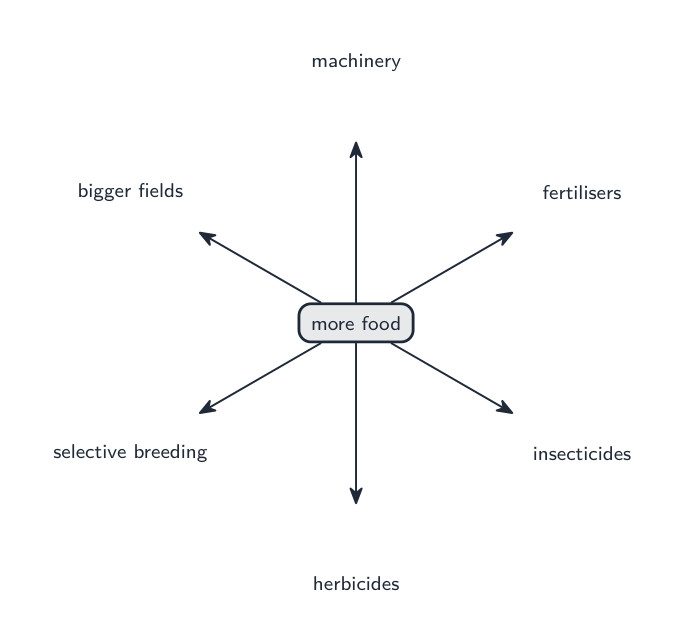
วิธีการผลิตอาหารเพิ่มขึ้น: เครื่องจักรกล, ปุ๋ย, ยาฆ่าแมลง, ยา除草剂, การเพาะพันธุ์แบบเลือกสรร และพื้นที่ปลูกที่ใหญ่ขึ้น
วิธีการที่เกษตรกรเพิ่มการผลิตอาหาร
  • เครื่องจักรทางการเกษตร เพื่อทำนาบนพื้นที่ขนาดใหญ่ได้อย่างรวดเร็ว
  • ปุ๋ย ทางเคมีเพื่อปรับปรุง ผลผลิต
  • ยาฆ่าแมลง เพื่อกำจัดแมลงศัตรูพืช
  • ยา除草剂 เพื่อกำจัด วัชพืช ที่แข่งขันกับพืชผล
  • การเพาะพันธุ์แบบเลือกสรร เพื่อปรับปรุง พืชผล และ สัตว์เลี้ยง

** monoculture** (การปลูกพืชชนิดเดียวในพื้นที่กว้าง) ให้การเก็บเกี่ยวที่มากและง่าย แต่ศัตรูพืชหรือโรคหนึ่งชนิดสามารถทำลายพืชผลทั้งหมดได้ และลด ความหลากหลายทางชีวภาพ การเลี้ยงสัตว์แบบเข้มข้น (สัตว์จำนวนมากในพื้นที่เล็ก) ให้เนื้อราคาถูกแต่สร้างความกังวลเรื่องสวัสดิภาพสัตว์และการแพร่ระบาดของโรค

Explore · ⁨สำรวจ⁩

Food supply pressure lab · ⁨ห้องปฏิบัติการแรงกดดันด้านอาหาร⁩

Follow how demand, farming and waste affect food supply. · ⁨ติดตามว่าความต้องการ การเกษตร และของเสียส่งผลต่อแหล่งอาหารอย่างไร⁩

Vocabulary · ⁨คำศัพท์⁩ Train · ⁨ฝึกฝน⁩
English ไทย
monoculture/ˈmɒnəʊkʌltʃə/ การปลูกพืชเพียงชนิดเดียว
biodiversity/ˌbaɪəʊdaɪˈvɜːsɪti/ ความหลากหลายทางชีวภาพ
20.2

Habitat destruction · ⁨การทำลายที่อยู่อาศัย⁩

Syllabus · ⁨หลักสูตร⁩
English
Core Supplement
1 Describe biodiversity as the number of different species that live in an area
2 Describe the reasons for habitat destruction, including: (a) increased area for housing, crop plant production and livestock production (b) extraction of natural resources (c) freshwater and marine pollution
3 State that through altering food webs and food chains, humans can have a negative impact on habitats
4 Explain the undesirable effects of deforestation as an example of habitat destruction, to include: reducing biodiversity, extinction, loss of soil, flooding and increase of carbon dioxide in the atmosphere
ไทย
แก่น เพิ่มเติม
1 อธิบายความหลากหลายทางชีวภาพว่าเป็นจำนวนของชนิดพันธุ์ที่แตกต่างกันที่มีชีวิตอยู่ในพื้นที่
2 อธิบายสาเหตุของการทำลายแหล่งที่อยู่อาศัย รวมถึง: (ก) พื้นที่เพิ่มขึ้นสำหรับการอยู่อาศัย, การผลิตพืชผลทางการเกษตร และการเลี้ยงสัตว์ (ข) การขุดค้นทรัพยากรธรรมชาติ (ค) มลพิษจากน้ำจืดและน้ำทะเล
3 ระบุว่าผ่านการเปลี่ยนแปลงห่วงโซ่อาหารและสายใยอาหาร มนุษย์สามารถส่งผลกระทบเชิงลบต่อแหล่งที่อยู่อาศัย
4 อธิบายผลกระทบที่ไม่พึงประสงค์ของการตัดไม้ทำลายป่าในฐานะตัวอย่างของการทำลายแหล่งที่อยู่อาศัย โดยรวมถึง: การลดลงของความหลากหลายทางชีวภาพ, การสูญพันธุ์, การสูญเสียชั้นดิน, น้ำท่วม และการเพิ่มขึ้นของคาร์บอนไดออกไซด์ในบรรยากาศ

Source: Cambridge International syllabus · ⁨แหล่งที่มา: หลักสูตร Cambridge International⁩

English

Biodiversity is the number of different species 物种 living in an area. Humans destroy habitats 栖息地 (the places where organisms live) by:

  • clearing land for housing, crops and livestock.
  • extracting natural resources 资源, such as by mining.
  • pollution 污染 of fresh water and the sea.

By changing food webs 食物网 and food chains 食物链, humans harm habitats.

Deforestation 森林砍伐 (cutting down forests) is a major example. It causes:

  • lower biodiversity and the extinction 灭绝 of species.
  • loss of soil (no roots to hold it, so it washes away).
  • more flooding.
  • more carbon dioxide 二氧化碳 in the air, because there are fewer trees to take it in.
ไทย
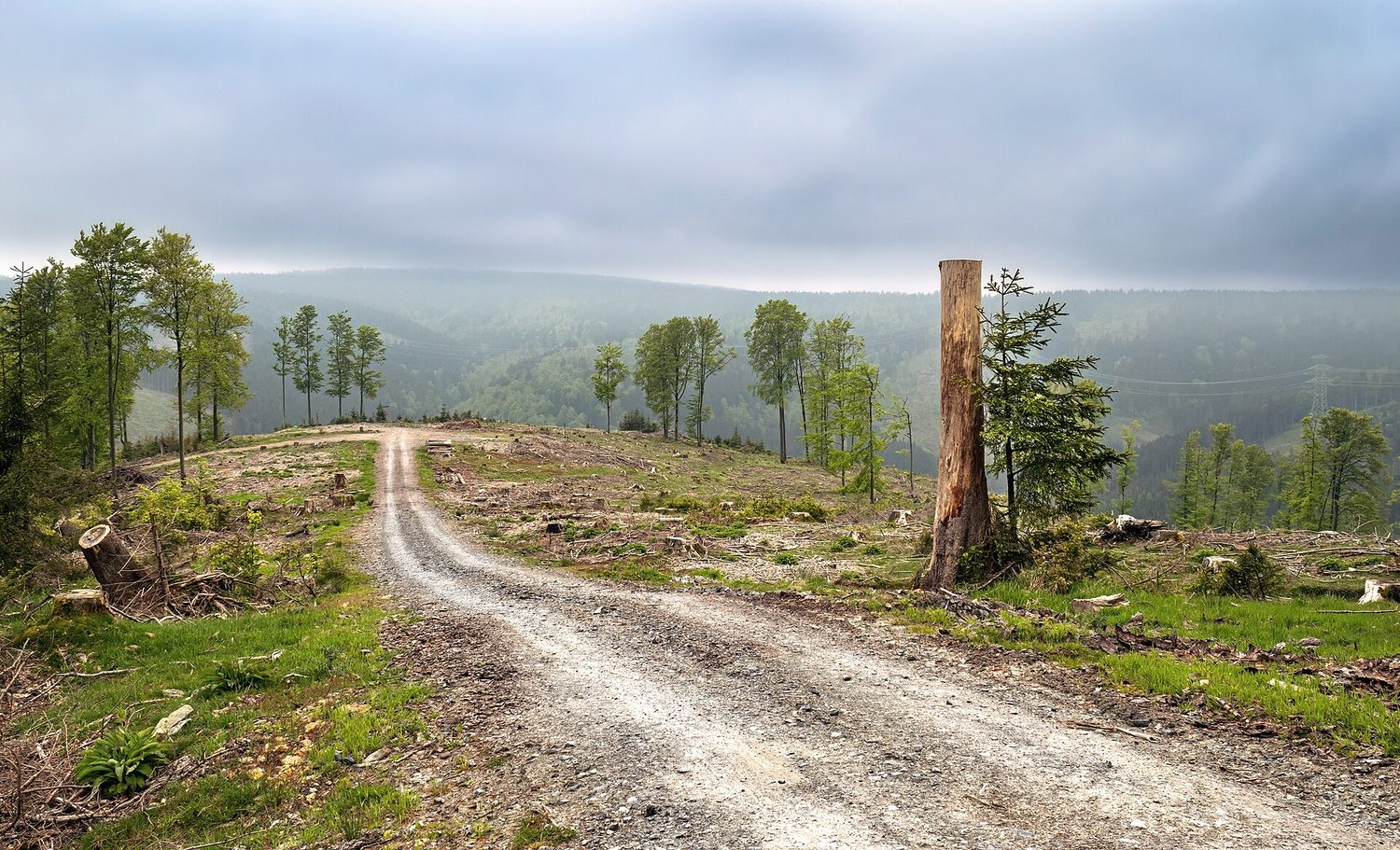
พื้นที่ที่ถูกตัดไม้ทำลายป่า
การตัดไม้ทำลายป่าทำลายที่อยู่อาศัยและลดความหลากหลายทางชีวภาพ

ความหลากหลายทางชีวภาพคือจำนวนของ species ที่แตกต่างกัน living在一个区域中。มนุษย์ทำลาย ที่อยู่อาศัย (สถานที่ที่สิ่งมีชีวิต resides) โดย:

  • ตัดไม้เพื่อสร้างบ้าน พื้นที่ปลูกพืช และที่เลี้ยงสัตว์
  • การ extracting ทรัพยากรธรรมชาติ เช่น通过采矿
  • มลพิษ ของน้ำจืดและทะเล

通过对食物网和食物链的改变,人类破坏了栖息地。

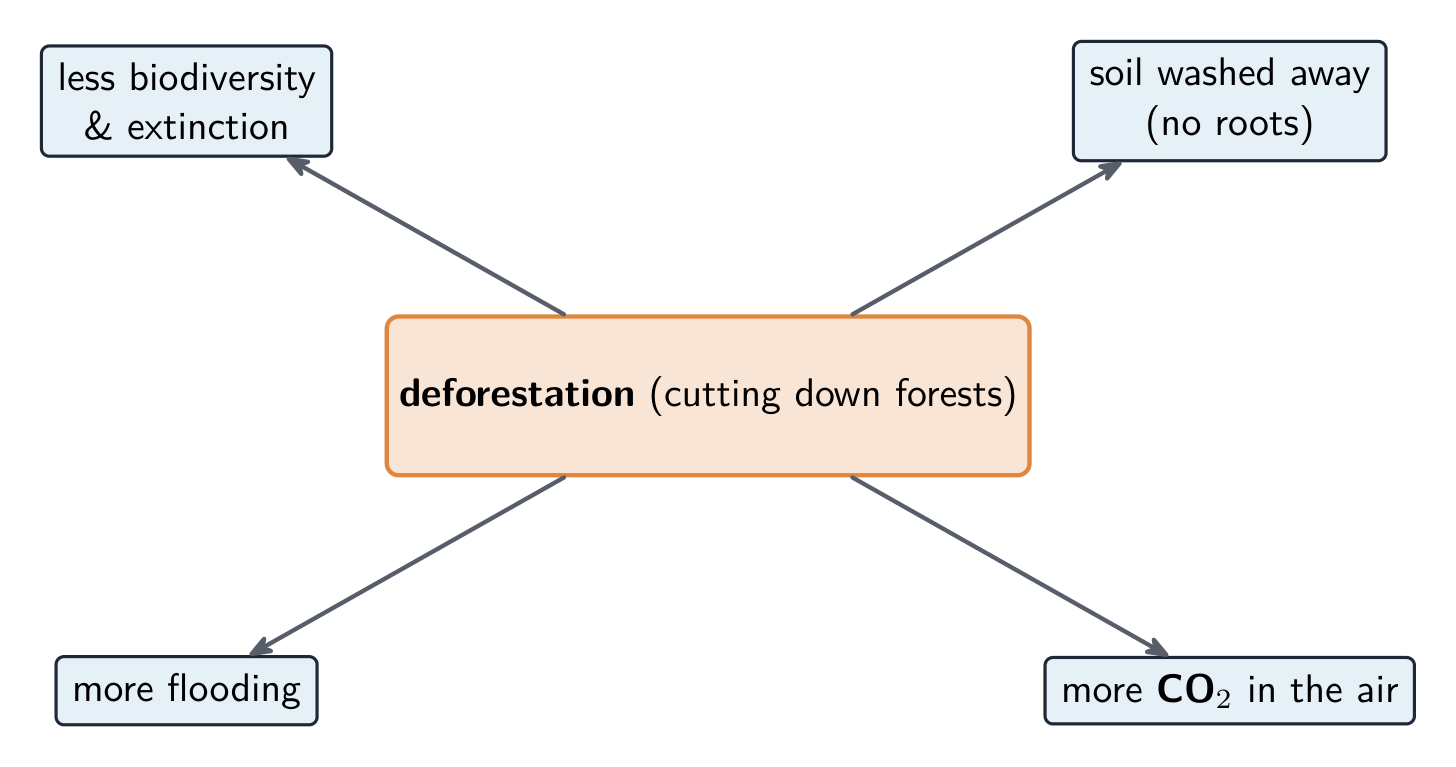
การตัดไม้ทำลายป่า (การ砍伐森林) เป็นตัวอย่างสำคัญ causing以下后果:

  • ความหลากหลายทางชีวภาพลดลงและ การสูญพันธุ์ ของ species
  • การสูญเสียดิน (ไม่มีรากยึดไว้ sehingga被冲走)
  • น้ำท่วมมากขึ้น
  • คาร์บอนไดออกไซด์ในอากาศมากขึ้น เนื่องจากมีต้นไม้adioButtonในการ吸收它
แผนภาพวงกลม: การตัดไม้ทำลายป่านำไปสู่ความหลากหลายทางชีวภาพลดลงและการสูญพันธุ์ ดินถูกชะล้างเพราะไม่มีราก ภัยน้ำท่วมเพิ่มขึ้น และปริมาณคาร์บอนไดออกไซด์ในอากาศมากขึ้น
การตัดไม้ทำลายป่าลดความหลากหลายทางชีวภาพ ชะล้างดิน ก่อให้เกิดน้ำท่วม และเพิ่ม CO₂ ในบรรยากาศ
Explore · ⁨สำรวจ⁩

Habitat destruction chain · ⁨ลำดับเหตุการณ์การทำลายแหล่งอาศัย⁩

See how removing habitat causes a chain of ecological effects. · ⁨ดูว่าการกำจัดแหล่งอาศัยก่อให้เกิดผลกระทบเชิงนิเวศอย่างไร⁩

Vocabulary · ⁨คำศัพท์⁩ Train · ⁨ฝึกฝน⁩
English ไทย
species/ˈspiːsiːz/ ชนิด (species)
habitats/ˈhæbɪtæts/ ถิ่นที่อยู่
resources/rɪˈzɔːsɪz/ ทรัพยากร
deforestation/diːˌfɒrɪˈsteɪʃn/ การตัดไม้ทำลายป่า
extinction/ekˈstɪŋkʃn/ การสูญพันธุ์
carbon dioxide/ˈkɑːbən daɪˈɒksaɪd/ คาร์บอนไดออกไซด์
sewage/ˈsuːɪdʒ/ น้ำเสีย (sewage)
ecosystems/ˈiːkəʊsɪstəmz/ ระบบนิเวศ (ecosystems)
20.3

Pollution · ⁨มลพิษ⁩

Syllabus · ⁨หลักสูตร⁩
English
Core Supplement
1 Describe the effects of untreated sewage and excess fertiliser on aquatic ecosystems 4 Explain the process of eutrophication of water, limited to: • increased availability of nitrate and other ions • increased growth of producers • increased decomposition after death of producers • increased aerobic respiration by decomposers • reduction in dissolved oxygen • death of organisms requiring dissolved oxygen in water
2 Describe the effects of non-biodegradable plastics, in both aquatic and terrestrial ecosystems
3 Describe the sources and effects of pollution of the air by methane and carbon dioxide, limited to: the enhanced greenhouse effect and climate change
ไทย
แก่น เพิ่มเติม
1 อธิบายผลกระทบของน้ำเสียที่ไม่ได้รับการบำบัดและปุ๋ยเกินปริมาณที่มีต่อระบบนิเวศทางน้ำ 4 อธิบายกระบวนการเกิดนอทรอกฟิเคชัน (Eutrophication) ของน้ำ ซึ่งจำกัดอยู่เฉพาะ: • ความพร้อมใช้งานของไนเตรตและไอออนอื่นๆ เพิ่มขึ้น • การเจริญเติบโตของผู้ผลิตเพิ่มขึ้น • การย่อยสลายเพิ่มขึ้นหลังผู้ผลิตตาย • การหายใจแบบแอโรบิกของตัวย่อยสลายเพิ่มขึ้น • การลดลงของออกซิเจนละลายในน้ำ • การตายของสิ่งมีชีวิตที่ต้องการออกซิเจนละลายในน้ำ
2 อธิบายผลกระทบของพลาสติกที่ย่อยสลายไม่ได้ ทั้งในระบบนิเวศทางน้ำและบนบก
3 อธิบายแหล่งกำเนิดและผลกระทบของมลพิษทางอากาศจากมีเทนและคาร์บอนไดออกไซด์ โดยจำกัดอยู่ที่: ผลเรือนกระจกที่รุนแรงขึ้นและการเปลี่ยนแปลงสภาพภูมิอากาศ

Source: Cambridge International syllabus · ⁨แหล่งที่มา: หลักสูตร Cambridge International⁩

English

Water pollution

Untreated sewage 污水 and excess fertiliser washed into rivers and lakes damage water ecosystems 生态系统.

(Supplement) Excess fertiliser causes eutrophication 富营养化:

  1. the fertiliser adds nitrate ions 硝酸根离子 and other ions to the water.
  2. producers 生产者 such as algae grow very fast.
  3. they soon die, and decomposition 分解 increases.
  4. decomposers 分解者 use up the oxygen 氧气 in aerobic respiration 有氧呼吸.
  5. the dissolved oxygen falls, so fish and other organisms die.

Worked example. A farmer spreads fertiliser on a field; weeks later the fish in a nearby river die. Put the steps in order and explain. Rain washes nitrate ions off the field into the river. The extra nitrate makes algae grow very fast and cover the surface. The algae block the light, so the plants below die. Decomposers multiply as they feed on the dead algae and plants, and their aerobic respiration uses up the oxygen dissolved in the water. With too little oxygen left, the fish die. The fish are not poisoned by the fertiliser - they suffocate, and it is the decomposers that actually remove the oxygen.

Plastics and air pollution

Non-biodegradable 不可降解 plastics 塑料 do not rot away. They build up in the sea and on land, harming wildlife — animals may eat them or get trapped.

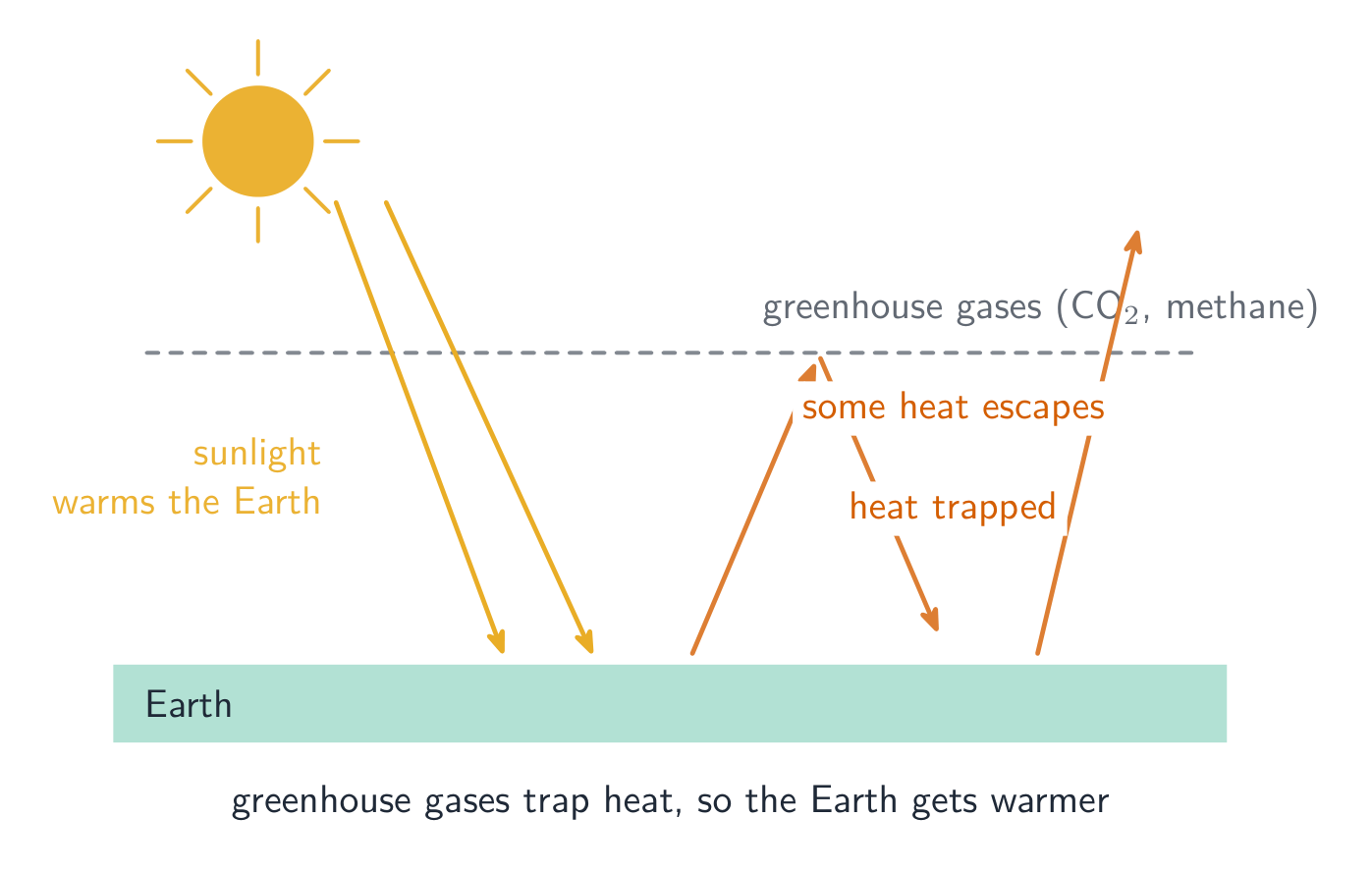
Methane 甲烷 and carbon dioxide are greenhouse gases. Too much of them strengthens the greenhouse effect 温室效应 (the enhanced greenhouse effect), which causes climate change 气候变化.

ไทย
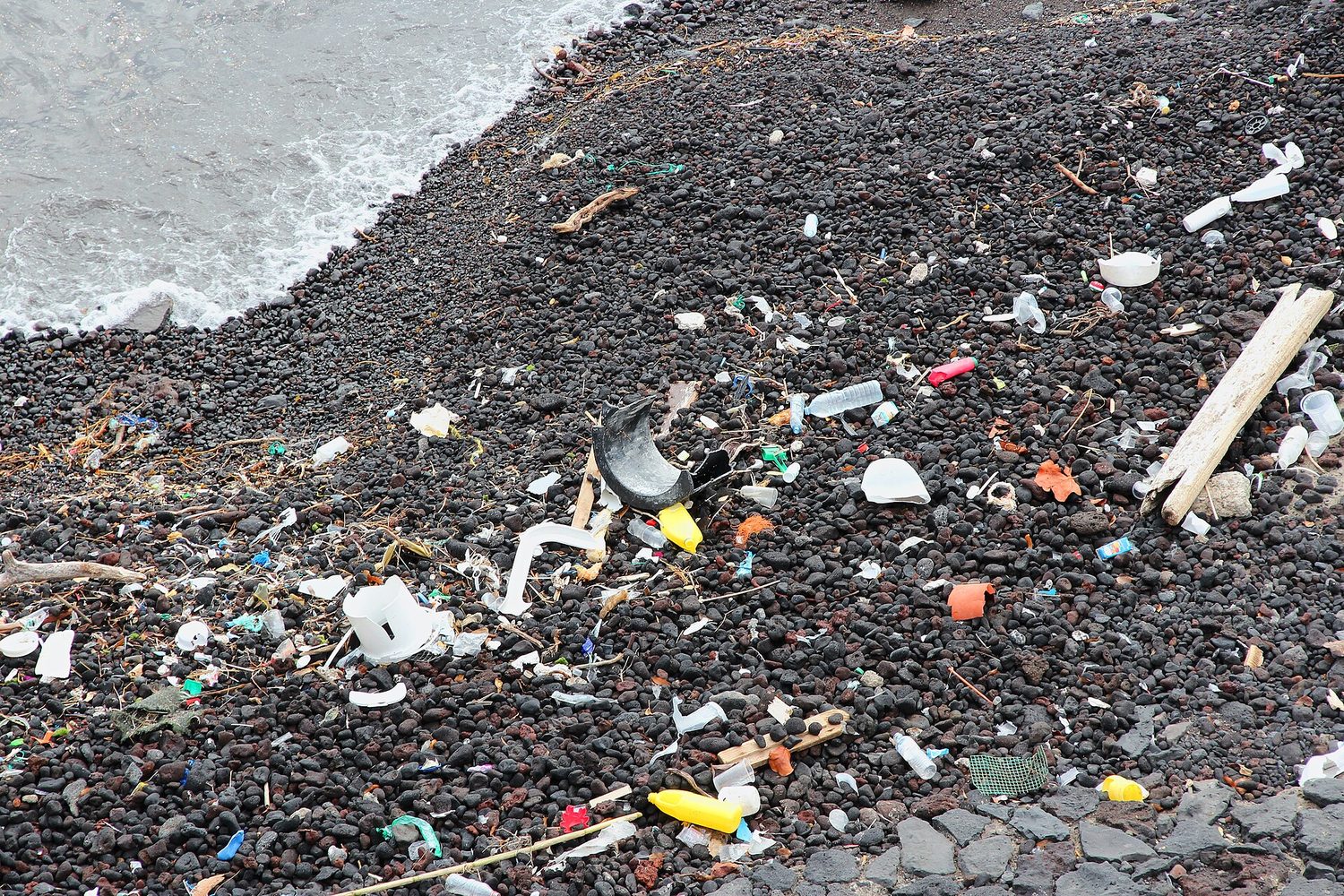
เศษขยะพลาสติกที่ลอย上岸บนชายหาด
มลพิษจากพลาสติกเป็นผลกระทบหลักของมนุษย์ต่อระบบนิเวศ

มลพิษทางน้ำ

น้ำเสียที่ไม่ได้ผ่านการบำบัดและปุ๋ยที่มากเกินไปที่ถูกชะล้างลงแม่น้ำและทะเลสาบ ทำลาย ระบบนิเวศ ทางน้ำ

(ส่วนเสริม) ปุ๋ยที่มากเกินไปก่อให้เกิด ภาวะสารอาหารเกิน (eutrophication):

  1. ปุ๋ยเพิ่ม ไอออนไนเตรต และไอออนอื่นๆ ลงในน้ำ
  2. ผู้ผลิต เช่น สาหร่ายเจริญเติบโตอย่างรวดเร็วมาก
  3. พวกมันตายไปเร็ว และกระบวนการ การสลายตัว เพิ่มขึ้น
  4. จุลินทรีย์ย่อยสลาย ใช้ ออกซิเจน ใน การหายใจแบบใช้ออกซิเจน
  5. ออกซิเจนที่ละลายน้ำลดลง สัตว์น้ำและสิ่งมีชีวิตอื่น ๆ จึงตาย
แผนภูมิแสดงกระบวนการภาวะสารอาหารเกิน: ปุ๋ยส่วนเกินชะล้างลงน้ำ สาหร่ายเจริญเติบโตเร็วแล้วตาย จุลินทรีย์ย่อยสลายใช้氧หมด ปลาตาย
富营养化:过量肥料导致藻华爆发,随后水体缺氧致使鱼类死亡

ตัวอย่างวิธีทำ. เกษตรกรกระจายปุ๋ยลงในนา几天หลังปลาในแม่น้ำใกล้เคียงตาย เรียงลำดับขั้นตอนและอธิบายฝนชะล้าง ไอออนไนเตรต จากนาเข้าสู่แม่น้ำ ไนเตรตส่วนเกินทำให้สาหร่ายเจริญเติบโตเร็วมากและปกคลุมพื้นผิว สาหร่ายบังแสงพืชด้านล่างจึงตาย จุลินทรีย์ย่อยสลาย เจริญคูณขึ้นเมื่อกินสาหร่ายและพืชที่ตายแล้ว และการ หายใจแบบใช้ออกซิเจน ของพวกมันใช้氧ที่ละลายในน้ำจนหมด เมื่อมี氧เหลือไม่เพียงพอ ปลาจึงตาย ปลาไม่ได้ ถูก พิษจากปุ๋ย—they窒息 และผู้ย่อยสลายต่างหากที่เป็นสาเหตุหลักในการกำจัด氧

พลาสติกและมลพิษทางอากาศ

พลาสติกที่ย่อยสลายไม่ได้ ไม่เน่าเปื่อย มันสะสมในทะเลและบนบก ทำให้สัตว์ป่าเสียหาย—สัตว์อาจกินเข้าไปหรือติดกับดัก

เมเทน และคาร์บอนไดออกไซด์เป็นก๊าซเรือนกระจก มีมากเกินไปจะทำให้ ปรากฏการณ์เรือนกระจก เข้มข้นขึ้น (greenhouse effect ที่ уси力) ซึ่งนำไปสู่ การเปลี่ยนแปลงสภาพภูมิอากาศ

แผนภาพปรากฏการณ์เรือนกระจก: แสงแดดผ่านบรรยากาศและทำความร้อนให้โลก; โลกปล่อยความร้อนออกมา และก๊าซเรือนกระจกกักเก็บบางส่วนไว้แทนที่จะปล่อยให้หนีทั้งหมด
温室气体捕获地球散发的热量,导致地球变暖
Explore · ⁨สำรวจ⁩

Eutrophication sequence · ⁨ลำดับเหตุการณ์การเจริญเติบโตเกินของสาหร่าย⁩

Follow fertiliser runoff from nutrient input to fish death. · ⁨ติดตามน้ำล้างปุ๋ยจากสารอาหารเข้าสู่การตายของปลา⁩

Vocabulary · ⁨คำศัพท์⁩ Train · ⁨ฝึกฝน⁩
English ไทย
pollution/pəˈluːʃn/ มลพิษ
food webs/fuːd webz/ ห่วงโซ่อาหาร
food chains/fuːd tʃeɪnz/ สายโซ่อาหาร
eutrophication/ˌjuːtrəfɪˈkeɪʃn/ การเพิ่มสารอาหาร (eutrophication)
nitrate ions/ˈnaɪtreɪt ˈaɪɒnz/ ไอออนไนเตรต
producers/prəˈdjuːsəz/ ผู้ผลิต
decomposition/ˌdiːkɒmpəˈzɪʃn/ การสลายตัว
decomposers/ˌdiːkəmˈpəʊzəz/ ตัวย่อยสลาย
oxygen/ˈɒksɪdʒn/ ออกซิเจน
aerobic respiration/eəˈrəʊbɪk ˌrespɪˈreɪʃn/ การหายใจแบบใช้ออกซิเจน
non-biodegradable/nɒn ˌbaɪəʊdɪˈɡreɪdəbl/ ย่อยสลายไม่ได้
plastics/ˈplæstɪks/ พลาสติก
methane/ˈmiːθeɪn/ มีเทน
greenhouse effect/ˈɡriːnhaʊs ɪˈfekt/ ปรากฏการณ์เรือนกระจก (greenhouse effect)
20.4

Conservation · ⁨การอนุรักษ์⁩

Syllabus · ⁨หลักสูตร⁩
English
Core Supplement
1 Describe a sustainable resource as one which is produced as rapidly as it is removed from the environment so that it does not run out
2 State that some resources can be conserved and managed sustainably, limited to forests and fish stocks 5 Explain how forests can be conserved using: education, protected areas, quotas and replanting
6 Explain how fish stocks can be conserved using: education, closed seasons, protected areas, controlled net types and mesh size, quotas and monitoring
3 Explain why organisms become endangered or extinct, including: climate change, habitat destruction, hunting, overharvesting, pollution and introduced species
4 Describe how endangered species can be conserved, limited to: (a) monitoring and protecting species and habitats (b) education (c) captive breeding programmes (d) seed banks 7 Describe the reasons for conservation programmes, limited to: (a) maintaining or increasing biodiversity (b) reducing extinction (c) protecting vulnerable ecosystems (d) maintaining ecosystem functions, limited to nutrient cycling and resource provision, including food, drugs, fuel and genes
8 Describe the use of artificial insemination (AI) and in vitro fertilisation (IVF) in captive breeding programmes
9 Explain the risks to a species if its population size decreases, reducing genetic variation (knowledge of genetic drift is not required)
ไทย
แก่น เพิ่มเติม
1 อธิบายทรัพยากรที่ยั่งยืนว่าคือทรัพยากรที่ผลิตขึ้นในอัตราที่รวดเร็วเท่ากับการนำไปใช้จากสิ่งแวดล้อม sehinggaไม่หมดสิ้น
2 ระบุว่ามีทรัพยากรบางชนิดสามารถอนุรักษ์และจัดการอย่างยั่งยืนได้ โดยจำกัดอยู่ที่ป่าไม้และสต็อกปลา 5 อธิบายวิธีการอนุรักษ์ป่าไม้โดยใช้: การศึกษา, พื้นที่ป้องกัน, โควตา และการปลูกใหม่
6 อธิบายวิธีการอนุรักษ์สต็อกปลาโดยใช้: การศึกษา, ฤดูกาลปิดการจับปลา, พื้นที่ป้องกัน, การควบคุมประเภทและขนาดของตาข่าย, โควตา และการตรวจสอบ
3 อธิบายเหตุผลที่สิ่งมีชีวิตกลายเป็นสัตว์ใกล้สูญพันธุ์หรือสูญพันธุ์ไป包括: การเปลี่ยนแปลงสภาพภูมิอากาศ, การทำลายถิ่นที่อยู่, การล่าสัตว์, การเก็บเกี่ยวมากเกินไป, มลพิษ และ species ที่ถูกนำเข้ามาใหม่
4 อธิบายวิธีการอนุรักษ์สายพันธุ์ที่ใกล้สูญพันธุ์ โดยจำกัดอยู่ที่: (ก) การติดตามและปกป้องสายพันธุ์และถิ่นที่อยู่ (ข) การศึกษา (ค) โครงการเพาะเลี้ยงใน captivity (ง) ธนาคารเมล็ด 7 อธิบายเหตุผลของการทำโครงการอนุรักษ์ โดยจำกัดอยู่ที่: (ก) การรักษาหรือเพิ่มความหลากหลายทางชีวภาพ (ข) การลดการสูญพันธุ์ (ค) การปกป้องระบบนิเวศที่เปราะบาง (ง) การรักษาการทำงานของระบบนิเวศ ซึ่งจำกัดอยู่ที่การหมุนเวียนสารอาหารและการจัดสรรทรัพยากร รวมถึง อาหาร ยา พลังงาน และยีน
8 อธิบายการใช้การ授精เทียม (AI) และการปฏิสนธิ体外 (IVF) ในโครงการเพาะเลี้ยงใน captivity
9 อธิบายความเสี่ยงต่อสายพันธุ์หากขนาดประชากรลดลง ทำให้ความหลากหลายทางพันธุกรรมลดลง (ไม่จำเป็นต้องรู้เรื่อง genetic drift)

Source: Cambridge International syllabus · ⁨แหล่งที่มา: หลักสูตร Cambridge International⁩

English

Sustainable resources

A sustainable 可持续 resource is produced as fast as it is used up, so it never runs out. Forests and fish 鱼类 stocks can both be managed in this way.

(Supplement) Forests are conserved 保护 by education, protected areas, quotas 配额 (limits on how much is taken) and replanting. Fish stocks are conserved by closed seasons 禁渔期, protected areas, controlled net mesh sizes (so young fish can escape), quotas and monitoring.

Saving endangered species

A species becomes endangered 濒危 or extinct when its numbers fall, because of climate change, habitat destruction, hunting 狩猎, overharvesting 过度捕捞, pollution and introduced species 外来物种.

Endangered species can be saved by:

  • monitoring and protecting the species and its habitat.
  • education.
  • captive breeding 圈养繁殖 programmes, which breed animals in zoos. (Supplement) These may use artificial insemination 人工授精 (AI) or in vitro fertilisation 体外受精 (IVF).
  • seed banks 种子库, which store seeds safely.

(Supplement) We conserve nature to keep up biodiversity, reduce extinction, protect ecosystems, and keep ecosystem functions going — such as recycling nutrients and providing food, drugs 药物, fuel and useful genes 基因. If a population becomes too small, it loses genetic variation 变异, which makes it harder for the species to survive future change.

ไทย

ทรัพยากรที่ยั่งยืน

ทรัพยากร ยั่งยืน ถูกผลิตมาพร้อมกับระดับการใช้ sehinggaไม่เคยหมด ป่าและแหล่ง ปลา สามารถบริหารจัดการได้โดยวิธีนี้

(ส่วนเสริม) ป่าถูก อนุรักษ์ ผ่านการศึกษา พื้นที่คุ้มครอง โควตา (จำกัดปริมาณการ取的) และการปลูกใหม่ แหล่งปลาถูกอนุรักษ์ด้วย ฤดูกาลปิด, พื้นที่คุ้มครอง การควบคุมขนาดตาข่าย (เพื่อให้ปลาเล็ก escapes), โควตา และการตรวจสอบ

การอนุรักษ์สายพันธุ์ที่ใกล้สูญพันธุ์

สายพันธุ์จะกลายเป็น ใกล้สูญพันธุ์ หรือสูญพันธุ์เมื่อจำนวนลดลง เนื่องจาก climate change, การทำลายที่อยู่อาศัย, การล่า, การเก็บเกี่ยวเกิน限度, มลพิษ และ สายพันธุ์ที่ pbem带入

สายพันธุ์ที่ใกล้สูญพันธุ์สามารถช่วยชีวิตได้ด้วย:

  • การตรวจสอบและปกป้องสายพันธุ์และที่อยู่อาศัยของมัน
  • การศึกษา
  • โครงการ การเพาะพันธุ์ใน captivity, ซึ่งเลี้ยงสัตว์ในสวนสัตว์ (ส่วนเสริม) อาจใช้ การ artificially insemination (AI) หรือ in vitro fertilisation (IVF)
  • ธนาคารเมล็ด, เก็บรักษาเมล็ดอย่างปลอดภัย
แพนด้าใหญ่กำลังนั่งถือก้านไผ่เข้าปาก
แพนด้าใหญ่เคยเป็นสายพันธุ์ที่ใกล้สูญพันธุ์; พื้นที่คุ้มครองและโครงการเพาะพันธุ์ใน captivity ช่วย的数量ฟื้นตัว

(ส่วนเสริม) เราอนุรักษ์ธรรมชาติเพื่อรักษาความหลากหลายทางชีวภาพ ลดการสูญพันธุ์ ปกป้องระบบนิเวศ และรักษาระบบการทำงานต่อไปเช่นการรีไซเคิลสารอาหารและการจัดหามัน ยา, เชื้อเพลิงและ ยีน ที่มีประโยชน์ หากประชากรมีขนาดเล็กเกินไป จะสูญเสีย ความหลากหลายทางพันธุกรรม ซึ่งทำให้ยากต่อการอยู่รอดของการเปลี่ยนแปลงในอนาคต

Explore · ⁨สำรวจ⁩

Conservation action lab · ⁨ห้องปฏิบัติการการอนุรักษ์⁩

Follow how conservation protects a threatened population. · ⁨ติดตามวิธีการอนุรักษ์เพื่อปกป้องประชากรที่เสี่ยงต่อการสูญพันธุ์⁩

Vocabulary · ⁨คำศัพท์⁩ Train · ⁨ฝึกฝน⁩
English ไทย
climate change/ˈklaɪmət tʃeɪndʒ/ การเปลี่ยนแปลงสภาพภูมิอากาศ
sustainable/səˈsteɪnəbl/ ยั่งยืน
fish/fɪʃ/ ปลา
conserved/kənˈsɜːvd/ คงที่
quotas/ˈkwəʊtəz/ โควต้า
closed seasons/kləʊzd ˈsiːznz/ ฤดูกาลห้ามเก็บเกี่ยว/การจับสัตว์น้ำ
endangered/enˈdeɪndʒəd/ ใกล้สูญพันธุ์
hunting/ˈhʌntɪŋ/ การล่าสัตว์
overharvesting/ˌəʊvəˈhɑːvɪstɪŋ/ การใช้ประโยชน์เกินขนาด
introduced species/ˌɪntrəˈdjuːst ˈspiːsiːz/ ชนิดที่ pb Introduc ed เข้ามาใหม่
captive breeding/ˈkæptɪv ˈbriːdɪŋ/ การเพาะพันธุ์ใน captivity
artificial insemination/ˌɑːtɪˈfɪʃl ɪnˌsemɪˈneɪʃn/ การปฏิสนธิเทียม
in vitro fertilisation/ɪn ˈvɪtrəʊ ˌfɜːtɪlaɪˈzeɪʃn/ การปฏิสนธิ体外 fertilisation in vitro
seed banks/siːd bæŋks/ ธนาคารเมล็ดพันธุ์
drugs/drʌɡz/ ยา
genes/dʒiːnz/ ยีนส์
genetic variation/dʒɪˈnetɪk ˌveərɪˈeɪʃn/ ความหลากหลายทางพันธุกรรม
20.4

Exam tips · ⁨ข้อแนะนำสำหรับการสอบ⁩

English
  • More food: machinery, fertilisers, insecticides, herbicides, selective breeding. Monocultures and intensive farming each have advantages and disadvantages.
  • Deforestation: less biodiversity, extinction, soil loss, flooding, more carbon dioxide.
  • Eutrophication (Supplement): fertiliser → more producers → more decomposers → less dissolved oxygen → organisms die.
  • Greenhouse gases (carbon dioxide, methane) → enhanced greenhouse effect → climate change.
  • Conservation: sustainable use, protected areas, quotas, captive breeding and seed banks. Small populations lose genetic variation.
ไทย
  • อาหารมากขึ้น: เครื่องจักร, ปุ๋ย, สารฆ่าแมลง, สารกำจัดวัชพืช, การ selective breeding Monocultures และการเกษตรแบบเข้มข้นมีข้อดีและข้อเสีย各自的
  • การตัดไม้ทำลายป่า: ความหลากหลายทางชีวภาพลดลง, การสูญพันธุ์, การสูญเสียดิน, น้ำท่วม, คาร์บอนไดออกไซด์เพิ่มขึ้น
  • ภาวะสารอาหารเกิน (ส่วนเสริม): ปุ๋ย → ผู้ผลิตเพิ่มขึ้น → ผู้ย่อยสลายเพิ่มขึ้น →氧ที่ละลายน้ำลดลง → สิ่งมีชีวิตตาย
  • ก๊าซเรือนกระจก (คาร์บอนไดออกไซด์, เมเทน) → ปรากฏการณ์เรือนกระจกเข้มขึ้น → การเปลี่ยนแปลงสภาพภูมิอากาศ
  • การอนุรักษ์: การใช้可持续性, พื้นที่คุ้มครอง, โควตา, การเพาะพันธุ์ใน captivity และธนาคารเมล็ด ประชากรขนาดเล็กสูญเสียความหลากหลายทางพันธุกรรม
Vocabulary · ⁨คำศัพท์⁩ Train · ⁨ฝึกฝน⁩
English ไทย
fertilisers/ˈfɜːtəlaɪzəz/ ปุ๋ย
yields/jiːldz/ ผลผลิต
insecticides/ˌɪnˈsektɪsaɪdz/ ยาฆ่าแมลง
herbicides/ˈhɜːbɪsaɪdz/ สาร除草剂 ( herbicides )
weeds/wiːdz/ วัชพืช
selective breeding/sɪˈlektɪv ˈbriːdɪŋ/ การคัดเลือกพันธุ์
crop plants/krɒp plænts/ พืชเศรษฐกิจ
livestock/ˈlaɪvstɒk/ livestock

Interactive lessons on this topic · ⁨บทเรียนเชิงโต้ตอบสำหรับหัวข้อนี้⁩

Work through it step by step, with instant-check exercises. · ⁨ทำทีละขั้นตอน พร้อมแบบฝึกหัดตรวจสอบผลทันที⁩

Past Papers · ⁨ข้อสอบย้อนหลัง⁩

More topics in IGCSE Biology · ⁨Biology IGCSE⁩ · ⁨หัวข้อเพิ่มเติมใน IGCSE Biology · ⁨Biology IGCSE⁩⁩

Log in or create account · ⁨เข้าสู่ระบบหรือสร้างบัญชี⁩

IGCSE, A-Level & AP