Skip to content · ⁨ข้ามไปยังเนื้อหา⁩

Short Fiction I · ⁨เรื่องสั้น I⁩

AP English Literature and Composition · ⁨AP วรรณกรรมและบทวิเคราะห์เชิงลึก⁩ · Topic 1 · ⁨หัวข้อ 1⁩

Video lesson for this topic · ⁨บทเรียนวิดีโอสำหรับหัวข้อนี้⁩ Open the video page · ⁨เปิดหน้าวิดีโอ⁩
6:43

หน่วยที่ 1: เรื่องสั้น I

AP English Literature อ่านข้อความในสาม жанr across九个หน่วย — เรื่องสั้น กวีนิพนธ์ และเรื่องยาวหรือละคร — แต่ละชนิดถูกสำรวจสามครั้งที่...

English narration · English + 中文 subtitles burned in · ⁨การบรรยายภาษาอังกฤษ · คำบรรยายภาษาอังกฤษ + 中文 ลอยตัวบนภาพ⁩

1.1

What Textual Details Reveal About a Character · ⁨รายละเอียดทางภาษาเปิดเผยเกี่ยวกับตัวละครอย่างไร⁩

Syllabus · ⁨หลักสูตร⁩
English

Enduring Understanding (CHR-1): Characters in literature allow readers to study and explore a range of values, beliefs, assumptions, biases, and cultural norms represented by those characters.

Learning Objective 1.A: Identify and describe what specific textual details reveal about a character, that character’s perspective, and that character’s motives.

  • CHR-1.A Description, dialogue, and behavior reveal characters to readers.
  • CHR-1.B Descriptions of characters may come from a speaker, narrator, other characters, or the characters themselves.
  • CHR-1.C Perspective is how narrators, characters, or speakers understand their circumstances, and is informed by background, personality traits, biases, and relationships.
  • CHR-1.D A character’s perspective is both shaped and revealed by relationships with other characters, the environment, the events of the plot, and the ideas expressed in the text.
ไทย

ความเข้าใจที่ยั่งยืน (CHR-1): ตัวละครในวรรณกรรมช่วยให้ผู้อ่านศึกษาและสำรวจค่าต่างๆ ความเชื่อ สมมติฐาน อคติ และบรรทัดฐานทางวัฒนธรรมที่ตัวละครเหล่านั้นสะท้อนออกมา

วัตถุประสงค์การเรียนรู้ 1.A: ระบุและอธิบายว่ารายละเอียดเฉพาะจากข้อความบอกอะไรเกี่ยวกับตัวละคร มุมมองของตัวละคร และแรงจูงใจของตัวละครนั้น

  • CHR-1.A การบรรยาย บทพูด และพฤติกรรมเผยตัวอักษรให้ผู้อ่านเห็น
  • CHR-1.B การบรรยายเกี่ยวกับตัวละครอาจมาจากผู้พูด ผู้บรรยาย ตัวละครอื่น หรือตัวละครเอง
  • CHR-1.C มุมมองคือวิธีการที่ผู้บรรยาย ตัวละคร หรือผู้พูด เข้าใจสถานการณ์ของพวกเขา ซึ่งได้รับอิทธิพลจากภูมิหลัง ลักษณะนิสัย อคติ และความสัมพันธ์
  • CHR-1.D มุมมองของตัวละครทั้งถูก shaped และ revealed โดยความสัมพันธ์กับตัวละครอื่นๆ สิ่งแวดล้อม เหตุการณ์ในเนื้อเรื่อง และความคิดที่ expressed ในข้อความ

Source: College Board AP Course and Exam Description · ⁨แหล่งที่มา: คำอธิบายหลักสูตรและข้อสอบ College Board AP⁩

English

AP English Literature reads texts in three genres across nine units - short fiction, poetry, and longer fiction or drama, each visited three times at increasing difficulty. Unit 1 installs the tools for all of them.

Character 人物 is revealed by three things, and the CED names them exactly:

  • Description, dialogue, and behaviour 描写、对话与行为 reveal characters to readers.
  • Descriptions may come from a speaker, narrator, other characters, or the characters themselves - so who is describing is part of the evidence.
  • Perspective 视角 is how narrators, characters, or speakers understand their circumstances, informed by background, experience, and values.
  • A character's perspective is both shaped and revealed by relationships with other characters, the environment, and events.

That last point is the one that turns character notes into analysis. A character is not a list of adjectives; a character is a way of seeing, which becomes visible in what they notice, what they misread, and how they respond.

ไทย

AP English Literature อ่านข้อความในสามประเภท Across สี่หน่วย - นิยายสั้น, กวีนิพนธ์ และนวนิยายหรือละครที่ยาวขึ้น, แต่ละอย่างถูกศึกษาสามครั้งด้วยความยากที่เพิ่มขึ้น Unit 1 เป็นจุดเริ่มต้นของเครื่องมือสำหรับทั้งหมดนั้น

ตัวละคร 人物 ถูกเปิดเผยโดยสามสิ่ง และ CED ชี้ชื่อนั้นอย่างชัดเจน:

  • คำบรรยาย, บทสนทนา และพฤติกรรม 描写、对话与行为 เปิดเผยตัวละครให้ผู้อ่านเห็น
  • คำบรรยายอาจมาจาก ผู้พูด, ผู้บรรยาย, ตัวละครอื่น หรือตัวตัวละครเอง - ดังนั้นใครคือผู้บรรยายก็เป็นส่วนหนึ่งของหลักฐาน
  • มุมมอง 视角 คือ วิธีที่ผู้บรรยาย ตัวละคร หรือผู้พูดเข้าใจสถานการณ์ของตนเอง ซึ่งได้รับอิทธิพลจากพื้นหลัง ประสบการณ์ และค่านิยม
  • มุมมองของตัวละครถูก สร้างและเผยให้เห็นผ่านความสัมพันธ์ กับตัวละครอื่น สิ่งแวดล้อม และเหตุการณ์ต่างๆ

จุดสุดท้ายนี้คือสิ่งที่เปลี่ยนหมายเหตุตัวละครให้เป็นบทวิเคราะห์ ตัวละครไม่ใช่รายการคุณศัพท์; ตัวละครคือวิธีการมองเห็น ซึ่งปรากฏชัดในสิ่งที่พวกเขาสังเกตเห็น สิ่งที่พวกเขาตีความผิด และวิธีการตอบสนองของพวกเขา

อธิบายว่ารายละเอียดนั้นกำหนดอะไรไว้ และหยุดลงตรงที่หลักฐานสิ้นสุด
Explore · ⁨สำรวจ⁩

Take a detail exactly as far as it goes · ⁨นำรายละเอียดมาพิจารณาให้ครบถ้วนตามขอบเขตของมัน⁩

Over-reading loses as many marks as under-reading: say what the detail establishes, and stop where the evidence stops. · ⁨การตีความเกินจริงทำให้เสียคะแนนเท่ากับการตีความน้อยเกินไป: บอกสิ่งที่รายละเอียดยืนยัน แล้วหยุดตรงที่หลักฐานสิ้นสุดลง.⁩

1.2

Textual Details That Convey Setting · ⁨รายละเอียดทางภาษาที่สื่อถึงฉาก⁩

Syllabus · ⁨หลักสูตร⁩
English

Enduring Understanding (SET-1): Setting and the details associated with it not only depict a time and place, but also convey values associated with that setting.

Learning Objective 2.A: Identify and describe specific textual details that convey or reveal a setting.

  • SET-1.A Setting includes the time and place during which the events of the text occur.
ไทย

ความเข้าใจที่ยั่งยืน (SET-1): ฉากและรายละเอียดที่เกี่ยวข้องไม่เพียงแต่ depict เวลาและสถานที่ แต่ยัง convey ค่าต่างๆ ที่ associated กับฉากนั้นด้วย

วัตถุประสงค์การเรียนรู้ 2.A: ระบุและอธิบายรายละเอียดเฉพาะจากข้อความที่ convey หรือ reveal ฉาก

  • SET-1.A ฉาก รวมถึงเวลาและสถานที่ที่เหตุการณ์ของข้อความเกิดขึ้น

Source: College Board AP Course and Exam Description · ⁨แหล่งที่มา: คำอธิบายหลักสูตรและข้อสอบ College Board AP⁩

English

Setting 背景 includes the time and place during which the events of the text occur.

The CED's definition is deliberately minimal, and that is the trap. Setting earns marks not when it is described but when it is shown doing something - constraining a character, explaining a value, or contrasting with an interior state. A paragraph that establishes where a story happens has not yet made a claim.

ไทย

ฉาก 背景 รวมถึง เวลาและสถานที่ ที่เหตุการณ์ในข้อความเกิดขึ้น

นิยามของ CED มีน้อยมากอย่างตั้งใจ และนั่นกับดัก ฉากได้คะแนนไม่เมื่อถูกบรรยาย แต่เมื่อถูกแสดง กำลังทำอะไร - ขัดขวางตัวละคร อธิบายค่านิยม หรือตัดกับสภาวะภายใน_paragraph ที่กำหนดสถานที่เรื่องเกิดขึ้นยังไม่ได้อ้างอิงสิ่งใดเลย

1.3

How Plot Orders Events · ⁨วิธีเรียงลำดับเหตุการณ์ของplot⁩

Syllabus · ⁨หลักสูตร⁩
English

Enduring Understanding (STR-1): The arrangement of the parts and sections of a text, the relationship of the parts to each other, and the sequence in which the text reveals information are all structural choices made by a writer that contribute to the reader’s interpretation of a text.

Learning Objective 3.A: Identify and describe how plot orders events in a narrative.

  • STR-1.A Plot is the sequence of events in a narrative; events throughout a narrative are connected, with each event building on the others, often with a cause-and-effect relationship.
  • STR-1.B The dramatic situation of a narrative includes the setting and action of the plot and how that narrative develops to place characters in conflict(s), and often involves the rising or falling fortunes of a main character or set of characters.
ไทย

ความเข้าใจที่ยั่งยืน (STR-1): การจัด arrangement ของส่วนและ section ของข้อความ ความสัมพันธ์ของส่วนต่างๆ ต่อกัน และ sequence ที่ข้อความ revealing ข้อมูล ล้วนเป็น structural choices ที่นักเขียนทำซึ่ง contribute ต่อการ interpretation ของผู้อ่านที่มีต่อข้อความ

วัตถุประสงค์การเรียนรู้ 3.A: ระบุและอธิบายว่า plot เรียงลำดับเหตุการณ์ในนิยายอย่างไร

  • STR-1.A Plot คือ sequence ของเหตุการณ์ในนิยาย; เหตุการณ์ตลอดทั้งนิยาย interconnected โดยแต่ละเหตุการณ์ build上一 events ก่อนหน้า มักจะมี cause-and-effect relationship
  • STR-1.B สถานการณ์ทางดราม่าของนิยายรวมถึง setting และ action ของ plot以及如何 narrative develops to place characters in conflict(s), และมักเกี่ยวข้องกับ rising หรือ falling fortunes ของ main character หรือ set of characters

Source: College Board AP Course and Exam Description · ⁨แหล่งที่มา: คำอธิบายหลักสูตรและข้อสอบ College Board AP⁩

English
  • Plot 情节 is the sequence of events in a narrative; events are connected, each building on those before it.
  • The dramatic situation 戏剧情境 includes the setting and action of the plot and how the narrative develops to place characters in conflict.

The word sequence is doing work. Plot is not the events but their order - and an author who reveals something late that happened early has made a choice you can analyse.

ไทย
  • plot 情节 คือ ลำดับของเหตุการณ์ ในเรื่อง; เหตุการณ์เชื่อมต่อกัน แต่ละเหตุการณ์สร้างบนพื้นฐานของเหตุการณ์ก่อนหน้า
  • สถานการณ์แบบละคร 戏剧情境 รวมถึง ฉากและการกระทำ ของ plot และ วิธีที่เรื่องราวพัฒนาไป เพื่อวางตัวละครไว้ในความขัดแย้ง

คำว่า ลำดับ ทำงานหนัก Plot ไม่ใช่แค่เหตุการณ์แต่คือ ลำดับ - และนักเขียนที่เปิดเผยสิ่งที่เกิดขึ้นก่อนหน้าในภายหลัง ได้เลือกสิ่งที่คุณสามารถวิเคราะห์ได้

ลำดับเหตุการณ์ที่เกิดขึ้น เทียบกับลำดับที่คุณได้รับทราบ - ความต่างคือการเลือก
Vocabulary · ⁨คำศัพท์⁩ Train · ⁨ฝึกฝน⁩
English ไทย
Character/ˈkærɪktə/ ตัวละคร
Description, dialogue, and behaviour/dɪˈskrɪpʃn ˈdaɪəlɒɡ ænd bɪˈheɪvjə/ คำบรรยาย บทสนทนา และพฤติกรรม
Perspective/pəˈspektɪv/ มุมมอง
Setting/ˈsetɪŋ/ ฉาก (Setting)
Plot/plɒt/ พล็อตเรื่อง
dramatic situation/drəˈmætɪk ˌsɪtʃuːˈeɪʃn/ สถานการณ์ทางละคร
1.4

The Function of a Sequence of Events · ⁨หน้าที่ของการเรียงลำดับเหตุการณ์⁩

Syllabus · ⁨หลักสูตร⁩
English

Enduring Understanding (STR-1): The arrangement of the parts and sections of a text, the relationship of the parts to each other, and the sequence in which the text reveals information are all structural choices made by a writer that contribute to the reader’s interpretation of a text.

Learning Objective 3.B: Explain the function of a particular sequence of events in a plot.

  • STR-1.C Plot and the exposition that accompanies it focus readers’ attention on the parts of the narrative that matter most to its development, including characters, their relationships, and their roles in the narrative, as well as setting and the relationship between characters and setting.
ไทย

ความเข้าใจที่ยั่งยืน (STR-1): การจัด arrangement ของส่วนและ section ของข้อความ ความสัมพันธ์ของส่วนต่างๆ ต่อกัน และ sequence ที่ข้อความ revealing ข้อมูล ล้วนเป็น structural choices ที่นักเขียนทำซึ่ง contribute ต่อการ interpretation ของผู้อ่านที่มีต่อข้อความ

วัตถุประสงค์การเรียนรู้ 3.B: อธิบาย function ของ sequence ของเหตุการณ์เฉพาะ在某 plot

  • STR-1.C Plot และ exposition yang accompanying与之 focus ให้ความสนใจของผู้อ่านไปที่ parts ของนิยายที่สำคัญที่สุดสำหรับการพัฒนา củaมัน รวมถึงตัวละคร ความสัมพันธ์ระหว่างตัวละคร และบทบาทของตัวละครในนิยาย ainsi que setting และความสัมพันธ์ระหว่างตัวละครและ setting

Source: College Board AP Course and Exam Description · ⁨แหล่งที่มา: คำอธิบายหลักสูตรและข้อสอบ College Board AP⁩

English

Plot and the exposition that accompanies it focus readers' attention on the parts of the narrative that matter most to the text's meaning.

That sentence is the whole method for prose analysis: proportion is evidence. What the text lingers over, and what it passes in a clause, is the author telling you where to look.

ไทย

plot และการแนะนำเนื้อหาที่ตามมา มุ่งเน้นความสนใจของผู้อ่านไปที่ส่วนที่สำคัญที่สุดของเรื่องราว ต่อความหมายของข้อความ

ประโยคนั้นคือวิธีการทั้งหมดสำหรับการวิเคราะห์งานเขียน: สัดส่วนคือหลักฐาน สิ่งที่ข้อความ停留 ( linger ) และสิ่งที่ข้ามผ่านในประโยคเดียว คือนักเขียนบอกให้คุณมองหาที่ไหน

1.5

Identifying the Narrator or Speaker · ⁨การระบุผู้บรรยายหรือผู้พูด⁩

Syllabus · ⁨หลักสูตร⁩
English

Enduring Understanding (NAR-1): A narrator’s or speaker’s perspective controls the details and emphases that affect how readers experience and interpret a text.

Learning Objective 4.A: Identify and describe the narrator or speaker of a text.

  • NAR-1.A Narrators or speakers relate accounts to readers and establish a relationship between the text and the reader.
  • NAR-1.B Perspective refers to how narrators, characters, or speakers see their circumstances, while point of view refers to the position from which a narrator or speaker relates the events of a narrative.
  • NAR-1.C A speaker or narrator is not necessarily the author.
ไทย

ความเข้าใจที่ยั่งยืน (NAR-1): มุมมองของผู้บรรยายหรือผู้พูด controlling Details และ emphases yang affecting Cómo readers experience และ interpret ข้อความ

วัตถุประสงค์การเรียนรู้ 4.A: ระบุและอธิบายผู้บรรยายหรือผู้พูดของข้อความ

  • NAR-1.A ผู้บรรยายหรือผู้พูด relate Accounts ถึงผู้อ่านและ establish Relationship ระหว่างข้อความและผู้อ่าน
  • NAR-1.B มุมมอง (Perspective) หมายถึงวิธีที่ผู้เล่าเรื่อง ตัวละคร หรือผู้พูดมองเห็นสถานการณ์ของตน ในขณะที่มุมมองการเล่าเรื่อง (Point of view) หมายถึงตำแหน่งหรือมุมมองที่ผู้เล่าเรื่องหรือผู้พูดนำเสนอเหตุการณ์ของเรื่องราว
  • NAR-1.C ผู้พูดหรือผู้เล่าเรื่องไม่จำเป็นต้องเป็นผู้เขียน Works เอง

Source: College Board AP Course and Exam Description · ⁨แหล่งที่มา: คำอธิบายหลักสูตรและข้อสอบ College Board AP⁩

English
  • Narrators or speakers relate accounts and establish a relationship between the text and the reader.
  • Perspective refers to how narrators, characters, or speakers see their circumstances; point of view 叙述视点 refers to the position from which they relate the account.
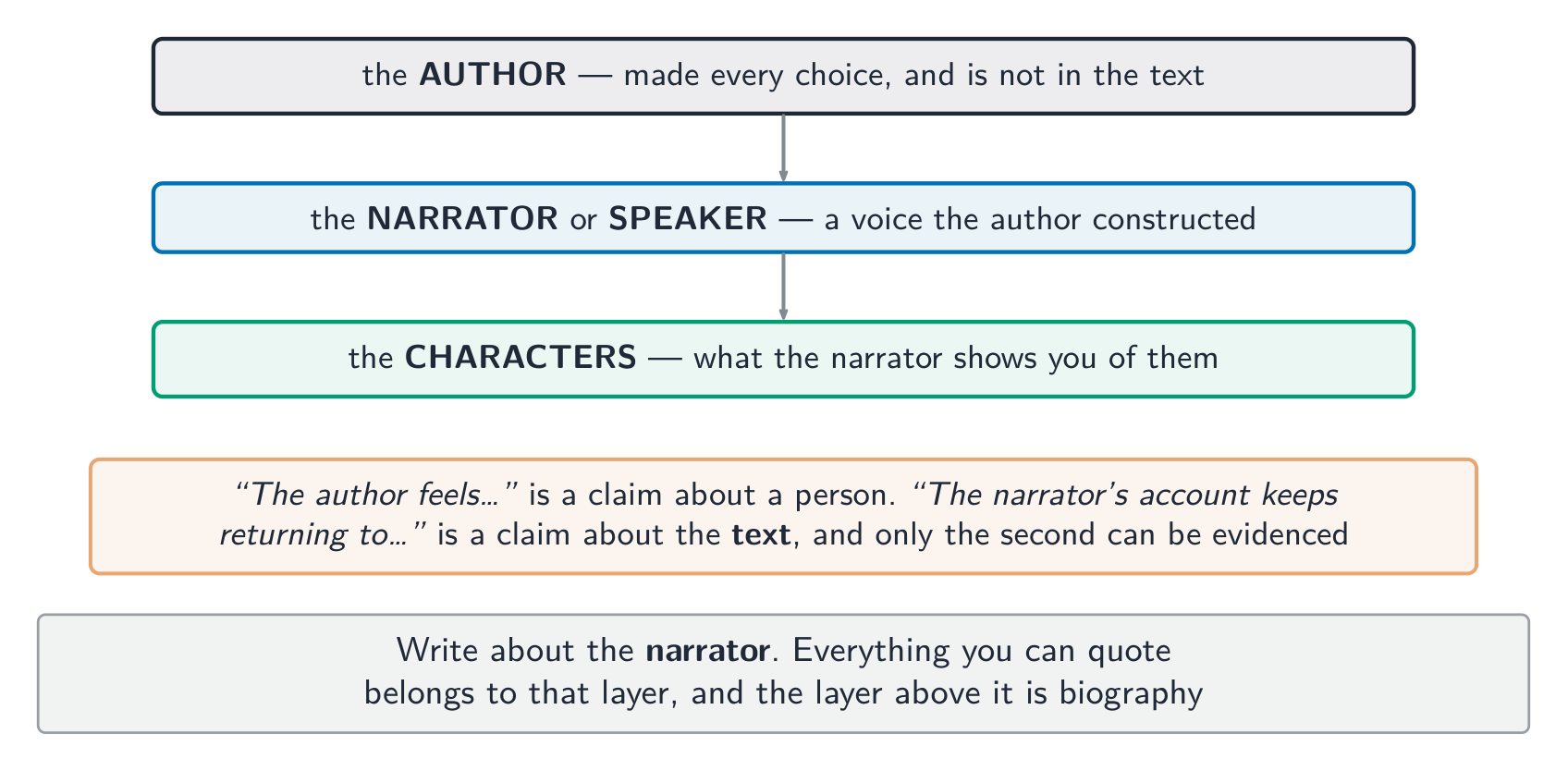
  • A speaker or narrator is not necessarily the author. Never write "the author feels" about a first-person narrator.
ไทย
แต่ละมุมมองสามารถมอบอะไรให้คุณได้และไม่มอบอะไร - และข้อจำกัดนี้คือบทวิเคราะห์
มุมมองคือสิ่งที่พวกเขามองเห็น; มุมมองการเล่าเรื่องคือตำแหน่งที่พวกเขายืน CED แยกแยะทั้งสองอย่างนี้ ดังนั้นคุณก็ควรทำเช่นเดียวกัน
  • ผู้บรรยายหรือผู้พูด เล่าเรื่องและ สร้างความสัมพันธ์ระหว่างข้อความและผู้读者
  • มุมมอง หมายถึง วิธี ที่ผู้บรรยาย ตัวละคร หรือผู้พูดมองเห็นสถานการณ์; มุมมองการเล่าเรื่อง 叙述视点 หมายถึง ตำแหน่งจากซึ่ง พวกเขาเล่าเรื่อง
  • ผู้พูดหรือผู้บรรยายไม่จำเป็นต้องเป็นนักเขียน ห้ามเขียนว่า "นักเขียนรู้สึก" เกี่ยวกับผู้บรรยายแบบบุคคลที่หนึ่ง
เขียนเกี่ยวกับผู้บรรยาย: ทุกสิ่งที่คุณสามารถอ้างถึงได้เป็นของชั้นนี้
Explore · ⁨สำรวจ⁩

Sort each statement by the layer it belongs to · ⁨เรียงลำดับแต่ละคำกล่าวโดยชั้นที่มันอยู่ใน⁩

Everything you can quote belongs to the narrator's layer. The layer above it is biography. · ⁨ทุกอย่างที่คุณสามารถ trích dikutipได้เป็นของชั้นผู้เล่าเรื่อง ชั้นถัดไปคือชีวประวัติ⁩

Vocabulary · ⁨คำศัพท์⁩ Train · ⁨ฝึกฝน⁩
English ไทย
point of view/pɔɪnt ɒv vjuː/ มุมมอง
observational to all-knowing/ɒbzəˈveɪʃənl tʊ ɔːl ˈnəʊɪŋ/ จากการสังเกตสู่ผู้รู้ทุกthings
1.6

The Function of Point of View · ⁨หน้าที่ของมุมมองการเล่าเรื่อง⁩

Syllabus · ⁨หลักสูตร⁩
English

Enduring Understanding (NAR-1): A narrator’s or speaker’s perspective controls the details and emphases that affect how readers experience and interpret a text.

Learning Objective 4.B: Identify and explain the function of point of view in a narrative.

  • NAR-1.D The point of view contributes to what narrators, characters, or speakers can and cannot provide in a text based on their level of involvement and intimacy with the details, events, or characters.
  • NAR-1.E Narrators may also be characters, and their role as characters may influence their perspective.
  • NAR-1.F First-person narrators are involved in the narrative; their relationship to the events of the plot and the other characters shapes their perspective.
  • NAR-1.G Third-person narrators are outside observers.
  • NAR-1.H Third-person narrators’ knowledge about events and characters may range from observational to all-knowing, which shapes their perspective.
  • NAR-1.I The outside perspective of third-person narrators may not be affected by the events of the narrative.
ไทย

ความเข้าใจที่ยั่งยืน (NAR-1): มุมมองของผู้บรรยายหรือผู้พูด controlling Details และ emphases yang affecting Cómo readers experience และ interpret ข้อความ

จุดประสงค์การเรียนรู้ 4.B: ระบุและอธิบายหน้าที่ของมุมมองการเล่าเรื่องในเรื่องราว

  • NAR-1.D มุมมองการเล่าเรื่องมีผลต่อสิ่งที่ผู้เล่าเรื่อง ตัวละคร หรือผู้พูดสามารถให้ข้อมูลได้หรือไม่ในข้อความ โดยขึ้นอยู่กับระดับการมีส่วนร่วมและความใกล้ชิดกับรายละเอียด เหตุการณ์ หรือตัวละคร
  • NAR-1.E ผู้เล่าเรื่องอาจเป็นตัวละครด้วย และบทบาทในฐานะตัวละครอาจส่งผลต่อมุมมองของพวกเขานี้
  • NAR-1.G ผู้เล่าเรื่องแบบบุคคลที่สามคือผู้สังเกตภายนอก
  • NAR-1.H ความรู้ของผู้เล่าเรื่องแบบบุคคลที่สามเกี่ยวกับเหตุการณ์และตัวละครอาจครอบคลุมตั้งแต่การสังเกตไปจนถึงการรู้ทุกสิ่ง ซึ่งจะกำหนดมุมมองของพวกเขานี้
  • NAR-1.I มุมมองภายนอกของผู้เล่าเรื่องแบบบุคคลที่สามอาจไม่ได้รับผลกระทบจากเหตุการณ์ในเรื่องราว
  • NAR-1.I มุมมองภายนอกของนักบรรยายแบบบุคคลที่สามอาจไม่ได้รับผลกระทบจากเหตุการณ์ในเนื้อเรื่อง

Source: College Board AP Course and Exam Description · ⁨แหล่งที่มา: คำอธิบายหลักสูตรและข้อสอบ College Board AP⁩

English
  • Point of view contributes to what narrators can and cannot provide in a text, based on their position.
  • Narrators may also be characters, and that role may influence their perspective.
  • First-person narrators are involved in the narrative; their relationship to events and to other characters shapes what they can tell you.
  • Third-person narrators are outside observers, and their knowledge may range from observational to all-knowing 全知.
  • The outside perspective of a third-person narrator may not be affected by the events of the narrative.

The analytical payoff is the cannot. A first-person narrator cannot report what they did not witness or will not admit, and every gap is meaningful. A limited third-person narrator confines you to one consciousness, which is a choice about whose experience counts.

ไทย
  • มุมมองการเล่าเรื่องมีส่วนร่วมใน สิ่งที่ผู้บรรยายสามารถและไม่สามารถให้ ในข้อความ โดยขึ้นอยู่กับตำแหน่งของพวกเขา
  • ผู้บรรยาย อาจเป็นตัวละครด้วย และบทบาทนี้อาจมีผลต่อมุมมองของพวกเขา
  • ผู้บรรยายแบบบุคคลที่หนึ่งมีส่วนร่วมในเรื่องราว; ความสัมพันธ์与他们กับเหตุการณ์และตัวละครอื่นกำหนดสิ่งที่พวกเขาบอกคุณได้
  • ผู้บรรยายแบบบุคคลที่สามเป็นผู้สังเกตภายนอก และความรู้ของพวกเขาอาจตั้งแต่ การสังเกตไปจนถึงรู้ทุกสิ่ง 全知
  • มุมมองภายนอกของผู้บรรยายแบบบุคคลที่สาม อาจไม่ได้รับผลกระทบจากเหตุการณ์ ของเรื่องราว

ผลตอบแทนจากการวิเคราะห์อยู่ที่คำว่า ไม่สามารถ ผู้บรรยายแบบบุคคลที่หนึ่งไม่สามารถรายงานสิ่งที่他们没有目睹หรือไม่ยอมยอมรับ และช่องว่างทุกอย่างมีความหมาย ผู้บรรยายแบบบุคคลที่สามแบบจำกัดทำให้คุณอยู่ในจิตสำนึกเพียงคนเดียว ซึ่ง это выбор о том чьё переживание считаетсяสำคัญ

1.7

Developing a Paragraph with Claim and Evidence · ⁨การพัฒนาย่อหน้าด้วยข้ออ้างและหลักฐาน⁩

Syllabus · ⁨หลักสูตร⁩
English

Enduring Understanding (LAN-1): Readers establish and communicate their interpretations of literature through arguments supported by textual evidence.

Learning Objective 7.A: Develop a paragraph that includes 1) a claim that requires defense with evidence from the text and 2) the evidence itself.

  • LAN-1.A In literary analysis, writers read a text closely to identify details that, in combination, enable them to make and defend a claim about an aspect of the text.
  • LAN-1.B A claim is a statement that requires defense with evidence from the text.
  • LAN-1.C In literary analysis, the initial components of a paragraph are the claim and textual evidence that defends the claim.
ไทย

ความเข้าใจที่ยั่งยืน (LAN-1): ผู้_read者确立并传达对文学作品的解读,通过有文本证据支持的论证。

วัตถุประสงค์การเรียนรู้ 7.A: พัฒนาพารากราฟที่ประกอบด้วย 1) ข้ออ้างที่ต้องการการปกป้องด้วยหลักฐานจากข้อความ และ 2) ตัวหลักฐานเอง

  • LAN-1.B ข้ออ้างคือประโยคที่จำเป็นต้องมีหลักฐานจากข้อความมาสนับสนุน
  • LAN-1.C ในการวิเคราะห์วรรณกรรม ส่วนประกอบเริ่มต้นของย่อหน้าคือข้ออ้างและหลักฐานจากข้อความ用来 defends the claim
  • LAN-1.C ในการวิเคราะห์วรรณกรรม ส่วนประกอบเริ่มต้นของพารากราฟคือข้ออ้างและหลักฐานจากข้อความ用来捍卫该主张。

Source: College Board AP Course and Exam Description · ⁨แหล่งที่มา: คำอธิบายหลักสูตรและข้อสอบ College Board AP⁩

English
  • In literary analysis, writers read a text closely to identify details that, in combination, enable them to make and defend a claim.
  • A claim is a statement that requires defence with evidence from the text.
  • The initial components of a paragraph are the claim and the textual evidence that defends it.

Note in combination. A single detail rarely supports an interpretive claim; two or three details that point the same way do.

Worked example (a real AP exam task). The AP Literature free-response section has three questions - poetry analysis, prose fiction analysis, and a literary argument on a work you choose - all marked on a six-point rubric: thesis 1, evidence and commentary 4, sophistication 1. For a prose fiction prompt asking how the author uses narrative techniques to reveal a character's attitude, a weak answer writes "the narrator is first-person, which makes it personal." A scoring answer uses the cannot: "Because the narrator is a participant recounting events years later, the account gives us his present judgement of his younger self and withholds what the other characters thought - so the reader receives his self-criticism as the only available evidence, and must decide whether the harshness of it is accuracy or performance." Point of view, its limit, and the effect on the reader.

ไทย
  • ในการวิเคราะห์วรรณกรรม นักเขียน อ่านข้อความอย่างละเอียดเพื่อระบุรายละเอียดที่ เมื่อรวมกันแล้ว ทำให้พวกเขาสามารถเสนอและปกป้องข้ออ้างได้
  • ข้ออ้าง คือ statement ที่ ต้องการการปกป้องด้วยหลักฐานจากข้อความ
  • ส่วนประกอบเริ่มต้นของย่อหน้าคือ ข้ออ้างและหลักฐานทางภาษา ที่ปกป้องมัน

สังเกตคำว่า รวมกันแล้ว รายละเอียดเดี่ยวๆ มักจะไม่รองรับข้ออ้างในการตีความ; สองหรือสามรายละเอียดที่ชี้ไปในทิศทางเดียวกันทำได้

ตัวอย่างการวิเคราะห์ (โจทย์จริงจากข้อสอบ AP). ส่วนคำตอบแบบอิสระของวิชา AP Literature มี 3 ข้อ - การวิเคราะห์บทกวี, การวิเคราะห์เรื่องสั้น และงานเขียนเชิงวรรณกรรม เกี่ยวกับงานที่คุณเลือก - โดยทั้งหมดใช้เกณฑ์การให้คะแนนแบบ 6 ระดับ: Thesis 1, หลักฐานและคำอธิบาย 4, ความลึกซึ้ง 1. สำหรับโจทย์เรื่องสั้นที่ถามว่าผู้แต่งใช้เทคนิคการเล่าเรื่องอย่างไรเพื่อเผยทัศนคติของตัวละคร คำตอบที่ไม่ดีจะเขียนว่า “ผู้บรรยายเป็นแบบบุคคลที่หนึ่ง ซึ่งทำให้รู้สึกใกล้ชิด” แต่คำตอบที่ได้คะแนนจะใช้คำว่า ไม่สามารถ: “เนื่องจากผู้บรรยายเป็นผู้มีส่วนร่วมที่เล่าเหตุการณ์หลังจากผ่านไปหลายปี การเล่าเรื่องนี้จึงให้มุมมองปัจจุบันของเขาที่มีต่อตัวเองในวัยเยาว์ และปิดบังสิ่งที่ตัวละครอื่นคิด - ดังนั้นผู้อ่านจึงได้รับคำวิพากษ์วิจารณ์ตนเองของเขาเป็นหลักฐานเดียวที่มีอยู่ และต้องตัดสินใจว่าความเข้มงวดนั้นคือความจริงหรือเป็นการแสดง” มุมมอง, ข้อจำกัดของมัน, และผลต่อผู้อ่าน

1.7

Exam tips · ⁨ข้อแนะนำสำหรับการสอบ⁩

English
  • Character is a way of seeing, not a list of adjectives. Analyse what they notice and misread.
  • Setting must do something. Describing where a story happens is not yet a claim.
  • Plot is the order of events. A late revelation of an early event is an authorial choice worth analysing.
  • Proportion is evidence. What the text lingers over is where the meaning is.
  • The narrator is not the author. Never write "the author feels" about a first-person narrator.
  • The analytical gold in point of view is what the narrator cannot provide.
ไทย
  • ตัวละครคือ วิธีมองโลก ไม่ใช่แค่รายการคำขยาย วิเคราะห์ดูว่าเขาสนใจอะไรและตีความผิดพลาดอย่างไร
  • ฉากหลังต้องทำหน้าที่บางอย่าง. การบรรยายเพียงสถานที่发生的事情 ยังไม่ถือเป็นข้อโต้แย้งทางวรรณกรรม
  • plot คือ ลำดับ ของเหตุการณ์ การเปิดเผยเหตุการณ์ที่เกิดขึ้นก่อนหน้าในภายหลัง เป็นตัวเลือกของผู้แต่ง worthy of analysis.
  • สัดส่วนคือหลักฐาน. สิ่งที่ข้อความเน้นย้ำไว้คือจุดที่มีนัยสำคัญ
  • ผู้บรรยายไม่ใช่ผู้แต่ง. ห้ามเขียนว่า “ผู้แต่งรู้สึก” เมื่อพูดถึงผู้บรรยายแบบบุคคลที่หนึ่ง
  • ทองคำแห่งการวิเคราะห์ในมุมมองคือสิ่งที่ผู้บรรยาย ไม่สามารถ ให้ได้

Interactive lessons on this topic · ⁨บทเรียนเชิงโต้ตอบสำหรับหัวข้อนี้⁩

Work through it step by step, with instant-check exercises. · ⁨ทำทีละขั้นตอน พร้อมแบบฝึกหัดตรวจสอบผลทันที⁩

Past Papers · ⁨ข้อสอบย้อนหลัง⁩

More topics in AP English Literature and Composition · ⁨AP วรรณกรรมและบทวิเคราะห์เชิงลึก⁩ · ⁨หัวข้อเพิ่มเติมใน AP English Literature and Composition · ⁨AP วรรณกรรมและบทวิเคราะห์เชิงลึก⁩⁩

Log in or create account · ⁨เข้าสู่ระบบหรือสร้างบัญชี⁩

IGCSE, A-Level & AP