Oxides
Introduced| English | Meaning |
|---|---|
| oxide/ˈɒksaɪd/ | A compound containing oxygen bonded to another element. |
| metal oxides/ˈmetl ˈɒksaɪdz/ | metal oxides |
| basic oxide/ˈbeɪsɪk ˈɒksaɪd/ | basic oxide |
| acidic oxide/əˈsɪdɪk ˈɒksaɪd/ | acidic oxide |
| amphoteric/ˌæmfəʊˈterɪk/ | Able to react as both an acid and a base under appropriate conditions. |
Acidic, basic or neither
- When an element reacts with oxygen it forms an oxide 氧化物 — and oxides behave very differently.
- Whether an oxide is acidic or basic depends on the element.
Oxide type lab
Classify oxides by how they behave with acids and bases.
Metal oxides are usually:
Difficulty 1/5 · 100 coins + a small bonus on first completion today
Metal oxides tend to be basic.
Non-metal oxides are usually:
Difficulty 1/5 · 100 coins + a small bonus on first completion today
Non-metal oxides tend to be acidic.
Metal and non-metal oxides 金属氧化物
- Metal oxides are usually basic (many dissolve to form alkalis).
- Non-metal oxides are usually acidic (many dissolve to form acids).
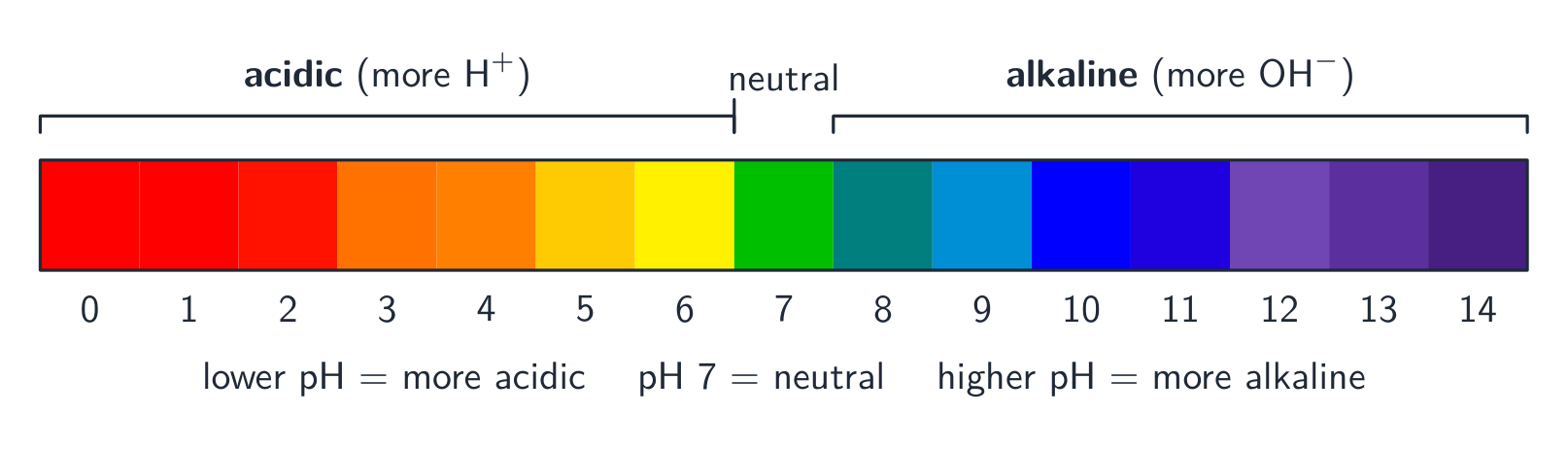
The pH scale: below 7 is acidic, 7 is neutral, above 7 is alkaline
A basic oxide reacts with an acid to form a salt and water.
Difficulty 1/5 · 100 coins + a small bonus on first completion today
Basic oxides neutralise acids.
Carbon dioxide is a non-metal oxide, so it is ______.
Difficulty 1/5 · 100 coins + a small bonus on first completion today
Non-metal oxides are acidic.
Acidic and basic oxides 碱性氧化物
- A basic oxide (e.g. magnesium oxide) reacts with acids to form a salt and water.
- An acidic oxide 酸性氧化物 (e.g. carbon dioxide, sulfur dioxide) reacts with alkalis.
An amphoteric oxide reacts with:
Difficulty 1/5 · 100 coins + a small bonus on first completion today
Amphoteric oxides react with both.
Amphoteric 两性 oxides
- A few oxides are amphoteric — they react with both acids and alkalis.
- Examples include aluminium oxide and zinc oxide.
Worked example. Magnesium (a metal) burns to form magnesium oxide, a basic oxide. Carbon (a non-metal) burns to form carbon dioxide, an acidic oxide. Metal vs non-metal predicts the oxide's nature.
You've got it
- metal oxides are usually basic; non-metal oxides are usually acidic
- a basic oxide reacts with acids; an acidic oxide reacts with alkalis
- amphoteric oxides (e.g. aluminium oxide) react with both
Write from an amphoteric oxide
- Aluminium oxide reacts with hydrochloric acid and also with sodium hydroxide.
- Carbon dioxide reacts with alkalis but not with acids.
What kind of oxide is aluminium oxide?
Amphoteric oxides react with acids and with alkalis.
What kind of oxide reacts with both acids and alkalis?
Difficulty 1/5 · 100 coins + a small bonus on first completion today
Both reactions are needed for this classification.