Your learning plan · Continue · Review →
给 vs 为 (to/for vs for the sake of)
IntroducedYour saved position stays in this browser. Resuming does not complete the lesson or answer its questions.
A gift and a sacrifice
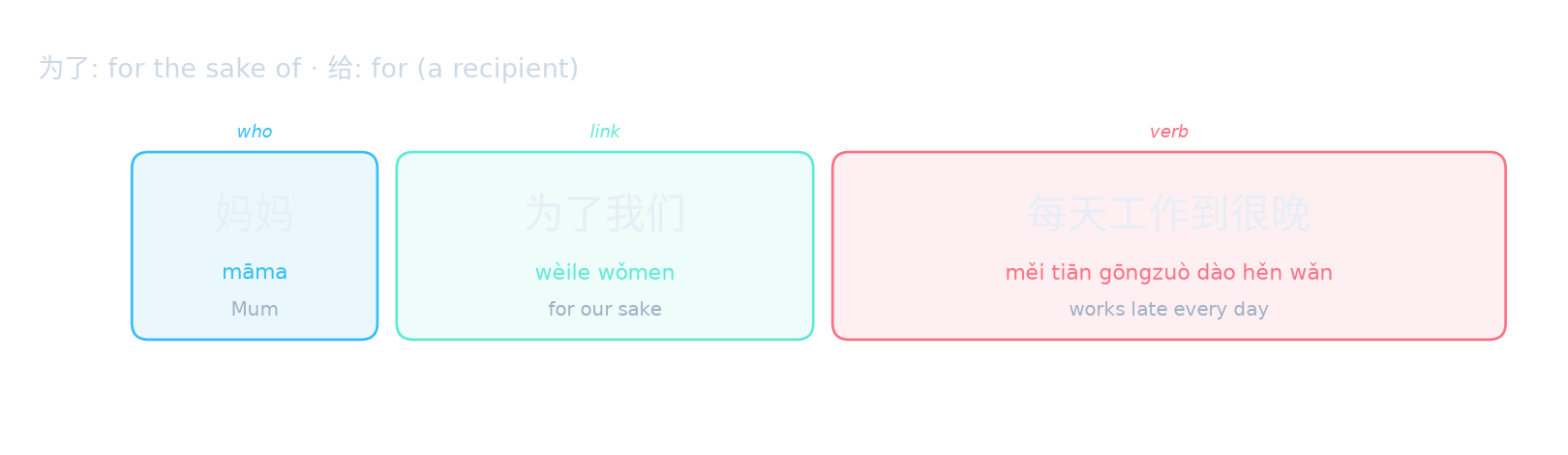
- Your mother works late every night to support the family.
- Mum妈妈in order to为了we我们every day每天to work工作to / arrive到degree / adjective linker很evening晚,I我want / think / miss想for给she / her她buy买一份gift礼物。 — "Mum works late every day for us; I want to buy her a present."
for给 = to / for (a recipient)
- for给 + person + verb = do something for / to someone who receives it: for给she / her她buy买gift礼物, for给I我to make a telephone call打电话, for给you你to introduce (sb to sb)介绍.
- The person gets the thing or the service.
I我for给Mum妈妈buy买了a bunch of一束flowers花。
Build: “I bought Mum a bunch of flowers.”
Difficulty 3/5 · 200 coins + a small bonus on first completion today
给 + person + verb + object.
for为 = for the sake of, because of
- for为 + person / cause + verb = for the sake of, on behalf of: for为everyone大家serve服务, for为you你are happy高兴, for为child孩子anxious担心.
- for为 often goes with feelings and effort.
we我们all都for为you你are happy高兴。
Complete: “We're all happy for you.” 我们都____你高兴。
Difficulty 1/5 · 100 coins + a small bonus on first completion today
Feelings take 为.
Receiving versus caring
- for给 + person = they receive something: for给he / him他to write a letter写信. for为 + person = on their behalf or about them: for为he / him他anxious担心.
- Feelings take for为, not for给: I我for为you你are happy高兴, not I我for给you你are happy高兴.
“Call me tomorrow.” Which fits? 明天____我打电话。
Difficulty 1/5 · 100 coins + a small bonus on first completion today
The recipient of a call takes 给.
Where both work
- "Do something for someone" can sometimes take either: for给 / for为everyone大家to prepare a meal做饭.
- for给 is more everyday; for为 sounds more formal or dedicated: for为the people人民serve服务 — "serve the people".
for为the people人民serve服务。
为人民服务 sounds more formal than 给人民服务.
Difficulty 1/5 · 100 coins + a small bonus on first completion today
为 is the formal, dedicated “for”.
Recap
- for给 = to / for a recipient (for给she / her她buy买, for给I我to make a telephone call打电话); for为 = for the sake of / because of (for为you你are happy高兴, for为child孩子anxious担心).
- Feelings take for为; service can take either (for给 everyday, for为 formal).
Read the full reference: HSK 5 grammar — Comparing similar prepositions.
Your mother works late every night to support the family. Close the examples. Say a Mandarin response, then write it in Chinese. Explain briefly in English what the lesson’s pattern adds. Compare with the model, then change one detail and try again.
This is supported productive practice. Compare meaning and structure; your answer need not copy the model. A partner or teacher must hear the spoken response to comment on pronunciation.