Borrowed Technology, New Oceans
Introduced| English | Meaning |
|---|---|
| lateen sail/ˈlætiːn seɪl/ | A triangular sail that let ships sail closer to the wind. |
| compass/ˈkʌmpəs/ | compass |
| astronomical charts/əstrəˈnɒmɪkl tʃɑːts/ | astronomical charts |
Europe's voyages began with other people's knowledge
- Knowledge, scientific learning and technology from the Classical, Islamic and Asian worlds spread, facilitating European technological developments and innovation.
- The CED's causal direction is explicit: transfer came first, European innovation second.
- The examples are the lateen sail 三角帆, the compass 罗盘, and astronomical charts 天文图表 — none of them European inventions.
The CED's causal order is that...
Difficulty 1/5 · 100 coins + a small bonus on first completion today
Transfer came first; European innovation second.
Three ships that made the difference
- The developments included the production of new tools, innovations in ship designs, and an improved understanding of regional wind and currents patterns.
- The named designs are the caravel, the carrack and the fluyt.
- Each solves a different problem: manoeuvrability against the wind, cargo capacity, and cheap bulk carriage.

Four necessary conditions, not one motive- knowledge and instruments still need a sponsor
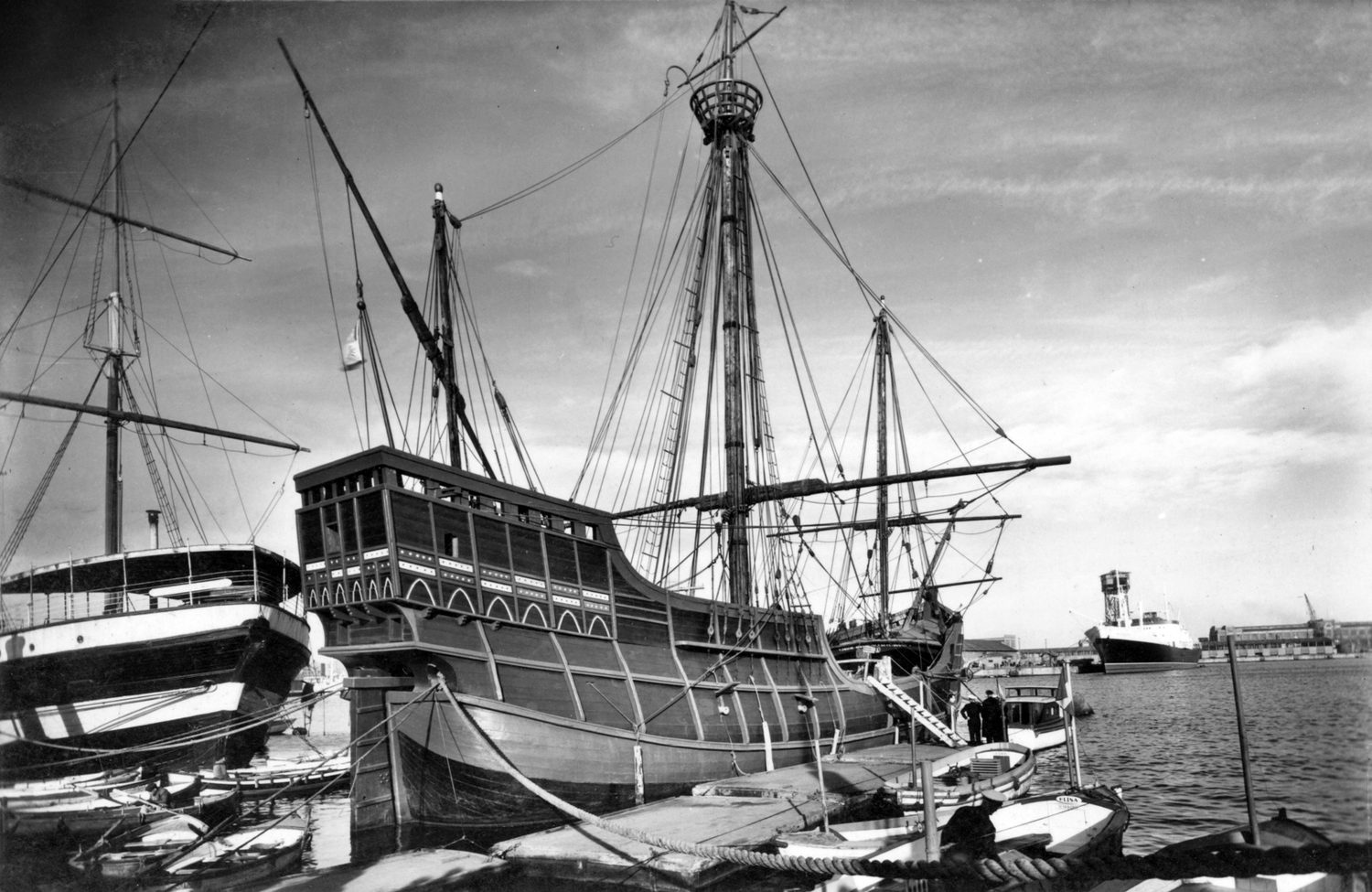
A caravel replica- the ship design that made the oceanic voyages possible
Select all the borrowed technologies the CED names.
Difficulty 2/5 · 140 coins + a small bonus on first completion today
The caravel is a European ship design built using those borrowed technologies.
Knowing the wind is a technology
- The CED lists an improved understanding of regional wind and currents patterns beside tools and ships.
- This is the Indian Ocean monsoon lesson from unit 2, now applied to the Atlantic.
- All of which made transoceanic travel and trade possible — the CED's own conclusion, tying all three together.
Collect the four conditions for a voyage
Knowledge, ship design, navigation and a sponsor — any three without the fourth produces no voyage.
Select all three ship designs the CED names.
Difficulty 2/5 · 140 coins + a small bonus on first completion today
Each solves a different problem: manoeuvrability, capacity, cheap bulk carriage.
The CED puts diffusion before European innovation, in that order. Knowledge from the Classical, Islamic and Asian worlds spread facilitating European developments — so an answer that begins with European invention has skipped the clause the objective is built on.
Understanding wind and current patterns counts as one of the developments.
Difficulty 1/5 · 100 coins + a small bonus on first completion today
The CED lists it beside tools and ship designs, and says all three made transoceanic travel possible.
Diffusion, not invention
- The subtopic's objective is how cross-cultural interactions resulted in the diffusion of technology.
- So the story is a continuation of unit 2's networks, not a break from them.
- The same routes that carried gunpowder and paper carried the navigational knowledge that opened the oceans.
The chain worth writing is transfer, adaptation, ____.
Difficulty 1/5 · 100 coins + a small bonus on first completion today
Better than a list of ship names.
Using this in an answer
- When a prompt asks why Europeans could cross oceans after 1450, the CED's answer starts elsewhere.
- Name a borrowed technology, say where it came from, and say what it made possible.
- That chain — transfer, adaptation, capability — is worth more than a list of ship names.
The lateen sail lets a ship make progress against the wind; the compass gives a heading with no land in sight; astronomical charts give latitude. None was invented in Europe. Put on a caravel and used with knowledge of Atlantic wind belts, they make a return voyage possible — and a voyage you cannot return from is not a trade route.
Knowledge and technology from the Classical, Islamic and Asian worlds spread, facilitating European developments — diffusion first, innovation second. The developments were new tools, ship designs (caravel, carrack, fluyt) and an improved understanding of wind and current patterns, all of which made transoceanic travel and trade possible.
Write from a borrowed compass
- Portuguese ships crossed the Atlantic and the Indian Ocean.
- Their navigators used a magnetic compass and knowledge of winds developed earlier in Asia and the Islamic world.
Did Europe invent every tool on those ships?
Iberian voyages depended on technology developed elsewhere.
Where did the magnetic compass on these ships come from?
Difficulty 1/5 · 100 coins + a small bonus on first completion today
The compass was transferred, then used on new routes.