Drawing the Figure and Portrait
Introduced| English | Meaning |
|---|---|
| proportion/prəˈpɔːʃn/ | A part's size relative to a whole, or the relative sizes of quantities being compared. |
| halfway line/ˈhɑːfweɪ laɪn/ | A reference line marking the midpoint of a measured form or span, used to compare proportions. |
Every skill at once
- The figure combines proportion 比例, gesture, form, and likeness under one deadline.
- The classic adult figure stands about 7.5 heads tall.
- The body's halfway point is near the hip — not the waist.
True or trap?
Sort the figure-drawing claims: canon or classic beginner error?
The classic adult figure is about ____ heads tall.
Difficulty 1/5 · 100 coins + a small bonus on first completion today
About 7.5 heads.
The eyes sit near the top third of the skull.
Difficulty 1/5 · 100 coins + a small bonus on first completion today
They sit at the halfway line — the classic beginner error is placing them too high.
The head's map
- The eyes sit at the halfway line 中线 of the skull — beginners always place them too high.
- The nose sits about halfway from eyes to chin; the mouth a third below the nose.
- Check likeness with landmark distances, not memorised rules alone — every face bends the average.
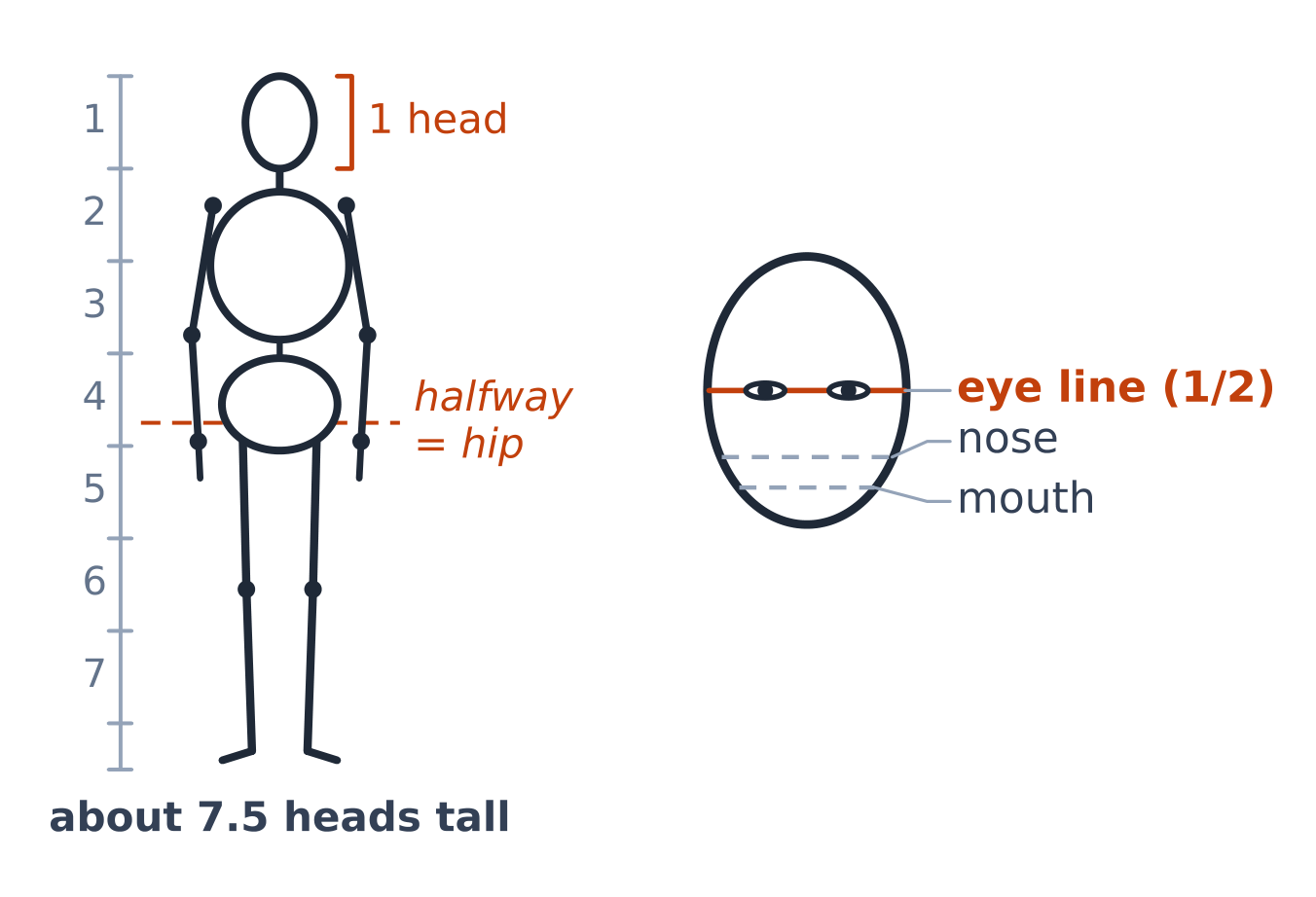
Figure and head proportions: about 7.5 heads tall, eyes halfway down the head
The body's halfway point is near the ____, not the waist.
Difficulty 1/5 · 100 coins + a small bonus on first completion today
Halfway = hip.
Select all parts of the recommended drawing order.
Difficulty 2/5 · 140 coins + a small bonus on first completion today
Energy, masses, map, then features.
Masses first, mittens first
- Start with gesture and the big masses: ribcage, pelvis, skull. Features and fingers come last.
- Draw hands as simple mittens and feet as wedges first, then divide.
- Figure and portrait work is a portfolio staple: observation, proportion, and nerve in one image.
Match the simplification to its subject.
Difficulty 2/5 · 140 coins + a small bonus on first completion today
Simple volumes first, division later.
Starting with a perfect eye and growing the face outward from it almost guarantees a drifting likeness. Big masses first — skull shape, eye-line, centre line — then features inside the map.
A 20-minute portrait: two minutes gesture and skull mass, three minutes placing eye-line/nose/mouth lines, ten minutes big value shapes, five minutes features. The likeness arrives in the map, not the eyelashes.
Figure canon: ~7.5 heads tall, halfway at the hip; eyes at the skull's halfway line; masses before features, mittens before fingers — and sighting checks beat memorised rules.
Write from a portrait that uses three skills at once
- A portrait uses a measured contour, a modelled light, and a cropped placement.
One portrait uses a measured contour, modelled light and shade, and a crop that places the head off centre. How many of those drawing concerns are present?
The same sheet can show measurement, tone, and placement.
What does this one portrait show?
Difficulty 1/5 · 100 coins + a small bonus on first completion today
Measurement, tone, and placement are all visible in the same drawing.