English
| Candidates should be able to: | Notes and guidance |
|---|---|
| 1 Understand the program development life cycle, limited to: analysis, design, coding and testing | • Including identifying each stage and performing these tasks for each stage: – analysis: abstraction, decomposition of the problem, identification of the problem and requirements – design: decomposition, structure diagrams, flowcharts, pseudocode – coding: writing program code and iterative testing – testing: testing program code with the use of test data |
| 2 (a) Understand that every computer system is made up of sub-systems, which are made up of further sub-systems (b) Understand how a problem can be decomposed into its component parts | • Including: – inputs – processes – outputs – storage |
| (c) Use different methods to design and construct a solution to a problem | • Including: – structure diagrams – flowcharts – pseudocode |
| 3 Explain the purpose of a given algorithm | • Including: – stating the purpose of an algorithm – describing the processes involved in an algorithm |
| 4 Understand standard methods of solution | • Limited to: – linear search – bubble sort – totalling – counting – finding maximum, minimum and average values |
| 5 (a) Understand the need for validation checks to be made on input data and the different types of validation check | • Including: – range check – length check – type check – presence check – format check – check digit |
| (b) Understand the need for verification checks to be made on input data and the different types of verification check | • Including: – visual check – double entry check |
| 6 Suggest and apply suitable test data | • Limited to: – normal – abnormal – extreme – boundary • Extreme data is the largest/smallest acceptable value • Boundary data is the largest/smallest acceptable value and the corresponding smallest/largest rejected value |
| 7 Complete a trace table to document a dry-run of an algorithm | • Including, at each step in an algorithm: – variables – outputs – user prompts |
| 8 Identify errors in given algorithms and suggest ways of correcting these errors | |
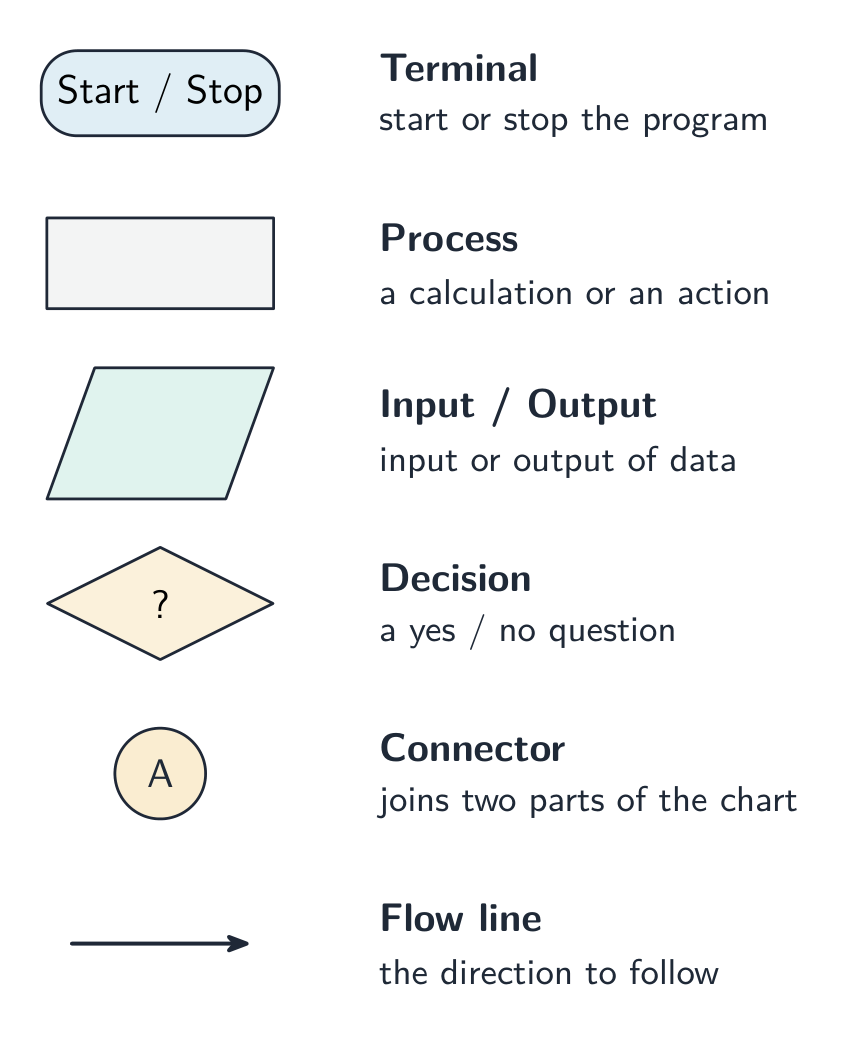
| 9 Write and amend algorithms for given problems or scenarios, using: pseudocode, program code and flowcharts | • Precision is required when writing algorithms, e.g. x > y is acceptable but x is greater than y is not acceptable • See section 4 for flowchart symbols • See section 4 for pseudocode |
한국어
| 응시자가 다음을 수행할 수 있어야 함: | 참고 사항 및 가이드라인 |
|---|---|
| 1 프로그램 개발 생명 주기를 이해하기 (다음으로 제한: 분석, 설계, 코딩 및 테스트) | • 각 단계 식별 및 다음 작업을 각 단계별로 수행: – 분석: 추상화, 문제 분해, 문제 및 요구사항 식별 – 설계: 분해, 구조도, 플로우차트, 가짜 코드 – 코딩: 프로그램 코드 작성 및 반복 테스트 – 테스트: 테스트 데이터 사용하여 프로그램 코드 테스트 |
| 2 (a) 모든 컴퓨터 시스템이 서브 시스템으로 구성되어 있으며, 이 서브 시스템은 다시 더 작은 서브 시스템으로 이루어져 있음을 이해하기 (b) 문제를 구성 요소로 어떻게 분해할 수 있는지 이해하기 | • 다음을 포함: – 입력 – 처리 – 출력 – 저장 |
| (c) 다양한 방법을 사용하여 문제에 대한 해결책을 설계하고 구축하기 | • 다음을 포함: – 구조도 – 플로우차트 – 가짜 코드 |
| 3 주어진 알고리즘의 목적을 설명하기 | • 다음을 포함: – 알고리즘의 목적 명시 – 알고리즘에 포함된 프로세스 설명 |
| 4 표준 해결 방법을 이해하기 | • 다음으로 제한: – 선형 탐색 – 버블 정렬 – 합산 – 세기 – 최대값, 최소값 및 평균값 찾기 |
| 5 (a) 입력 데이터에 대해 검증 체크가 필요하며, 검증 체크의 다양한 유형을 이해하기 | • 다음을 포함: – 범위 체크 – 길이 체크 – 타입 체크 – 존재 체크 – 형식 체크 – 체크 디지트 |
| (b) 입력 데이터에 대해 확인 체크가 필요하며, 확인 체크의 다양한 유형을 이해하기 | • 다음을 포함: – 시각적 체크 – 이중 입력 체크 |
| 6 적절한 테스트 데이터를 제안하고 적용하기 | • 다음으로 제한: – 정상 – 비정상 – 극단 – 경계 • 극단 데이터는 허용 가능한 최대/최소 값이다. • 경계 데이터는 허용 가능한 최대/최소 값 및 그에 대응하는 비허용 최소/최대 값이다. |
| 7 알고리즘의 드라이 런을 문서화하기 위해 트레이스 표를 완성하기 | • 알고리즘의 각 단계마다 다음을 포함: – 변수 – 출력 – 사용자 프롬프트 |
| 8 주어진 알고리즘에서 오류를 식별하고 이를 수정할 방법을 제안하기 | |
| 9 주어진 문제나 시나리오에 대해 알고리즘을 작성하고 수정하기: 가짜 코드, 프로그램 코드 및 플로우차트를 사용 | • 알고리즘 작성 시 정확성이 필요하다. 예를 들어 x > y는 허용되지만 x is greater than y는 허용되지 않는다. • 플로우차트 기호는 4절 참조 • 가짜 코드는 4절 참조 |