Skip to content · ⁨본문 바로가기⁩

Infectious diseases · ⁨감염성 질환⁩

A-Level Biology · ⁨A-Level 생물학⁩ · Topic 10 · ⁨주제 10⁩

Video lesson for this topic · ⁨이 주제용 영상 수업⁩ Open the video page · ⁨영상 페이지 열기⁩
8:28

감염성 질환

매년 가장 많은 사람을 죽이는 동물은 상어나 뱀이 아니다. 그것은 모기이다. 그리고 이상한 점은 모기 자체가…

English narration · English + 中文 subtitles burned in · ⁨영어 내레이션 · 영어 + 중국어 자막 burned-in⁩

10.1

What causes infectious disease · ⁨감염성 질환의 원인⁩

Syllabus
English
  1. state that infectious diseases are caused by pathogens and are transmissible
  2. state the name and type of pathogen that causes each of the following diseases: • cholera – caused by the bacterium Vibrio cholerae • malaria – caused by the protoctists Plasmodium falciparum, Plasmodium malariae, Plasmodium ovale and Plasmodium vivax • tuberculosis (TB) – caused by the bacteria Mycobacterium tuberculosis and Mycobacterium bovis • HIV/AIDS – caused by the human immunodeficiency virus (HIV)
  3. explain how cholera, malaria, TB and HIV are transmitted
  4. discuss the biological, social and economic factors that need to be considered in the prevention and control of cholera, malaria, TB and HIV (details of the life cycle of the malarial parasite are not expected)
한국어
  1. 전염병이 병원체에 의해 유발되며 전파될 수 있음을 명시하시오
  2. 다음 각 질병을 유발하는 병원체의 명칭과 종류를 서술하시오: • ** 콜레라** – Vibrio cholerae라는 세균에 의해 유발됨 • ** 말라리아** – Plasmodium falciparum, Plasmodium malariae, Plasmodium ovale 및 Plasmodium vivax라는 원생생물에 의해 유발됨 • ** 결핵(TB)** – Mycobacterium tuberculosis 및 Mycobacterium bovis이라는 세균에 의해 유발됨 • ** HIV/AIDS** – **인간면역결정면역결핍바이러스(HIV)**에 의해 유발됨
  3. 콜레라, 말라리아, 결핵 및 HIV가 어떻게 전파되는지 설명하시오
  4. 콜레라, 말라리아, 결핵 및 HIV의 예방 및 통제 시 고려해야 할 생물학적, 사회경제적 요인을 논의하시오 (말라리아 기생충의 생활주기에 대한 상세 내용은 요구되지 않음)

Source: Cambridge International syllabus · ⁨출처: Cambridge International syllabus⁩

English

An infectious disease 传染病 is caused by a pathogen 病原体 — an organism that lives in or on a host and causes harm. Infectious diseases are transmissible: the pathogen can be transmitted 传播 (passed) from one person to another.

You need to know four diseases, the pathogen that causes each, and how each spreads.

Disease Pathogen and type How it spreads
cholera 霍乱 the bacterium 细菌 Vibrio cholerae drinking water or food contaminated 污染 with faeces 粪便 (human waste)
malaria 疟疾 the protoctist 原生生物 Plasmodium the bite of an infected mosquito 蚊子, which acts as a vector 媒介 (a carrier of the pathogen); also through infected blood
tuberculosis (TB) 结核病 the bacterium Mycobacterium tiny airborne droplets 飞沫 from coughs and sneezes; spreads fast where people are crowded
HIV/AIDS the virus 病毒 HIV (which leads to AIDS 艾滋病) unprotected sex, infected blood (for example shared needles), and from mother to baby

HIV infects and destroys certain white blood cells, so it slowly weakens the body's immune system 免疫系统.

한국어

감염성 질환은 병원성 미생물(pathogen) 에 의해 발생하며, 이는 숙주 내부 또는 표면에 서식하여 손상을 입히는 생물이다. 감염성 질환은 전염성(transmissible) 으로, 병원성이 한 사람에서 다른 사람으로 전파(transmitted) 될 수 있다.

네 가지 질병, 각 질환을 유발하는 병원성 미생물, 그리고 전파 방식을 알고 있어야 한다.

질환 병원성 미생물 및 유형 전파 경로
콜레라 세균 Vibrio cholerae 배설물(인간 배변물)로 오염된 물이나 음식 섭취
말라리아 원생동물(protoctist) Plasmodium 감염된 모기의 물림(모기는 매개체(vector) 역할); 감염된 혈액을 통한 전파
결핵(TB) 세균 Mycobacterium 기침과 재채기로 비산된 미세 비말; 밀집된 지역에서 빠르게 확산
HIV/AIDS 바이러스 HIV(AIDS로 진행) 안전장구 없는 성관계, 감염된 혈액(공유 바늘 등), 모편에서 신생아로

HIV는 특정 백혈구를 감염시켜 파괴하므로, 몸의 면역계가 천천히 약화된다.

구슬 가래 시료의 현미경 사진: 파란색으로 염색된 세포들 사이에 빨간 막대 모양의 결핵균이 관찰됨 *결핵을 유발하는 세균인 미코박테리움(빨간 막대 모양), 구슬 가래 시료에 염색됨

혈액 도말 표본: 옅은 붉은색 적혈구들이 많고, 일부에는 어두운 색으로 염색된 말라리아 원생생물인 플라스모디움이 포함되어 있음 *적혈구 내부에서 생활하며 말라리아를 유발하는 원생생물 플라스모디움(작은 어두운 고리 모양)

모기와 인간 간의 순환도: 모기가 물면 플라스모디움을 인체에 주입하고, 감염된 사람을 물은 모기는 기생충을 가져감 *말라리아는 모기 매개체 없이는 발생하지 않습니다. 각 물림을 통해 기생충이 인간 → 모기 → 인간으로 이동하므로, 통제 대상은 모기입니다.
Explore · ⁨탐색하기⁩

Infectious disease route lab · ⁨감염병 경로 실험실⁩

Classify disease cases by pathogen and route of transmission. · ⁨병원체와 전파 경로를 기준으로 질병 사례를 분류하십시오.⁩

Explore · ⁨탐색하기⁩

Disease control chain · ⁨질병 통제 사슬⁩

Follow how prevention breaks the chain of infection. · ⁨예방이 감염 사슬을 어떻게 끊는지 확인하십시오.⁩

Vocabulary · ⁨어휘⁩ Train · ⁨연습하기⁩
English 한국어
infectious disease/ɪnˈfekʃəs dɪˈziːz/ 전염성 질환
pathogen/ˈpæθədʒn/ 병원체
transmit/trænˈsmɪt/ 전달하다(transmit)
cholera/ˈkɒlərə/ cholera
bacterium/bækˈtɪərɪəm/ 세균
contaminated/kənˈtæmɪneɪtɪd/ 오염된(contaminated)
faeces/ˈfiːsiːz/ 변(대변)
malaria/mæˈleərɪə/ malaria
protoctist/ˈprəʊtəʊktɪst/ 원생동물
mosquito/məˈskiːtəʊ/ 모기(mosquito)
vector/ˈvektə/ 벡터
tuberculosis/ˌtjuːbəkjʊˈləʊsɪs/ tuberculosis
droplet/ˈdrɒplɪt/ 방울(droplet)
virus/ˈvaɪrəs/ 바이러스(virus)
AIDS/eɪdz/ AIDS
immune system/ɪˈmjuːn ˈsɪstəm/ 면역계
vaccine/vækˈsiːn/ 백신
insecticide/ˌɪnˈsektɪsaɪd/ 살충제
10.1

Preventing and controlling these diseases · ⁨이러한 질병의 예방 및 통제⁩

English

Control has biological, social and economic sides — the science of the pathogen, people's behaviour and education, and the money and resources available. Examples:

  • cholera: provide clean water and proper sewage treatment; good hygiene; vaccines 疫苗 in some areas.
  • malaria: sleep under nets; remove pools of still water where mosquitoes breed; spray insecticides 杀虫剂; take anti-malarial drugs.
  • TB: find and treat infected people with a long course of antibiotics; give the BCG vaccine; reduce overcrowding; trace contacts of patients.
  • HIV: use condoms; use clean needles; test donated blood; educate people. There is no cure and no vaccine yet, but drugs can slow the virus down.

In every case, cost (economic), people's willingness to change behaviour (social) and the supply of drugs or vaccines (biological) all affect how well a disease can be controlled.

한국어

통제는 생물학적, 사회적 그리고 경제적 측면을 포함합니다. 즉, 병원체의 과학, 사람들의 행동과 교육, 그리고可利用한 자금 및 자원을 의미합니다. 예시:

  • 콜레라: 깨끗한 수자원 공급 및 적절한 하수 처리; 좋은 위생 관행; 일부 지역에서 백신 접종.
  • 말라리아: 그물에 덮여 잠들기; 모기가 번식하는 고인 물 제거; 방충제 살포; 말라리아 치료제 복용.
  • 결핵(TB): 감염자를 찾아 장기간 항생제 치료; BCG 백신 접종; 과밀화 감소; 환자 접촉자 추적.
  • HIV: 콘돔 사용; 청정 바늘 사용; 기증 혈액 검사; 대중 교육. 아직 치유법이나 백신은 없지만, 약물로 바이러스 증식을 늦출 수 있습니다.

모든 경우에서 비용(경제적), 행동 변화에 대한人们的 의지(사회적) 그리고 약물 또는 백신의 공급(생물학적)은 질병 통제의 성패에 모두 영향을 미칩니다.

10.2

Antibiotics · ⁨항생제⁩

Syllabus
English
  1. outline how penicillin acts on bacteria and why antibiotics do not affect viruses
  2. discuss the consequences of antibiotic resistance and the steps that can be taken to reduce its impact
한국어
  1. 페니실린이 세균에 작용하는 방식을 서술하고, 왜 항생제가 바이러스에는 영향을 주지 않는지 설명하시오
  2. 항생제 내성의 결과를 논의하고 그 영향을 줄이기 위해 취할 수 있는 조치를 서술하시오

Source: Cambridge International syllabus · ⁨출처: Cambridge International syllabus⁩

English

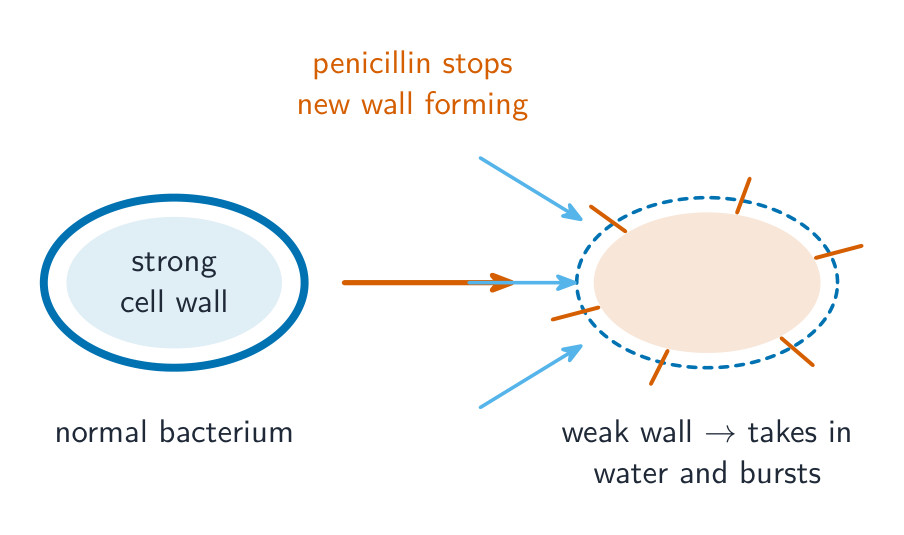
An antibiotic 抗生素 is a drug that kills bacteria or stops them growing. For example, penicillin 青霉素 stops bacteria from building their cell walls 细胞壁. As the bacterium grows, its weak wall cannot hold it, so the cell takes in water and bursts.

Antibiotics do not work against viruses. A virus has no cell wall and no chemical reactions of its own to attack — it simply uses the machinery of the host cell. So there is no antibiotic target in a virus.

한국어

항생제는 세균을 사멸시키거나 생장을 억제하는 약입니다. 예를 들어, 페니실린은 세균이 세포벽을 형성하는 것을 방해합니다. 세균이 자랄 때 약해진 벽은 세포를 지탱하지 못해 물이 들어와 세포가 터지게 됩니다.

강한 세포벽을 가진 세균과 페니실린에 의해 약화된 세포벽을 가진 세균(물이 들어와 터짐)을 나란히 배치한 그림 *페니실린이 새로운 세포벽 형성을 막아 세균이 물을 흡수하여 터지게 함

세균이 밀집해서 자란 배양판 위에 작은 종이 디스크가 흩뿌려져 있으며, 몇몇 디스크 주변에는 세균이 자라지 않은 투명한 원형 영역이 보임 *어떤 항생제가 효과적인지 테스트하는 방법. 각 종이 디스크에는 서로 다른 항생제가 담겨 있습니다. 투명한 고리가 formed되면 해당 항생제가 주변 세균을 죽였다는 뜻이며, 고리가 클수록 약효가 높음을 의미합니다. 고리가 없는 디스크는 세균이 내성을 나타내는 것입니다.

항생제는 바이러스에는 작용하지 않습니다. 바이러스는 세포벽이 없고 자체적인 화학 반응이 없어 공격할 대상이 없으며, 단순히 숙주 세포의 기계적 장치만 이용합니다. 따라서 바이러스 안에는 항생제의 타겟이 없습니다.

Vocabulary · ⁨어휘⁩ Train · ⁨연습하기⁩
English 한국어
antibiotic/ˌæntɪbaɪˈɒtɪk/ 항생제
penicillin/ˌpenɪˈsɪlɪn/ 페니실린
cell wall/sel wɔːl/ 세포벽
mutation/mjuːˈteɪʃn/ 변이
10.2

Antibiotic resistance · ⁨항생제 내성⁩

English

Sometimes a mutation 突变 makes a bacterium resistant to an antibiotic, which means the antibiotic no longer kills it. This resistance 耐药性 is a serious problem:

  • when an antibiotic is used, the non-resistant bacteria die, but any resistant ones survive and multiply. Over time, more and more bacteria carry the resistance.
  • some infections then become very hard, or impossible, to treat.

Steps to slow resistance down:

  • only use antibiotics when they are really needed (not for viral illnesses such as colds).
  • always finish the full course, so no bacteria are left alive.
  • use the correct antibiotic for the infection.
  • reduce the heavy use of antibiotics in farming.

Worked example. A patient with influenza is prescribed an antibiotic. Explain why it will not help, and why it is actively harmful. Antibiotics work by attacking structures or processes that bacteria have and human cells do not - penicillin, for instance, blocks cell wall synthesis, so the growing bacterium bursts under osmotic pressure. A virus has no cell wall, no ribosomes of its own and no metabolism: it replicates inside the host's cells using the host's machinery, so there is simply no bacterial target for the drug to attack. Taking it anyway exposes the patient's harmless resident bacteria to the antibiotic, killing the susceptible ones and selecting for resistant ones - which is how resistance spreads through a population. Name the target that is missing: "viruses are not alive" is not the reason and earns nothing.

한국어

어떤情况下 돌연변이가 세균을 항생제에 내성 있게 만들어, 이는 항생제가 더 이상 세균을 죽이지 못함을 의미합니다. 이 내성은 심각한 문제입니다:

  • 항생제를 사용할 때 비내성 세균은 죽지만, 내성을 가진 세균들은 생존하여 번식합니다. 시간이 지남에 따라 내성을 가진 세균의 비율이 점점 증가합니다.
  • 이로 인해 일부 감염증은 치료하기 매우 어렵거나 불가능해집니다.
세균 집단의 세 단계를 보여주는 그림: 우연히 몇 개의 세균이 내성을 가지며, 항생제는 비내성 세균을 죽이고, 내성 생존 세균들이 번식함
항생제 내성은 자연선택을 통해 확산됩니다: 항생제가 나머지 세균을 죽이므로, 내성 생존 세균들이 지배권을 잡습니다

내성 확산을 늦추기 위한 조치:

  • 실제 필요할 때만 항생제를 사용하십시오 (감기 같은 바이러스 질환에는 사용하지 않음).
  • 반드시 처방된 용량을 모두 복용하여, 살아남은 세균이 없게 하십시오.
  • 감염증에 맞는 정확한 항생제를 사용하십시오.
  • 농업에서의 항생제 과다 사용을 줄이십시오.

해설 예시. 인플루엔자 환자에게 항생제가 처방되었습니다. 이것이 효과가 없는 이유와 오히려 해가 되는 이유를 설명하십시오. 항생제는 세균에만 있고 인간 세포에는 없는 구조나 과정을 공격하여 작용합니다. 예를 들어 페니실린은 세포벽 합성을 차단하여 삼투압 하에 성장 중인 세균이 터지게 만듭니다. 바이러스는 세포벽이 없고, 자체 리보솜도 없으며, 대사 활동도 하지 않습니다. 바이러스는宿主(주인)의 세포 machinery(기계)를 사용하여 세포 내부에서 복제되므로, 약물이 공격할 세균 표적이 존재하지 않습니다. 그럼에도 불구하고 복용하게 되면 환자의 무해한 상주 세균이 항생제에 노출되어 감수성 있는 세균은 죽고 저항성이 선별된(selected for) 세균만 남게 됩니다. 이것이 저항성이 집단 내에서 퍼지는 방식입니다. 결여된 target(표적) 을 명시하십시오: "바이러스는 생명이 아니다"라는 답변은 정답이 아니며 점수를 주지 않습니다.

Explore · ⁨탐색하기⁩

How resistance evolves · ⁨내성의 진화 과정⁩

Step through natural selection in fast-forward. The antibiotic kills the rest, so only the resistant bacteria are left to breed. · ⁨자연선택 과정을 가속적으로 따르십시오. 항생제가 나머지 세균을 죽이므로, 내성이 있는 세균만 남아서 번식하게 됩니다.⁩

Vocabulary · ⁨어휘⁩ Train · ⁨연습하기⁩
English 한국어
resistance/rɪˈzɪstəns/ 저항
10.2

Exam tips · ⁨시험 팁⁩

English
  • For each named disease give the pathogen and route (cholera – bacterium, water; malaria – Plasmodium, mosquito vector; also TB, HIV/AIDS).
  • Explain why antibiotics work on bacteria only (they target cell walls/enzymes, not viruses).
  • Explain antibiotic resistance as natural selection: a resistant mutant survives and reproduces; reduce it by finishing courses and avoiding overuse.
한국어
  • 각 명명된 질병에 대해 병원체(pathogen)와 전파 경로(route) 를 제시하십시오 (콜레라 – 세균, 물; 말라리아 – Plasmodium, 모기 매개체; 또한 결핵, HIV/AIDS).
  • 항생제가 세균에만 작용하는 이유를 설명하십시오 (세포벽/효소를 표적으로 하며, 바이러스는 표적으로 하지 않음).
  • 자연선택으로서 항생제 내성을 설명하십시오: 내성 돌연변이가 생존하고 번식하며, 치료 과정을 완수하고 과용을 피함으로써 이를 줄일 수 있습니다.

Interactive lessons on this topic · ⁨이 주제에 대한 인터랙티브 수업⁩

Work through it step by step, with instant-check exercises. · ⁨즉시 체크 기능 exercises를 통해 단계별로 진행하세요.⁩

Past Papers · ⁨과거 시험지⁩

More topics in A-Level Biology · ⁨A-Level 생물학⁩ · ⁨A-Level Biology · ⁨A-Level 생물학⁩ 내 추가 주제⁩

Log in or create account · ⁨로그인 또는 계정 만들기⁩

IGCSE, A-Level & AP