Passing it on
Every living thing gets one chance to pass its genes on. Flowers do it with petals and pollen, humans with gametes and cycles of hormones — and the packets of information that pass are chromosomes, shuffled by meiosis and recombined at fertilisation. This section runs from flower structure to monohybrid crosses, from Darwin's finches to antibiotic-resistant bacteria.
Edexcel International GCSE Biology 4BI1, Section 3 (statements 3.1–3.39) is the genetics and reproduction section. Crosses and pedigrees carry reliable marks for students who lay out a genetic diagram properly.
Reproduction
Sexual reproduction needs two gametes; the offspring are genetically different. Asexual reproduction needs one parent; the offspring are genetically identical clones.
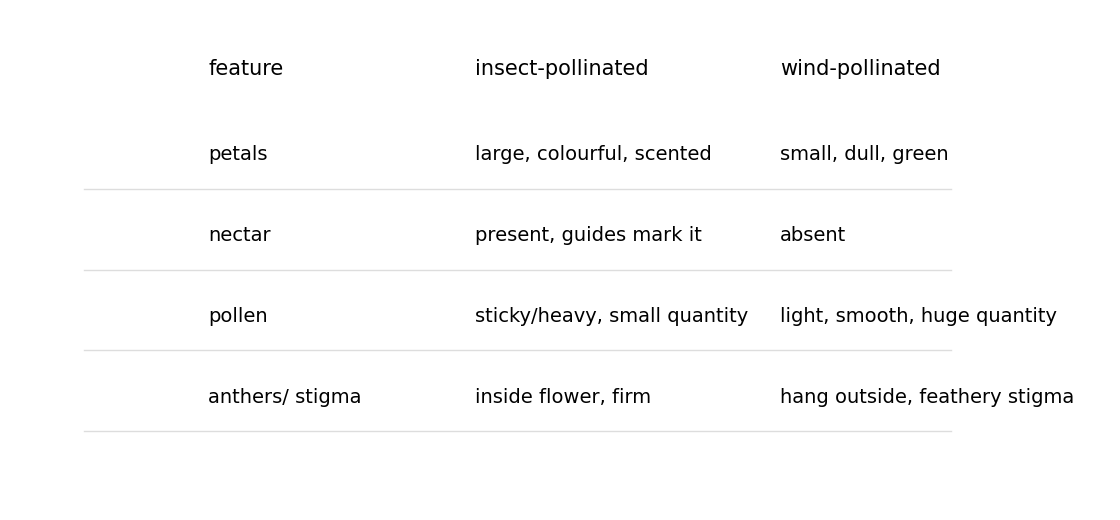
Flowering plants. Insect-pollinated flowers have large colourful petals, scent and nectar; wind-pollinated flowers are small and green, with light smooth pollen in huge quantities, anthers hanging outside and feathery stigmas.
After pollination 传粉 the pollen grain grows a pollen tube 花粉管 down the style; fertilisation 受精 follows, and the ovule becomes the seed while the ovary becomes the fruit. Germinating seeds live on their stored food reserves until the seedling can photosynthesise. Plants reproduce asexually by runners and artificially by cuttings.
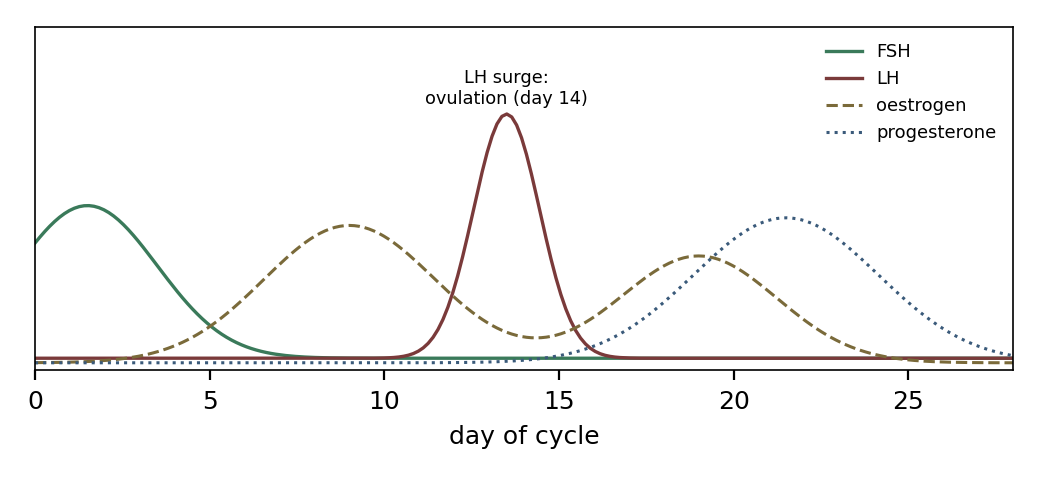
Humans. The menstrual cycle: FSH 促卵泡激素 matures an egg in the ovary; the mature follicle releases oestrogen 雌激素, which thickens the uterus lining and triggers the LH surge that causes ovulation at about day 14; the empty follicle becomes a corpus luteum releasing progesterone 孕酮, holding the lining thick until day 28, when the falling hormone levels bring menstruation (B: FSH and LH from the pituitary).
The placenta supplies the embryo with oxygen and nutrients and removes waste; amniotic fluid protects it. Oestrogen and testosterone 睾酮 drive the development of secondary sexual characteristics.
Inheritance
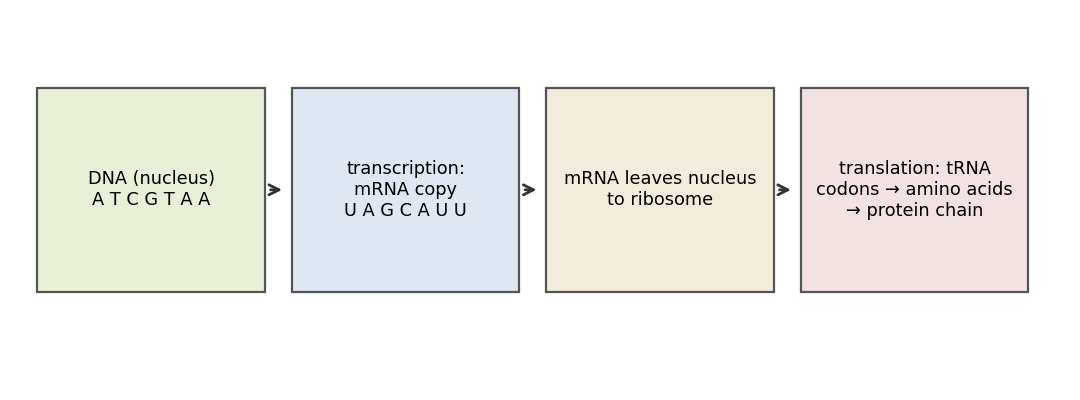
The genome 基因组 is all an organism's DNA; a gene is a section of a DNA molecule coding for one protein. Genes sit on chromosomes in the nucleus. (B) DNA is a double helix 双螺旋 with paired bases — A–T and C–G; RNA is single-stranded with U replacing T. (B) Protein synthesis: transcription 转录 copies the gene to mRNA in the nucleus; translation 翻译 at the ribosome reads codons 密码子, each matched by a tRNA anticodon carrying its amino acid, building the chain.
Alleles 等位基因 are alternative forms of a gene. Vocabulary: dominant 显性 (shows if one copy present), recessive 隐性 (needs two), homozygous 纯合, heterozygous 杂合, genotype 基因型, phenotype 表型; (B) codominance 共显性 — both alleles expressed. Most features are polygenic, not single-gene.
A monohybrid cross, laid out to earn its marks: parents' genotypes → gametes → Punnett grid → phenotype ratio.
Worked check. Cystic fibrosis (cf, recessive): both parents heterozygous Cc × Cc. Gametes C or c. Offspring CC, Cc, Cc, cc — 3 unaffected : 1 affected; a 1-in-4 chance per child, the same chance every child.
Sex determination: XX female, XY male. Mother always gives X; father gives X or Y — a genetic diagram of X×X, X×Y gametes gives 1:1 female:male, and the father's gamete decides the sex.
Mitosis 有丝分裂 makes two cells with identical chromosomes — growth, repair, cloning, asexual reproduction. Meiosis 减数分裂 makes four genetically different haploid 单倍体 gametes (human diploid 46 → haploid 23), and random fertilisation of any sperm with any egg creates further variation.
 Variation can be genetic, environmental, or both. Mutation 突变 is a rare, random change in DNA that can be inherited — mostly harmless, occasionally significant (B: a changed base can alter one amino acid and the protein's shape); ionising radiation and chemical mutagens such as tobacco chemicals raise mutation rates.
Evolution
Darwin's natural selection 自然选择, step by step: organisms produce more offspring than survive; variation exists within a species; those with characteristics best suited to the environment survive and reproduce, passing the alleles on; over generations the advantageous characteristic becomes more common.
Antibiotic resistance is selection in action: a random mutation makes one bacterium resistant; antibiotics kill the non-resistant majority; the resistant bacterium survives and reproduces — completing courses of antibiotics and avoiding overuse slows the spread, and resistant infections become hard to control.
Check yourself
- Give two differences between sexual and asexual reproduction.
- State two adaptations of a wind-pollinated flower.
- What happens after the pollen tube reaches the ovule?
- Which hormone surges at day 14, and what does it cause?
- Define gene, allele and genome.
- (B) Name the base that replaces thymine in RNA, and where translation happens.
- Cross Cc × cc and give the phenotype ratio.
- Why does the father's gamete determine the sex of a child?
- Give two differences between mitosis and meiosis.
- Explain antibiotic resistance by natural selection in three steps.
Answers: 1 sexual — two parents, genetically different offspring; asexual — one parent, genetically identical offspring; 2 light smooth pollen in large quantity; anthers hanging outside the flower with a feathery stigma (small dull petals, no nectar); 3 the male gamete fuses with the ovule's egg cell — fertilisation; the ovule becomes a seed and the ovary a fruit; 4 LH — ovulation (release of the egg); 5 gene — a DNA section coding for one protein; allele — an alternative form of a gene; genome — all the organism's DNA; 6 (B) uracil; at a ribosome; 7 gametes C, c and c, c → Cc, Cc, cc, cc — 1 unaffected : 1 affected; 8 the mother's egg always carries X; the sperm carries X or Y, so XX (female) or XY (male) depends on the sperm; 9 mitosis — two cells, identical, same (diploid) chromosome number, for growth/repair/asexual reproduction; meiosis — four cells, genetically different, half the number (haploid), for gametes; 10 a mutation gives one bacterium resistance; the antibiotic kills the non-resistant bacteria; the resistant one survives and reproduces, so resistance spreads.