Skip to content · ⁨コンテンツへスキップ⁩

Nucleic acids and protein synthesis · ⁨核酸とタンパク質合成⁩

A-Level Biology · ⁨A-Level 生物⁩ · Topic 6 · ⁨トピック 6⁩

View Slides · ⁨查看幻灯片⁩ Train · ⁨練習する⁩
Video lesson for this topic · ⁨このトピックのビデオレッスン⁩ Open the video page · ⁨動画ページを開く⁩
9:37

DNAとタンパク質合成

あなたのほぼすべての細胞の中に、約2メートルの長さを持つ分子が存在しており、非常に密に折りたたまれているため目には見えません。それはDNAであり、その記述法は…

English narration · English + 中文 subtitles burned in · ⁨英語ナレーション・英語+中文字幕 burning-in⁩

6.1

Nucleotides — the building blocks · ⁨ニュクレオチド — 構成要素⁩

Syllabus · ⁨シラバス⁩
English
  1. describe the structure of nucleotides, including the phosphorylated nucleotide ATP (structural formulae are not expected)
  2. state that the bases adenine and guanine are purines with a double ring structure, and that the bases cytosine, thymine and uracil are pyrimidines with a single ring structure (structural formulae for bases are not expected)
  3. describe the structure of a DNA molecule as a double helix, including: • the importance of complementary base pairing between the 5′ to 3′ strand and the 3′ to 5′ strand (antiparallel strands) • differences in hydrogen bonding between C–G and A–T base pairs • linking of nucleotides by phosphodiester bonds
  4. describe the semi-conservative replication of DNA during the S phase of the cell cycle, including: • the roles of DNA polymerase and DNA ligase (knowledge of other enzymes in DNA replication in cells and different types of DNA polymerase is not expected) • the differences between leading strand and lagging strand replication as a consequence of DNA polymerase adding nucleotides only in a 5′ to 3′ direction
  5. describe the structure of an RNA molecule, using the example of messenger RNA (mRNA)
日本語
  1. ヌクレオチドの構造を記述する。これにはリン酸化されたヌクレオチドであるATPも含む(構造式は必須ではない)
  2. 塩基アデニンおよびグアニンは二重環構造を持つプリンであり、塩基シトシン、チミンおよびウラシルは単一環構造を持つピリミジンであることを述べる(塩基の構造式は求められない)
  3. DNA分子の構造を二重らせんとして記述する。以下を含む: • 5′から3′方向の鎖と3′から5′方向の鎖との間の相補的塩基対合の重要性(反平行鎖) • C–G塩基対とA–T塩基対の間の水素結合の違い • ホスホジエステル結合によるヌクレオチドの連結
  4. 細胞周期のS期におけるDNAの半保存的複製を記述する。以下を含む: • DNAポリメラーゼおよびDNAライゲアーゼの役割(細胞内の他の酵素や、異なる種類のDNAポリメラーゼに関する知識は必須ではない) • DNAポリメラーゼが5′から3′方向へのみヌクレオチドを追加するため、リード鎖とラグging鎖の複製に生じる違い
  5. **mRNA(メッセンジャーRNA)**の例を用いて、RNA分子の構造を記述する
Source: Cambridge International syllabus · ⁨出典: Cambridge International シラバス⁩

English
DNA replication: unzip and copy

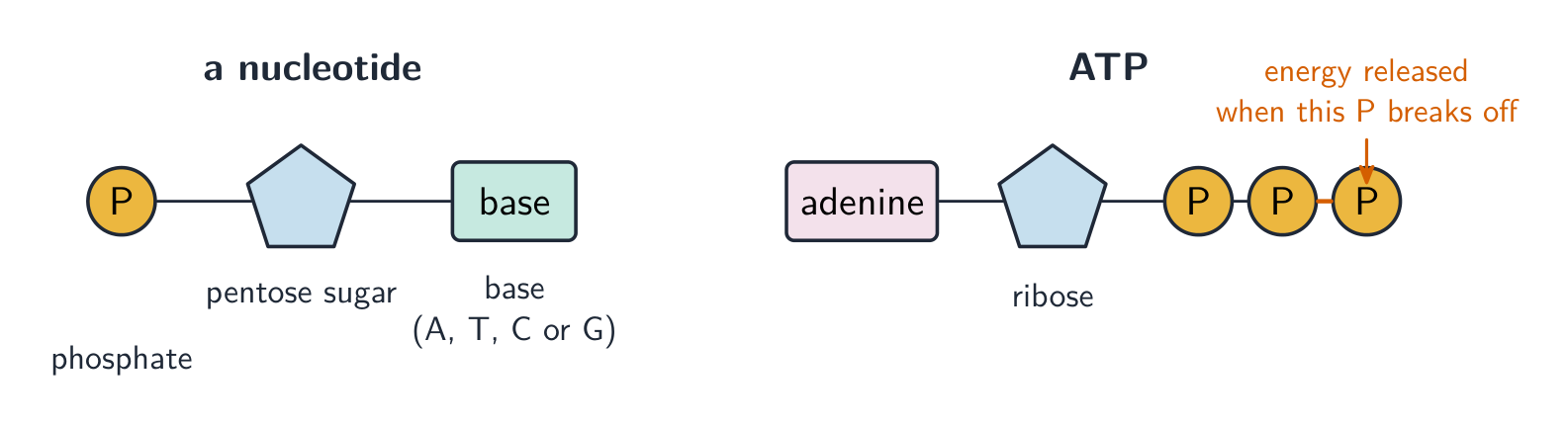
Nucleic acids 核酸 (DNA and RNA) are polymers of small units called nucleotides 核苷酸. Each nucleotide is made of three parts joined together:

  • a phosphate 磷酸 group,
  • a sugar (a 5-carbon sugar),
  • a nitrogen-containing base 碱基.

ATP is a special nucleotide. It has the base adenine 腺嘌呤, the sugar ribose 核糖, and three phosphate groups. Breaking off the last phosphate releases energy 能量 for the cell.

There are five bases, in two groups:

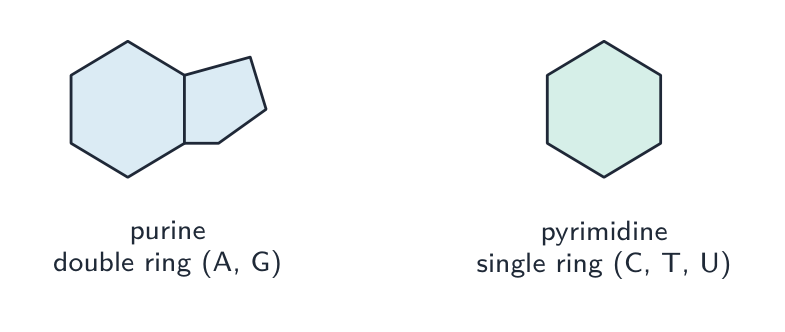
  • purines 嘌呤 have a double ring (two rings): adenine and guanine 鸟嘌呤.
  • pyrimidines 嘧啶 have a single ring (one ring): cytosine 胞嘧啶, thymine 胸腺嘧啶 and uracil 尿嘧啶.
日本語
DNA複製:解きほぐしてコピーする

核酸(DNAおよびRNA)は、ニュクレオチドと呼ばれる小さな単位からなるポリマーである。各ニュクレオチドは3つの部分で構成されている:

  • リン酸基、
  • 糖(5炭素糖)、
  • 窒素を含む塩基。

ATP は特別なニュクレオチドである。塩基にアデニン、糖にリボース、そして3個のリン酸基を持つ。最後のリン酸基が切り離されることで、細胞にとってのエネルギーが放出される。

リン酸、ペンタース糖、塩基が結合したニュクレオチドの描画;隣にはアデニン、リボース、3つのリン酸からなるATPが描かれ、最後の結合が高エネルギー結合として示されている
ニュクレオチドはリン酸、糖、塩基からなる;ATPは3つのリン酸を持つニュクレオチド
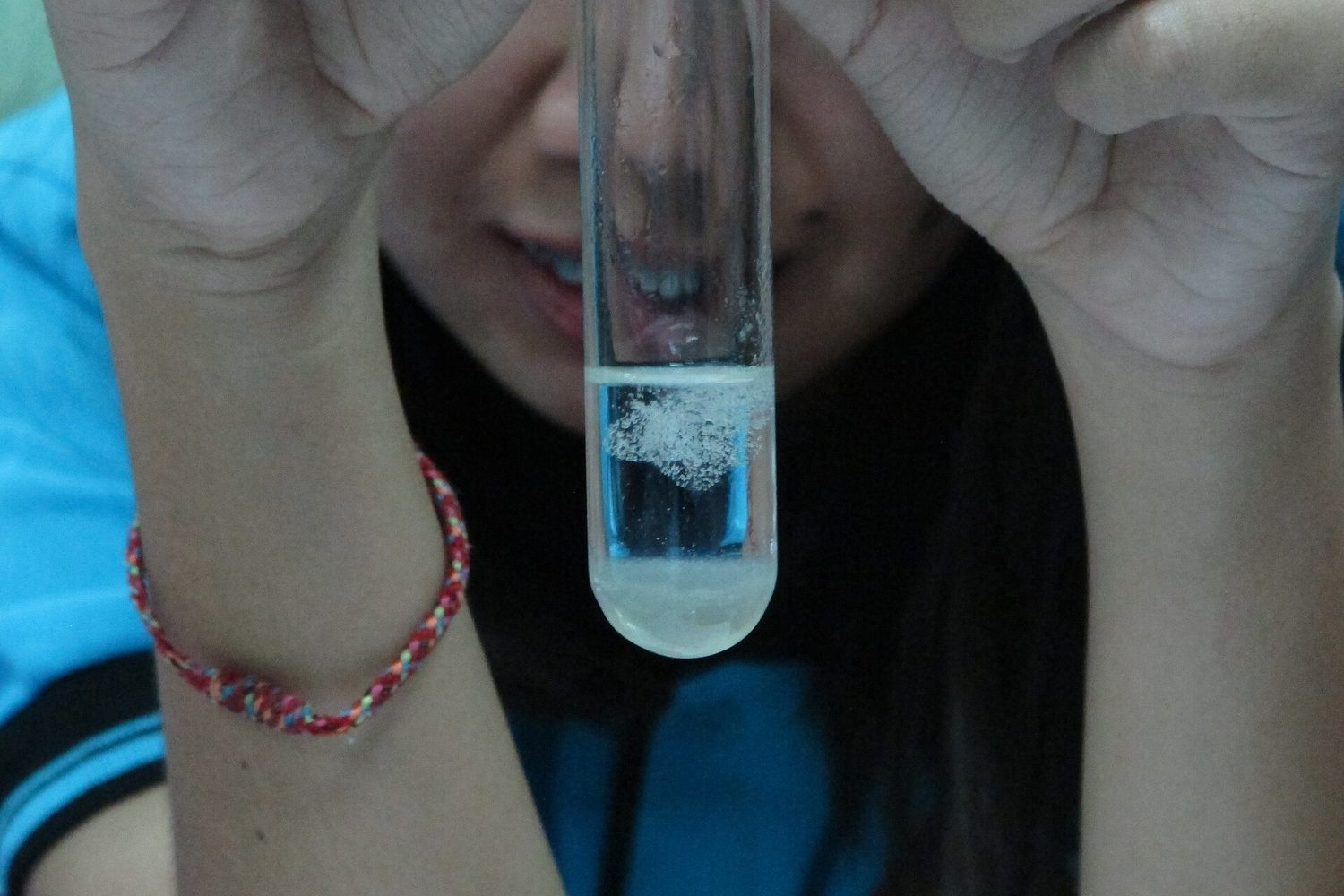
試験管内の淡く糸状のDNAの列
細胞から抽出されたDNAは、これらのニュクレオチドポリマーの淡い糸状の構造として見える

塩基には5種類あり、2つのグループに分かれる:

  • プリンは二重環(2つの環)を持つ:アデニンとグアニン。
  • ピリミジンは単一環(1つの環)を持つ:シトシン、チミン、およびウラシル。
2つの環の形状:プリンは融合した2つの環で描かれ、ピリミジンは1つの環で描かれている
2つのグループは形が異なる:プリンは二重環、ピリミジンは単一環であり、そのためプリン常にピリミジンと対になる
Vocabulary · ⁨語彙⁩ Train · ⁨練習する⁩
English 日本語
nucleic acid/njuːˈklɪɪk ˈæsɪd/ 核酸
nucleotide/ˈnjuːklɪɒtaɪd/ ヌクレオチド
phosphate/ˈfɒsfeɪt/ リン酸
base/beɪs/ 底
adenine/ˈædəniːn/ アデニン
ribose/ˈrɪbəʊs/ リボース
energy/ˈenədʒi/ エネルギー
purine/ˈpjʊəriːn/ プリン
guanine/ˈɡwɑːnaɪn/ グアニン
pyrimidine/ˈpɪrɪmɪdiːn/ ピリミジン
cytosine/ˈsaɪtəsaɪn/ シトシン
thymine/ˈθaɪmaɪn/ チミン
uracil/ˈjʊərəsɪl/ ウラシル
double helix/ˈdʌbl ˈhiːlɪks/ 二重らせん
strand/strænd/ 鎖
deoxyribose/diːˈɒksɪrɪbəʊs/ デオキシリボース
phosphodiester bond/ˈfɒsfəʊdɪstə bɒnd/ ホスホジエステル結合
complementary base pairing/ˌkɒmplɪˈmentəri beɪs ˈpeərɪŋ/ 塩基対
hydrogen bond/ˈhaɪdrədʒn bɒnd/ 水素結合
replication/ˌreplɪˈkeɪʃn/ 複製
semi-conservative replication/ˈsemi kənˈsɜːvətɪv ˌreplɪˈkeɪʃn/ 半保存的複製
enzyme/ˈenzaɪm/ 酵素
polymerase/ˌpɒlɪməˈreɪz/ ポリメラーゼ
leading strand/ˈliːdɪŋ strænd/ リーディング strand(先行鎖)
lagging strand/ˈlæɡɪŋ strænd/ ラグGING strand(遅延鎖)
ligase/ˈlɪɡeɪs/ ライゲース
gene/dʒiːn/ 遺伝子
polypeptide/ˌpɒlɪˈpeptaɪd/ ポリペプチド
triplet/ˈtrɪplɪt/ 三重線
amino acid/əˈmiːnəʊ ˈæsɪd/ アミノ酸
6.1

The structure of DNA · ⁨DNAの構造⁩

English

A DNA molecule is two strands twisted together into a double helix 双螺旋.

Each strand 链 has a backbone of alternating sugar (here the sugar is deoxyribose 脱氧核糖) and phosphate. The sugar of one nucleotide is joined to the phosphate of the next by a phosphodiester bond 磷酸二酯键.

The two strands are held together by their bases, which meet in the middle. The pairing is exact — this is complementary base pairing 碱基互补配对:

  • A always pairs with T, held by two hydrogen bonds 氢键.
  • C always pairs with G, held by three hydrogen bonds (so a C–G base pair 碱基对 is harder to separate).

The two strands run in opposite directions: one goes 5′ to 3′ while the other goes 3′ to 5′. We say they are antiparallel 反平行.

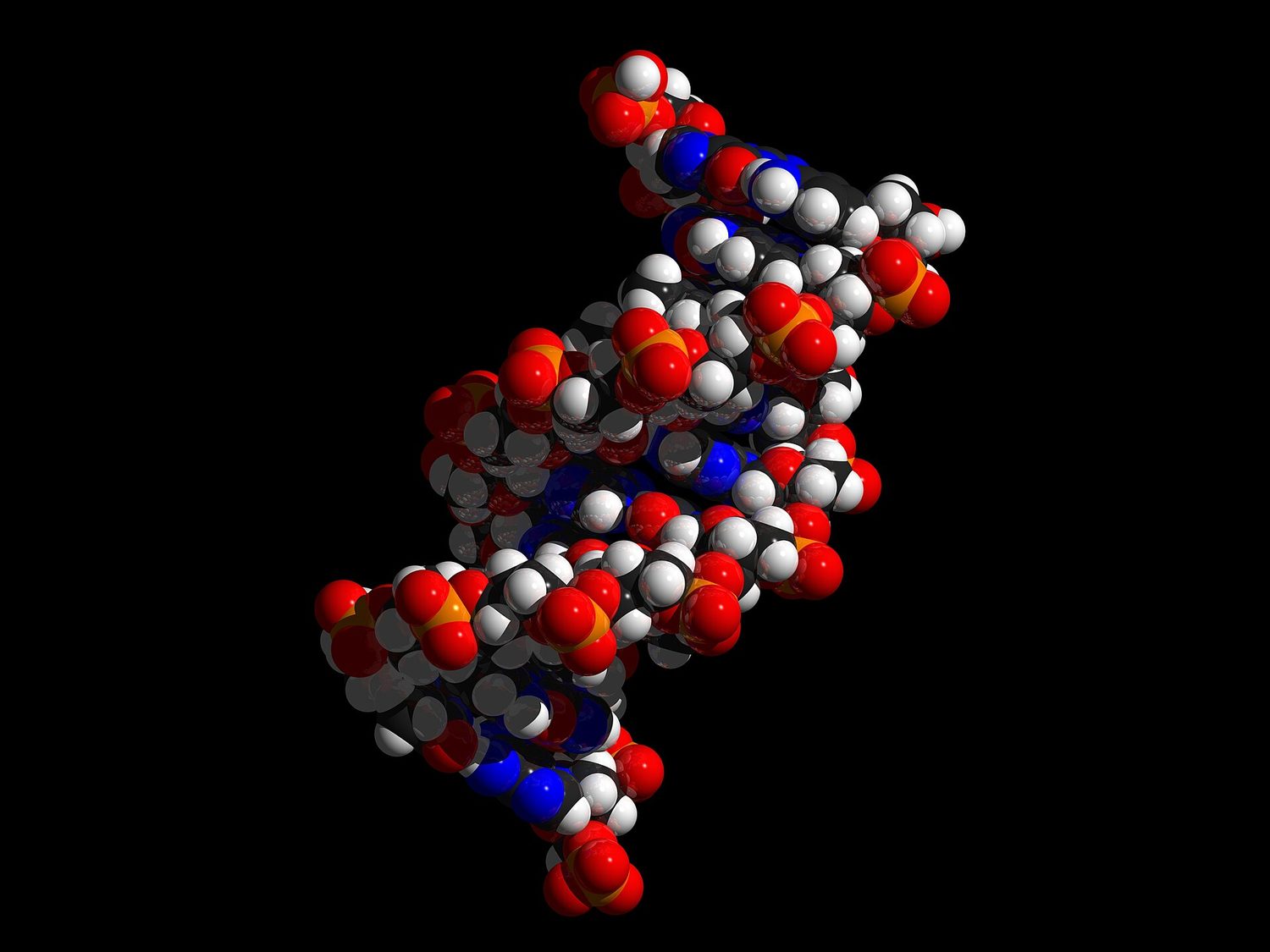
The flat ladder above is twisted into a spiral. This space-filling model, where every atom is a ball, shows the real shape of the double helix:

日本語

DNA分子は、2本の鎖がねじれて二重らせんを形成している。

各鎖は、糖(ここでは糖はデオキシリボース)とリン酸が交互に並んだ骨格を持つ。あるニュクレオチドの糖は、次のニュクレオチドのリン酸とホスホジエステル結合によって結合している。

2本の鎖は塩基によって結びつけられ、中央で出会う。この対合は正確であり、これを相補的塩基対合という:

  • Aは常にTと対になり、2個の水素結合によって保持される。
  • Cは常にGと対になり、3個の水素結合によって保持される(したがってC–G塩基対は分断しにくい)。

2本の鎖は逆向きに進む:片方は5′から3′へ、もう片方は3′から5′へ向かう。これらは逆平行であると述べる。

DNAの梯子図:2本の逆平行な糖-リン酸骨格と、2個の水素結合で結ばれた塩基対A=T、および3個で結ばれた塩基対C=G
相補的塩基対合:AはTと対になる(水素結合2個)、CはGと対になる(水素結合3個);鎖は逆平行

上記の平らな梯子は螺旋にねじれている。すべての原子が球体であるこの空間充填モデルは、二重らせんの実際の形を示している:

黒背景上の短いDNAのコンピュータによる空間充填モデル:多数の色付きの原子(赤、オレンジ、青、灰色、白)が2本の鎖に詰まり、互いにねじり合いながら二重らせんを形成している
DNAの空間充填モデル:2本の鎖が互いにねじり合い二重らせんを形成している — 図の梯子が巻き上げられたもの
Explore · ⁨探索⁩

Explore the DNA ladder · ⁨DNAの梯子を調べる⁩

Tap each part of the double helix — two antiparallel backbones with complementary base pairs as the rungs. · ⁨二重らせんの各部分にタップする — 補合塩基対を横木とする2本の反平行骨格。⁩

Vocabulary · ⁨語彙⁩ Train · ⁨練習する⁩
English 日本語
base pair/beɪs peə/ 塩基対
antiparallel/ˌæntɪˈpærəlel/ 反平行
6.1

DNA replication · ⁨DNA複製⁩

English

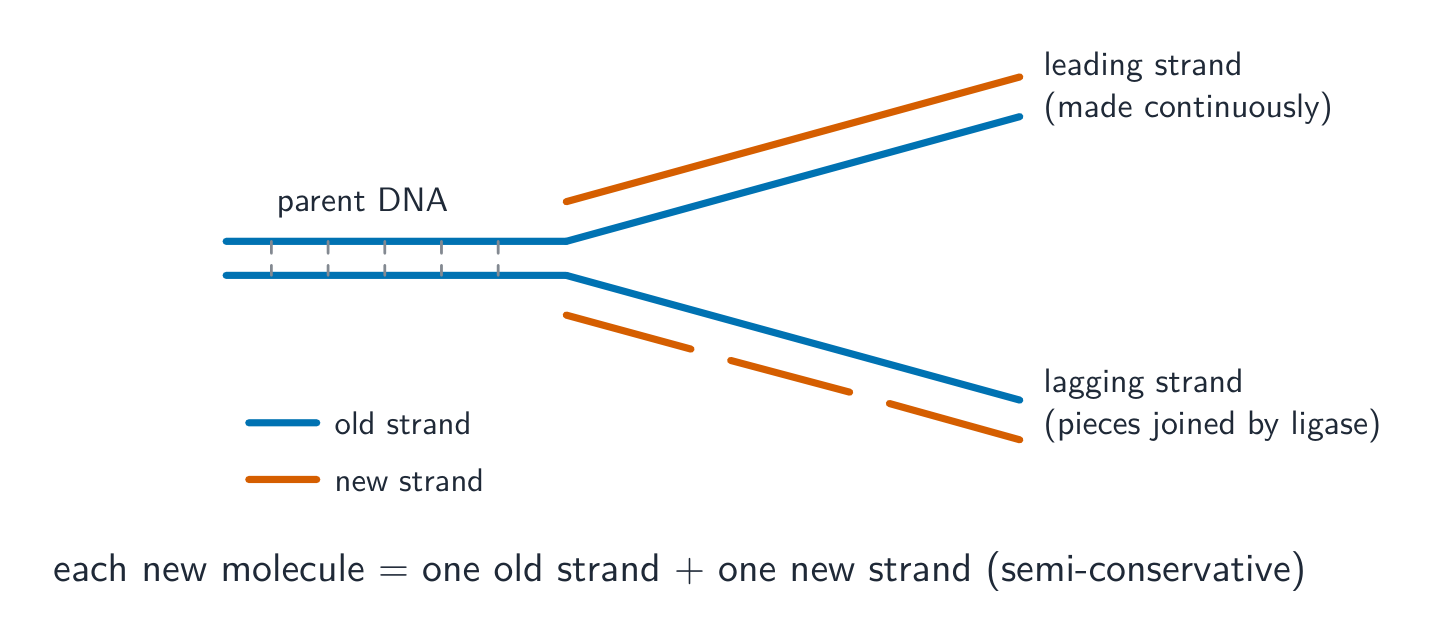
DNA replication 复制 (copying) happens during the S phase of the cell cycle. It is semi-conservative 半保留复制: each new molecule keeps one old strand and one new strand. The steps are:

  1. the double helix unwinds and the hydrogen bonds break, so the two strands separate.
  2. each old strand acts as a template. Free nucleotides pair with the exposed bases by complementary base pairing.
  3. the enzyme 酶 DNA polymerase 聚合酶 joins the new nucleotides into a strand. It can only add nucleotides in the 5′ to 3′ direction.

Because of that 5′ to 3′ rule, the two new strands are made differently:

  • the leading strand 前导链 is built continuously, following the unwinding.
  • the lagging strand 后随链 is built in short pieces, working away from the unwinding point. The enzyme DNA ligase 连接酶 then joins these pieces together.
日本語

DNAの複製(コピー作成)は細胞周期のS期に行われる。半保存的であり、各新しい分子は古い鎖1本と新しい鎖1本を維持する。手順は以下の通り:

  1. 二重らせんが解け、水素結合が切断されて2本の鎖が分離する。
  2. 各古い鎖がテンプレートとなる。遊離ニュクレオチドが露出した塩基と相補的塩基対合によって対になる。
  3. 酵素 DNAポリメラーゼが新しいニュクレオチドを鎖に繋ぎ合わせる。これは5′から3′方向へのみニュクレオチドを追加できる。

この5′から3′のルールのため、2本の新しい鎖は異なる方法で作成される:

  • リード鎖は、解きほぐしに続いて連続的に合成される。
  • ラグ鎖は、解きほぐし地点から遠ざかる方向に短い断片として合成される。その後、酵素DNAライガーゼがこれらの断片をつなぐ。
複製フォーク:親の二重らせんが解け、各古い鎖が新しい鎖のテンプレートとなり、リード鎖は連続的に、ラグ鎖は断片として作られる
複製は半保存的である:各新しい分子は古い鎖1本(青)と新しい鎖1本(オレンジ)を維持する
Explore · ⁨探索⁩

Semi-conservative replication · ⁨半保存的複製⁩

Step through copying DNA. The helix unwinds, each old strand templates a new one, and you end with two identical molecules. · ⁨DNAの複製工程を追う。らせんが解开され、古い鎖それぞれが新しい鎖の鋳型となり、2つの同一分子が完成する。⁩

6.1

RNA

English

RNA is also made of nucleotides, but it is a single strand, its sugar is ribose, and it uses uracil in place of thymine. The most important type here is messenger RNA (mRNA), which carries a copy of a gene's instructions out of the nucleus to be used.

日本語

RNAもヌクレオチドから構成されていますが、一本鎖であり、糖はリボースであり、チミンの代わりにウラシルを使用します。ここで最も重要なタイプは**メッセンジャーRNA (mRNA)**であり、遺伝子の指示のコピーを核の外へ運びます。

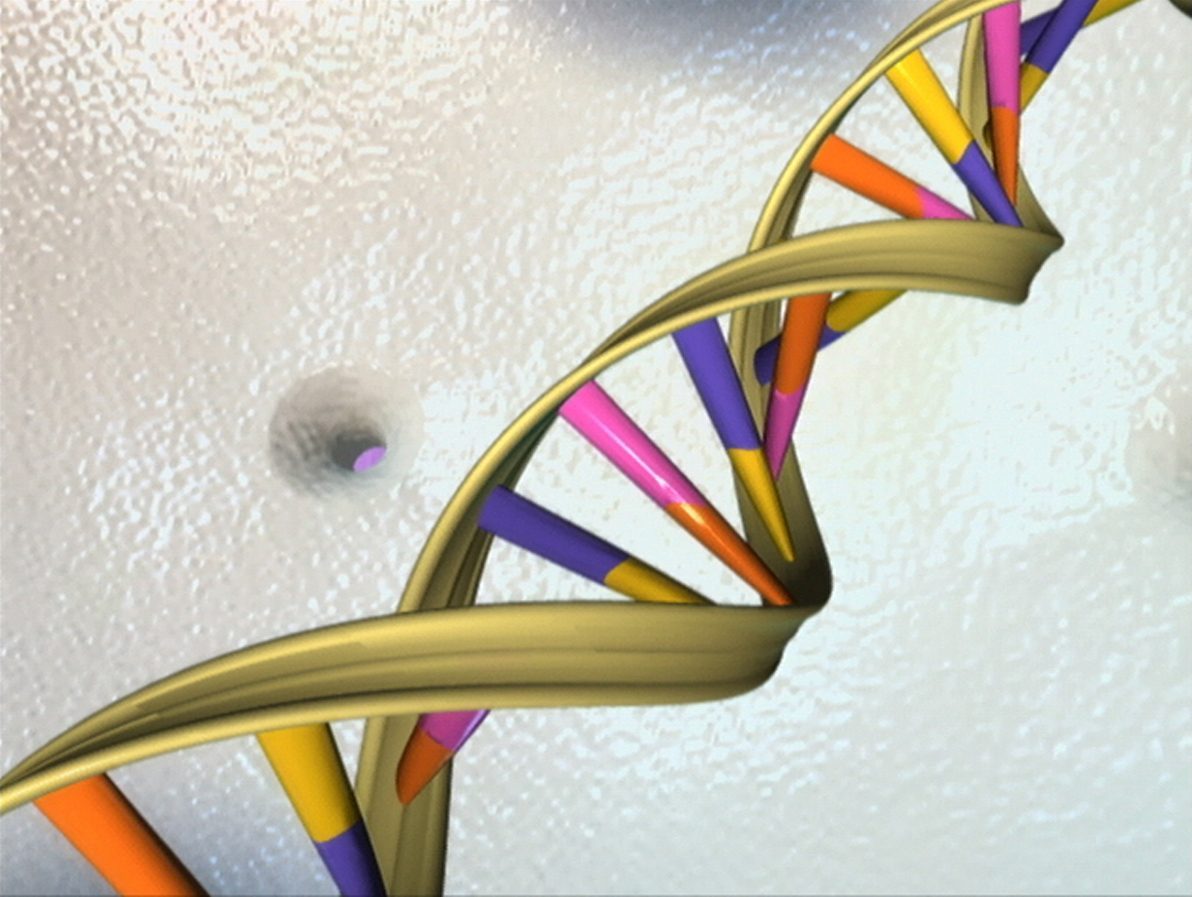
DNA二重らせん: RNAは遺伝情報をタンパク質合成に運ぶ関連する核酸です
6.2

The genetic code · ⁨遺伝コード⁩

Syllabus · ⁨シラバス⁩
English
  1. state that a polypeptide is coded for by a gene and that a gene is a sequence of nucleotides that forms part of a DNA molecule
  2. describe the principle of the universal genetic code in which different triplets of DNA bases either code for specific amino acids or correspond to start and stop codons
  3. describe how the information in DNA is used during transcription and translation to construct polypeptides, including the roles of: • RNA polymerase • messenger RNA (mRNA) • codons • transfer RNA (tRNA) • anticodons • ribosomes
  4. state that the strand of a DNA molecule that is used in transcription is called the transcribed or template strand and that the other strand is called the non-transcribed strand
  5. explain that, in eukaryotes, the RNA molecule formed following transcription (primary transcript) is modified by the removal of non-coding sequences (introns) and the joining together of coding sequences (exons) to form mRNA
  6. state that a gene mutation is a change in the sequence of base pairs in a DNA molecule that may result in an altered polypeptide
  7. explain that a gene mutation is a result of substitution or deletion or insertion of nucleotides in DNA and outline how each of these types of mutation may affect the polypeptide produced
日本語
  1. ポリピペプチドが遺伝子によってコードされ、遺伝子がDNA分子を構成するヌクレオチドの配列であることを示す
  2. 異なるトリプレットが特定のアミノ酸をコードするか、あるいはスタートコドンおよびストップコドンに対応するかという、普遍遺伝暗号の原則を示す
  3. DNA内の情報が転写および翻訳においてポリペプチドの構築にどのように使用されるかを記述し、以下の役割を含む: • RNAポリメラーゼ • メッセンジャーRNA (mRNA) • コドン • 転送RNA (tRNA) • アンチコドン • リボソーム
  4. 転写に使用されるDNA鎖は転写鎖(またはテンプレート鎖)と呼ばれ、もう一方の鎖は非転写鎖と呼ばれることを示す
  5. 真核生物において、転写後に形成されるRNA分子(一次転写産物)が、非コーディング配列(イントロン)の除去およびコーディング配列(エクソン)の連結によってmRNAに変換されることを説明する
  6. 遺伝子変異とは、DNA分子の塩基対配列の変化であり、これが変化したポリペプチドの生成につながる可能性があることを示す
  7. 遺伝子変異がDNAにおけるヌクレオチドの置換、欠失、または挿入の結果であることを説明し、これらの各タイプの変異が生産されるポリペプチドに与える影響を概説する

Source: Cambridge International syllabus · ⁨出典: Cambridge International シラバス⁩

English
Protein synthesis: DNA to protein

A gene 基因 is a sequence of DNA nucleotides that codes for one polypeptide 多肽.

The code is read in triplets 三联体 — groups of three bases. Each triplet either codes for one specific amino acid 氨基酸, or acts as a start or stop signal. The code is universal: nearly all living things use the same triplets for the same amino acids.

There are 64 possible triplets but only 20 common amino acids, so most amino acids are coded by more than one triplet.

日本語
タンパク質合成: DNAからタンパク質へ

遺伝子とは、一つのポリペプチドをコードするDNAのヌクレオチド配列のことです。

コードはトリプレット(塩基の3つ組)として読み取られます。各トリプレットは特定のアミノ酸の一つをコードするか、開始または停止シグナルとして機能します。このコードは普遍的であり、ほぼすべての生物が同じアミノ酸に対して同じトリプレットを使用しています。

可能なトリプレットは64種類ありますが、一般的なアミノ酸は20種類のみであるため、多くのアミノ酸は複数のトリプレットによってコードされます。

Watch lesson · ⁨レッスンを視聴⁩
6.2

Protein synthesis: transcription and translation · ⁨タンパク質合成:転写と翻訳⁩

English

Transcription (in the nucleus)

The DNA gene is copied into mRNA. This is transcription 转录.

  • the strand of DNA that is copied is the template strand 模板链; the partner strand is the non-transcribed strand 非转录链.
  • the enzyme RNA polymerase joins RNA nucleotides that pair with the template bases (with uracil pairing to adenine).
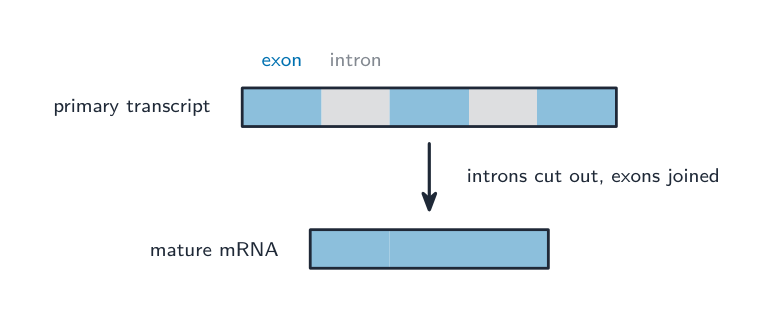
  • in eukaryotes the first RNA made (the primary transcript 初级转录本) contains coding parts called exons 外显子 and non-coding parts called introns 内含子. The introns are cut out and the exons joined together to form the finished mRNA.

Translation (at the ribosome)

The mRNA leaves the nucleus and attaches to a ribosome 核糖体. Building the polypeptide from the mRNA code is translation 翻译.

  • the mRNA is read in codons 密码子 (each codon is one triplet of mRNA bases).
  • molecules of transfer RNA (tRNA) bring amino acids to the ribosome. Each tRNA has an anticodon 反密码子 that pairs with a matching codon.
  • as the codons are read in order, the ribosome joins the amino acids with peptide bonds 肽键, building the polypeptide.

Worked example. A DNA template strand reads TAC GGA CTT. Give the mRNA codons, and say how long the polypeptide is. Transcribe by complementary base pairing, remembering that RNA uses uracil in place of thymine: TAC gives AUG, GGA gives CCU, CTT gives GAA. So the mRNA reads AUG CCU GAA. AUG is the start codon (methionine), so the polypeptide is three amino acids long - two once the start methionine is removed. Two errors cost most of the marks here: pairing A with T instead of U when writing mRNA, and transcribing the coding strand instead of the template strand. The mRNA is complementary to the template, and identical to the coding strand apart from U replacing T.

日本語

転写(核内)

DNAの遺伝子がmRNAにコピーされます。これを転写といいます。

  • コピーされるDNAの鎖はテンプレート鎖と呼ばれます。対となる鎖は非転写鎖です。
  • RNAポリメラーゼという酵素が、テンプレート塩基と相補的に結合するRNAヌクレオチドをつなぎます(ウラシルはアデニンと対になります)。
  • 真核生物では、最初に作られるRNA(一次転写産物)は、エクソンと呼ばれるコード部分と、イントロンと呼ばれる非コード部分を含んでいます。イントロンは切り出され、エクソンがつながって完成したmRNAとなります。
交互に並ぶエクソンとイントロンを持つ一次転写産物;イントロンが除去され、エクソンがつながって短くなった成熟したmRNAとなります
スプライシング:非コードのイントロンが切り出され、コードのエクソンがつながって完成したmRNAとなります

翻訳(リボソーム上)

mRNAは核を出てリボソームに結合します。mRNAのコードに基づいてポリペプチドを合成することを翻訳といいます。

  • mRNAはコドンとして読み取られます(各コドンはmRNA塩基の1つのトリプレットです)。
  • トランスファーRNA (tRNA) の分子がアミノ酸をリボソームに運びます。各tRNAには、対応するコドンと対になるアンチコドンがあります。
  • コドンの順に読み取られるにつれて、リボソームはアミノ酸同士をペプチド結合で結びつけ、ポリペプチドを合成していきます。
タンパク質合成の全体像:核内でDNAがmRNAに転写され、核を出たmRNAがリボソームで翻訳され、tRNAがアミノ酸を運びポリペプチドを合成します
転写は核内でDNAをmRNAにコピーし、翻訳はリボソーム上でポリペプチドを合成します

** worked example.** DNAのテンプレート鎖の配列が TAC GGA CTT です。mRNAのコドンを与え、ポリペプチドの長さを答えよ。相補的塩基対合により転写し、RNAはチミンの代わりにウラシルを使用することを忘れないでください:TAC は AUG に、GGA は CCU に、CTT は GAA に変換されます。したがってmRNAの配列は AUG CCU GAA です。AUG は開始コドン(メチオニン)なので、ポリペプチドは3個のアミノ酸から成ります - 開始メチオニンを除くと2個です。ここでの大部分の点数を失う2つの誤りは、mRNAを書く際にTとペアにするのではなくUとペアにするべきところをTとペアにしたこと、そしてテンプレート鎖ではなくコード鎖を転写してしまったことです。mRNAはテンプレート鎖に相補的であり、TがUに置き換わったものを除けばコード鎖と同じです。

Explore · ⁨探索⁩

From gene to protein · ⁨遺伝子からタンパク質へ⁩

Step through the central dogma: the DNA template is transcribed into mRNA by base pairing (A→U, T→A, G→C, C→G), then read in codons and translated into a chain of amino acids. · ⁨中央ドグマを順を追って確認する:DNA鋳型は塩基対形成(A→U, T→A, G→C, C→G)によりmRNAに転写され、コドン単位で読み取られ、アミノ酸鎖に翻訳される。⁩

Explore · ⁨探索⁩

From gene to protein · ⁨遺伝子からタンパク質へ⁩

Step through how a gene becomes a protein. Transcription copies DNA into mRNA; translation reads the mRNA to build the polypeptide. · ⁨遺伝子がタンパク質になるプロセスをステップバイステップで確認。転写でDNAをmRNAにコピー、翻訳でmRNAを読み取ってポリアミノ酸鎖を合成します。⁩

Vocabulary · ⁨語彙⁩ Train · ⁨練習する⁩
English 日本語
transcription/trænˈskrɪpʃn/ 転写
template strand/ˈtempleɪt strænd/ テンプレート鎖
non-transcribed strand/nɒn trænˈskraɪbd strænd/ 非転写鎖
primary transcript/ˈpraɪməri ˈtrænskrɪpt/ 一次転写産物
exon/eɡˈzɒn/ エクソン
intron/ɪnˈtrɒn/ イントロン
ribosome/ˈriːbəʊsəʊm/ リボソーム
translation/trænˈsleɪʃn/ 翻訳
anticodon/ˌæntɪˈkəʊdɒn/ アンチコドン
peptide bond/ˈpeptaɪd bɒnd/ ペプチド結合
6.2

Gene mutations · ⁨遺伝子変異⁩

English

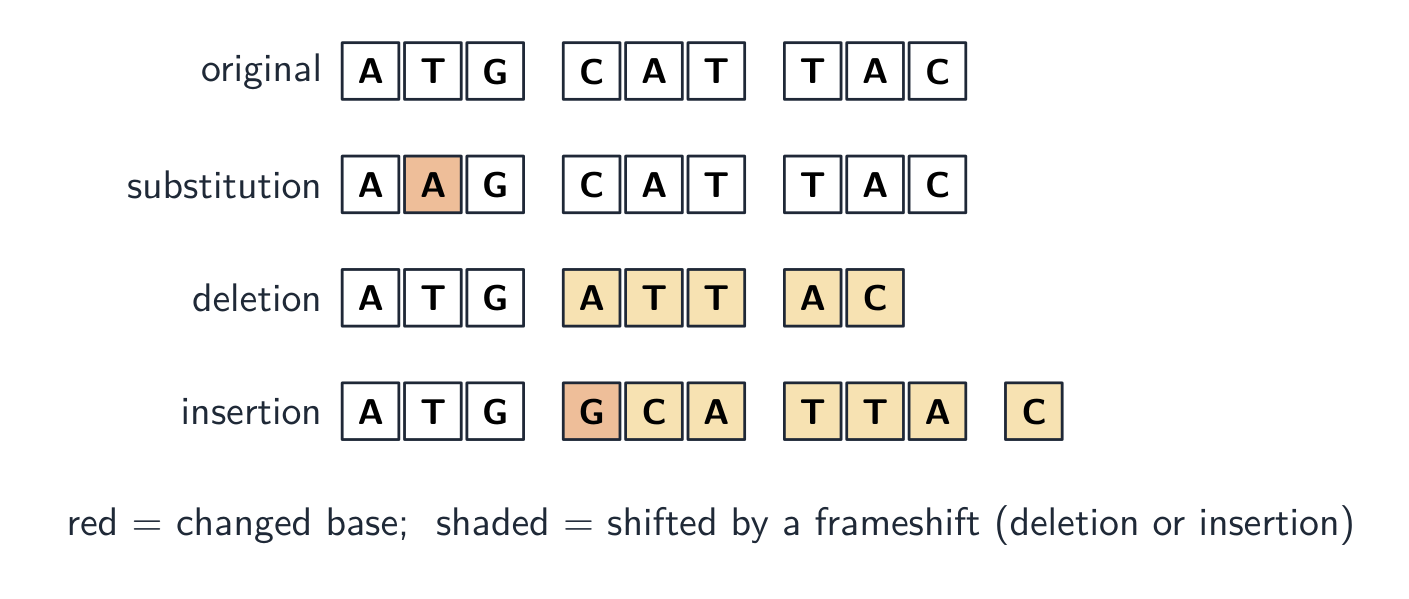
A gene mutation 突变 is a change in the base sequence of a DNA molecule. It may change the polypeptide made. There are three types:

  • substitution 替换 — one base is swapped for a different base. This changes at most one amino acid, and sometimes none (because most amino acids have more than one triplet).
  • deletion 缺失 — a base is removed.
  • insertion 插入 — an extra base is added.

A deletion or insertion shifts how every later triplet is read, so it usually changes many amino acids after that point and has a large effect on the polypeptide.

日本語

遺伝子変異とは、DNA分子の塩基配列の変化を指します。これにより生成されるポリペプチドが変わる可能性があります。3つのタイプがあります:

  • 置換 — 一つの塩基が異なる塩基に置き換わります。これにより最大で1つ、あるいは全くアミノ酸が変わらないことがあります(なぜなら、多くのアミノ酸は複数のトリプレットを持つから)。
  • 欠失 — 一つの塩基が失われます。
  • 挿入 — 余分な塩基が加わります。

欠失や挿入はそれ以降のすべてのトリプレットの読み取り方をずらすため、通常その点以降の多くのアミノ酸を変化させ、ポリペプチドに大きな影響を与えます。

三重 codon で読み取られた塩基配列が4回表示される:元の配列、1つの塩基を変異させた置換、そしてすべての後の三重codonをずらす欠失と挿入
置換は1つのトリプレットを変化させ、欠失や挿入はすべての後のトリプレットをずらします(フレームシフト)
Explore · ⁨探索⁩

Mutation type lab · ⁨変異タイプ実験室⁩

Compare substitution, insertion and deletion using their effect on the code. · ⁨置換、挿入、欠失の影響を比較しなさい。⁩

Vocabulary · ⁨語彙⁩ Train · ⁨練習する⁩
English 日本語
codon/ˈkəʊdɒn/ コドン
mutation/mjuːˈteɪʃn/ 突然変異
substitution/ˌsʌbstɪˈtjuːʃn/ 置換反応
deletion/dɪˈliːʃn/ 欠失
insertion/ɪnˈsɜːʃn/ 挿入
6.2

Exam tips · ⁨試験対策⁩

English
  • DNA is antiparallel, held by hydrogen bonds (A=T two, C≡G three); replication is semi-conservative (each product keeps one old strand).
  • State where and what: transcription (nucleus → mRNA), translation (ribosome, mRNA + tRNA → polypeptide).
  • Describe the code with all four terms: triplet, non-overlapping, degenerate, universal.
  • For a gene mutation (substitution, insertion, deletion) explain the effect on the protein — and why a substitution can be silent (degeneracy).
日本語
  • DNAは逆平行であり、水素結合(A=Tが2つ、C≡Gが3つ)によって保持されています。複製は半保存的です(各生成物は古い鎖の1本を維持します)。
  • どこで何が行われるかを述べる:転写(核 → mRNA)、翻訳(リボソーム、mRNA + tRNA → ポリペプチド)。
  • 4つの用語を用いてコードを説明する:トリプレット、非重複、冗長性、普遍性。
  • 遺伝子変異(置換、挿入、欠失)について、タンパク質への影響を説明し、なぜ置換が沈黙的(無効)になり得るか(冗長性による)を説明する。

Interactive lessons on this topic · ⁨このトピックのインタラクティブ授業⁩

Work through it step by step, with instant-check exercises. · ⁨一歩ずつ進め、即時チェック付きの問題で学習します。⁩

Past Papers · ⁨過去問⁩

More topics in A-Level Biology · ⁨A-Level 生物⁩ · ⁨A-Level Biology · ⁨A-Level 生物⁩ の他のトピック⁩

Log in or create account · ⁨ログインまたはアカウント作成⁩

IGCSE, A-Level & AP