אתה שולח תמונה לחבר בצד השני של העולם. היא לא נוסעת כחבילה אחת. היא חתוכה למאות חבילות קטנות, כל אחת מהן מסומנת…
English narration · English + 中文 subtitles burned in · קריאת קול באנגלית · תרגום אנגלי + סינית שרוף בתוך הסרטון
2.1
What is data transmission? · מהי העברת נתונים?
English
Data transmission 数据传输 means moving data from one place to another — for example from your computer to a website, or from a phone to a printer.
Data often travels along a cable. Two common ones are shown below.
Before it is sent, the data is broken down into small, equal-sized pieces called packets 数据包. Each packet travels separately and they are put back together at the other end.
Using packets has benefits:
if one packet is lost or damaged, only that packet is sent again, not the whole file;
packets can take different routes, so a busy or broken route can be avoided;
many users can share the same connection at the same time.
עברית
העברת נתונים פירונו העברת מידע ממקום למקום אחר — לדוגמה מהמחשב שלך לאתר, או מהטלפון למדפסת.
נתונים לעיתים קרובות עוברים לאורך כבל. שני סוגים נפוצים מוצגים למטה.
כבל אתרנט עם תקע RJ45, המשמש לעיתים קרובות להעברת נתונים ברשת חוטיתכבל סיבי אופטי משדר נתונים כפולסים של אור לאורך סיבי זכוכית דקים
לפני השליחה, הנתונים מחולקים לחלקים קטנים ושווי גודל הנקראים חבילות. כל חבילה נוסעת בנפרד והן מורכבות מחדש בסוף האחר.
שימוש בחבילות מציע יתרונות:
אם חבילה אחת אובדת או נפגמת, רק החבילה ההיא נשלחת שוב, ולא הקובץ כולו;
חבילות יכולות לקחת מסלולים שונים, כך שמסלול עמוס או תקולתי ניתן להתעלם ממנו;
מספר רב של משתמשים יכולים לשתף באותו חיבור בו זמנית.
2.1
The structure of a packet · מבנה החבילה
Syllabus · סיילבוס
English
Candidates should be able to:
Notes and guidance
1 (a) Understand that data is broken down into packets to be transmitted
(b) Describe the structure of a packet
• A packet of data contains a: – packet header – payload – trailer • The packet header includes the: – destination address – packet number – originator’s address
(c) Describe the process of packet switching
• Data is broken down into packets • Each packet could take a different route • A router controls the route a packet takes • Packets may arrive out of order • Once the last packet has arrived, packets are reordered
2 (a) Describe how data is transmitted from one device to another using different methods of data transmission
(b) Explain the suitability of each method of data transmission, for a given scenario
• Including the advantages and disadvantages of each method
3 Understand the universal serial bus (USB) interface and explain how it is used to transmit data
• Including the benefits and drawbacks of the interface
עברית
המועמדים צריכים להיות מסוגלים:
הערות והנחיות
1 (א) הבן שהנתונים מחולקים ל-חבילות כדי להעביר אותן
(ב) תאר את מבנה החבילה
• חבילת נתונים מכילה: – ראש חבילה – תוכן נטען – זנב • ראש החבילה כולל את: – כתובת יעד – מספר החבילה – כתובת השולח
(ג) תאר את תהליך החלפת חבילות
• הנתונים מחולקים לחבילות • לכל חבילה עשויה להיות מסלול שונה • נתב שולט במסלול של החבילה • החבילות עשויות להגיע בסדר לא נכון • לאחר שהחבילה האחרונה הגיעה, החבילות מסודרות מחדש
2 (א) תאר כיצד נתונים מועברים ממכשיר אחד למשנהו באמצעות שיטות שונות להעברת נתונים
Packet switching 数据包交换 is the way packets are sent across a network.
Special devices called routers 路由器 read each packet's header and choose the best route for it.
Each packet may take its own path, so packets can travel different ways.
Packets may arrive out of order.
When the last packet has arrived, the packets are reordered using their packet numbers.
עברית
חילוק חבילות הוא הדרך שבה חבילות נשלחות דרך רשת.
נתבים ממשיכים את החבילות, וחבילות שונות יכולות לעבור במסלולים שונים לאותו מקבל
התקנים מיוחדים הנקראים נתבים קוראים את ה-header של כל חבילה ובוחרים את המסלול הטוב ביותר עבורה.
כל חבילה עשויה לעבור ב-מסלול משלה, כך שחבילות יכולות לנוע בדרכים שונות.
חבילות עשויות להגיע בסדר לא נכון.
כאשר החבילה האחרונה הגיעה, החבילות מוחזרות לסדר באמצעות מספרי החבילה שלהן.
Explore · חקור
How data travels in packets · כיצד נתונים עוברים בחבילות
Step through packet switching. Splitting a file into addressed packets is why one lost packet only needs resending, and why many users can share the same line. · צעד אחר צעד במעבר נתונים באמצעות חבילות. חלוקת קובץ לחבילות עם כתובות היא הסיבה לכך שחבולה אחת בלבד נאבדת וצריכה לשלוח מחדש, ולמה מספר רב של משתמשים יכולים לשתף את אותה קו תקשורת.
Methods of data transmission · שיטות העברת נתונים
English
Serial and parallel
Serial 串行
Parallel 并行
How
one bit at a time, down one wire
several bits at once, down several wires
Distance
good over long distances
good over short distances only
Cost
cheaper (fewer wires)
more expensive (more wires)
Errors
bits stay in order
bits can arrive at slightly different times over long wires
Serial sends one bit after another along a single wire. Parallel sends several bits at the same time along several wires, so it is faster over short distances.
Simplex, half-duplex and full-duplex
These describe the direction data can travel.
Method
Direction
simplex 单工
one direction only (e.g. computer → printer)
half-duplex 半双工
both directions, but only one at a time (e.g. walkie-talkie)
full-duplex 全双工
both directions at the same time (e.g. phone call)
Choosing a method
The choice depends on the distance, the speed needed, the cost, and whether data must travel both ways at once.
עברית
סריאלית ופאראלללית
סריאלית
פאראלללית
אופן
ביט אחד בכל פעם, לאורך כבל אחד
מספר ביטים בו-זמנית, לאורך מספר כבלים
מרחק
טוב למרחקים ארוכים
טוב רק למרחקים קצרים
עלות
זולה יותר (פחות חוטים)
יקר יותר (יותר חוטים)
שגיאות
ביטים נשארים בסדר
ביטים עשויים להגיע בזמנים מעט שונים בלול כבלים ארוכים
סריאלי שולח ביט אחד אחרי השני לאורך כבל יחיד. פראללי שולח מספר ביטים בו-זמנית לאורך מספר כבלים, ולכן מהיר יותר במרחקים קצרים.
סריאלי שולח ביט אחד בכל פעם לאורך כבל אחד; פראללי שולח מספר ביטים בו-זמנית לאורך מספר כבלים
שיפלקס, חצי-דופלקס ודופלקס מלא
אלה מתארים את כיוון שבו נתונים יכולים לנסוע.
שיפלקס הוא רק בכיוון אחד; חצי-דופלקס הוא בשני כיוונים אך לא בו-זמנה; דופלקס מלא הוא בשני כיוונים בו-זמנה
שיטה
כיוון
שיפלקס
כיוון אחד בלבד (למשל: מחשב → מדפסת)
חצי-דופלקס
שני כיוונים, אך רק אחד בכל פעם (למשל: רדיו טווח קצר)
דופלקס מלא
שני כיוונים בו-זמנה (למשל: שיחת טלפון)
בחירת שיטה
הבחירה תלויה ב-מרחק, ב-מהירות הנדרשת, ב-עלות, ובאם הנתונים צריכים לנוע בשני הכיוונים בו-זמנה.
Why we check for errors · מדוע אנו בודקים טעויות
Syllabus · סיילבוס
English
Candidates should be able to:
Notes and guidance
1 Understand the need to check for errors after data transmission and how these errors can occur
• Errors can occur during data transmission due to interference, e.g. data loss, data gain and data change
2 Describe the processes involved in each of the following error detection methods for detecting errors in data after transmission: parity check (odd and even), checksum and echo check
• Including parity byte and parity block check
3 Describe how a check digit is used to detect errors in data entry and identify examples of when a check digit is used, including international standard book numbers (ISBN) and bar codes
4 Describe how an automatic repeat query (ARQ) can be used to establish that data is received without error
• Including the use of: – positive/negative acknowledgements – timeout
עברית
המועמדים צריכים להיות מסוגלים:
הערות והנחיות
1 הבן את הצורך לבדוק שגיאות לאחר העברת נתונים וכיצד שגיאות אלו יכולות לקרות
• שגיאות עשויות לקרות במהלך העברת נתונים עקב הפרעות, לדוגמה: איבוד נתונים, תוספת נתונים ושינוי נתונים
2 תאר את התהליכים המעורבים בכל שיטת זיהוי שגיאות הבאה לגילוי שגיאות בנתונים לאחר העברה: בדיקת זוגיות (אי-זוגית וזוגית), סיכום בדיקה ובדיקת הדיו
• כולל בדיקת ביט זוגיות וחסימת זוגיות
3 תאר כיצד ספרת בדיקה משמשת לגילוי שגיאות בהקלטת נתונים ולזיהוי דוגמאות לשימוש בספרת בדיקה, כולל מספרי ספרים בינלאומיים (ISBN) ובר-קודים
4 תאר כיצד בקשה להעברה חוזרת אוטומטית (ARQ) יכולה לשמש כדי לוודא שהנתונים התקבלו ללא שגיאה
• כולל השימוש ב: – אישורים חיוביים/שליליים – תזמון
Source: Cambridge International syllabus · מקור: הסיילבוס הבינלאומי של קמבריד'ג'
English
While data travels, interference 干扰 can change it. Three things can go wrong:
data loss — some bits do not arrive;
data gain — extra bits are added;
data change — some bits are flipped.
So the receiver checks whether the data arrived correctly.
עברית
בעת העברת נתונים, הפרעות יכולות לשנות אותם. שלושה דברים עלולים לקרות:
A parity check 奇偶校验 adds one extra bit, the parity bit 奇偶校验位, to each byte. There are two types:
even parity — the total number of 1s in the byte (including the parity bit) must be even;
odd parity — the total number of 1s must be odd.
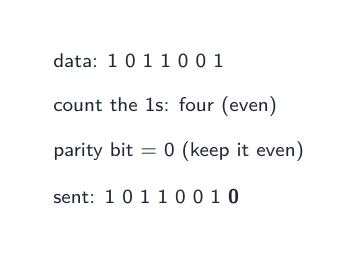
Example (even parity): the data 1011001 has four 1s, which is already even, so the parity bit is 0:
To find an error: the receiver counts the 1s. If even parity was agreed but a byte arrives with an odd number of 1s, an error has happened during transmission.
A parity check cannot find every error. If two bits flip, the count may still look correct.
Worked example. A single parity bit tells you that an error happened, but not where. A parity block 奇偶校验块 can find the exact bit. Several bytes are sent together, each with a row parity bit, and one extra parity byte 奇偶校验字节 at the bottom holds a parity bit for each column. Even parity is used below, and one bit was flipped during transmission. Find it.
Row byte 3 breaks even parity, and column b3 breaks even parity. The flipped bit is where they cross: byte 3, bit b3. Changing it back from 1 to 0 repairs the data. A single parity bit only says an error happened; a parity block says exactly where, so the receiver can even fix it.
Checksum
A checksum 校验和 is a value worked out from all the data before sending. The receiver works out the checksum again from the data it received. If the two values do not match, an error has occurred and the data is resent.
Echo check
In an echo check 回送校验, the receiver sends the data back to the sender. The sender compares it with the original. If they differ, an error happened. (This needs the data to be sent twice, so it is slow.)
Automatic Repeat reQuest (ARQ)
Automatic Repeat reQuest 自动重传请求 (ARQ) uses messages called acknowledgements 确认.
The receiver sends a positive acknowledgement if a packet arrived correctly, or a negative acknowledgement if it did not.
The sender starts a timeout 超时 timer. If no positive acknowledgement comes back in time, the sender sends the packet again.
Check digit
A check digit 校验码 is an extra digit placed at the end of a number, worked out from the other digits. It is used to find mistakes when a number is typed in.
When the number is entered, the check digit is calculated again and compared. It can catch:
an incorrect digit entered,
a transposition error 换位错误 (two digits swapped, e.g. 21 typed as 12),
a digit left out or an extra digit added,
a phonetic error (a digit that sounds similar, e.g. 13 and 30).
Check digits are used in barcodes 条形码 and ISBNs (book numbers).
עברית
בדיקת זוגיות
בדיקת זוגיות מוסיפה ביט נוסף, ה-ביט הזוגיות, לכל באייט. ישנם שני סוגים:
A parity bit is added to make the number of 1s even (or odd)
זוגיות זוגית — המספר הכולל של 1s בבאייט (כולל ביט הזוגיות) חייב להיות זוגי;
זוגיות אי-זוגית — המספר הכולל של 1s חייב להיות אי-זוגי.
דוגמה (זוגיות זוגית): הנתונים 1011001 מכילים ארבעה 1s, שהם כבר זוגיים, לכן ביט הזוגיות הוא 0:
parity bit + data
    0        1011001
כדי למצוא טעות: המקבל סופר את ה-1s. אם הסכם היה על זוגיות זוגית אך באייט הגיע עם מספר אי-זוגי של 1s, התרחשה טעות במהלך ההעברה.
בדיקת זוגיות אינה יכולה לזהות כל שגיאה. אם שני ביטים מתהפכים, הסכול עשוי להישאר נכון.
דוגמה מפורטת. ביט זוגיות בודד מספר לך שהייתה שגיאה, אך לא איפה. בלוק זוגיות יכול למצוא את הביט המדויק. מספר בייטים נשלחים יחד, כל אחד עם ביט זוגיות בשורה, וביט זוגיות נוסף בלוק זוגיות בתחתית מחזיק ביט זוגיות לכל עמודה. משמשת כאן זוגיות אפס, וביט אחד התהפך במהלך השידור. מצא אותו.
ביט השורה 3 מפסיל זוגיות אפס, ועמודה b3 מפסילה זוגיות אפס. הביט שהתהפך הוא במקום שבו הם נמצאים: ביט 3, ביט b3. שינויו חזרה מ-1 ל-0 תיקון הנתונים. ביט זוגיות בודד רק אומר שהייתה שגיאה; בלוק זוגיות אומר בדיוק איפה, כך שהמקלט אף יכול לתקן אותו.
סיכום בדיקה
סיכום בדיקה הוא ערך שמחושב מהכל הנתונים לפני השליחה. המקלט מחשב שוב את סיכום הבדיקה מהנתונים שקיבל. אם הערכים אינם תואמים, התרחשה שגיאה והנתונים נשלחו מחדש.
בדיקת הדsoning (Echo Check)
בבדיקת הדsoning, המקלט שולח את הנתונים חזרה לשולח. השולח משווה אותם לראשוניים. אם הם שונים, התרחשה שגיאה. (דבר זה דורש שלוח את הנתונים פעמיים, ולכן הוא איטי.)
בקשה לחזרה אוטומטית (ARQ)
בקשה לחזרה אוטומטית (ARQ) משתמש בהודעות הנקראות אישורים.
המקלט שולח אישור חיובי אם החבילה הגיעה נכונה, או אישור שלילי אם לא.
השולח מפעיל טיימר חריגת זמן. אם אישור חיובי אינו מגיע בזמן, השולח שולח את החבילה מחדש.
דיgit בדיקה
דיgit בדיקה הוא דיgit נוסף המוצב בסוף מספר, שמחושב מהדיgits האחרים. הוא משמש לזיהוי טעויות כאשר מספר מותקן.
כאשר המספר מוזן, דיgit הבדיקה מחושב שוב ומשווה. הוא יכול לזהות:
דיgit שגוי שמוזן,
שגיאת מעבר (שני דיgits הוחלפו, לדוגמה 21 הוטבע כ-12),
דיgit נשכח או דיgit עודף שנוסף,
שגיאת פונטית (דיgit שנשמע דומה, לדוגמה 13 ו-30).
דיgits בדיקה משמשים בברקודים וב-ISBNs (מספרי ספרים).
Explore · חקור
Computing concept lab · מעבדת מושגי מחשוב
Classify concrete examples by the computing idea they demonstrate. · סווג דוגמאות מلموسة לפי הרעיון המחשובי שהן מדגימות.
1 Understand the need for and purpose of encryption when transmitting data
2 Understand how data is encrypted using symmetric and asymmetric encryption
• Asymmetric encryption includes the use of public and private keys
עברית
המועמדים צריכים להיות מסוגלים:
הערות והנחיות
1 הבן את הצורך והמטרה של הצפנה במהלך העברת נתונים
2 הבן כיצד נתונים מוצפנים באמצעות הצפנה סימטרית והצפנה א-סימטרית
• הצפנה א-סימטרית כוללת שימוש במפתחות ציבוריים ופרטיים
Source: Cambridge International syllabus · מקור: הסיילבוס הבינלאומי של קמבריד'ג'
English
Why we need encryption
Encryption 加密 scrambles data so that it cannot be understood if it is intercepted 拦截 (caught) by the wrong person. The readable data is called plaintext 明文; after encryption it becomes ciphertext 密文.
Encryption does not stop data from being intercepted. It only stops the data from being understood.
Symmetric encryption
Symmetric encryption 对称加密 uses a single key 密钥 to both encrypt and decrypt the data. The sender and receiver must share this same secret key. The risk is that the key itself could be stolen while being shared.
Asymmetric encryption
Asymmetric encryption 非对称加密 uses two different keys:
a public key 公钥 that anyone can have, used to encrypt;
a private key 私钥 that is kept secret, used to decrypt.
Data encrypted with the public key can only be decrypted with the matching private key, so the key never has to be shared. This is safer than sharing one secret key.
עברית
למה אנו זקוקים להצפנה
הצפנה מערבלת נתונים כך שלא ניתן יהיה להבין אותם במקרה של הפרעה (לכידה) על ידי אדם לא מוסמך. הנתונים הקריאים נקראים טקסט פשוט; לאחר ההצפנה הם הופכים ל-טקסט מצופן.
הצפנה אינה מונעת הפרעה של נתונים. היא רק מונעת הבנת הנתונים.
הצפנה סימטרית
הצפנה סימטרית משתמשת ב-מפתח אחד גם להצפנה וגם לפענוח הנתונים. השולח והנמען חייבים לחלק את אותו מפתח סודי זה. הסיכון הוא שהמפתח עצמו עשוי להיות גנוב בזמן החילוק.
הצפנה א-סימטרית
הצפנה א-סימטרית משתמש בשני מפתחות שונים:
מפתח ציבורי שאף אחד יכול לקבל, המשמש להצפנה;
מפתח פרטי שנשמר בסוד, המשמש לפענוח.
נתונים המוצפנים במפתח הציבורי יכולים לפענח רק באמצעות מפתח הפרטי המתאים, ולכן לעולם אין צורך לחלק את המפתח. זה בטוח יותר מאשר חילוק מפתח סודי אחד.
הצפנה סימטרית משתמשת במפתח משותף אחד; הצפנה א-סימטרית משתמשת במפתח ציבורי להצפנה ובמפתח פרטי לפיענוח
Explore · חקור
The Caesar cipher · צופן קייסר
Shift each letter to encrypt a message — the simplest idea of a cipher and its key. · הזז כל אות כדי לקוד הודעה — הרעיון הפשוט ביותר של ציפר ומפתח ה-Key שלו.
Data is sent in packets (a header with the addresses and packet number, a payload, and a trailer). Packets can take different routes and arrive out of order, then are reordered by their packet numbers.
Match the transmission types: serial (one bit at a time, good over long distances) vs parallel (several bits at once, short distances); simplex / half-duplex / full-duplex describe the direction.
A single parity bit only shows that an error happened; a parity block locates the exact wrong bit — the row and the column that both fail.
Learn the error-detection methods and what each does: parity check, checksum, echo check, ARQ, and the check digit (for typed-in numbers).
Symmetric encryption uses one shared key; asymmetric uses a public key to encrypt and a private key to decrypt, so no secret key is ever shared.
עברית
נתונים נשלחים ב-חבילות (ראש המכיל כתובות ומספר חבילה, גוף נתונים וסוף חבילה). חבילות עשויות לעבור מסלולים שונים ולהגיע בסדר שגוי, ולאחר מכן מסודרות מחדש לפי מספרי החבילה.
התאם בין סוגי השידור: סריאלי (ביט אחד בכל פעם, מתאים למרחקים ארוכים) מול פאראללי (מספר ביטים בו-זמנית, למרחקים קצרים); סימפלקסי / חצי-דופלקס / דופלקס מלא מתארים את הכיוון.
ביט בדיקה (parité) יחיד מראה רק שה טעות התרחשה; בלוק בדיקה מזהה את הביט השגוי בדיוק — השורה והעמודה ששניהן כושלים.
למד את שיטות זיהוי הטעויות ואת מה שעושה כל אחת: בדיקת זוגיות, סכום בדיקה, בדיקת הדבר, ARQ, וספרת בדיקה (למספרים שנכתבו ידנית).
הצפנה סימטרית משתמשת במפתח משותף אחד; הצפנה א-סימטרית משתמשת במפתח ציבורי להצפנה ומפתח פרטי לפענוח, ולכן לעולם אינו משותף מפתח סודי.
Interactive lessons on this topic · שיעורים אינטראקטיביים בנושא זה
Work through it step by step, with instant-check exercises. · לעבור על הדברים צעד אחר צעד, עם תרגילים לבדיקה מיידית.
Pick one and the site follows you — notes, papers, videos and practice all open on it. · בחרו נושא אחד והאתר יעקוב אחריו — הערות, מסמכים, וידאו ותרגולים פתוחים בו.
Type to search notes, lessons, code, vocabulary and past-paper questions across every subject. · הקלד כדי לחפש הערות, שיעורים, קוד, אוצר מילים ושאלות מבחנים בכל הנושאים.