Skip to content · ⁨דלג לתוכן⁩

Short Fiction I · ⁨פרוזה קצרה I⁩

AP English Literature and Composition · ⁨ספרות אנגלית וכתיבה יצירתית - AP⁩ · Topic 1 · ⁨נושא 1⁩

Video lesson for this topic · ⁨שיעור וידאו לנושא זה⁩ Open the video page · ⁨פתח את עמוד הוידאו⁩
6:43

יחידה 1: פרוזה קצרה I

קורס AP ספרות אנגלית עוסק בטקסטים בשלושה ז'אנרים לאורך תשע יחידות — פרוזה קצרה, שירה ופרוזה ארוכה או דרמה — כל אחד מהם נדון שלוש פעמים ב…

English narration · English + 中文 subtitles burned in · ⁨קריאת קול באנגלית · תרגום אנגלי + סינית שרוף בתוך הסרטון⁩

1.1

What Textual Details Reveal About a Character · ⁨מה פרטים טקסטואליים חושפים לגבי דמות⁩

Syllabus · ⁨סיילבוס⁩
English

Enduring Understanding (CHR-1): Characters in literature allow readers to study and explore a range of values, beliefs, assumptions, biases, and cultural norms represented by those characters.

Learning Objective 1.A: Identify and describe what specific textual details reveal about a character, that character’s perspective, and that character’s motives.

  • CHR-1.A Description, dialogue, and behavior reveal characters to readers.
  • CHR-1.B Descriptions of characters may come from a speaker, narrator, other characters, or the characters themselves.
  • CHR-1.C Perspective is how narrators, characters, or speakers understand their circumstances, and is informed by background, personality traits, biases, and relationships.
  • CHR-1.D A character’s perspective is both shaped and revealed by relationships with other characters, the environment, the events of the plot, and the ideas expressed in the text.
עברית

הבנה מתמשכת (CHR-1): דמויות בספרות מאפשרות לקוראים לעסוק בחקר ובחינוך מגוון ערכים, אמונות, הנחות בסיס, גיויים ונורמות תרבותיים המייצגות הדמויות הללו.

מטרות למידה 1.A: לזהות ולתאר מה פרטים טקסטואליים ספציפיים חושפים על דמות, על מבטא של הדמות ועל מנימיה של הדמות.

  • CHR-1.A תיאור, דיאלוג והתנהגות חושפים דמויות לקוראים.
  • CHR-1.B תיאורים של דמויות יכולים להתקבל מקריין, מספר, דמויות אחרות או מהדמויות עצמן.
  • CHR-1.C מבט הוא האופן שבו מספרים, דמויות או קרינים מבינים את מצבם, והוא מושפע מרקע, תכונות אישיות, גיויים ויחסים.
  • CHR-1.D מבטא של דמות מעוצב ומתגלה גם על ידי יחסים עם דמויות אחרות, הסביבה, אירועי העלילה והרעיונות המבוארים בטקסט.

Source: College Board AP Course and Exam Description · ⁨מקור: תיאור הקורס והמבחן של College Board AP⁩

English

AP English Literature reads texts in three genres across nine units - short fiction, poetry, and longer fiction or drama, each visited three times at increasing difficulty. Unit 1 installs the tools for all of them.

Character 人物 is revealed by three things, and the CED names them exactly:

  • Description, dialogue, and behaviour 描写、对话与行为 reveal characters to readers.
  • Descriptions may come from a speaker, narrator, other characters, or the characters themselves - so who is describing is part of the evidence.
  • Perspective 视角 is how narrators, characters, or speakers understand their circumstances, informed by background, experience, and values.
  • A character's perspective is both shaped and revealed by relationships with other characters, the environment, and events.

That last point is the one that turns character notes into analysis. A character is not a list of adjectives; a character is a way of seeing, which becomes visible in what they notice, what they misread, and how they respond.

עברית

AP English Literature קורא טקסטים בשלושה סוגים בתוך תשע יחידות - פרוזה קצרה, שירה ופרוזה ארוכה או דרמה, כל אחד מהם נדון שלוש פעמים ברמת קושי עולה. יחידה 1 מציבה את הכלים לכל אלו.

דמות 人物 נחשפת על ידי שלושה דברים, ו-CED מציין אותם במדויק:

  • תיאור, דיאלוג והתנהגות 描写、对话与行为 חושפים דמויות לקוראים.
  • תיאורים עשויים לבוא מדובר, מספר, דמויות אחרות או הדמויות עצמן - כך שמי שמתאר הוא חלק מהעדויות.
  • Perspective 视角 הוא האופן שבו מספרים, דמויות או דיבורנים מבינים את נסיבותיהם, תוך השפעת רקע, ניסיון וערכים.
  • פרספקטיבה של דמות נעצבת ומתגלת באמצעות היחסים שלה עם דמויות אחרות, הסביבה והאירועים.

נקודה זו היא מה שהופכת הערות לדמות לניתוח. דמות אינה רשימת תארים; דמות היא סוג של ראיה, הפך לגלוי במה שהיא שומרת לב, במה שהיא טועה בו ובאיך היא מגיבה.

Say what the detail establishes, and stop where the evidence stops
Explore · ⁨חקור⁩

Take a detail exactly as far as it goes · ⁨קח פרט בדיוק עד הגבול שבו הוא חל⁩

Over-reading loses as many marks as under-reading: say what the detail establishes, and stop where the evidence stops. · ⁨קריאה יתר מאבדת אותם רבים מהנקודות כמו קריאה חסרה: אמור מה הפרט מקיים, ועצור כאשר הממצאים נפסקים.⁩

Vocabulary · ⁨מילון מונחים⁩ Train · ⁨אימון⁩
English עברית
Character/ˈkærɪktə/ דמות
Description, dialogue, and behaviour/dɪˈskrɪpʃn ˈdaɪəlɒɡ ænd bɪˈheɪvjə/ תיאור, דיאלוג והתנהגות
Perspective/pəˈspektɪv/ נקודת מבט
1.2

Textual Details That Convey Setting · ⁨פרטים טקסטואליים המעבירים את הסביבה⁩

Syllabus · ⁨סיילבוס⁩
English

Enduring Understanding (SET-1): Setting and the details associated with it not only depict a time and place, but also convey values associated with that setting.

Learning Objective 2.A: Identify and describe specific textual details that convey or reveal a setting.

  • SET-1.A Setting includes the time and place during which the events of the text occur.
עברית

הבנה מתמשכת (SET-1): הסביבה והפרטים הקשורים אליה לא רק מתארים זמן ומקום, אלא גם משדרים ערכים הקשורים לסביבה זו.

מטרות למידה 2.A: לזהות ולתאר פרטים טקסטואליים ספציפיים המשדרים או חושפים סביבה.

  • SET-1.A הסביבה כוללת את הזמן והמקום שבהם מתרחשים אירועי הטקסט.

Source: College Board AP Course and Exam Description · ⁨מקור: תיאור הקורס והמבחן של College Board AP⁩

English

Setting 背景 includes the time and place during which the events of the text occur.

The CED's definition is deliberately minimal, and that is the trap. Setting earns marks not when it is described but when it is shown doing something - constraining a character, explaining a value, or contrasting with an interior state. A paragraph that establishes where a story happens has not yet made a claim.

עברית

Setting 背景 כולל את הזמן והמקום בהם מתרחשים אירועי הטקסט.

ההגדרה של ה-CED היא מינימליסטית במתכונתה, וזהו המלכודת. סביבה מיינת נקודות לא כאשר היא מתוארת, אלא כאשר היא מוצגת בפעולה - הגבלת דמות, הסבר על ערך, או ניגוד למצב פנימי. פרק שמציב את המקום שבו סיפור מתרחש, עדיין לא העלה טענה.

Vocabulary · ⁨מילון מונחים⁩ Train · ⁨אימון⁩
English עברית
Setting/ˈsetɪŋ/ הגדרת זמן ומקום
1.3

How Plot Orders Events · ⁨כיצד תוכנית האירועים מסדרת אירועים⁩

Syllabus · ⁨סיילבוס⁩
English

Enduring Understanding (STR-1): The arrangement of the parts and sections of a text, the relationship of the parts to each other, and the sequence in which the text reveals information are all structural choices made by a writer that contribute to the reader’s interpretation of a text.

Learning Objective 3.A: Identify and describe how plot orders events in a narrative.

  • STR-1.A Plot is the sequence of events in a narrative; events throughout a narrative are connected, with each event building on the others, often with a cause-and-effect relationship.
  • STR-1.B The dramatic situation of a narrative includes the setting and action of the plot and how that narrative develops to place characters in conflict(s), and often involves the rising or falling fortunes of a main character or set of characters.
עברית

הבנה מתמשכת (STR-1) סידור החלקים והפרקים של טקסט, היחס בין החלקים זה לזה, והרצף שבו הטקסט חושף מידע הם כולם בחירות מבניות שנעשו על ידי סופר ותורמים לפירוש הטקסט על ידי הקורא.

מטרות למידה 3.A: לזהות ולתאר כיצד עלילה מסדרת אירועים בעלילת סיפור.

  • STR-1.A העלילה היא סדר האירועים בסיפור; אירועים לאורך הסיפור קשורים זה לזה, כאשר כל אירוע נבנה על הקודם לו, לעיתים קרובות באמצעות יחס סיבה-תוצאה.
  • STR-1.B המצב הדרמטי של סיפור כולל את הסטאוס והפעולה של העלילה, וכיצד הסיפור מתפתח כדי למקם דמויות בסכסוך (או סכסוכים), ולעיתים כרוך בהתגברות או במורידה של גורלו של דמות מרכזית או קבוצת דמויות.

Source: College Board AP Course and Exam Description · ⁨מקור: תיאור הקורס והמבחן של College Board AP⁩

English
  • Plot 情节 is the sequence of events in a narrative; events are connected, each building on those before it.
  • The dramatic situation 戏剧情境 includes the setting and action of the plot and how the narrative develops to place characters in conflict.

The word sequence is doing work. Plot is not the events but their order - and an author who reveals something late that happened early has made a choice you can analyse.

עברית
  • Plot 情节 הוא רצף האירועים בסטוריה; האירועים קשורים זה לזה, כל אחד בונה על הקודמים לו.
  • המצב הדרמטי 戏剧情境 כולל את העלילה והפעולה ואת האופן שבו הסיפור מתפתח כדי לייצר קונפליקט בין הדמויות.

המילה סדר עושה עבודה. העלילה אינה אלא האירועים עצמם, אלא הסדר שבו הם מופיעים - וכך סופר חושף דבר שהתרחש מוקדם אך נגלה מאוחר יותר, הוא מבצע בחירה שאפשר לנתח אותה.

הסדר שבו האירועים התרחשו לעומת הסדר שבו סופרו לנו - ההפרש הוא בחירה
Vocabulary · ⁨מילון מונחים⁩ Train · ⁨אימון⁩
English עברית
Plot/plɒt/ עלילה
dramatic situation/drəˈmætɪk ˌsɪtʃuːˈeɪʃn/ מצב דרמטי
1.4

The Function of a Sequence of Events · ⁨פונקציית רצף האירועים⁩

Syllabus · ⁨סיילבוס⁩
English

Enduring Understanding (STR-1): The arrangement of the parts and sections of a text, the relationship of the parts to each other, and the sequence in which the text reveals information are all structural choices made by a writer that contribute to the reader’s interpretation of a text.

Learning Objective 3.B: Explain the function of a particular sequence of events in a plot.

  • STR-1.C Plot and the exposition that accompanies it focus readers’ attention on the parts of the narrative that matter most to its development, including characters, their relationships, and their roles in the narrative, as well as setting and the relationship between characters and setting.
עברית

הבנה מתמשכת (STR-1) סידור החלקים והפרקים של טקסט, היחס בין החלקים זה לזה, והרצף שבו הטקסט חושף מידע הם כולם בחירות מבניות שנעשו על ידי סופר ותורמים לפירוש הטקסט על ידי הקורא.

מטרת למידה 3.B: הסביר את הפונקציה של סדר אירועים מסוים בעלילה.

  • STR-1.C העלילה וההצגה המלווה אותה מכוונים את תשומת הלב של הקוראים לחלקים מהסיפור החשובים ביותר להתפתחותו, כולל הדמויות, היחסים ביניהן, התפקידים שלהן בסיפור, כמו גם הסטאוס והיחס בין הדמויות לבין הסטאוס.

Source: College Board AP Course and Exam Description · ⁨מקור: תיאור הקורס והמבחן של College Board AP⁩

English

Plot and the exposition that accompanies it focus readers' attention on the parts of the narrative that matter most to the text's meaning.

That sentence is the whole method for prose analysis: proportion is evidence. What the text lingers over, and what it passes in a clause, is the author telling you where to look.

עברית

העלילה וההקדמה המלווה אותה ממקדים את תשומת לב הקוראים באלה מהחשוב ביותר במשמעות הטקסט.

משפט זה הוא השיטה כולה לניתוח נפרוזה: היחס היא העדות. מה עליון הטקסט ומתייחד בו, ומה שהוא עובר עליו בקלסה אחת, הוא הסופר שמכוון אותך לאן להסתכל.

1.5

Identifying the Narrator or Speaker · ⁨זיהוי המספר או הדובר⁩

Syllabus · ⁨סיילבוס⁩
English

Enduring Understanding (NAR-1): A narrator’s or speaker’s perspective controls the details and emphases that affect how readers experience and interpret a text.

Learning Objective 4.A: Identify and describe the narrator or speaker of a text.

  • NAR-1.A Narrators or speakers relate accounts to readers and establish a relationship between the text and the reader.
  • NAR-1.B Perspective refers to how narrators, characters, or speakers see their circumstances, while point of view refers to the position from which a narrator or speaker relates the events of a narrative.
  • NAR-1.C A speaker or narrator is not necessarily the author.
עברית

הבנה מתמשכת (NAR-1): נקודת מבט של מספר או דובר שולטת בפרטים ובדגשים המשפיעים על כך כיצד קוראים חווים ומפרשים טקסט.

מטרת למידה 4.A: זיהה ותיאר את המספר או הדובר בטקסט.

  • NAR-1.A מספרים או דוברים מעבירים חשבונות לקוראים ומקימים יחס בין הטקסט לבין הקורא.
  • NAR-1.B נקודת מבט מתייחסת לכך כיצד מספרים, דמויות או דוברים רואים את נסיבותיהם, בעוד שנקודת מבט מתייחסת למיקום ממנו מספר או דובר משתף את אירועי הסיפור.
  • NAR-1.C דובר או מספר אינם בהכרח המחבר.

Source: College Board AP Course and Exam Description · ⁨מקור: תיאור הקורס והמבחן של College Board AP⁩

English
  • Narrators or speakers relate accounts and establish a relationship between the text and the reader.
  • Perspective refers to how narrators, characters, or speakers see their circumstances; point of view 叙述视点 refers to the position from which they relate the account.
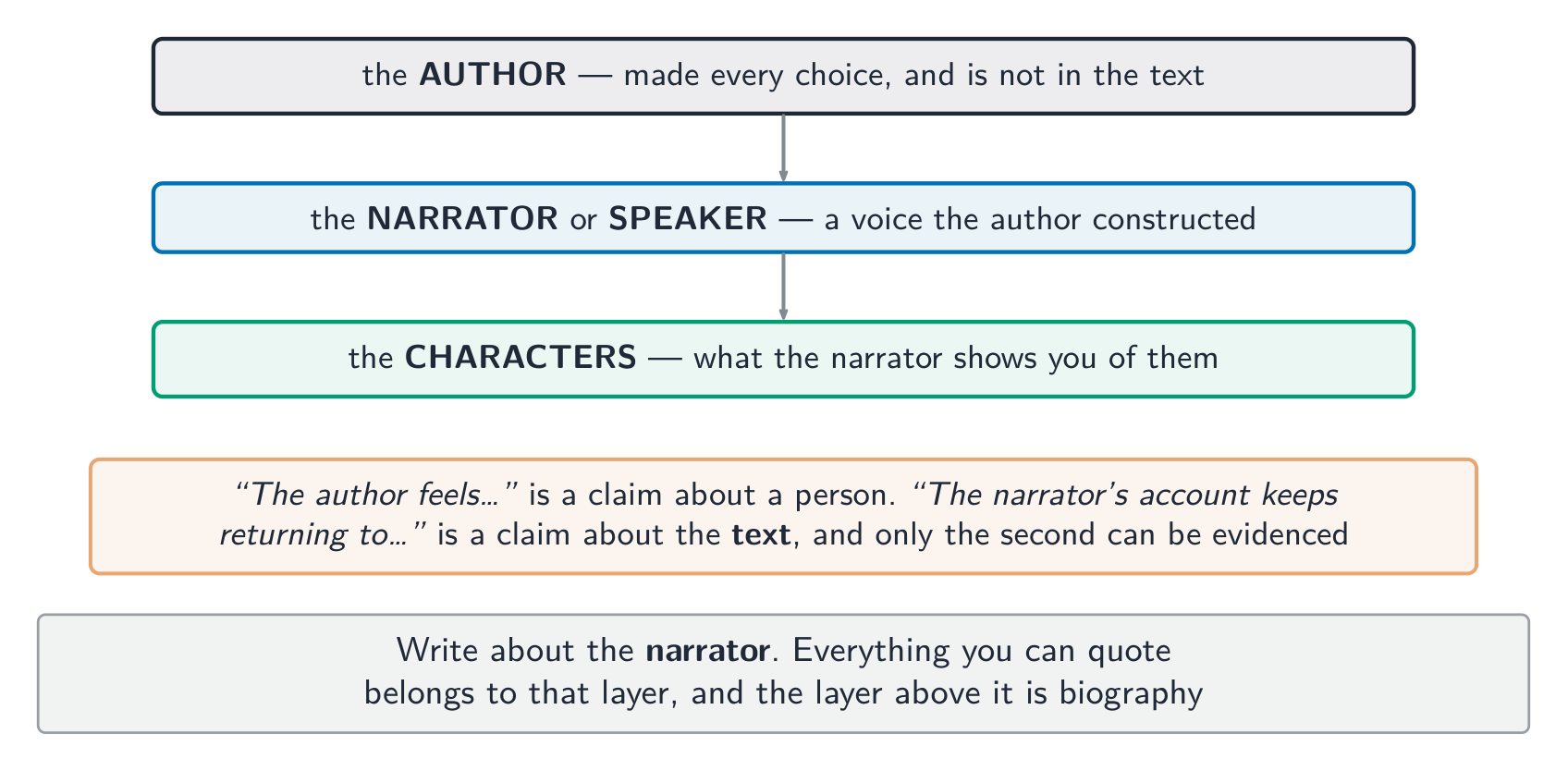
  • A speaker or narrator is not necessarily the author. Never write "the author feels" about a first-person narrator.
עברית
מה כל נקודת מבט יכולה ואינה יכולה לתת לך - וגבול זה הוא הניתוח
זווית הראייה היא האופן שבו הם רואים; נקודת מבט היא המקום שבו הם עומדים. ה-CED מפריד ביניהם, ולכן גם עליך להפריד.
  • מספרים או דברים מספרים סיפורים ויוצרים קשר בין הטקסט לקורא.
  • זווית ראיה מתייחסת לאופן שבו מספרים, דמויות או דברים רואים את מצבם; נקודת מבט 叙述视点 מתייחסת להמיקום שממנו הם מספרים את הסיפור.
  • דובר או מספר אינם בהכרח הסופר. לעולם אל תכתוב "הסופר מרגיש" לגבי מספר בגוף ראשון.
כתוב על המספר: כל מה שניתן לצטט שייך לשכבה זו
Explore · ⁨חקור⁩

Sort each statement by the layer it belongs to · ⁨סדרו כל משפט לפי השכבה שבה הוא מופיע⁩

Everything you can quote belongs to the narrator's layer. The layer above it is biography. · ⁨הכל מה שניתן להצטט בו שייך לשכבת המספר. השכבה שמעליה היא הביוגרפיה.⁩

Vocabulary · ⁨מילון מונחים⁩ Train · ⁨אימון⁩
English עברית
point of view/pɔɪnt ɒv vjuː/ נקודת מבט
observational to all-knowing/ɒbzəˈveɪʃənl tʊ ɔːl ˈnəʊɪŋ/ מצפיין לידען
1.6

The Function of Point of View · ⁨פונקציית נקודת מבט⁩

Syllabus · ⁨סיילבוס⁩
English

Enduring Understanding (NAR-1): A narrator’s or speaker’s perspective controls the details and emphases that affect how readers experience and interpret a text.

Learning Objective 4.B: Identify and explain the function of point of view in a narrative.

  • NAR-1.D The point of view contributes to what narrators, characters, or speakers can and cannot provide in a text based on their level of involvement and intimacy with the details, events, or characters.
  • NAR-1.E Narrators may also be characters, and their role as characters may influence their perspective.
  • NAR-1.F First-person narrators are involved in the narrative; their relationship to the events of the plot and the other characters shapes their perspective.
  • NAR-1.G Third-person narrators are outside observers.
  • NAR-1.H Third-person narrators’ knowledge about events and characters may range from observational to all-knowing, which shapes their perspective.
  • NAR-1.I The outside perspective of third-person narrators may not be affected by the events of the narrative.
עברית

הבנה מתמשכת (NAR-1): נקודת מבט של מספר או דובר שולטת בפרטים ובדגשים המשפיעים על כך כיצד קוראים חווים ומפרשים טקסט.

מטרת למידה 4.B: זיהה והסביר את הפונקציה של נקודת מבט בסיפור.

  • NAR-1.D נקודת המבט תורמת לכך שהמספרים, הדמויות או הדוברים יכולים ולא יכולים לספק בטקסט, בהתבסס על רמת ההשתתפות והאינטימיות שלהם עם הפרטים, האירועים או הדמויות.
  • NAR-1.E מספרים עשויים להיות גם דמויות, ותפקידם כדמויות עשוי להשפיע על נקודת המבט שלהם.
  • NAR-1.F מספרים ברמה ראשונה משתתפים בסיפור; היחס שלהם לאירועי העלילה ולדמויות האחרות מעצב את נקודת המבט שלהם.
  • NAR-1.G מספרים ברמה שלישית הם צופים מחוץ.
  • NAR-1.H הידע של מספרים ברמה שלישית לגבי אירועים ודמויות עשוי להשתנות מצפייה ועד ידע כולל, מה שמעצב את נקודת המבט שלהם.
  • NAR-1.I נקודת המבט החיצונית של מספרים ברמה שלישית עשויה שלא להיות מושפעת מאירועי הסיפור.

Source: College Board AP Course and Exam Description · ⁨מקור: תיאור הקורס והמבחן של College Board AP⁩

English
  • Point of view contributes to what narrators can and cannot provide in a text, based on their position.
  • Narrators may also be characters, and that role may influence their perspective.
  • First-person narrators are involved in the narrative; their relationship to events and to other characters shapes what they can tell you.
  • Third-person narrators are outside observers, and their knowledge may range from observational to all-knowing 全知.
  • The outside perspective of a third-person narrator may not be affected by the events of the narrative.

The analytical payoff is the cannot. A first-person narrator cannot report what they did not witness or will not admit, and every gap is meaningful. A limited third-person narrator confines you to one consciousness, which is a choice about whose experience counts.

עברית
  • נקודת מבט תורמת למה שמספרים יכולים ואינם יכולים לספק בטקסט, בהתבסס על מיקומם.
  • מספרים יכולים להיות גם דמויות, ותפקיד זה עשוי להשפיע על זווית הראייה שלהם.
  • מספרים בגוף ראשון מעורבים בסיפור; הקשר שלהם לאירועים ולדמויות אחרות קובע מה הם יכולים לספר לך.
  • מספרים בגוף שלישי הם צופים מחוץ, והידע שלהם עשוי להשתנות מצפייה עד כל-ידע 全知.
  • הזווית החיצונית של מספר גוף שלישי עשויה לא להיות מושפעת מאירועי הסיפור.

התוצאה האנליטית טמונה ב-אינו יכול. מספר בגוף ראשון אינו יכול לדווח על מה שלא ראה או לא יודה בו, וכל רווח משמעותי. מספר בגוף שלישי מוגבל מצמצם אותך לקונסציה אחת, וזהו בחירה לגבי מיניחוויה חשובה.

1.7

Developing a Paragraph with Claim and Evidence · ⁨פיתוח פרק עם טענה ועדות⁩

Syllabus · ⁨סיילבוס⁩
English

Enduring Understanding (LAN-1): Readers establish and communicate their interpretations of literature through arguments supported by textual evidence.

Learning Objective 7.A: Develop a paragraph that includes 1) a claim that requires defense with evidence from the text and 2) the evidence itself.

  • LAN-1.A In literary analysis, writers read a text closely to identify details that, in combination, enable them to make and defend a claim about an aspect of the text.
  • LAN-1.B A claim is a statement that requires defense with evidence from the text.
  • LAN-1.C In literary analysis, the initial components of a paragraph are the claim and textual evidence that defends the claim.
עברית

הבנה מתמשכת (LAN-1): קוראים בונים ומגדירים את פרשנותם לספרות באמצעות טענות התומכות בעדויות מטקסט.

מטרת למידה 7.A: פתח פראגרף הכולל 1) טענה הדורשת הגנה באמצעות עדות מהטקסט ו-2) העדות עצמה.

  • LAN-1.A בניתוח ספרותי, כותבים קוראים טקסט בקפידה כדי לזהות פרטים שמאפשרים להם, בשילוב, לנסח ולהגן על טענה לגבי היבט כלשהו בטקסט.
  • LAN-1.B טענה היא הצהרה הדורשת הגנה באמצעות עדות מהטקסט.
  • LAN-1.C בניתוח ספרותי, המרכיבים ההתחלתיים של פראגרף הם הטענה והעדות הטקסטואלית התומכות בה.

Source: College Board AP Course and Exam Description · ⁨מקור: תיאור הקורס והמבחן של College Board AP⁩

English
  • In literary analysis, writers read a text closely to identify details that, in combination, enable them to make and defend a claim.
  • A claim is a statement that requires defence with evidence from the text.
  • The initial components of a paragraph are the claim and the textual evidence that defends it.

Note in combination. A single detail rarely supports an interpretive claim; two or three details that point the same way do.

Worked example (a real AP exam task). The AP Literature free-response section has three questions - poetry analysis, prose fiction analysis, and a literary argument on a work you choose - all marked on a six-point rubric: thesis 1, evidence and commentary 4, sophistication 1. For a prose fiction prompt asking how the author uses narrative techniques to reveal a character's attitude, a weak answer writes "the narrator is first-person, which makes it personal." A scoring answer uses the cannot: "Because the narrator is a participant recounting events years later, the account gives us his present judgement of his younger self and withholds what the other characters thought - so the reader receives his self-criticism as the only available evidence, and must decide whether the harshness of it is accuracy or performance." Point of view, its limit, and the effect on the reader.

עברית
  • במחקר ספרותי, כותבים קוראים טקסט בקפדנות כדי לזהות פרטים שבהשלבם מאפשרים להם לעצב ולהגן על טענה.
  • טענה היא הצהרה הדורשת הגנה באמצעות עדויות מהטקסט.
  • המרכיבים ההתחלתיים של פסקה הם ה-טענה והעדויות הטקסטואליות שמגנות עליה.

שים לב להשלב. פרט בודד נדיר שתומך בטענת פרשנית; שני או שלושה פרטים המכוונים לכיוון אחד כן תומכים.

דוגמה מפורטת (משימת בוחן AP אמיתית). חלק הבחינה הפתוח בספרות AP מכיל שלוש שאלות – ניתוח שירה, ניתוח סיפור קצר וטענה ספרותית על יצירה שאתה בוחר – כולן מוערכות לפי סכאלת דירוג בת 6 נקודות: תזיסה 1, עדויות ומעורבות 4, עמקות 1. עבור הנחיה בסיפור קצר השואלת כיצד הכותב משתמש בטכניקות נרטיב לחשיפת גיסת דמות, תשובה חלשה כותבת "המספר הוא בגוף ראשון, מה שהופך את הסיפור לאישית." תשובה שקובעת נקודות משתמשת ב-לא יכול: "מכיוון שהמספר הוא שותף מספר אירועים בשנים שלאחר מכן, הסיפוק מעניק לנו את שיפוטו הנוכחי של עצמו צעיר ומחזיק בחסר את מה שאנשים אחרים חשבו – כך שהקורה מקבל את הביקורת העצמית שלו כעדויה היחידה הזמינה, ועליו להחליט האם הקשיות שלה היא דיוק או ביצוע." נקודת מבט, הגבולות שלה והאפקט על הקורא.

1.7

Exam tips · ⁨טיפים לבחינות⁩

English
  • Character is a way of seeing, not a list of adjectives. Analyse what they notice and misread.
  • Setting must do something. Describing where a story happens is not yet a claim.
  • Plot is the order of events. A late revelation of an early event is an authorial choice worth analysing.
  • Proportion is evidence. What the text lingers over is where the meaning is.
  • The narrator is not the author. Never write "the author feels" about a first-person narrator.
  • The analytical gold in point of view is what the narrator cannot provide.
עברית
  • אישיות היא דרך ראייה, ולא רשימת תארים. ניתח מה הם מבחינים ומה הם מפרשים לאורך.
  • המקום חייב לעשות משהו. תיאור המקום בו הסיפור מתרחש אינו טענה עוד.
  • עלילה היא ה-סדר האירועים. גילוי מאוחר של אירוע מוקדם הוא בחירת מחבר ששווה לניתוח.
  • יחס הוא עדות. מה שהטקסט מתמקד בו הוא המקום בו הטמון המשמעות.
  • המספר אינו הכותב. לעולם אל תכתוב "הכותב מרגיש" לגבי מספר בגוף ראשון.
  • הזהב האנליטי בנקודת מבט הוא מה שהמספר לא יכול לספק.

Interactive lessons on this topic · ⁨שיעורים אינטראקטיביים בנושא זה⁩

Work through it step by step, with instant-check exercises. · ⁨לעבור על הדברים צעד אחר צעד, עם תרגילים לבדיקה מיידית.⁩

Past Papers · ⁨מבחני עבר⁩

More topics in AP English Literature and Composition · ⁨ספרות אנגלית וכתיבה יצירתית - AP⁩ · ⁨נושאים נוספים בAP English Literature and Composition · ⁨ספרות אנגלית וכתיבה יצירתית - AP⁩⁩

Log in or create account · ⁨היכנס או צור חשבון⁩

IGCSE, A-Level & AP