Skip to content · ⁨דלג לתוכן⁩

Inheritance · ⁨ירישה⁩

A-Level Biology · ⁨ביולוגיה A-Level⁩ · Topic 16 · ⁨נושא 16⁩

Video lesson for this topic · ⁨שיעור וידאו לנושא זה⁩ Open the video page · ⁨פתח את עמוד הוידאו⁩
9:35

גנטיקה

יש לך 23 זוגות כרומוזומים. כאשר נוצרים גמטות, כל זוג מסתדר באופן עצמאי — בכל כיוון — כך שמספר הגמטות השונות האפשריות עבורך…

English narration · English + 中文 subtitles burned in · ⁨קריאת קול באנגלית · תרגום אנגלי + סינית שרוף בתוך הסרטון⁩

16.1

Meiosis and how it creates variation · ⁨אי-חילוק ואופן יצירת מגוון⁩

Syllabus · ⁨סיילבוס⁩
English
  1. explain the meanings of the terms haploid (n) and diploid (2n)
  2. explain what is meant by homologous pairs of chromosomes
  3. explain the need for a reduction division during meiosis in the production of gametes
  4. describe the behaviour of chromosomes in plant and animal cells during meiosis and the associated behaviour of the nuclear envelope, the cell surface membrane and the spindle (names of the main stages of meiosis, but not the sub-divisions of prophase I, are expected: prophase I, metaphase I, anaphase I, telophase I, prophase II, metaphase II, anaphase II and telophase II)
  5. interpret photomicrographs and diagrams of cells in different stages of meiosis and identify the main stages of meiosis
  6. explain that crossing over and random orientation (independent assortment) of pairs of homologous chromosomes and sister chromatids during meiosis produces genetically different gametes
  7. explain that the random fusion of gametes at fertilisation produces genetically different individuals
עברית
  1. הסבר את המשמעות של המונחים הפלואיד (n) ו-דיפלואיד (2n)
  2. הסבר את המשמעות של זוגות כרומוזומים הומולוגיים
  3. הסבר את הצורך בחלוקה מצטמצמת במהלך מיוזה בייצור גמטות
  4. תאר את התנהגות הכרומוזומים בתאי צמחים ובתאי בעלי חיים במהלך מיוזה, ואת ההתנהגות הקשורה של מעטפת הגרעין, ממברנת הפנייה לתא והספינדל (נדרשים שמות של שלבי המיוזה הראשיים, אך לא החלוקות התת-שלבים של פרופאז I: פרופאז I, מטאפאז I, אנאפאז I, טלופאז I, פרופאז II, מטאפאז II, אנאפאז II וטלופאז II)
  5. פרש תצלומי מיקרוסקופ ותרשימים של תאים בשלבים שונים של מיוזה וזהה את שלבי המיוזה הראשיים
  6. הסבר כי מעבר חוצה וכיוון אקראי (אסורטמנט עצמאי) של זוגות כרומוזומים הומולוגיים וקרוטימות אחיות במהלך מיוזה מייצר גמטות עם רכיבים גנטיים שונים
  7. הסבר כי האיחוד האקראי של גמטות בהחוטמה מייצר פרטים עם רכיבים גנטיים שונים
Source: Cambridge International syllabus · ⁨מקור: הסיילבוס הבינלאומי של קמבריד'ג'⁩

English

A diploid 二倍体 cell (2n) has two full sets of chromosomes 染色体 — one set from each parent. A haploid 单倍体 cell (n) has just one set.

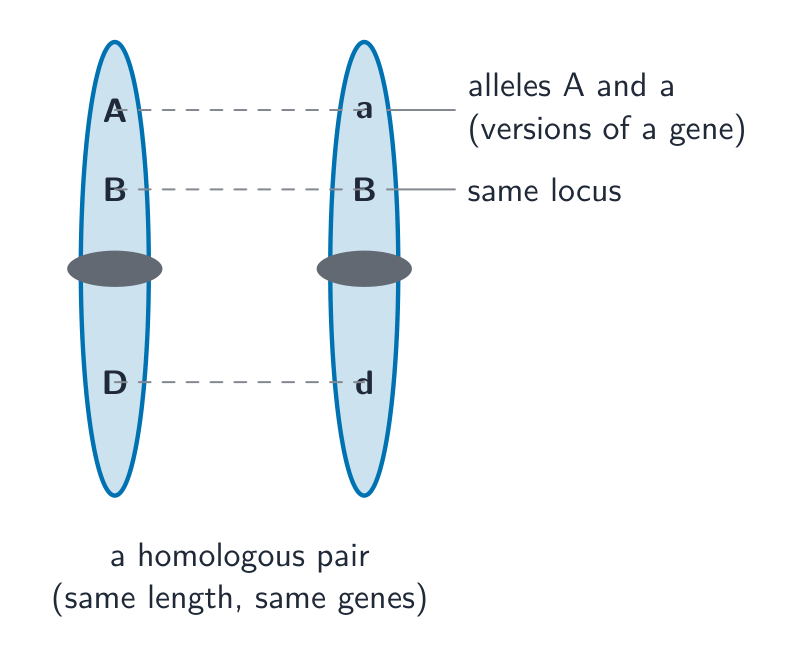
Chromosomes come in homologous chromosomes 同源染色体 pairs: the two chromosomes in a pair are the same length and carry the same genes 基因 (though they may carry different versions of them).

Gametes 配子 (sex cells) must be haploid. If they were diploid, the chromosome number would double at every generation. So gametes are made by a special division, meiosis 减数分裂, which halves the chromosome number.

Meiosis has two divisions, one after the other, so there are eight named stages: prophase I, metaphase I, anaphase I and telophase I, then prophase II, metaphase II, anaphase II and telophase II. As in mitosis, the nuclear envelope 核膜 breaks down, a spindle 纺锤体 forms, and the chromosomes are moved by the spindle.

Meiosis makes the gametes genetically different from each other in two ways:

  • crossing over 交叉互换 — homologous chromosomes swap matching pieces, mixing the alleles.
  • independent assortment 自由组合 — the pairs line up in a random order, so each gamete gets a random mix of the parent's chromosomes.

Then at fertilisation 受精, any gamete can fuse with any other. This random fusion makes every new individual genetically different.

עברית

תא דיפלואידי (2n) ישנם לו שני סט完整的 של כרומוזומים — סט אחד מכל הורה. תא הפלואידי (n) יש לו רק סט אחד.

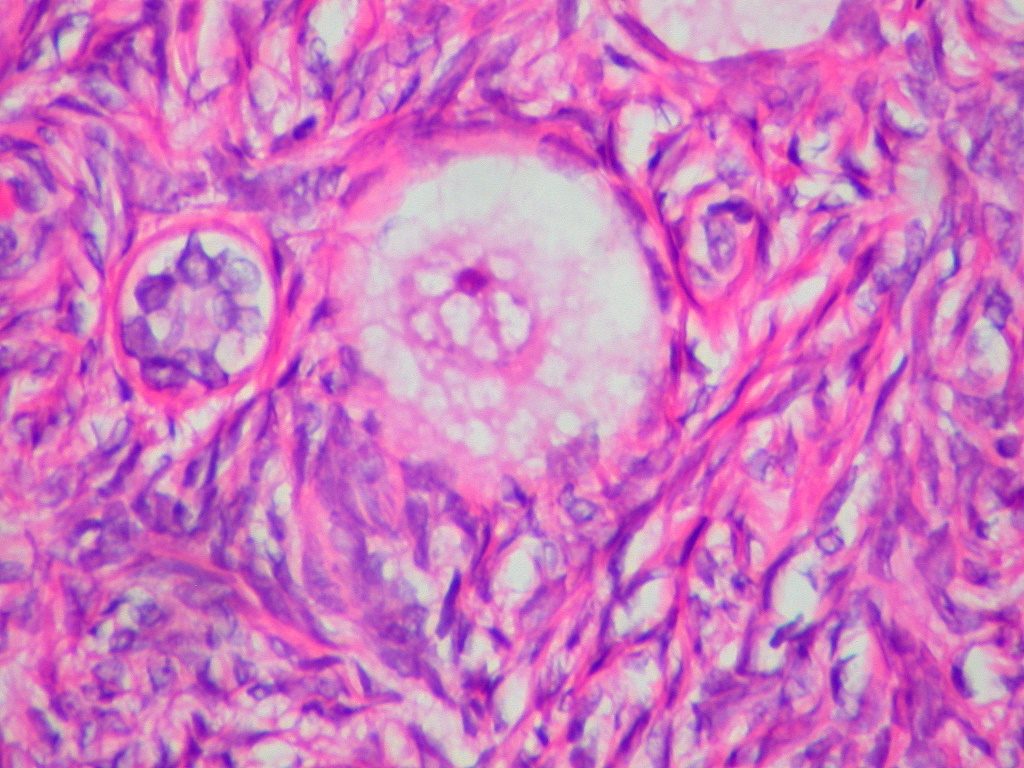
תא ביצה אנושי תחת המיקרוסקופ *תא ביצה אנושי (אוובה) — גמטה הפלוידית המיוצרת על ידי אי-חילוק.

כרומוזומים מגיעים בזוגות כרומוזומים הומולוגיים: שני הכרומוזומים בזוג הם באותו אורך ונושאים את אותם גנים (אולם ייתכן שהם נושאים גרסאות שונות שלהם).

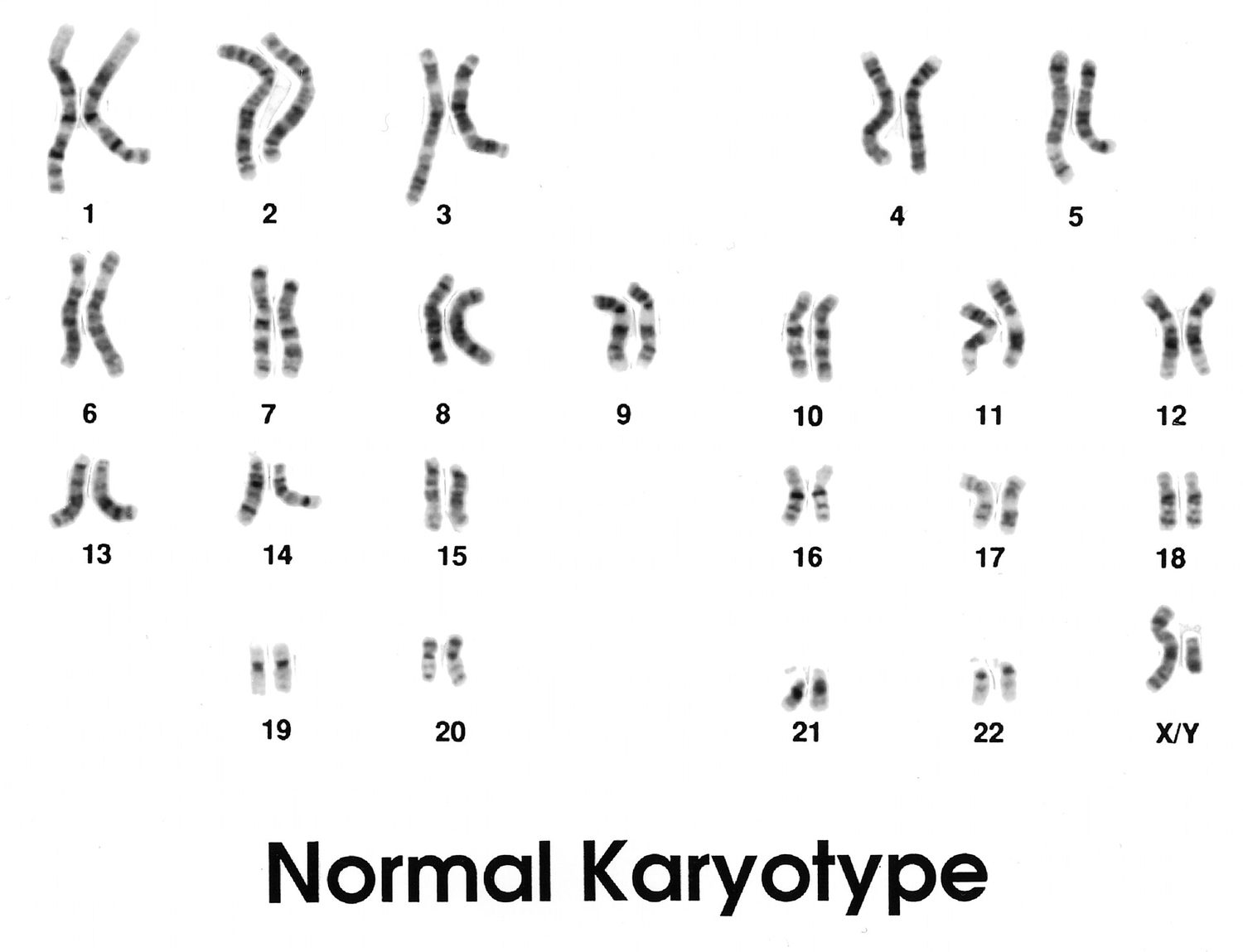
קריוטיפ אנושי: 46 כרומוזומים מצופים כדי להראה פסים כהים ובהירים, מסודרים ב-23 זוגות הממוספרים 1 עד 22 בנוסף לכרומוזומי המין X ו-Y
קריוטיפ אנושי: ה-46 כרומוזומים מסודרים ב-23 זוגות הומולוגיים (הזוג האחרון, X ו-Y, מראה שזהו זכר).

שני כרומוזומים באורך זהה זה לצד זה, הנושאים גנים באותם מיקומים; במיקום אחד האללים שונים (A ו- a) *זוג הומולוגי נושא את אותם גנים באותם לוקוסים, אך האללים (הגרסאות) עשויים להיות שונים
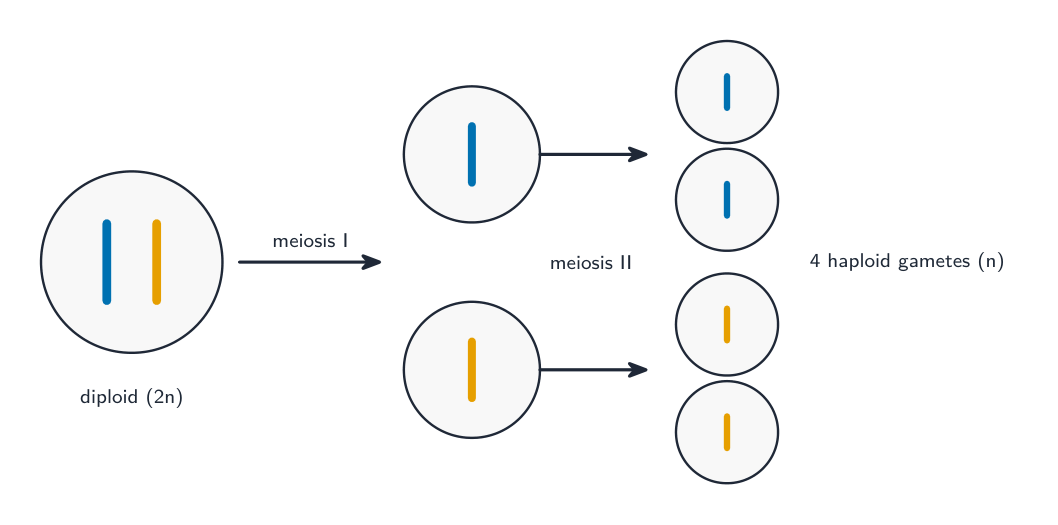
גמטות (תאי מין) חייבות להיות haploid. אם היו diploid, מספר הכרומוזומים יכפיל עצמו בכל דור. לכן הגמטות נוצרות על ידי חלוקה מיוחדת, מיזוזיס, המחצית את מספר הכרומוזומים.

למיזוזיס יש שתי חלוקות, אחת לאחר השנייה, ולכן ישנם שמונה שלבים ממונים: פרופאזה I, מטאפאזה I, אנאפאזה I וטלופאזה I, ולאחר מכן פרופאזה II, מטאפאזה II, אנאפאזה II וטלופאזה II. כמו במיטוזיס, המעטפת הגרעין מתפרקת, הסיבי תא נוצרים, והכרומוזומים מוזזים על ידי הסיב.

תא diploid עם זוג כרומוזום אחד מתחלק על ידי מיזוזיס I לשני תאים, ולאחר מכן על ידי מיזוזיס II לארבע גמטות haploid *שתי החלוקות מחציות את מספר הכרומוזומים: מיזוזיס I מפרידה את הזוג ההומולוגי, מיזוזיס II מפרידה את הכרומטידים — ומניבה ארבע גמטות haploid
המיזוזיס מייצרת גמטות גנטיות שונות זו מזו בשתי דרכים:

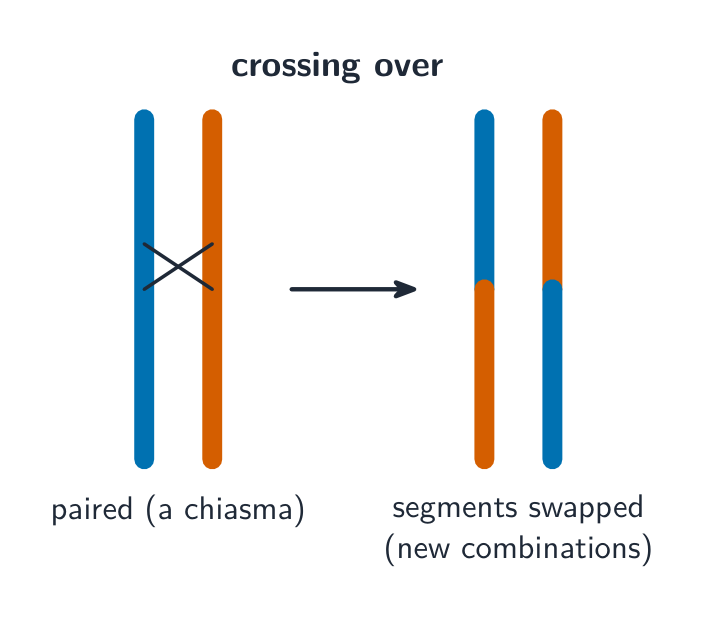
  • מעבר חומרי גנטי — כרומוזומים הומולוגיים מחליפים חלקים תואמים, מערבבים את האללים.

שני כרומוזומים זוגיים נצמדים בנקודת קרוסאובר, ולאחר מכן נפרדים עם החלפת החלקים התחתונים שלהם כדי ליצור שילובי צבע חדשים *מעבר חומרי גנטי: כרומוזומים זוגיים מחליפים מקטעים תואמים בנקודת קרוסאובר, ויוצרים שילובי אללים חדשים
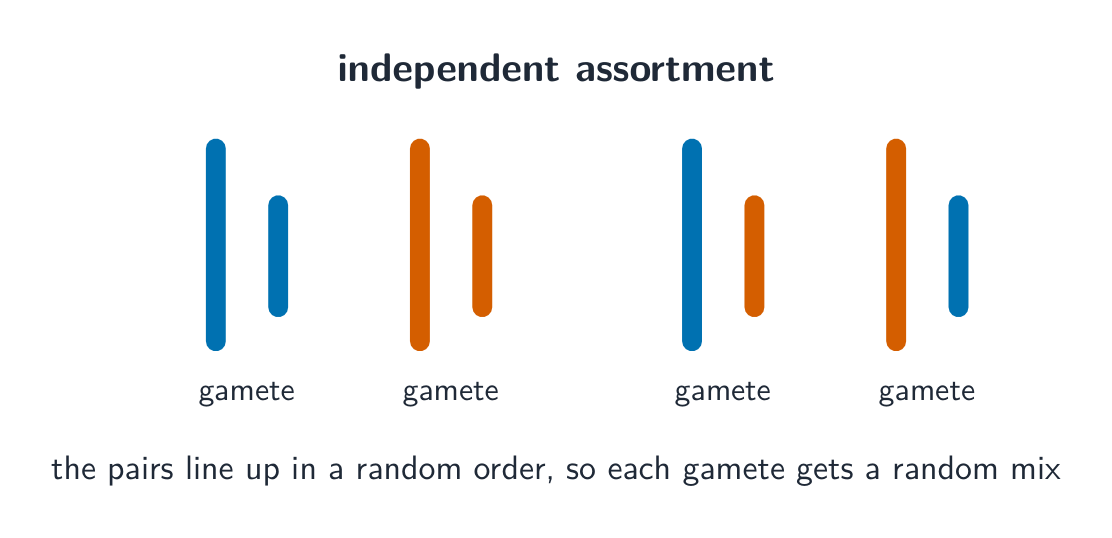
  • התפלגות עצמאית — הזוגות נסדרים בסדר אקראי, כך שכל גמטה מקבלת ערבול אקראי של כרומוזומי ההורים.

ארבע גמטות אפשריות, כל אחת עם כרומוזום גבוה וכרומוזום נמוך בשילוב שונה של שני צבעי ההורים *התפלגות עצמאית: זוגות כרומוזומים נסדרים בסדר אקראי, כך שהגמטות מקבלות ערבול רב משתנה
לאחר מכן ב-הפריה, כל גמטה יכולה להשתלב עם כל גמטה אחרת. שילוב אקראי זה גורם לכך שכל פרט חדש יהיה גנטית שונה.

Explore · ⁨חקור⁩

Meiosis · ⁨מיוזה⁩

Step through it. Two divisions halve the chromosome number and shuffle the alleles, giving four unique gametes. · ⁨התקדמו צעד אחר צעד. שני חלוקות מחציות את מספר הכרומוזומים ומעורבבות את האללים, מה שמוביל ליוצרת ארבע גמטות ייחודיות.⁩

Vocabulary · ⁨מילון מונחים⁩ Train · ⁨אימון⁩
English עברית
diploid/ˈdɪplɔɪd/ דאייפלואידי
chromosome/ˈkrəʊməsəʊm/ כרומוזום
haploid/ˈhæplɔɪd/ האפלויד
homologous chromosomes/həˈmɒləɡəs ˈkrəʊməsəʊmz/ כרומוזומים הומולוגיים
gene/dʒiːn/ גן
gamete/ˈɡæmiːt/ תא רבייה
meiosis/meɪˈəʊsɪs/ מיוזה
nuclear envelope/ˈnjuːklɪə ˈenvələʊp/ מעטפת גרעין
spindle/ˈspɪndl/ סיבי הילוכים
crossing over/ˈkrɒsɪŋ ˈəʊvə/ חילופי חומצות גנטיות
independent assortment/ˌɪndɪˈpendənt əˈsɔːtmənt/ התאבדות עצמאית
fertilisation/ˌfɜːtɪlaɪˈzeɪʃn/ השחלה
protein/ˈprəʊtiːn/ חלבון
locus/ˈləʊkəs/ לוקוס
allele/əˈliːl/ אלל
dominant/ˈdɒmɪnənt/ דומיננטי
recessive/rɪˈsesɪv/ רסיסיבי
codominant/ˈkəʊdəmɪnənt/ קו-דומיננטי
genotype/ˈdʒenətaɪp/ גנוטיפ
phenotype/ˈfenətaɪp/ פנוטיפ
homozygous/ˌhɒməˈzɪɡəs/ הומוזיגוטי
heterozygous/ˌhetrəˈzɪɡəs/ הטרוזיגוטי
test cross/test krɒs/ מבחן הצלבה
16.1

The language of genetics · ⁨השפה של הגנטיקה⁩

English

You must know these terms exactly:

  • a gene is a length of DNA that codes for a protein 蛋白质. Its position on a chromosome is its locus 基因座.
  • an allele 等位基因 is one version of a gene.
  • a dominant 显性 allele shows its effect even when only one copy is present; a recessive 隐性 allele only shows when two copies are present.
  • codominant 共显性 alleles both show their effect together.
  • the genotype 基因型 is the alleles an organism has; the phenotype 表现型 is the features you can see.
  • homozygous 纯合 means the two alleles are the same; heterozygous 杂合 means they are different.
  • a test cross 测交 crosses an organism with the recessive homozygote to find its unknown genotype.
עברית

עליכם לדעת מושגים אלה בדיוק:

  • גן הוא מקטע DNA המקודד ל-חלבון. המיקום שלו על כרומוזום הוא ה-לוקוס שלו.
  • אלל הוא גרסה אחת לגן.
  • אלל דומיננטי מבטא את השפעתו גם כאשר קיים רק העתק אחד; אלל רסיסיבי מבטא את עצמו רק כאשר קיימים שני העתקים.
  • אללים קודומיננטיים מבטאים את השפעתם יחד.
  • הגנוטיפ הוא האללים שיש לאורגניזם; הפנוטיפ הוא המאפיינים הניתנים לצפייה.
  • הומוזיגוטי פירושו שהשני אללים זהים; הרטרוזיגוטי פירושו שהם שונים.
  • צלב בדיקה מציב אורגניזם עם ההומוזיגוט הרצסיבי כדי לקבוע את הגנוטיפ שלו שאינו ידוע.
Explore · ⁨חקור⁩

Genetics vocabulary lab · ⁨מעבדת מושגי גנטיקה⁩

Link each genetics word to the real feature it names. · ⁨קשר כל מילה בגנטיקה לתכונה האמיתית שישמה.⁩

16.1

Genetic diagrams and crosses · ⁨תרשימים גנטיים וצלבים⁩

English

You show a cross with a genetic diagram, often using a Punnett square 庞纳特方格 — a grid that shows all the ways the gametes can combine.

  • a monohybrid cross 单基因杂交 follows one gene; a dihybrid cross 双基因杂交 follows two genes at once.
  • some genes have multiple alleles 复等位基因 (more than two versions in the population), such as the alleles for human blood groups.
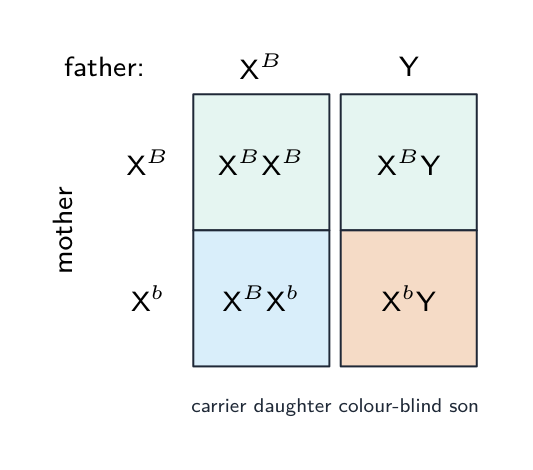
  • in sex linkage 伴性遗传, the gene is on the X chromosome, so the result is different for males and females.
  • in linkage 连锁, genes on the same autosome 常染色体 (a non-sex chromosome) tend to be inherited together.
  • in epistasis 上位性, one gene affects how another gene is shown.
עברית

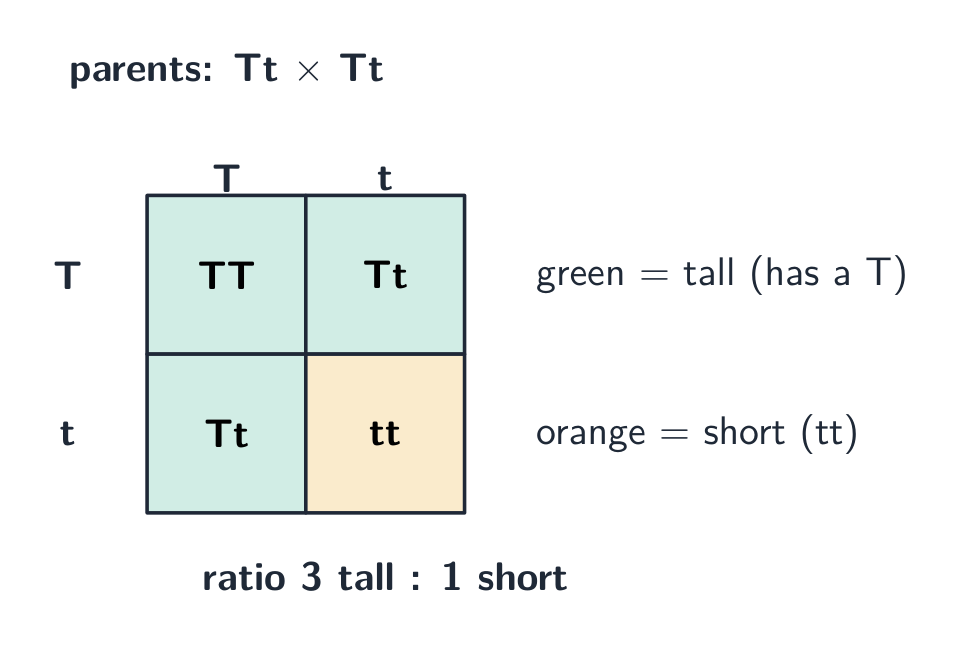
מציגים צלב באמצעות תרשים גנטי, לעיתים קרובות בעזרת ריבוע פאנט — טבלה המראה את כל הדרכים בהן הגמטות יכולות להשתלב.

ריבוע פאנט לצלב Tt × Tt: הגמטות T ו-t משתלבות לתוצאות TT, Tt, Tt ו-tt, שלוש מהן גבוהות ואחת נמוכה
ריבוע פאנט לצלב Tt × Tt: הצאצאים הם 3 גבוהים : 1 נמוך (T הוא דומיננטי)
  • צלב מונוהיברידי עוקב אחרי גן אחד; צלב די-היברידי עוקב אחרי שני גנים בו-זמנית.
  • לחלק מהגנים יש אללים מרובים (יותר משתי גרסאות באוכלוסייה), כגון האללים לקבוצות הדם האנושיות.
  • בקישור מיני, הגן נמצא על הכרומוזום X, ולכן התוצאה שונה בין זכרים לבין נקבות.
  • בקישור גנטי, גנים הנמצאים אותו אוטוזום (כרומוזום לא-מיני) נוטים להיות נחלקים יחד.
  • באפיסטאזה, גן אחד משפיע על הביטוי של גן אחר.
ריבוע פונט למהורה נשאת ובאד רגיל: הצאצאים הם בת רגילה, בן רגיל, בת נשאת ובן עיוור צבעים
מכיוון שהגן נמצא על הכרומוזום X, ייתכן שבני אמא נשאת יהיו חיוורי-עין בעוד הבנות שלה יהיו רק נשאות — תוצאה שונה לפי המין
Explore · ⁨חקור⁩

A monohybrid cross · ⁨צלבה מונוהיברידי⁩

Set each parent's genotype and read off the offspring. Crossing two heterozygotes (Aa × Aa) gives the classic 3 : 1 ratio. · ⁨הגדר גנוטיפ לכל הורה וקרא את הצאצאים. הצלבה של שני הטרוזיגוטים (Aa × Aa) נותנת את הפרופורציה הקלאסית 3 : 1.⁩

Vocabulary · ⁨מילון מונחים⁩ Train · ⁨אימון⁩
English עברית
Punnett square/ˈpʌnɪt skweə/ ריבוע פאנלט
monohybrid cross/ˈmɒnəʊhaɪbrɪd krɒs/ הצלבת מונוהיברידי
dihybrid cross/daɪˈhaɪbrɪd krɒs/ הצלבת דוהיברידי
multiple alleles/ˈmʌltɪpl əˈliːlz/ אללים מרובים
sex linkage/seks ˈlɪŋkɪdʒ/ קישור למין
linkage/ˈlɪŋkɪdʒ/ קישוריות גנטית
autosome/ˈɔːtəʊsəʊm/ אוטוזום
epistasis/ɪpɪˈstɑːsiz/ אפיסטאזה
chi-squared test/kaɪ skweəd test/ מבחן קאי-ריבוע
enzyme/ˈenzaɪm/ אנזים
albinism/ˈælbɪnɪzəm/ אלביניזם
haemoglobin/ˌhiːməˈɡləʊbɪn/ המוגלובין
sickle cell anaemia/ˈsɪkl sel əˈniːmɪə/ אנמיה סוצ'לי
haemophilia/ˌhiːməˈfɪlɪə/ המופיליה
Huntington's disease/ˈhʌntɪŋtnz dɪˈziːz/ מחלת הנטינגטון
gibberellin/ˌdʒɪbəˈrelɪn/ ג'יברלין
elongation/iːˌlɒnˈɡeɪʃn/ הארכה
structural gene/ˈstrʌktʃərəl dʒiːn/ גן מבנה
regulatory gene/ˌreɡjʊˈleɪtəri dʒiːn/ גן ויסותי
inducible enzyme/ɪnˈdjuːsɪbl ˈenzaɪm/ אנזים אינדוקציוני
repressible enzyme/rɪˈpresɪbl ˈenzaɪm/ אנזים נדכא
prokaryote/ˈprɒkərɪəʊt/ פרוקריוט
16.1

The chi-squared test · ⁨מבחן קו-ריבוע⁩

English

The chi-squared test 卡方检验 compares the results you actually counted (the observed numbers, $O$) with the results you expected from the genetic diagram (the expected numbers, $E$). It tells you whether the difference is small enough to be due to chance, or large enough to mean something else is going on.

You add up, for every group, the squared difference between observed and expected, divided by the expected:

$$\chi^2 = \sum \frac{(O - E)^2}{E}$$

Then you compare this $\chi^2$ value with a critical value from a table. The row you use is set by the degrees of freedom (the number of groups minus 1). If $\chi^2$ is less than the critical value, the difference is not significant — the results fit the expected ratio, and any difference is just chance. If $\chi^2$ is greater than the critical value, the difference is significant, so some other factor is involved.

Worked example. A $\text{Tt} \times \text{Tt}$ cross gives $160$ offspring: $114$ tall and $46$ short. Test whether this fits the expected $3:1$ ratio.

The expected numbers are $\tfrac{3}{4} \times 160 = 120$ tall and $\tfrac{1}{4} \times 160 = 40$ short. Then:

$$\chi^2 = \frac{(114 - 120)^2}{120} + \frac{(46 - 40)^2}{40} = \frac{36}{120} + \frac{36}{40} = 0.30 + 0.90 = 1.20.$$

There are $2$ groups, so degrees of freedom $= 2 - 1 = 1$. The critical value at $p = 0.05$ is $3.84$. Because $1.20 < 3.84$, the difference is not significant: the results fit a $3:1$ ratio, and the small difference is due to chance.

עברית

מבחן קו-ריבוע משווה את התוצאות שמנינו בפועל (המספרים הצופים, $O$) עם התוצאות שצפינו מהתרשים הגנטי (המספרים המצופים, $E$). הוא קובע האם ההבדל קטן מספיק כדי להיות נובע מקרנה, או גדול מספיק כדי להעיד על השפעה אחרת.

מסכמים, עבור כל קבוצה, את ההפרש הריבועי בין הצופים למצופים, מחולק במצופים:

$$\chi^2 = \sum \frac{(O - E)^2}{E}$$

לאחר מכן משווים ערך זה $\chi^2$ עם ערך קריטי מטבלה. השורה שמשתמשים בה נקבעת לפי דרגות החירות (מספר הקבוצות פחות 1). אם $\chi^2$ הוא קטן מהערך הקריטי, ההבדל אינו משמעותי — התוצאות תואמות את היחס המצופה, וההבדל הוא פשוט מקרי. אם $\chi^2$ הוא גדול מהערך הקריטי, ההבדל משמעותי, ולכן מעורב גורם נוסף.

דוגמה פתורה. צלב $\text{Tt} \times \text{Tt}$ נתן $160$ צאצאים: $114$ גבוהים ו$46$ נמוכים. בדוק האם זה תואם את היחס המצופה $3:1$.

המספרים המצופים הם $\tfrac{3}{4} \times 160 = 120$ גבוהים ו$\tfrac{1}{4} \times 160 = 40$ נמוכים. אז:

$$\chi^2 = \frac{(114 - 120)^2}{120} + \frac{(46 - 40)^2}{40} = \frac{36}{120} + \frac{36}{40} = 0.30 + 0.90 = 1.20.$$

קיימות $2$ קבוצות, ולכן דרגות החירות הן $= 2 - 1 = 1$. הערך הקריטי ב-$p = 0.05$ הוא $3.84$. מכיוון ש-$1.20 < 3.84$, ההבדל אינו משמעותי: התוצאות תואמות יחס $3:1$, וההבדל הקטן נובע מאקראיות.

Explore · ⁨חקור⁩

Test a genetic ratio with chi-squared · ⁨מבחן פרופורציה גנטית עם קו-ריבוע (chi-squared)⁩

This is the worked example on the page. The cross gives $\chi^2 = 1.20$ with $1$ degree of freedom, and the widget shows the critical value $3.84$ — set the statistic to $1.20$ and it falls well short of the shaded region, so the results fit the $3:1$ ratio. Drag it past $3.84$ to see what a significant departure would look like. · ⁨זהו הדוגמה המפורטת בדף. הצלב נותן $\chi^2 = 1.20$ עם $1$ דרגות חירות, והוויז''ט מראה את הערך הקריטי $3.84$ — הגדר את הסטטיסטיקה ל$1.20$ והיא נופלת הרחק מחוץ לאזור המוצל, אז התוצאות מתאימות ליחס $3:1$. גרור אותו מעבר ל$3.84$ כדי לראות איך ייראה סטייה משמעותית.⁩

16.2

From genes to proteins to phenotype · ⁨מגנים לחלבונים לפנוטיפ⁩

Syllabus · ⁨סיילבוס⁩
English
  1. explain the terms gene, locus, allele, dominant, recessive, codominant, linkage, test cross, F1, F2, phenotype, genotype, homozygous and heterozygous
  2. interpret and construct genetic diagrams, including Punnett squares, to explain and predict the results of monohybrid crosses and dihybrid crosses that involve dominance, codominance, multiple alleles and sex linkage
  3. interpret and construct genetic diagrams, including Punnett squares, to explain and predict the results of dihybrid crosses that involve autosomal linkage and epistasis (knowledge of the expected ratios for different types of epistasis is not expected)
  4. interpret and construct genetic diagrams, including Punnett squares, to explain and predict the results of test crosses
  5. use the chi-squared test to test the significance of differences between observed and expected results (the formula for the chi-squared test will be provided, as shown in the Mathematical requirements)
  6. explain the relationship between genes, proteins and phenotype with respect to the: • TYR gene, tyrosinase and albinism • HBB gene, haemoglobin and sickle cell anaemia • F8 gene, factor VIII and haemophilia • HTT gene, huntingtin and Huntington’s disease
  7. explain the role of gibberellin in stem elongation including the role of the dominant allele, Le, that codes for a functional enzyme in the gibberellin synthesis pathway, and the recessive allele, le, that codes for a non-functional enzyme
עברית
  1. הסבר את המונחים גן, לוקוס, אלל, דומיננטי, ריצסיבי, קודומיננטי, קישור, מבחן צלב, F1, F2, פנוטיפ, גנוטיפ, הומוזיגוטי ו-הטרוזיגוטי
  2. פרש ובנה תרשימים גנטיים, כולל טבלאות פאנאט, כדי להסביר ולחזות תוצאות של צלבים מונוגמריים וצלבים דיגמריים הכוללים דומיננטיות, קודומיננטיות, אללים מרובים וקישור למין
  3. פרש ובנה תרשימים גנטיים, כולל טבלאות פאנאט, כדי להסביר ולחזות תוצאות של צלבים דיגמריים הכוללים קישור אוטוזומלי ואפיסטאז (ידע ביחסים הצפויים לסוגים שונים של אפיסטאז אינו נדרש)
  4. פרש ובנה תרשימים גנטיים, כולל טבלאות פאנאט, כדי להסביר ולחזות תוצאות של מבחני צלב
  5. השתמש במבחן קאי-ריבוע לבדיקת משמעות ההבדלים בין תוצאות שנצפו לתוצאות שנצפות (הנוסחה למבחן קאי-ריבוע תסופק, כפי שמוצג בדרישות המתמטיות)
  6. הסבר את הקשר בין גנים, חלבונים ופנוטיפ בהתייחס ל: • גן TYR, טירוזינאז ואלביניזם • גן HBB, המוגלובין ואנמיה קוצבת • גן F8, גורם VIII והמופיליה • גן HTT, האנטנגטין ומחלת Huntington
  7. הסבר את תפקידו של גיברלין בהתארכות הגבעול, כולל תפקידו של האלל הדומיננטי, Le, המקודד לחלבון פעיל במסלול סינתזת הגיברלין, והאלל הריצסיבי, le, המקודד לחלבון לא פעיל

Source: Cambridge International syllabus · ⁨מקור: הסיילבוס הבינלאומי של קמבריד'ג'⁩

English

A gene codes for a protein, and that protein affects the phenotype. If the gene is faulty, the protein is faulty, and the phenotype changes:

Gene Protein Effect of a faulty allele
TYR the enzyme 酶 tyrosinase albinism 白化病 (no pigment made)
HBB haemoglobin 血红蛋白 sickle cell anaemia 镰状细胞贫血
F8 factor VIII (helps blood clot) haemophilia 血友病
HTT huntingtin Huntington's disease 亨廷顿病

Gibberellin and stem height

In pea plants, the dominant allele Le codes for a working enzyme that makes gibberellin 赤霉素, so the plant grows tall by stem elongation 伸长. The recessive allele le codes for a broken enzyme, so little gibberellin is made and the plant is short.

עברית

גן מקודד לחלבון, וחלבון זה משפיע על הפנוטיפ. אם הגן פגום, החלבון פגום, והפנוטיפ משתנה:

גן חלבון השפעת אלל פגום
TYR אנזים טירוזינאזה אלביניזם (אין ייצור פיגמנט)
HBB המוגלובין אנמיית תא צרחתנית
F8 גורם VIII (עוזר לקרישת דם) המوفיליה
HTT האנטנגטין מחלת הנטינגטון

גיברלין וגובה הגבעול

צמחי אפונה, האלל הדומיננטי Le מקודד לאנזים פעיל המייצר גיברלין, ולכן הצמח גדול בגובה בזכות הארכה של הגבעול. האלל הרצסיבי le מקודד לאנזים שבור, ולכן מיוצר מעט גיברלין והצמח קצר.

Explore · ⁨חקור⁩

From gene to phenotype · ⁨מגן לפנוטיפ⁩

Step through it. A gene makes a protein that does a job — so a faulty allele makes a faulty protein and a changed feature. · ⁨עבורו על התהליך. גן מייצר חלבון שמבצע תפקיד — ולכן אלל פגום מייצר חלבון פגום ותכונה משתנה.⁩

Watch lesson · ⁨צפה בשיעור⁩
16.3

Gene control · ⁨בקרת גנים⁩

Syllabus · ⁨סיילבוס⁩
English
  1. describe the differences between structural genes and regulatory genes and the differences between repressible enzymes and inducible enzymes
  2. explain genetic control of protein production in a prokaryote using the lac operon (knowledge of the role of cAMP is not expected)
  3. state that transcription factors are proteins that bind to DNA and are involved in the control of gene expression in eukaryotes by decreasing or increasing the rate of transcription
  4. explain how gibberellin activates genes by causing the breakdown of DELLA protein repressors, which normally inhibit factors that promote transcription
עברית
  1. תאר את ההבדלים בין גנים מבניים לבין גנים ויסתריים, וההבדלים בין אנזימים מדכאים לבין אנזימים מופעלים
  2. הסבר את הבקרה הגנטית על יצירת חלבונים בפרוקריוט באמצעות אופרון לקטוז (ידע בתפקיד cAMP אינו נדרש)
  3. ציין כי גורמי העתקה הם חלבונים הנקשרים ל-DNA ומשתתפים בבקרה על ביטוי גנים באי-סלוליות על ידי הפחתה או הגדלת קצב העתקה
  4. הסבר כיצד גיברלין מפעיל גנים על ידי גרימת פירוק של מדכאי חלבון DELLA, המדכאים לרוב גורמים המעודדים עתקה

Source: Cambridge International syllabus · ⁨מקור: הסיילבוס הבינלאומי של קמבריד'ג'⁩

English

Not all genes are switched on all the time. Cells control which proteins they make.

  • structural genes 结构基因 code for useful proteins such as enzymes; regulatory genes 调节基因 control whether other genes are switched on.
  • an inducible enzyme 可诱导酶 is made only when it is needed; a repressible enzyme 可抑制酶 is normally made but can be switched off.

The lac operon

In a prokaryote 原核生物 such as a bacterium, a group of genes called the lac operon 乳糖操纵子 controls the digestion of lactose:

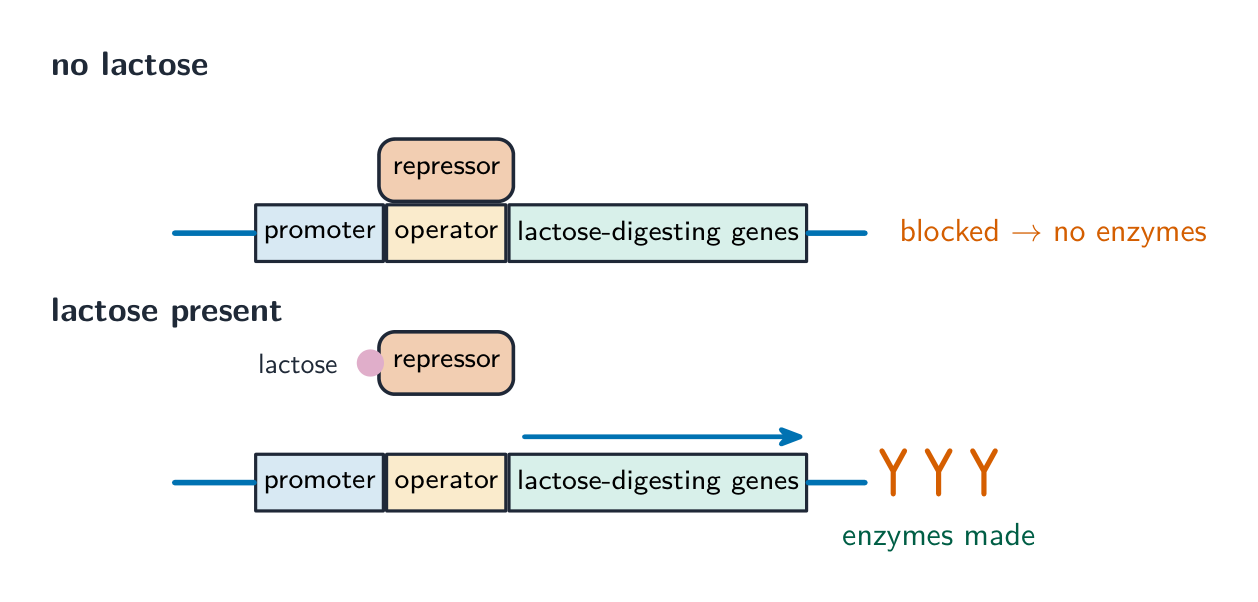
  • when there is no lactose, a repressor 阻遏物 protein binds to the operator (a short control sequence within the operon) and blocks transcription 转录, so the lactose-digesting enzymes are not made.
  • when lactose is present, it binds to the repressor and pulls it off. Transcription can now happen, and the enzymes are made. The enzymes are therefore inducible.

Control in eukaryotes

In eukaryotes, transcription factors 转录因子 are proteins that bind to DNA and control gene expression 基因表达, by increasing or decreasing the rate of transcription.

Gibberellin switches genes on in this way: it causes the breakdown of DELLA protein repressors. These DELLA proteins normally block the factors that turn on transcription, so removing them lets those genes be expressed.

עברית

לא כל הגנים מופעלים בכל עת. תאים מבקרים אילו חלבונים הם מייצרים.

  • גנים מבניים מקודדים לחלבונים שימושיים כגון אנזימים; גנים ויסתוניים מבקרים האם גנים אחרים מופעלים.
  • אנזים אינדוקציבלי מיוצר רק כאשר הוא נדרש; אנזים רפרסבל מיוצר לרוב אך ניתן לכבותו.

אופרון lac

ב-פרוקאריוט כמו חיידק, קבוצת גנים הנקראת אופרון lac מבקרת את עיכול הלקטוז:

  • כאשר אין לקטוז, חלבון רפרסור נקשר ל-אופרטור (רצף בקרה קצר בתוך האופרון) וחוסם טרנסקריפציה, ולכן אנזימי עיכול הלקטוז לא מיוצרים.
  • כאשר לקטוז קיים, הוא נקשר לרפרסור ומרחיק אותו. כעת יכולה להתרחש טרנסקריפציה, והאנזימים מיוצרים. לכן האנזימים הם אינדוקציבליים.
אופרון lac בשתי מצבים: ללא לקטוז, רפרסור יושב על האופרטור וחוסם את הגנים; עם לקטוז קיים, הלקטוז מרחיק את הרפרסור כך שהגנים מתורגמים והאנזימים מיוצרים
אופרון lac: רפרסור חוסם את הגנים עד שהלקטוז מרחיק אותו, ולכן האנזימים הם אינדוקציבליים

בקרה באוקאריוטים

באוקריוטים, גורמי תעתיק הם חלבונים הנקשרים ל-DNA ומבקרים את ביטוי הגנים, על ידי הגדלה או הקטנת קצב התעתיק.

ג'יברלין מפעיל גנים בדרך זו: הוא גורם לפירוק מדכאי החלבון DELLA. חלבונים אלו מנטעים באופן רגיל את גורמי ההפעלת התעתיק, ולכן הסרתם מאפשרת ביטוי גנים אלו.

Explore · ⁨חקור⁩

The lac operon · ⁨אופרון lac⁩

Step through the switch. With no lactose the genes are blocked; lactose pulls the repressor off and switches them on. · ⁨עבור על המתג צעד אחר צעד. ללא לקטוז הגנים חסומים; לקטוז מוריד את המדכא ומפעיל אותם.⁩

Vocabulary · ⁨מילון מונחים⁩ Train · ⁨אימון⁩
English עברית
lac operon/læk ˈɒpərən/ אפרון לוק
repressor/rɪˈpresə/ רפרסור
transcription/trænˈskrɪpʃn/ טרנסקריפציה
transcription factor/trænˈskrɪpʃn ˈfæktə/ גורם תרגום
gene expression/dʒiːn ekˈspreʃn/ ביטוי גנטי
16.3

Exam tips · ⁨טיפים לבחינות⁩

English
  • Set out a cross fully: parental genotypes → gametes (in circles) → Punnett square → offspring ratio and phenotypes.
  • Use the chi-squared test to compare observed with expected; degrees of freedom $=$ classes $- 1$, compare with $3.84$ at $p = 0.05$.
  • Recognise codominance, multiple alleles, sex linkage, epistasis and linkage — each alters the expected ratio.
  • Meiosis creates variation by crossing over and independent assortment — state both.
עברית
  • סמן צלב במלואו: גנוטיפי הורים → גמטות (בעיגולים) → טבלת פונט → יחס צאצאים ופנוטיפים.
  • השתמש במבחן כיוון-צד כדי להשוות בין תוצאות שנצפו לבין אלו שהצופו; דרגות חירות $=$ מחלקות $- 1$, השווה עם $3.84$ ב$p = 0.05$.
  • זיהוי של קודומיננטיות, אללים מרובים, קישור למין, אפיסטזיס וקישור גנטי – כל אחד מהם משנה את היחס המצופה.
  • מיוזה יוצרת מגוון באמצעות מעבר גנטי ואסורטמנט עצמאי – ציין שניהם.

Interactive lessons on this topic · ⁨שיעורים אינטראקטיביים בנושא זה⁩

Work through it step by step, with instant-check exercises. · ⁨לעבור על הדברים צעד אחר צעד, עם תרגילים לבדיקה מיידית.⁩

Past Papers · ⁨מבחני עבר⁩

More topics in A-Level Biology · ⁨ביולוגיה A-Level⁩ · ⁨נושאים נוספים בA-Level Biology · ⁨ביולוגיה A-Level⁩⁩

Log in or create account · ⁨היכנס או צור חשבון⁩

IGCSE, A-Level & AP