Skip to content · ⁨الانتقال إلى المحتوى⁩

Short Fiction I · ⁨القصة القصيرة I⁩

AP English Literature and Composition · ⁨الأدب والتأليف الإنجليزي (AP)⁩ · Topic 1 · ⁨الموضوع 1⁩

Video lesson for this topic · ⁨درس فيديو لهذا الموضوع⁩ Open the video page · ⁨افتح صفحة الفيديو⁩
6:43

الوحدة 1: الخيال القصصي I

يقرأ امتحان AP English Literature النصوص في ثلاثة أنواع عبر تسع وحدات — الخيال القصصي، والشعر، والخيال الطويل أو المسرحية — يتم زيارة كل نوع ثلاث مرات عند…

English narration · English + 中文 subtitles burned in · ⁨سرد باللغة الإنجليزية · ترجمة مدمجة بالإنجليزية + الصينية⁩

1.1

What Textual Details Reveal About a Character · ⁨ما تكشفه التفاصيل النصية عن الشخصية⁩

Syllabus · ⁨المنهج⁩
English

Enduring Understanding (CHR-1): Characters in literature allow readers to study and explore a range of values, beliefs, assumptions, biases, and cultural norms represented by those characters.

Learning Objective 1.A: Identify and describe what specific textual details reveal about a character, that character’s perspective, and that character’s motives.

  • CHR-1.A Description, dialogue, and behavior reveal characters to readers.
  • CHR-1.B Descriptions of characters may come from a speaker, narrator, other characters, or the characters themselves.
  • CHR-1.C Perspective is how narrators, characters, or speakers understand their circumstances, and is informed by background, personality traits, biases, and relationships.
  • CHR-1.D A character’s perspective is both shaped and revealed by relationships with other characters, the environment, the events of the plot, and the ideas expressed in the text.
العربية

فهم دائم (CHR-1): الشخصيات في الأدب تتيح للقراء دراسة واستكشاف مجموعة متنوعة من القيم والمعتقدات والفرضيات والتحيزات والأعراف الثقافية التي تمثلها تلك الشخصيات.

هدف التعلم 1.A: تحديد ووصف ما تكشفه التفاصيل النصية المحددة عن شخصية، وجهة نظر تلك الشخصية، ودوافعها.

  • CHR-1.A الوصف والحوار والسلوك يكشفون الشخصيات للقراء.
  • CHR-1.B قد تأتي وصفات الشخصيات من متحدث، راوي، شخصيات أخرى، أو الشخصيات نفسها.
  • CHR-1.C منظور هو كيفية فهم الرواة أو الشخصيات أو المتحدثين لظروفهم، ويتأثر بالخلفية السيرة الذاتية والسمات الشخصية والتحيزات والعلاقات.
  • CHR-1.D منظور الشخصية يتشكل ويكشف عن نفسه من خلال العلاقات مع الشخصيات الأخرى، والبيئة، وأحداث الحبكة، والأفكار المعبرة في النص.

Source: College Board AP Course and Exam Description · ⁨المصدر: وصف دورة وامتحان College Board AP⁩

English

AP English Literature reads texts in three genres across nine units - short fiction, poetry, and longer fiction or drama, each visited three times at increasing difficulty. Unit 1 installs the tools for all of them.

Character 人物 is revealed by three things, and the CED names them exactly:

  • Description, dialogue, and behaviour 描写、对话与行为 reveal characters to readers.
  • Descriptions may come from a speaker, narrator, other characters, or the characters themselves - so who is describing is part of the evidence.
  • Perspective 视角 is how narrators, characters, or speakers understand their circumstances, informed by background, experience, and values.
  • A character's perspective is both shaped and revealed by relationships with other characters, the environment, and events.

That last point is the one that turns character notes into analysis. A character is not a list of adjectives; a character is a way of seeing, which becomes visible in what they notice, what they misread, and how they respond.

العربية

الأدب الإنجليزي AP يقرأ نصوصاً في ثلاثة أنواع عبر تسع وحدات - القصة القصيرة، والشعر، والأعمال الطويلة أو المسرحيات، كل منها يُؤخذ ثلاث مرات بصعوبة متزايدة. وحدتي 1 تُرسّخ الأدوات لجميعها.

الشخصية 人物 تُكشف من خلال ثلاثة things، ويحدد CED اسمها بدقة:

  • الوصف، والحوار، والسلوك 描写、对话与行为 يكشف الشخصيات للقراء.
  • قد يأتي الوصف من متحدث، راوي، شخصيات أخرى، أو الشخصيات نفسها - لذا فإن من يصف جزء من الدليل.
  • المنظور 视角 هو كيف يفهم الرواة، أو الشخصيات، أو المتحدثون ظروفهم، بناءً على الخلفية والتجربة والقيم.
  • منظور الشخصية يتشكل ويُكشف من خلال العلاقات مع الشخصيات الأخرى، والبيئة، والأحداث.

النقطة الأخيرة هي التي تحول ملاحظات الشخصية إلى تحليل. الشخصية ليست قائمة بصفات؛ بل هي طريقة للنظر، تظهر في ما تلاحظه، وما تسيء فهمه، وكيف تستجيب.

قل ما确立ه التفصيل، وتوقف عند حدود الدليل
Explore · ⁨استكشف⁩

Take a detail exactly as far as it goes · ⁨خُذ تفصيلًا إلى أقصى حد ما يصل إليه⁩

Over-reading loses as many marks as under-reading: say what the detail establishes, and stop where the evidence stops. · ⁨التفسير المفرط يكتسب نفس عدد الدرجات المفقودة بسبب التفسير غير الكافي: اذكر ما يثبته التفصيل، وتوقف حيث ينتهي الدليل.⁩

1.2

Textual Details That Convey Setting · ⁨تفاصيل نصية تنقل المشهد⁩

Syllabus · ⁨المنهج⁩
English

Enduring Understanding (SET-1): Setting and the details associated with it not only depict a time and place, but also convey values associated with that setting.

Learning Objective 2.A: Identify and describe specific textual details that convey or reveal a setting.

  • SET-1.A Setting includes the time and place during which the events of the text occur.
العربية

فهم دائم (SET-1): الخلفية الزمنية والمكانية والتفاصيل المرتبطة بها لا تصور فقط وقتاً ومكاناً، بل تنقل أيضاً القيم المرتبطة بتلك الخلفية الزمنية والمكانية.

هدف التعلم 2.A: تحديد ووصف تفاصيل نصية محددة تنقل أو تكشف عن الزمان والمكان (الإطار).

  • SET-1.A الإطار يشمل الوقت والمكان اللذين تحدث فيهما أحداث النص.

Source: College Board AP Course and Exam Description · ⁨المصدر: وصف دورة وامتحان College Board AP⁩

English

Setting 背景 includes the time and place during which the events of the text occur.

The CED's definition is deliberately minimal, and that is the trap. Setting earns marks not when it is described but when it is shown doing something - constraining a character, explaining a value, or contrasting with an interior state. A paragraph that establishes where a story happens has not yet made a claim.

العربية

المشهد 背景 يشمل الزمان والمكان الذي تحدث فيه أحداث النص.

تعريف CED متعمد وبسيط، وهذا هو الفخ. المشهد يحصل على درجات ليس عندما يُوصف ولكن عندما يُظهر قيامه بشيء - تقييد شخصية، أو شرح قيمة، أو التناقض مع حالة داخلية. فقرة تحدد مكان حدوث القصة لم تقدم بعد أي ادعاء.

1.3

How Plot Orders Events · ⁨كيف يرتب Plot الأحداث⁩

Syllabus · ⁨المنهج⁩
English

Enduring Understanding (STR-1): The arrangement of the parts and sections of a text, the relationship of the parts to each other, and the sequence in which the text reveals information are all structural choices made by a writer that contribute to the reader’s interpretation of a text.

Learning Objective 3.A: Identify and describe how plot orders events in a narrative.

  • STR-1.A Plot is the sequence of events in a narrative; events throughout a narrative are connected, with each event building on the others, often with a cause-and-effect relationship.
  • STR-1.B The dramatic situation of a narrative includes the setting and action of the plot and how that narrative develops to place characters in conflict(s), and often involves the rising or falling fortunes of a main character or set of characters.
العربية

فهم دائم (STR-1): ترتيب أجزاء ونصوص النص، وعلاقة الأجزاء ببعضها البعض، والتسلسل الذي يكشف به النص عن المعلومات هي جميعًا اختيارات بنائية يقوم بها الكاتب تساهم في تفسير القارئ للنص.

هدف التعلم 3.A: تحديد ووصف كيفية ترتيب Plot الأحداث في السرد.

  • STR-1.A Plot هو تسلسل الأحداث في السرد؛ ترتبط الأحداث عبر السرد، حيث يستند كل حدث إلى الآخر، وغالبًا ما تكون هناك علاقة سببية بين events.
  • STR-1.B الوضع الدرامي للسرد يتضمن الإطار وإجراءات plot وكيفية تطور هذا السرد لوضع الشخصيات في صراعات، وغالبًا ما يتضمن صعود أو هبوط حظ البطل أو مجموعة من الشخصيات.

Source: College Board AP Course and Exam Description · ⁨المصدر: وصف دورة وامتحان College Board AP⁩

English
  • Plot 情节 is the sequence of events in a narrative; events are connected, each building on those before it.
  • The dramatic situation 戏剧情境 includes the setting and action of the plot and how the narrative develops to place characters in conflict.

The word sequence is doing work. Plot is not the events but their order - and an author who reveals something late that happened early has made a choice you can analyse.

العربية
  • Plot 情节 هو تسلسل الأحداث في السرد؛ الأحداث مترابطة، كل منها يبني على ما سبقه.
  • الموقف الدرامي 戏剧情境 يشمل المشهد والحركة للplot وكيف يتطور السرد لوضع الشخصيات في صراع.

كلمة تسلسل تقوم بعمل. الـ plot ليس الأحداث بل ترتيبها - وكاتب يكشف شيئاً حدث متأخراً لكنه وقع مبكراً فقد اتخذ قراراً يمكنك تحليله.

الترتيب الذي حدثت به الأحداث مقابل الترتيب الذي سُمعت به - الفرق هو اختيار
Vocabulary · ⁨مفردات⁩ Train · ⁨تدريب⁩
English العربية
Character/ˈkærɪktə/ الشخصية
Description, dialogue, and behaviour/dɪˈskrɪpʃn ˈdaɪəlɒɡ ænd bɪˈheɪvjə/ وصف، حوار، وسلوك
Perspective/pəˈspektɪv/ وجهة النظر
Setting/ˈsetɪŋ/ الإعداد
Plot/plɒt/ الحبكة
dramatic situation/drəˈmætɪk ˌsɪtʃuːˈeɪʃn/ الموقف الدرامي
1.4

The Function of a Sequence of Events · ⁨وظيفة تسلسل الأحداث⁩

Syllabus · ⁨المنهج⁩
English

Enduring Understanding (STR-1): The arrangement of the parts and sections of a text, the relationship of the parts to each other, and the sequence in which the text reveals information are all structural choices made by a writer that contribute to the reader’s interpretation of a text.

Learning Objective 3.B: Explain the function of a particular sequence of events in a plot.

  • STR-1.C Plot and the exposition that accompanies it focus readers’ attention on the parts of the narrative that matter most to its development, including characters, their relationships, and their roles in the narrative, as well as setting and the relationship between characters and setting.
العربية

فهم دائم (STR-1): ترتيب أجزاء ونصوص النص، وعلاقة الأجزاء ببعضها البعض، والتسلسل الذي يكشف به النص عن المعلومات هي جميعًا اختيارات بنائية يقوم بها الكاتب تساهم في تفسير القارئ للنص.

هدف التعلم 3.B: شرح وظيفة سلسلة معينة من الأحداث في plot.

  • STR-1.C يركز plot والتقديم المصاحبه له انتباه القراء على أجزاء السرد الأكثر أهمية لتطوره، بما في ذلك الشخصيات، وعلاقاتها، وأدوارها في السرد، بالإضافة إلى الإطار والعلاقة بين الشخصيات والإطار.

Source: College Board AP Course and Exam Description · ⁨المصدر: وصف دورة وامتحان College Board AP⁩

English

Plot and the exposition that accompanies it focus readers' attention on the parts of the narrative that matter most to the text's meaning.

That sentence is the whole method for prose analysis: proportion is evidence. What the text lingers over, and what it passes in a clause, is the author telling you where to look.

العربية

الـ plot والنص التمهيدي المصاحِب له يركزان انتباه القراء على أجزاء السرد الأهم لمعنى النص.

هذه الجملة هي المنهج الكامل لتحليل النثر: التناسب هو دليل. ما يتوقف عنده النص، وما يعبر عنه في جملة قصيرة، هو الكاتب يخبرك أين تنظر.

1.5

Identifying the Narrator or Speaker · ⁨تحديد الراوي أو المتحدث⁩

Syllabus · ⁨المنهج⁩
English

Enduring Understanding (NAR-1): A narrator’s or speaker’s perspective controls the details and emphases that affect how readers experience and interpret a text.

Learning Objective 4.A: Identify and describe the narrator or speaker of a text.

  • NAR-1.A Narrators or speakers relate accounts to readers and establish a relationship between the text and the reader.
  • NAR-1.B Perspective refers to how narrators, characters, or speakers see their circumstances, while point of view refers to the position from which a narrator or speaker relates the events of a narrative.
  • NAR-1.C A speaker or narrator is not necessarily the author.
العربية

فهم دائم (NAR-1): يحدد منظور الروائي أو المتحدث التفاصيل والتركيزات التي تؤثر على كيفية تجربة القارئ وتفسيره للنص.

هدف التعلم 4.A: تحديد ووصف الراوي أو متحدث النص.

  • NAR-1.A يروي الروائيون أو المتحدثون الحكايات للقراء ويقررون علاقة بين النص والقارئ.
  • NAR-1.B يشير منظور إلى كيفية رؤية الراوي أو الشخصيات أو المتحدث لظروفه، بينما تشير نقطة النظر إلى الموقع الذي يروي منه راوي أو متحدث أحداث السرد.
  • NAR-1.C المتحدث أو الراوي ليس بالضرورة هو المؤلف.

Source: College Board AP Course and Exam Description · ⁨المصدر: وصف دورة وامتحان College Board AP⁩

English
  • Narrators or speakers relate accounts and establish a relationship between the text and the reader.
  • Perspective refers to how narrators, characters, or speakers see their circumstances; point of view 叙述视点 refers to the position from which they relate the account.
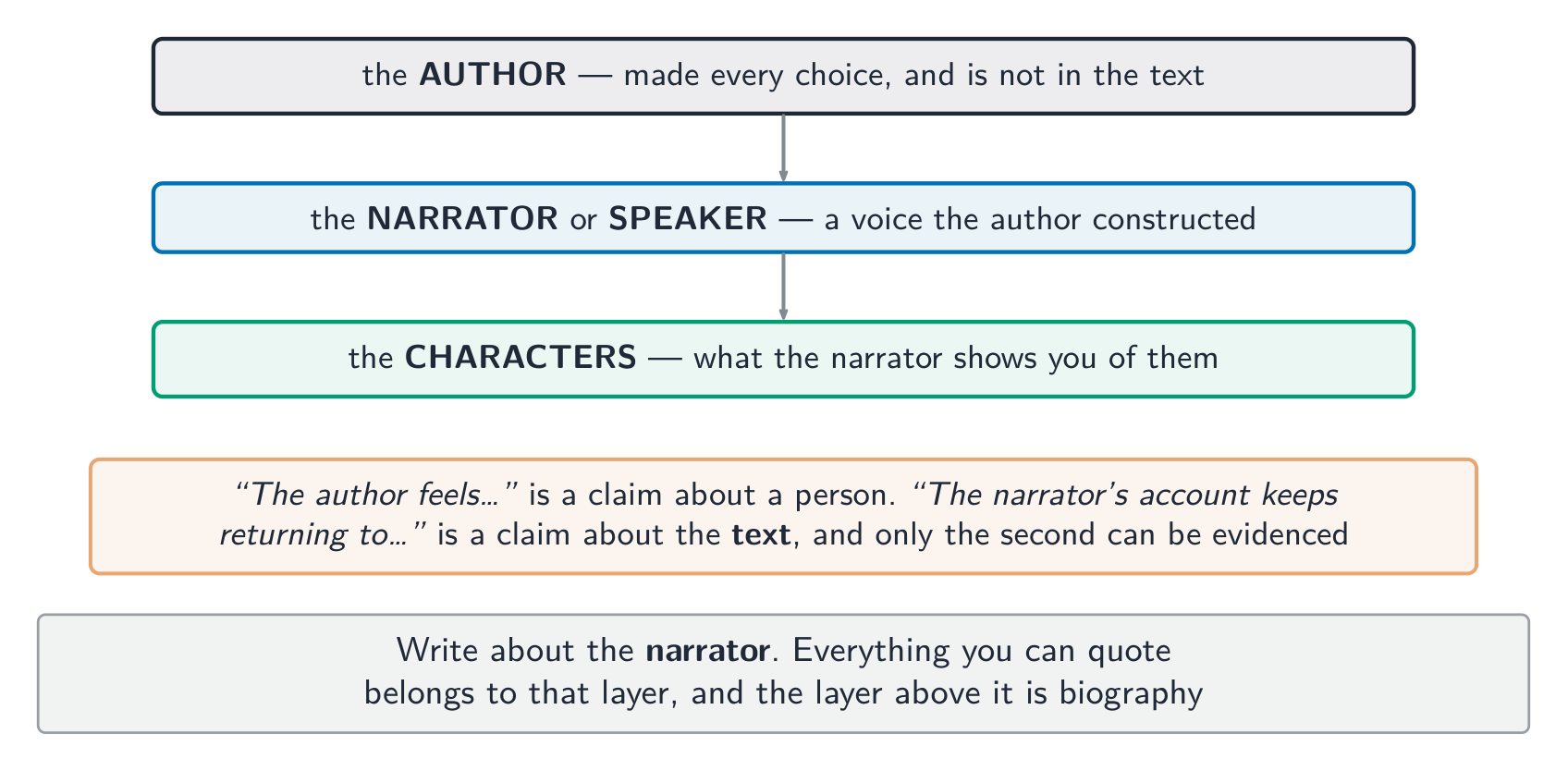
  • A speaker or narrator is not necessarily the author. Never write "the author feels" about a first-person narrator.
العربية
ما يمكن لكل نقطة نظر أن تعطيك إياها - وما لا تستطيع - وأن هذا الحد هو التحليل
المنظور هو كيف يرى؛ ونقطة النظر هي حيث يقف. يفصل CED بينهما، وعليك أن تفعل مثله
  • الرواة أو المتحدثون يروون حسابات ويؤسسون علاقة بين النص والقارئ.
  • المنظور يشير إلى كيف يرى الرواة، أو الشخصيات، أو المتحدثون ظروفهم؛ نقطة النظر 叙述视点 تشير إلى الموضع الذي يروون منه الحساب.
  • المتحدث أو الراوي ليس بالضرورة المؤلف. لا تكتب أبداً "يشعر المؤلف" عن راوي الضمير الأول.
اكتب عن الراوي: كل ما يمكنك اقتباسه ينتمي لتلك الطبقة
Explore · ⁨استكشف⁩

Sort each statement by the layer it belongs to · ⁨رتب كل عبارة حسب الطبقة التي تنتمي إليها⁩

Everything you can quote belongs to the narrator's layer. The layer above it is biography. · ⁨كل ما يمكنك الاستشهاد به ينتمي لطبقة الراوي. الطبقة التي تعلوها هي السيرة الذاتية.⁩

Vocabulary · ⁨مفردات⁩ Train · ⁨تدريب⁩
English العربية
point of view/pɔɪnt ɒv vjuː/ وجهة النظر
observational to all-knowing/ɒbzəˈveɪʃənl tʊ ɔːl ˈnəʊɪŋ/ رصدية إلى كل ما يعلم
1.6

The Function of Point of View · ⁨وظيفة نقطة النظر⁩

Syllabus · ⁨المنهج⁩
English

Enduring Understanding (NAR-1): A narrator’s or speaker’s perspective controls the details and emphases that affect how readers experience and interpret a text.

Learning Objective 4.B: Identify and explain the function of point of view in a narrative.

  • NAR-1.D The point of view contributes to what narrators, characters, or speakers can and cannot provide in a text based on their level of involvement and intimacy with the details, events, or characters.
  • NAR-1.E Narrators may also be characters, and their role as characters may influence their perspective.
  • NAR-1.F First-person narrators are involved in the narrative; their relationship to the events of the plot and the other characters shapes their perspective.
  • NAR-1.G Third-person narrators are outside observers.
  • NAR-1.H Third-person narrators’ knowledge about events and characters may range from observational to all-knowing, which shapes their perspective.
  • NAR-1.I The outside perspective of third-person narrators may not be affected by the events of the narrative.
العربية

فهم دائم (NAR-1): يحدد منظور الروائي أو المتحدث التفاصيل والتركيزات التي تؤثر على كيفية تجربة القارئ وتفسيره للنص.

الهدف التعليمي 4.B: تحديد وشرح وظيفة نقطة النظر في نص سردي.

  • NAR-1.D تساهم نقطة النظر فيما يمكن للرواة أو الشخصيات أو المتحدثين تقديمه أو عدم قدرتهم على ذلك في النص بناءً على مستوى انخراطهم وقربهم من التفاصيل أو الأحداث أو الشخصيات.
  • NAR-1.E قد يكون الرواة شخصيات أيضًا، وقد يؤثر دورهم كشخصيات على منظورهم.
  • NAR-1.G راويون بالضمير الغائب هم مراقبون خارجيون.
  • NAR-1.H قد يتراوح معرفة راوي الضمير الغائب بالأحداث والشخصيات بين المراقبة والمعرفة الشاملة، مما يشكل منظورهم.
  • NAR-1.I قد لا يتأثر المنظور الخارجي للروايين بالضمير الغائب بأحداث السرد.
  • NAR-1.I قد لا يتأثر المنظور الخارجي للروائيين من الشخص الثالث بأحداث السرد.

Source: College Board AP Course and Exam Description · ⁨المصدر: وصف دورة وامتحان College Board AP⁩

English
  • Point of view contributes to what narrators can and cannot provide in a text, based on their position.
  • Narrators may also be characters, and that role may influence their perspective.
  • First-person narrators are involved in the narrative; their relationship to events and to other characters shapes what they can tell you.
  • Third-person narrators are outside observers, and their knowledge may range from observational to all-knowing 全知.
  • The outside perspective of a third-person narrator may not be affected by the events of the narrative.

The analytical payoff is the cannot. A first-person narrator cannot report what they did not witness or will not admit, and every gap is meaningful. A limited third-person narrator confines you to one consciousness, which is a choice about whose experience counts.

العربية
  • تساهم نقطة النظر في ما يمكن للرواة تقديمه وما لا يستطيعونه في النص، بناءً على موقعهم.
  • قد يكون الرواة أيضاً شخصيات، وقد يؤثر هذا الدور على منظورهم.
  • الرواة من الضمير الأول مشاركون في السرد؛ علاقتهم بالأحداث وبشخصيات أخرى تشكل ما يمكنهم إخبارك به.
  • الرواة من الضمير الثالث مراقبون خارجيون، وقد تتراوح معرفتهم من المراقبة إلى المعرفة الكاملة 全知.
  • المنظور الخارجي للراوي من الضمير الثالث قد لا يتأثر بأحداث السرد.

العائد التحليلي هو كلمة لا يستطيع. الراوي من الضمير الأول لا يستطيع الإبلاغ عما لم يشهده أو لن يعترف به، وكل فراغ ذو معنى. الراوي المحدود من الضمير الثالث يحملك في وعي واحد، وهو اختيار حول من تُحسب تجربته.

1.7

Developing a Paragraph with Claim and Evidence · ⁨تطوير فقرة بالادعاء والدليل⁩

Syllabus · ⁨المنهج⁩
English

Enduring Understanding (LAN-1): Readers establish and communicate their interpretations of literature through arguments supported by textual evidence.

Learning Objective 7.A: Develop a paragraph that includes 1) a claim that requires defense with evidence from the text and 2) the evidence itself.

  • LAN-1.A In literary analysis, writers read a text closely to identify details that, in combination, enable them to make and defend a claim about an aspect of the text.
  • LAN-1.B A claim is a statement that requires defense with evidence from the text.
  • LAN-1.C In literary analysis, the initial components of a paragraph are the claim and textual evidence that defends the claim.
العربية

فهم دائم (LAN-1): يضع القارئ تفسيراتهم للأدب ويبلغون عنها من خلال حجج مدعومة بأدلة نصية.

هدف التعلم 7.A: تطوير فقرة تتضمن 1) ادعاء يتطلب الدفاع عنه بدليل من النص و2) الدليل نفسه.

  • LAN-1.B الادعاء هو عبارة تتطلب الدفاع عنها بدليل من النص.
  • LAN-1.C في التحليل الأدبي، تتكون المكونات الأولية للفقرة من الادعاء والدليل النصي الذي يدافع عنه.
  • LAN-1.C في التحليل الأدبي، تتكون المكونات الأولية للفقرة من الادعاء والدليل النصي الذي يدافع عن الادعاء.

Source: College Board AP Course and Exam Description · ⁨المصدر: وصف دورة وامتحان College Board AP⁩

English
  • In literary analysis, writers read a text closely to identify details that, in combination, enable them to make and defend a claim.
  • A claim is a statement that requires defence with evidence from the text.
  • The initial components of a paragraph are the claim and the textual evidence that defends it.

Note in combination. A single detail rarely supports an interpretive claim; two or three details that point the same way do.

Worked example (a real AP exam task). The AP Literature free-response section has three questions - poetry analysis, prose fiction analysis, and a literary argument on a work you choose - all marked on a six-point rubric: thesis 1, evidence and commentary 4, sophistication 1. For a prose fiction prompt asking how the author uses narrative techniques to reveal a character's attitude, a weak answer writes "the narrator is first-person, which makes it personal." A scoring answer uses the cannot: "Because the narrator is a participant recounting events years later, the account gives us his present judgement of his younger self and withholds what the other characters thought - so the reader receives his self-criticism as the only available evidence, and must decide whether the harshness of it is accuracy or performance." Point of view, its limit, and the effect on the reader.

العربية
  • في التحليل الأدبي، يقرأ الكُتّاب نصاً بعناية لتحديد تفاصيل تسمح لهم، مجتمعة، بصياغة دفاع عن ادعاء.
  • الادعاء هو عبارة تحتاج إلى دفاع بدليل من النص.
  • المكوّنات الأولية للفقرة هي الادعاء والدليل النصي الذي يدافع عنه.

لاحظ مجتمعة. نادراً ما يدعم تفصيل فردي ادعاءً تفسيرياً؛ لكن تفصيلين أو ثلاثة تتجه نحو نفس الاتجاه يفعل ذلك.

مثال محلول (مهمة حقيقية من امتحان AP). يحتوي الجزء الخاص بالإجابات الحرة في امتحان الأدب AP على ثلاثة أسئلة - تحليل القصيدة، وتحليل النثر الروائي، وحجة أدبية حول عمل تختاره - جميعها تُدرَّج بناءً على مقياس تقييم من ست نقاط: الأطروحة 1، والأدلة والتعليق 4، والعمق 1. بالنسبة لموضوع نثر روائي يطلب كيفية استخدام الكاتب للتقنيات السردية لكشف موقف شخصية ما، تكون الإجابة الضعيفة: "السرد من الشخص الأول مما يجعله شخصيًا." أما الإجابة التي تحصل على الدرجة الكاملة فتستخدم استحالة: "لأن الراوي مشارك يُعيد سرد أحداث بعد سنوات، فإن الرواية تعكس حكمه الحالي عن نفسه في صباه وتُخفي آراء الشخصيات الأخرى - لذا يتلقى القارئ انتقاده لذاته كأول دليل متاح، ويتعين عليه أن يقرر ما إذا كانت قسوة هذا النقد دقة أو تمثيلاً." زاوية النظر، وحدودها، وتأثيرها على القارئ."

1.7

Exam tips · ⁨نصائح للامتحان⁩

English
  • Character is a way of seeing, not a list of adjectives. Analyse what they notice and misread.
  • Setting must do something. Describing where a story happens is not yet a claim.
  • Plot is the order of events. A late revelation of an early event is an authorial choice worth analysing.
  • Proportion is evidence. What the text lingers over is where the meaning is.
  • The narrator is not the author. Never write "the author feels" about a first-person narrator.
  • The analytical gold in point of view is what the narrator cannot provide.
العربية
  • الشخصية هي طريقة للرؤية، وليست مجرد قائمة بالصفات. حلل ما تلاحظه وما تخطئه.
  • الإطار الزمان والمكان يجب أن يقوم بدور. وصف مكان وقوع القصة ليس ادعاءً بحد ذاته.
  • الحبكة هي ترتيب الأحداث. الكشف المتأخر عن حدث سابق هو اختيار من المؤلف يستحق التحليل.
  • النسبة هي الدليل. ما يتوقف النص عنده هو حيث تكمن المعنى.
  • الراوي ليس الكاتب. لا تكتب أبدًا "يشعر الكاتب" عند الحديث عن راوي من الشخص الأول.
  • الذهب التحليلي في زاوية النظر هو ما لا يستطيع الراوي تقديمه.

Interactive lessons on this topic · ⁨دروس تفاعلية حول هذا الموضوع⁩

Work through it step by step, with instant-check exercises. · ⁨ا-working عليه خطوة بخطوة، مع تمارين تحقق فوري.⁩

Past Papers · ⁨أوراق الامتحانات السابقة⁩

More topics in AP English Literature and Composition · ⁨الأدب والتأليف الإنجليزي (AP)⁩ · ⁨المزيد من المواضيع في AP English Literature and Composition · ⁨الأدب والتأليف الإنجليزي (AP)⁩⁩

Log in or create account · ⁨تسجيل الدخول أو إنشاء حساب⁩

IGCSE, A-Level & AP